
Morris Engel (1918–2005)
Author of Morris Engel: Early work
About the Author
Disambiguation Notice:
Do not confuse or combine him with philosopher and linguist S. Morris Engel (born 1931).
Image credit: Morris Engel
Works by Morris Engel
Weddings and Babies 2 copies
Tagged
Common Knowledge
- Birthdate
- 1918-04-08
- Date of death
- 2005-03-05
- Gender
- male
- Education
- Abraham Lincoln High School, Brooklyn
- Occupations
- photographer
filmmaker
cinematographer - Organizations
- Photo League
- Relationships
- Orkin, Ruth (wife)
Siskind, Aaron (influencer)
Strand, Paul (influencer) - Short biography
- Morris Engel was born in Brooklyn, New York, and attended Abraham Lincoln High School. In 1936, he joined the Photo League, where he met Aaron Siskind and Paul Strand, who were major influences on his work. There he also met Ruth Orkin, his future wife. Engel became a staff photographer on the left-wing newspaper PM, before joining the Navy in 1941 at the start of World War II. He was a member of Combat Photo Unit 8 that landed on Normandy on D-Day. After the war, he worked for many national magazines, including Ladies Home Journal, Fortune, and Colliers. His initial interest in motion pictures reached a new level when he built a lightweight, hand-held 35mm camera with Charles Woodruff. This camera was a major factor in the production of his first feature film, Little Fugitive (1953), which he made independently of any studio with Ruth Orkin and Raymond Abrashkin. The film won the Silver Lion award at the Venice Film Festival that year and an Academy Award nomination. Engel and Orkin married in 1952, and made a second feature film together, Lovers and Lollipops (1955). Engel also made Weddings and Babies in 1958 and I Need a Ride to California in 1968. Post-production work on that film was shelved until 1972, when it was finally completed, but for unknown reasons it was never released during Engel's lifetime. It finally received its premiere in 2019 at New York's Museum of Modern Art. In the 1980s, Engel began taking panoramic photographs on the streets of New York City. François Truffaut later cited Little Fugitive and its pioneering spontaneous production style as inspiration for the "New Wave" in French cinema and his film The 400 Blows (1959).
- Nationality
- USA
- Birthplace
- Brooklyn, New York, USA
- Places of residence
- New York, New York, USA
- Place of death
- New York, New York, USA
- Disambiguation notice
- Do not confuse or combine him with philosopher and linguist S. Morris Engel (born 1931).
- Associated Place (for map)
- New York, USA
Members
Reviews
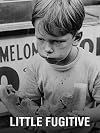
Little fugitive, c'est l'histoire de l'errance d'un petit garçon (remarquement interprété par Joey Norton) qui pense avoir tué son frère aîné lors d'une plaisanterie macabre qu'on lui fait pour lui montrer le déplaisir de devoir traîner avec un petit de son âge. La mère des deux garçons a dû s'absenter deux jours pour se rendre au chevet de sa mère malade, laissant au frère aîné le soin de s'occuper du plus jeune.
C'est donc pendant cettte absence qu'il fugue et prend un show more métro pour Coney Island, destination d'une promenade annulée qu'il attendait avec impatience. Pendant tout le weekend, il déambulera parmi les différentes attractions du parc de l'île, se nourrissant de toutes les sucreries dont un petit garçon de 7 ans peut rêver. Pendant ce temps, son frère aîné (bien vivant) par à sa recherche, voulant à tout prix le retrouver avant le retour de leur mère.
Ce film est un véritable trésor qui annonce l'arrivée de la Nouvelle vague avant celle qui devait déferler sur la France. Il est rare que l'on filme l'enfance avant autant de sensibilité, de fraîcheur et d'authenticité. La caméra, placée à hauteur d'un petit garçon, fait merveille.
Une très belle découverte ! show less
C'est donc pendant cettte absence qu'il fugue et prend un show more métro pour Coney Island, destination d'une promenade annulée qu'il attendait avec impatience. Pendant tout le weekend, il déambulera parmi les différentes attractions du parc de l'île, se nourrissant de toutes les sucreries dont un petit garçon de 7 ans peut rêver. Pendant ce temps, son frère aîné (bien vivant) par à sa recherche, voulant à tout prix le retrouver avant le retour de leur mère.
Ce film est un véritable trésor qui annonce l'arrivée de la Nouvelle vague avant celle qui devait déferler sur la France. Il est rare que l'on filme l'enfance avant autant de sensibilité, de fraîcheur et d'authenticité. La caméra, placée à hauteur d'un petit garçon, fait merveille.
Une très belle découverte ! show less
Aug 2, 2021French
Statistics
- Works
- 6
- Members
- 22
- Popularity
- #553,377
- Rating
- 4.0
- Reviews
- 1
- ISBNs
- 3