
Desiderius Erasmus (1466–1536)
Author of The Praise of Folly
About the Author
Desiderius Erasmus was born, probably in 1469, in Rotterdam, Holland. He studied in Paris, traveled in England, Germany, and Italy, and wrote in Latin. Living at the time of the Renaissance when most intellectual concepts were being examined, Erasmus was a great admirer of the ancient writers and show more edited many of their works. Erasmus remained a Roman Catholic, but believed that many of the priests and theologians had distorted the simple teachings of Jesus. He published an edition of the New Testament-the first edition in the original Greek-in order to make clear the essential teachings of Christianity. Erasmus liked above all things clear and honest thinking; he despised intolerance and persecution. He was the greatest of the humanists because his books, more effectively than any others, propagated a humane philosophy of life, teaching that one's chief duties are to be intelligent, open-minded, and charitable. The most famous and the most influential of Erasumus' books were The Praise of Folly (1509) and Colloquies (1518). These works, written in lively, colloquial, and witty Latin, expressed his ideas on the manners and customs of his time. Erasmus exerted a powerful influence not only through his books, but also through the private letters that he wrote to a great number of humanist scholars in all parts of Western Europe. He carried on extensive correspondences with Thomas More of England. More than 1500 of his letters survive today. Erasmus died in Basel, Switzerland, on July 12, 1536. (Bowker Author Biography) show less
Series
Works by Desiderius Erasmus
The Praise of Folly and Other Writings (Norton Critical Edition) (1989) — Author — 379 copies, 3 reviews
The education of a Christian prince : with the Panegyric for Archduke Philip of Austria (1516) 131 copies, 1 review
Desiderius Erasmus 3 - Opvoeding. Etiquette / Leren studeren / De opvoeding van kinderen / De opvoeding van de christenvorst / Tegen de barbaren (2006) 26 copies, 1 review
Desiderius Erasmus 4 - Verweerschriften: De spons / De Ciceroniaan / Antwoord aan prins Alberto Pio van Carpi (2007) 24 copies, 1 review
Literary and Educational Writings, 1 and 2. Volume 1: Antibarbari / Parabolae. Volume 2: De copia / De ratione studii (Collected Works of Erasmus, 23-24) (1978) 23 copies
The Correspondence of Erasmus: Letters 1-141 (1484-1500) (Collected Works of Erasmus, 1) (1974) 20 copies, 1 review
The Correspondence of Erasmus: Letters 446-593 (1516-17) (Collected Works of Erasmus, 4) (1977) 19 copies, 1 review
Erasmi Opera Omnia : Volume VII-6 (Opera Omnia Desiderii Erasmi Erasmus, Opera Omnia) (Volume 7) (1981) 17 copies
The Correspondence of Erasmus: Letters 594-841 (1517-1518) (Collected Works of Erasmus, 5) (1979) 17 copies, 1 review
Vrede's weeklacht en andere geschriften over vrede en eendracht op internationaal-politiek en kerkelijk terrein (1989) 17 copies
The Correspondence of Erasmus: Letters 142-297 (1501-1514) (Collected Works of Erasmus, 2) (1975) 16 copies, 1 review
The Correspondence of Erasmus: Letters 842-992 (1518-1519) (Collected Works of Erasmus, 6) (1982) 15 copies, 1 review
Delphi Collected Works of Desiderius Erasmus (Illustrated) (Delphi Series Nine Book 12) (2018) 15 copies
The Correspondence of Erasmus: Letters 298-445 (1514-1516) (Collected Works of Erasmus, 3) (1976) 15 copies, 1 review
Twenty Select Colloquies of Erasmus 13 copies
New Testament Scholarship: Paraphrases on Romans and Galatians (Collected Works of Erasmus, 42) (1984) 12 copies
The Correspondence of Erasmus: Letters 993 to 1121 (1519-1520) (Collected Works of Erasmus, 7) (1987) 10 copies, 1 review
Pas de deux in stilte de briefwisseling tussen Desiderius Erasmus en paus Adrianus VI 1522-1523 (2002) 10 copies
The Correspondence of Erasmus: Letters 1252-1355 (1522-1523) (Collected Works of Erasmus, 9) (1989) 10 copies
The Correspondence of Erasmus: Letters 1658-1801 (1526-1527) (Collected Works of Erasmus, 12) (2003) 10 copies
The Correspondence of Erasmus: Letters 1535-1657 (1525) (Collected Works of Erasmus, 11) (1994) 9 copies
The Correspondence of Erasmus: Letters 2082-2203 (1529) (Collected Works of Erasmus, 15) (2012) 9 copies
The Correspondence of Erasmus: Letters 1926-2081 (1528) (Collected Works of Erasmus, 14) (2011) 9 copies
New Testament Scholarship: Paraphrase on the Gospel of Matthew (Collected Works of Erasmus, 45) (2008) 8 copies
The Correspondence of Erasmus: Letters 2357-2471 (August 1530-March 1531) (Collected Works of Erasmus, 17) (2016) 8 copies
The Correspondence of Erasmus: Letters 1122-1251 (1520-1521) (Collected Works of Erasmus, 8) (1988) 8 copies, 1 review
The Correspondence of Erasmus: Letters 2204-2356 (August 1529-July 1530) (Collected Works of Erasmus, 16) (2015) 7 copies
Erasmus' Annotations on the New Testament : Acts, Romans, I and II Corinthians : facsimile of the final Latin text with all earlier variants (1989) 7 copies
Spiritualia and Pastoralia: Exomologesis and Ecclesiastes (Collected Works of Erasmus) (2015) 7 copies
The Correspondence of Erasmus: Letters 2940-3141 (June 1534-August 1536) (Collected Works of Erasmus, 21) (2021) 7 copies
The Correspondence of Erasmus: Letters 1356-1534 (1523-1524) (Collected Works of Erasmus, 10) (1992) 7 copies, 1 review
The Correspondence of Erasmus: Letters 1802-1925 (March-December 1527) (Collected Works of Erasmus, 13) (2010) 7 copies
The Correspondence of Erasmus: Letters 2635-2802 (April 1532-April 1533) (Collected Works of Erasmus, 19) (2019) 6 copies
The Praise of Folly--with a Short Life of the Author By Hendrik Willem van Loon (1942) 5 copies, 1 review
The New Testament Scholarship of Erasmus: An introduction with Erasmus' Preface and Ancillary Writings (Collected Works of Erasmus, 41) (2019) 5 copies
The Correspondence of Erasmus: Letters 2803 to 2939 (May 1533–May 1534) (Collected Works of Erasmus, 20) (2019) 5 copies
New Testament Scholarship: Paraphrase on the Acts of the Apostles (Collected Works of Erasmus, 50) (1995) 5 copies
The Correspondence of Erasmus: Letters 2472-2634 (April 1531-March 1532) (Collected Works of Erasmus, 18) (2018) 4 copies
New Testament Scholarship: Paraphrase on Luke 11-24 (Collected Works of Erasmus, 48) (2003) 4 copies
Des. Erasmi Roterod. Colloqvia 3 copies
Opera omnia Desiderii Erasmi Roterodami : recognita et adnotatione critica instructa notisque illustrata (2011) 3 copies
Adeges: Prolegomena to the Adages: Adagiorum Collectanea, Indexes to Erasmus' Adages (Collected Works of Erasmus, 30) (2017) 3 copies
The Epistles of Erasmus 3 copies
The Colloquies of Desiderius Erasmus 3 copies
Epitola ad Paulum Volzium brief an Paul Volz : enchiridion militis christiani handbüchlein eines christlichen streiters (1990) 3 copies
Gedachten over goede en slechte boekdrukkers gekozen uit het adagium "Festina Lente" (1986) 3 copies
ELOGIO DE LA LOCURA o ELOGIO DE LA ESTULTICIA: DIALOGOS, Juan Luis Vives. COLOQUIOS, Pedro Mexía. (1995) 3 copies, 1 review
In Euangelium Marci paraphrasis, 2 copies
Opulentia sordida e altri scritti attorno ad Aldo Manuzio (Letteratura universale. Albrizziana) (Italian Edition) (2015) 2 copies
The Ultimate Anthology of Christian Theology (20 works with an active table of contents) (2010) 2 copies
The Epistles of Erasmus, Vol. 1 2 copies
Rozmowy potoczne 2 copies
In Praise of Folly 2 copies
Magni Des. Erasmi Roterodami vita; 2 copies
Gedachten Van Erasmus 2 copies
Os pensadores: Rotherdam 2 copies
Classics Club Library 2 copies
Een tweede twaalftal samenspraken 2 copies
Collected proverbs, with commentary 2 copies
The Epistles of Erasmus, Vol. 3 2 copies
The Epistles of Erasmus, Vol. 2 2 copies
Diálogo Ciceroniano 2 copies
Erasmi Opera Omnia, Section 4, vol. 4 (Opera Omnia Desiderii Erasmi Erasmus, Opera Omnia) (2012) 2 copies
The Mental Health and Wellbeing Handbook for Schools: Transforming Mental Health Support on a Budget (2019) 2 copies
A Educação Liberal 2 copies
The Colloquies of Desiderius Erasmus 2 copies
The essential Erasmus 2 copies
Een derde twaalftal samenspraken 2 copies
De libero arbitrio matpibh sive collatio gespräch oder unterredung über den freien willen (2016) 2 copies
Een portret in brieven 1 copy
730 ngày Du & Học 1 copy
On copia of words and ideas 1 copy
The Life of Saint Augustine 1 copy
Erasmi Epistolae VII 1 copy
Lucian of Samosata 1 copy
The Praise of Folie 1 copy
O elogio Da Loucura 1 copy
[Works] 1 copy
Erasmi Epistolae X 1 copy
Erasmi Epistolae VI 1 copy
Das Lob der Torheit. Mit den Randzeichnungen der Basler Ausgabe von Hans Holbein d. J. (1950) 1 copy
Erasmi Epistolae IX 1 copy
Erasmi Epistolae I 1 copy
Erasmi Epistolae IV 1 copy
Erasmi Epistolae VIII 1 copy
Erasmi Epistolae III 1 copy
Erasmi Epistolae XI 1 copy
Erasmi Epistolae V 1 copy
Erasmi Epistolae II 1 copy
Portrétní kresby 1 copy
Against War 1 copy
Opera omnia Desiderii Erasmi Roterodami : recognita et adnotatione critica instructa notisque illustrata. Ordo 1. T. 4 (1973) 1 copy
Die Klage des Friedens 1 copy
Elogio da Loucura, A utopia 1 copy
Filosofskie proizvedeniia 1 copy
Nuevo Testamento 1 copy
Apophthegmata 1 copy
Opere scelte 1 copy
La Civilité puérile, par Érasme... Traduction nouvelle, texte latin en regard, précédée d'une notice sur les livres de… (1877) 1 copy
Antibarbarorum liber 1 copy
Correspondance 1 copy
Epistolario 1 copy
A nőkről és a házasságról 1 copy
Novum Testamentum Latinum 1 copy
Fortrolige Samtaler 1 copy
Familiar Colloquies, Vol. II 1 copy
Adagia 1 copy
Księgi, które zową język 1 copy
Briefe 1 copy
Erasme, l'Education Du Prince Chretien (Miroir Des Humanistes) (French and Latin Edition) (2016) 1 copy
o elogio da loucura 1 copy
Erasmo vol. 1 1 copy
Erasmo vol. 2 1 copy
Gespräch über die Ehe 1 copy
ELOGUO A LA LOCURA 1 copy
Opera omnia Desiderii Erasmi Roterodami : recognita et adnotatione critica instrvcta notisqve illvstrata Ordo 1, Tomus 8 [...] (2012) 1 copy
Julius: Dialogue Entre Saint Pierre Et Le Pape Jules II a la Porte Du Paradis (1513) (Classic Reprint) (French Edition) (2017) 1 copy
Erasmus on folly 1 copy
[Erasmus] 1 copy
Von walfart 1 copy
In Psalmum quartum concio 1 copy
Epitomes adagiorum omnium : quae hodie ab Erasmo, Iunio, et alijs collecta exstant, pars altera 1 copy
Cinq banquets 1 copy
An Inquiry Concerning Faith 1 copy
Aforismen 1 copy
De spons 1 copy
Leren studeren 1 copy
Brief aan Maarten van Dorp 1 copy
Lof van het huwelijk 1 copy
Familiar Colloquies, Vol. I 1 copy
Select Colloquies of Erasmus 1 copy
Dialogus Ciceronianus 1 copy
Colloqui : Ad Fidem Optimorum Exemplorum Denuo Edita Cum Scholiis Selectis Variorum... (2012) 1 copy
Erasmo da Rotterdam 1 copy
[Unspecified work] 1 copy
L'Éloge de la folie 1 copy
A Criança Psicossomática 1 copy
I classici del pensiero libero [Corriere della sera]: Erasmo da Rotterdam. Elogio della follia 1 copy
Colloqui scelti 1 copy
Erasmo. Sulla pace 1 copy
COLEÇÃO GRANDES OBRAS DO PENSAMNETO UNIVERSAL -3 . ELOGIO DA LOUCURA. TRADUÇÃO CIRO MIORANZA. 1 copy
Pequeno Manual dos Médiuns 1 copy
Adagios 1 copy
Erasmo [Opere di] 1 copy
La Mattana del Giorno 1 copy
L'Éloge de la folie, traduction nouvelle du latin d'Érasme, par M. Barrett, orné de 12 figures (1983) 1 copy
oeuvres complètes 1 copy
All the Familiar Colloquies of Desiderius Erasmus, of Roterdam, Concerning Men, Manners, and Things (2020) 1 copy
Cuestiones luteranas 1 copy
Nouu[m] testame[n]tu[m] omne 1 copy
The essential Erasmus : selected and newly translated with introduction and commentary by John P. Dolan 1 copy, 1 review
De matrimonio Christiano. Accessit Ludovici Vivis de conjugii origine & utilitate discursus. 1 copy, 1 review
De kersten weduwe 1 copy
Pagiriamasis žodis kvailybei 1 copy
Lof heimskunnar 1 copy
Associated Works
Readings and Exercises in Latin Prose Composition: From Antiquity to the Renaissance (2005) — Contributor — 48 copies
German Humanism and Reformation: Erasmus, Luther, Muntzer, and others (German Library) (1982) — Contributor — 35 copies
Oogst Der Tijden. keur uit de werken van schrijvers en dichters aller volken en eeuwen (1940) — Contributor — 12 copies
Mitt skattkammer. b.9 Gjennom tidene — Contributor — 9 copies
Het verloren lezen van Bonaventura Kruitwagen — Author — 8 copies
Erasmus en de vrouw in de religie; met een vertaling van "De abt en de geleerde vrouw" — Contributor — 1 copy
On the Nature of Things / The History of Henry Esmond / Old Goriot / The Praise of Folly / The Way of All Flesh (1947) — Contributor — 1 copy
Tagged
Common Knowledge
- Canonical name
- Erasmus, Desiderius
- Legal name
- Geert Geerts
- Other names
- Erasmus
Erasmus of Rotterdam
Desiderius Erasmus of Rotterdam
Desiderius Erasmus Roterodamus
Érasme de Rotterdam, Didier - Birthdate
- 1466-10-28
- Date of death
- 1536-07-12
- Gender
- male
- Education
- monastic
Collège de Montaigu, University of Paris
University of Turin (DD|1506) - Occupations
- private secretary (Bishop of Cambrai)
priest
theologian
professor (Divinity and Greek)
author
translator (show all 7)
editor - Organizations
- University of Cambridge
University of Oxford
University of Leuven
Catholic Church (ordained 1492) - Relationships
- John Colet (2) (friend)
- Short biography
- "Prince of the Humanists" The year of his birth is uncertain, either 1466 or 1469. The day is also uncertain but Erasmus apparently celebrated his birthday on the 28th.
- Nationality
- Netherlands
- Birthplace
- Gouda (or Rotterdam), Burgundian Netherlands, Holy Roman Empire
- Places of residence
- Cambrai, France
Paris, France
Cambridge, Cambridgeshire, England, UK
Louvain, Belgium
Steyn monastary, near Gouda, The Netherlands
Freiburg im Breisgau, Germany - Place of death
- Basel, Old Swiss Confederacy
- Burial location
- Basel Cathedral, Basel, Switzerland
- Map Location
- Netherlands
Members
Discussions
Folio Archives 256: Praise of Folly by Erasmus 1974 in Folio Society Devotees (November 2022)
Reviews
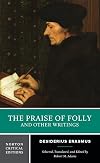
In this splendid Norton Critical Edition there is plenty of Erasmus: The Praise of Folly (including illustrations by Hans Holbein), The Complaint of Peace, Two Forwards to the Latin Translation to the New Testament, Julius Excluded from Heaven, excerpts from The Colloquies and a few letters. There is also a selection of critical commentary as well as a chronology and a short selected Bibliography.
The selections of Erasmus' writings give the reader the opportunity to sample the different show more facets of this 16th century scholar who wrote almost exclusively in Latin. He wrote passionately about the need to take religion back to the scriptures and put it in the hands of the people, and away from the dead intellectuals in the universities. He wanted to turn the catholic church from the path of over reliance on indulgences, pilgrimages, and ritual and so came into conflict with mendicant clerics and theologians. In his introduction to his translation of the New Testament he says:
"I absolutely dissent from those people who don't want the holy scriptures to be read in translation by the unlearned - as if, forsooth, Christ taught such complex doctrine that hardly anyone outside a handful of theologians could understand it, or as if the chief strength of the Christian religion lay in peoples ignorance of it. perhaps the state secrets of kings have to be concealed, but Christ wanted his mysteries to be disseminated as widely as possible. I should prfer that all women, even of the lowest rank, should read the evangelists and the epistles of Paul.........."
It is as a satirist that Erasmus is most often read and enjoyed today and the full text of "The Praise of Folly" will still provide some amusement as all classes of society come in for criticism in this lively essay. Oh to be a fool says Erasmus, how blissful this would be, but always listen to a fool because even a foolish man says something to the point. Erasmus launches into his critique with gusto and no one is spared, here is what he says about the theologians:
"perhaps I ought to pass over the theologians in silence and just not go near that open sewer, or touch that stink weed. They are a class of men so arrogant and irritable that they are likely to attack me by squadrons with their six hundred conclusions and force me into a recantation: then if I refuse they'd promptly have me up as a heretic............For they cocker up their own self esteem, as if raising themselves to a seventh heaven, and from that vantage point look down on the rest of the human race as so many dumb beasts crawling on the ground......"
Julius Excluded from Heaven is another biting satire. Pope Julius II had recently died and Erasmus imagines him appearing at the gates of heaven and demanding to be let in. Julius boasts of his irreligious behaviour while he was Pope, how he sold various offices to the highest bidder, how he used his position for his own and his families advantage, how he made war against fellow Christians etc.....
Erasmus was a popular figure, his writing was witty and to the point. He was also excellent company and well liked by friends in high places, but having said all that I wondered how he could have got away with the satires that he wrote. What protected him from charges of heresy while he was alive.
I was particularly keen to read the Critical commentary in this Norton Critical edition to see if the essays would enhance my appreciation of Erasmus. H R Trevor Roper's essay is typical of the historian, broad brush strokes and some startling assertions paint a lively picture of Erasmus and his legacy. R S Allen in "The Transatlantic Renaissance" shows how Erasmus as a representative of the Northern European renaissance was influenced by the Italian renaissance and this filled in some background to his works. There followed an extract from J Huizinga's biography, which I have previously read, but would be useful material for readers wanting to get an idea of the character and mind of Erasmus. Up next was an extract from Mikhail Bakhtin's [Rabelais and his World] which dealt with Medieval and Renaissance folk humour and this proved to be a gem. It grounded Erasmus writing in the long tradition of satire and comedy that was an essential part of medieval life. Bakhtin says that this stream of writing, play acting and comedy ran concurrently with the serious issues of Church services and law making and was often practiced by the same people. For me it shone a light on Erasmus' satires and convinced me that in this climate they would have been read and enjoyed by those very same people that were subjects of the satires.
There were two further essays one of which explored the wide definitions of humanism and provided more useful background material. All in all this Norton Critical Edition is extremely successful in presenting some important texts of a writer who may not be widely known to the general public and the essays provide enough background to enhance the appreciation of both the man and his works. A five star book. show less
The selections of Erasmus' writings give the reader the opportunity to sample the different show more facets of this 16th century scholar who wrote almost exclusively in Latin. He wrote passionately about the need to take religion back to the scriptures and put it in the hands of the people, and away from the dead intellectuals in the universities. He wanted to turn the catholic church from the path of over reliance on indulgences, pilgrimages, and ritual and so came into conflict with mendicant clerics and theologians. In his introduction to his translation of the New Testament he says:
"I absolutely dissent from those people who don't want the holy scriptures to be read in translation by the unlearned - as if, forsooth, Christ taught such complex doctrine that hardly anyone outside a handful of theologians could understand it, or as if the chief strength of the Christian religion lay in peoples ignorance of it. perhaps the state secrets of kings have to be concealed, but Christ wanted his mysteries to be disseminated as widely as possible. I should prfer that all women, even of the lowest rank, should read the evangelists and the epistles of Paul.........."
It is as a satirist that Erasmus is most often read and enjoyed today and the full text of "The Praise of Folly" will still provide some amusement as all classes of society come in for criticism in this lively essay. Oh to be a fool says Erasmus, how blissful this would be, but always listen to a fool because even a foolish man says something to the point. Erasmus launches into his critique with gusto and no one is spared, here is what he says about the theologians:
"perhaps I ought to pass over the theologians in silence and just not go near that open sewer, or touch that stink weed. They are a class of men so arrogant and irritable that they are likely to attack me by squadrons with their six hundred conclusions and force me into a recantation: then if I refuse they'd promptly have me up as a heretic............For they cocker up their own self esteem, as if raising themselves to a seventh heaven, and from that vantage point look down on the rest of the human race as so many dumb beasts crawling on the ground......"
Julius Excluded from Heaven is another biting satire. Pope Julius II had recently died and Erasmus imagines him appearing at the gates of heaven and demanding to be let in. Julius boasts of his irreligious behaviour while he was Pope, how he sold various offices to the highest bidder, how he used his position for his own and his families advantage, how he made war against fellow Christians etc.....
Erasmus was a popular figure, his writing was witty and to the point. He was also excellent company and well liked by friends in high places, but having said all that I wondered how he could have got away with the satires that he wrote. What protected him from charges of heresy while he was alive.
I was particularly keen to read the Critical commentary in this Norton Critical edition to see if the essays would enhance my appreciation of Erasmus. H R Trevor Roper's essay is typical of the historian, broad brush strokes and some startling assertions paint a lively picture of Erasmus and his legacy. R S Allen in "The Transatlantic Renaissance" shows how Erasmus as a representative of the Northern European renaissance was influenced by the Italian renaissance and this filled in some background to his works. There followed an extract from J Huizinga's biography, which I have previously read, but would be useful material for readers wanting to get an idea of the character and mind of Erasmus. Up next was an extract from Mikhail Bakhtin's [Rabelais and his World] which dealt with Medieval and Renaissance folk humour and this proved to be a gem. It grounded Erasmus writing in the long tradition of satire and comedy that was an essential part of medieval life. Bakhtin says that this stream of writing, play acting and comedy ran concurrently with the serious issues of Church services and law making and was often practiced by the same people. For me it shone a light on Erasmus' satires and convinced me that in this climate they would have been read and enjoyed by those very same people that were subjects of the satires.
There were two further essays one of which explored the wide definitions of humanism and provided more useful background material. All in all this Norton Critical Edition is extremely successful in presenting some important texts of a writer who may not be widely known to the general public and the essays provide enough background to enhance the appreciation of both the man and his works. A five star book. show less

Written from the viewpoint of the character Folly, Erasmus' "The Praise of Folly" is a satirical and perceptive work that examines the nature of foolishness and its place in society. Erasmus highlights the value of embracing joy and simplicity while simultaneously criticizing the religious and social conventions of his day through wit and irony.
Erasmus offers a biting but humorous critique of social evils, especially in the church and among the educated elite, through the character of show more Folly. The book examines how embracing foolishness—in the form of joy, pleasure, and a straightforward lifestyle—can be advantageous and even essential for contentment and kinship. The book also sheds important light on the early 16th-century social and religious climate, including the shift from medieval to modern ideas.
Using irony and a first-person narrative, the book is a masterwork of satire that makes for an engaging and thought-provoking read. For readers today, the book's examination of human nature, societal imperfections, and the pursuit of happiness is still pertinent and perceptive. Even readers who are not familiar with the era will find the book to be entertaining and captivating due to Erasmus's keen wit and sense of humor.
Lastly, and possibly most importantly, "The Praise of Folly" provides an insightful perspective on the Renaissance and the shift to the Reformation. show less
Erasmus offers a biting but humorous critique of social evils, especially in the church and among the educated elite, through the character of show more Folly. The book examines how embracing foolishness—in the form of joy, pleasure, and a straightforward lifestyle—can be advantageous and even essential for contentment and kinship. The book also sheds important light on the early 16th-century social and religious climate, including the shift from medieval to modern ideas.
Using irony and a first-person narrative, the book is a masterwork of satire that makes for an engaging and thought-provoking read. For readers today, the book's examination of human nature, societal imperfections, and the pursuit of happiness is still pertinent and perceptive. Even readers who are not familiar with the era will find the book to be entertaining and captivating due to Erasmus's keen wit and sense of humor.
Lastly, and possibly most importantly, "The Praise of Folly" provides an insightful perspective on the Renaissance and the shift to the Reformation. show less
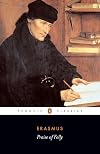
You know, before I read this, I imagined it was satire.
I couldn't have been more wrong! Indeed, after listening to Dame Folly, goddess extraordinaire, I think I will convert myself wholeheartedly to her teachings.
There has never been a more persuasive tract in literature. Hide thy wisdom, folks! There is no greater treasure than to proclaim just how much folly you possess!
It's especially good for churchmen and writers. The former generally do not know they are being made fun of and the show more latter can derive a sort of sick satisfaction that they, more than any other breed of fools, exemplify the teachings of Dame Folly.
For who else could go about the rest of their lives putting words down for nothing more than faint praise, outright scorn, and little to no money for their extensive efforts?
Exactly.
:) show less
I couldn't have been more wrong! Indeed, after listening to Dame Folly, goddess extraordinaire, I think I will convert myself wholeheartedly to her teachings.
There has never been a more persuasive tract in literature. Hide thy wisdom, folks! There is no greater treasure than to proclaim just how much folly you possess!
It's especially good for churchmen and writers. The former generally do not know they are being made fun of and the show more latter can derive a sort of sick satisfaction that they, more than any other breed of fools, exemplify the teachings of Dame Folly.
For who else could go about the rest of their lives putting words down for nothing more than faint praise, outright scorn, and little to no money for their extensive efforts?
Exactly.
:) show less

500 éves szöveg, és az istennek se akar elavulni. Jó, hát bizonyos elemei igen, de sokkal érdekesebb, hogy más elemei meg nem – csak éppen manapság ezt nem balgaságnak, hanem populizmusnak nevezzük. Amit például Erasmus tudomány témakörben elbeszélője szájába ad, azt simán mondhatná akár a jelenlegi amerikai elnök is – már ha eltekintünk attól, hogy a jelenlegi amerikai elnök sosem fog tudni úgy fogalmazni, mint Erasmus.
Amúgy én nem gondolom, hogy ez a show more szöveg gúnyolódik – sokkal inkább keserű. Merthogy a világ olyannyira a balgaság bűvkörébe esett, és a bölcsesség oly kevés szerepet kap manapság, akár a királyok, akár a teológusok, akár a köznép között keressük (1511! Luther mindjárt kiborítja a bilit!), hogy gondolkodónk joggal zuhan magába – és terápiás céllal megírja hosszú-hosszú levelét Morus Tamásnak: A balgaság dicséreté-t. Ami mellesleg messze nem egyenletes szöveg, főleg azért, mert a könnyedebb szatirikus hangütés és a morózus, „tényközlő” passzusok között ingadozik – nem csoda, ha az olvasó zavarba jön, hogy ez most vicc-e, vagy komoly. Hisz a szatírák célja többnyire az, hogy a humor segítségével sebezhetőnek mutassák azt, ami rossz – de Erasmus elbeszélője időnként olyan fapofával érvel a balgaság elsöprő dinamizmusa mellett, amitől az mindennek tűnik, csak épp sebezhetőnek nem. Hovatovább olyan meggyőző, hogy megfordult a fejemben: leiratkozom a molyról, és inkább követem facebookon a Schobert Norbit.
(Utólagos kiegészítés: 4 csillagnál többet viszont már csak azért sem kaphat, mert bizonyítatlanul egyenlőségjelet tesz balgaság és boldogság közé. Én viszont már láttam balgákat paranoid idegrángásban fetrengeni, csak mert a világ nem volt hajlandó alkalmazkodni a róla alkotott sematikus képükhöz. Mint ahogy láttam már intelligens elégedett embereket is – még ha néha fel is húzták magukat ezen-azon. Szóval a helyzet ennél bonyolultabb.) show less
Amúgy én nem gondolom, hogy ez a show more szöveg gúnyolódik – sokkal inkább keserű. Merthogy a világ olyannyira a balgaság bűvkörébe esett, és a bölcsesség oly kevés szerepet kap manapság, akár a királyok, akár a teológusok, akár a köznép között keressük (1511! Luther mindjárt kiborítja a bilit!), hogy gondolkodónk joggal zuhan magába – és terápiás céllal megírja hosszú-hosszú levelét Morus Tamásnak: A balgaság dicséreté-t. Ami mellesleg messze nem egyenletes szöveg, főleg azért, mert a könnyedebb szatirikus hangütés és a morózus, „tényközlő” passzusok között ingadozik – nem csoda, ha az olvasó zavarba jön, hogy ez most vicc-e, vagy komoly. Hisz a szatírák célja többnyire az, hogy a humor segítségével sebezhetőnek mutassák azt, ami rossz – de Erasmus elbeszélője időnként olyan fapofával érvel a balgaság elsöprő dinamizmusa mellett, amitől az mindennek tűnik, csak épp sebezhetőnek nem. Hovatovább olyan meggyőző, hogy megfordult a fejemben: leiratkozom a molyról, és inkább követem facebookon a Schobert Norbit.
(Utólagos kiegészítés: 4 csillagnál többet viszont már csak azért sem kaphat, mert bizonyítatlanul egyenlőségjelet tesz balgaság és boldogság közé. Én viszont már láttam balgákat paranoid idegrángásban fetrengeni, csak mert a világ nem volt hajlandó alkalmazkodni a róla alkotott sematikus képükhöz. Mint ahogy láttam már intelligens elégedett embereket is – még ha néha fel is húzták magukat ezen-azon. Szóval a helyzet ennél bonyolultabb.) show less
Lists
Awards


You May Also Like


Associated Authors
Statistics
- Works
- 610
- Also by
- 13
- Members
- 10,323
- Popularity
- #2,300
- Rating
- 3.8
- Reviews
- 117
- ISBNs
- 988
- Languages
- 29
- Favorited
- 18


