
Richard Delacy
Author of Lonely Planet : Phrasebook : Hindi & Urdu : 1998 : 2nd edition
About the Author
Richard Delacy has studied and taught Urdu at the university level in the USA and Australia
Works by Richard Delacy
Essential Hindi: Speak Hindi with Confidence! (Hindi Phrasebook & Dictionary) (Essential Phrase Bk) (2014) 11 copies
Hindi Flash Cards Kit: Learn 1,500 basic Hindi words and phrases quickly and easily! (Audio CD Included) (2016) 9 copies
India 1 copy
Tagged
Common Knowledge
Members
Reviews
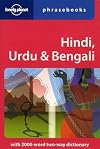
The Hindi, Urdu, & Bengali entry in the Lonely Planet Phrasebooks series, by Richard Delacy (Hindi-Urdu) and Shahara Ahmed (Bengali) is a potentially useful guide, despite several small inaccuracies and other shortcomings.
Its side-by-side presentation of Hindi & Urdu is both intuitive and illustrative, and while the grammar coverage is quite basic (the verb overview covers only the present tense), it is clearly written and does well at highlighting those key differences from English most show more likely to trip up the beginning speaker. The book is a bit light on cultural notes, however, especially when considered as a traveler's phrasebook - cultural context is notably absent from both the 'drugs' and 'religion' sections, two topics for which it would seem particularly pertinent. Similarly, the dictionary section omits some extraordinarily basic concepts, including ones covered elsewhere in the book, like 'need' and 'thanks'. These same concepts are omitted from the (wholly inadequate) index as well, which could make this a difficult phrasebook to use in time-sensitive settings.
The most serious issue with this work, however, is its absolutely abysmal transliteration scheme, which the authors euphemistically refer to as a 'simplified pronunciation guide'. It not only fails to distinguish between aspirated and unaspirated sounds, but also between dental and retroflex sounds, simplifications that render पल/pal (moment) indistinguishable from फल/phal (fruit) and تھیلا/thelaa (bag) indistinguishable from ٹھیلا/Thelaa (handcart), to name but two examples. These omissions, though, are at least briefly noted in the book's explanatory text. The confusion of the plosive /k/ and the fricative /x/ - which renders خبر/xabar (news) indistinguishable from کبر/kabar (grave) - is not. And as if all that didn't produce confusion enough, nasalization of vowels is represented by a misleading trailing -ng. Fortunately, the vast majority of the phrasebook does include both Devanagari and Naskh (which it calls 'nashk') alongside the romanized text, but there nonetheless remain several key exceptions.
Lesser issues and examples thereof are:
Its side-by-side presentation of Hindi & Urdu is both intuitive and illustrative, and while the grammar coverage is quite basic (the verb overview covers only the present tense), it is clearly written and does well at highlighting those key differences from English most show more likely to trip up the beginning speaker. The book is a bit light on cultural notes, however, especially when considered as a traveler's phrasebook - cultural context is notably absent from both the 'drugs' and 'religion' sections, two topics for which it would seem particularly pertinent. Similarly, the dictionary section omits some extraordinarily basic concepts, including ones covered elsewhere in the book, like 'need' and 'thanks'. These same concepts are omitted from the (wholly inadequate) index as well, which could make this a difficult phrasebook to use in time-sensitive settings.
The most serious issue with this work, however, is its absolutely abysmal transliteration scheme, which the authors euphemistically refer to as a 'simplified pronunciation guide'. It not only fails to distinguish between aspirated and unaspirated sounds, but also between dental and retroflex sounds, simplifications that render पल/pal (moment) indistinguishable from फल/phal (fruit) and تھیلا/thelaa (bag) indistinguishable from ٹھیلا/Thelaa (handcart), to name but two examples. These omissions, though, are at least briefly noted in the book's explanatory text. The confusion of the plosive /k/ and the fricative /x/ - which renders خبر/xabar (news) indistinguishable from کبر/kabar (grave) - is not. And as if all that didn't produce confusion enough, nasalization of vowels is represented by a misleading trailing -ng. Fortunately, the vast majority of the phrasebook does include both Devanagari and Naskh (which it calls 'nashk') alongside the romanized text, but there nonetheless remain several key exceptions.
Lesser issues and examples thereof are:
- The occasional odd translation choice - thank you is rendered 'shuk-ri-yah' in Urdu, as expected, but 'thaynk-yoo' in Hindi, despite the existence of the perfectly common and accepted word धन्यवाद/dhanyavaad.
- Similar oddities at the phrase level - I'm not religious is given as 'me-raa ko-ee maz-hab na-heeng hay', or मेरा कोई मज़हब नहीं है / میرا کوئی مذہب نہیں ہے, which would actually be much more closely translated by I have no religion - a potentially provocative phrase, especially in South Asia! A better choice would have been the more ambiguous and less confrontational मैं ज़्यादा मज़हबी नहीं हूँ / میں زیادہ مذہبی نہیں ہوں - I'm not too/very religious. (Pronunciation: maiN zyaadaa mazhabii nahiiN huuN.)
- A few curious decisions on what to include and exclude - the 'local flora & fauna' section teaches leopard and rhinoceros, but much more common creatures (cow, horse, monkey, dog) are nowhere mentioned, and the potentially frightening ones one might rather like to be able to communicate with one's hosts about (spider, scorpion, snake) are equally absent.
You May Also Like


Statistics
- Works
- 20
- Members
- 353
- Popularity
- #67,813
- Rating
- 3.9
- Reviews
- 2
- ISBNs
- 26
- Languages
- 4