
Kristen Brustad
Author of Al-Kitaab fii Ta'allum al-'Arabiyya, A Textbook for Beginning Arabic, Part One
About the Author
Kristen E. Brustad is an associate professor of Arabic at Emory University.
Image credit: via UT-Austin
Series
Works by Kristen Brustad
Al-Kitaab fii Ta'allum al-'Arabiyya, A Textbook for Beginning Arabic, Part One (1995) 550 copies, 6 reviews
Answer Key to Al-Kitaab fii Ta'allum al-'Arabiyya, A Textbook for Beginning Arabic, Part One (1995) 92 copies
Answer Key To Alif Baa: Introduction To Arabic Letters and Sounds (Arabic Edition) (1995) 79 copies, 1 review
The Syntax of Spoken Arabic: A Comparative Study of Moroccan, Egyptian, Syrian, and Kuwaiti Dialects (Arabic Edition) (2000) 26 copies
Al-Kitaab fii Ta'allum al-'Arabiyya: A Textbook for Arabic, Part Two: Texts of Audio Listening Passages. For Teachers (1997) 6 copies
Al-Kitaab fii Ta'allum al-'Arabiyya: A Textbook for Beginning Arabic, Part One. Teacher's Edition (2011) 5 copies
Teacher's Edition of Alif Baa: An Introduction to Arabic Letters and Sounds (With DVD, Third Editio) (Arabic and English Edition) (2010) 4 copies
Al-Kitaab fii Ta'allum al-'Arabiyya: A Textbook for Arabic, Part Three: Five Audio Compact Disc Set (2002) 3 copies
DVD for Al-Kitaab fii Tacallum al-cArabiyya: A Textbook for Intermediate Arabic: Part Two (Arabic Edition) (2013) 3 copies
Al-Kitaab Part Two, Third Edition Bundle: Book DVD Website Access Card (Al-Kitaab Arabic Language Program) (Arabic Edition) (2014) 3 copies
Tagged
Common Knowledge
- Canonical name
- Brustad, Kristen
- Other names
- كرستن بروستاد
- Gender
- female
- Education
- Harvard University (Ph.D. | Near Eastern Languages and Civilizations | 1991)
- Nationality
- USA
- Places of residence
- Austin, Texas, USA
- Associated Place (for map)
- Texas, USA
Members
Reviews
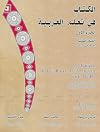
This book will teach you Arabic, but you won't enjoy it.
I get the impression that this book is intended for the perfect student--not just the A+ student who works hard and has experience in studying languages, but the student who has endless time on his hands and remembers every word after seeing it once.
It often seems that the authors have gone out of their way to make this book as difficult as possible, based perhaps on the premise that students are lazy and will take advantage of any show more crutches they provide. Maybe they're right. But I'm not convinced that taking away the basic supports leads students to try harder than they otherwise would; it may just make the whole process slower and lead to increased levels of frustration.
A case in point: the table of contents is almost entirely in Arabic, in a book for beginning students who have just learned the alphabet. Will they struggle through the list of Arabic words when they're trying to find that grammar explanation from a few weeks ago, or will it be both faster and easier to flip through the pages until they happen across the section they're looking for? From personal experience, I can say it's the latter.
The grammar explanations themselves aren't always easy to understand. The example sentences tend to be full of the current chapter's vocabulary, which was often seen for the first time only days before. Of course, the ideal student will have memorized all of the new vocabulary immediately. The average student will more likely miss the point of the sentences, or at least waste time flipping through the glossary that could be better spent actively studying.
It doesn't help that the grammar explanations use Arabic words whenever possible, and that these grammatical terms aren't listed in the main vocabulary to be memorized for each chapter. Instead, each chapter has a list of additional words at the end, without the convenience of their meanings. So again, time is spent flipping through the book to find these words, and they're ultimately not learned as well as the words in the main vocabulary. The result is that the grammar sections become harder and harder to follow.
To increase the student's frustration further, almost the only reading passages in the book are "authentic"; i.e., not written with the beginning student in mind. The idea is that the student will pick out the few familiar words from a paragraph, thereby gaining an understanding of the basic idea. Besides the fact that this doesn't work at all if you happen to forget one of the key words, it's just not satisfying to "read" only passages that are too advanced for your current level. There's no sense of accomplishment at all.
The book does have some good points; it comes with multiple DVDs, so the student can get plenty of practice in listening to the language, and I found that everything seemed a lot clearer when I read through it again before beginning my second-year course. As I was actually working through this book, though, I have to say I found it pretty painful. show less
I get the impression that this book is intended for the perfect student--not just the A+ student who works hard and has experience in studying languages, but the student who has endless time on his hands and remembers every word after seeing it once.
It often seems that the authors have gone out of their way to make this book as difficult as possible, based perhaps on the premise that students are lazy and will take advantage of any show more crutches they provide. Maybe they're right. But I'm not convinced that taking away the basic supports leads students to try harder than they otherwise would; it may just make the whole process slower and lead to increased levels of frustration.
A case in point: the table of contents is almost entirely in Arabic, in a book for beginning students who have just learned the alphabet. Will they struggle through the list of Arabic words when they're trying to find that grammar explanation from a few weeks ago, or will it be both faster and easier to flip through the pages until they happen across the section they're looking for? From personal experience, I can say it's the latter.
The grammar explanations themselves aren't always easy to understand. The example sentences tend to be full of the current chapter's vocabulary, which was often seen for the first time only days before. Of course, the ideal student will have memorized all of the new vocabulary immediately. The average student will more likely miss the point of the sentences, or at least waste time flipping through the glossary that could be better spent actively studying.
It doesn't help that the grammar explanations use Arabic words whenever possible, and that these grammatical terms aren't listed in the main vocabulary to be memorized for each chapter. Instead, each chapter has a list of additional words at the end, without the convenience of their meanings. So again, time is spent flipping through the book to find these words, and they're ultimately not learned as well as the words in the main vocabulary. The result is that the grammar sections become harder and harder to follow.
To increase the student's frustration further, almost the only reading passages in the book are "authentic"; i.e., not written with the beginning student in mind. The idea is that the student will pick out the few familiar words from a paragraph, thereby gaining an understanding of the basic idea. Besides the fact that this doesn't work at all if you happen to forget one of the key words, it's just not satisfying to "read" only passages that are too advanced for your current level. There's no sense of accomplishment at all.
The book does have some good points; it comes with multiple DVDs, so the student can get plenty of practice in listening to the language, and I found that everything seemed a lot clearer when I read through it again before beginning my second-year course. As I was actually working through this book, though, I have to say I found it pretty painful. show less
This book is inadequate for truly communicating in Arabic. I've taken classes at several universities using this text and the general consensus has been that it's confusing and under-informative. There is a lack of useful vocabulary and the explainations of grammar are mostly in Arabic. It seems like this book is intended as the MSA companion to some immersion course for people actually in the middle east. I don't reccomend it as a textbook and certainly not for self study.
Also, I've been show more going over this book to review for a placement exam. It all makes perfect sense now (having studied Arabic for two years) but the way the material is presented is extremely overwhelming for a beginning student. show less
Also, I've been show more going over this book to review for a placement exam. It all makes perfect sense now (having studied Arabic for two years) but the way the material is presented is extremely overwhelming for a beginning student. show less
Alif Baa, Third Edition: Alif Baa: Introduction to Arabic Letters and Sounds (Al-Kitaab Arabic Language Program) (Arabic Edition) by Kristen Brustad
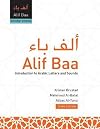
This book was the designated book for a class I was taking as part of the HeadStart program at uOttawa. This is not the greatest book for teaching the language in my opinion.
Granted this is designed for complete beginners (which I am not), but it seems to miss quite a bit of the nuances of the language. For the most part it disregards such things as dual, plural, past, future tenses, most of the grammar of the language, and doesn't really have any verbs.
If you've got a terrible teacher for show more the course, you're not going to enjoy it. My prof for this course (Afifa Haddad) was one of the two funniest of my teachers this semester (although my English prof was pretty cool too).
Another peeve was the narration on the included DVD. This was a bit hit-and-miss with a few of the speakers being wonderful, and a few of them completely unintelligible, even for someone who has at the very least a passing (if not greater) familiarity with spoken Arabic.
All in all unless this is a mandatory part of your course I would skip it.
It costs quite a pretty penny too, weighing in at approximately $90 Canadian, brand new. Even buying it secondhand I payed $45 Canadian. Not exactly the cheapest book out there. show less
Granted this is designed for complete beginners (which I am not), but it seems to miss quite a bit of the nuances of the language. For the most part it disregards such things as dual, plural, past, future tenses, most of the grammar of the language, and doesn't really have any verbs.
If you've got a terrible teacher for show more the course, you're not going to enjoy it. My prof for this course (Afifa Haddad) was one of the two funniest of my teachers this semester (although my English prof was pretty cool too).
Another peeve was the narration on the included DVD. This was a bit hit-and-miss with a few of the speakers being wonderful, and a few of them completely unintelligible, even for someone who has at the very least a passing (if not greater) familiarity with spoken Arabic.
All in all unless this is a mandatory part of your course I would skip it.
It costs quite a pretty penny too, weighing in at approximately $90 Canadian, brand new. Even buying it secondhand I payed $45 Canadian. Not exactly the cheapest book out there. show less
Once you have the Arabic alphabet and a small vocabulary going, this is the next place to turn. It works good as self study and even better if you have a teacher to converse with and strengthen speaking skills. As far as I've seen, this is the best series of books out there for learning Arabic as an English speaker.
You May Also Like


Associated Authors
Statistics
- Works
- 29
- Members
- 1,607
- Popularity
- #16,043
- Rating
- 3.6
- Reviews
- 9
- ISBNs
- 57
- Languages
- 1