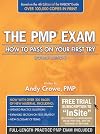
The book worked (for me) as advertised. I passed the PMP exam on my first try using only this book, the PMBOK, and a few practice tests from pmstudy. Crowe's book is better than study books I used for other tests because it didn't emphasize rote memorization. Instead, it walked you through each of PMI's processes and explained them so they made sense. I didn't need to memorize any long list of processes, tools, techniques, inputs, and outputs. By then end of Crowe's book and his online supplement, I understood which ITTOs went with each process. I recommend this book for anyone hoping to pass the PMP exam.
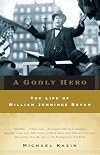
I am a huge fan of A Godly Hero. It is dense and takes a while to plow through, but provides a great overview of Bryan's life, how he evolved as a man, and how he became a household name. Kazin necessarily goes further by detailing life in the Gilded Age and how Bryan's populist politics fit into the period.
Kazin fills a gap in historical research by providing the biography of a man who ran for President multiple times, but never made it to the White House. History concentrates on the winners, but as Kazin convincingly argues, Bryan did as much as anyone else when defining a devoutly Christian populism for America that lingers in American politics today.
Kazin's book is both academic and readable. I recommend it for anyone seeking a deeper understanding of this time period and how Bryan shaped America's thinking during it.
Kazin fills a gap in historical research by providing the biography of a man who ran for President multiple times, but never made it to the White House. History concentrates on the winners, but as Kazin convincingly argues, Bryan did as much as anyone else when defining a devoutly Christian populism for America that lingers in American politics today.
Kazin's book is both academic and readable. I recommend it for anyone seeking a deeper understanding of this time period and how Bryan shaped America's thinking during it.
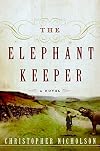
The idea of a boy raising elephants and care-taking for them in eighteenth century England seemed like a good plot for a book. However, I never identified with the boy that raised the elephants or felt that I really cared one way or another about how the story would unfold in The Elephant Keeper. Perhaps that was the point since the main character largely lived without close human companionship and seemed to find it difficult to relate to others.
However, the book was not uninteresting. Thanks to the historical details of England and London life during this time, I finished the book and felt I gained some value from the narrative. I also enjoyed the various other characters the protagonist found during his life and wished the author would have develop them more.
However, the book was not uninteresting. Thanks to the historical details of England and London life during this time, I finished the book and felt I gained some value from the narrative. I also enjoyed the various other characters the protagonist found during his life and wished the author would have develop them more.
 This review was written for LibraryThing Early Reviewers.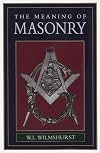
Wilmshurst's Meaning of Masonry provides deeper insight into the meaning of Freemasonry's degrees. He fits his understanding of the degrees offered in modern Freemasonry into the context of what ancient mystery religions revealed. It is one of those dense books that will provide new insights every time it is read. If you are looking for a deeper discussion of what Freemasonry means, is designed to instill in its members, and its historical context, this is a great book to read.

The Craft and Its Symbols provides information about the various symbols of Freemasonry. It provides good information for anyone looking for a general understanding of Freemasonry's symbols.

Seducing the Spirits tells story of a young woman's, Jenny's, experiences while working in Panama among the native Kuna population. Overall, the story was slow to evolve, but I found that one of the appealing aspects of this book. The reader gradually learns about Jenny and the local Kuna population. The details about Jenny's Kuna friends and how she grows during her time with them--and they grow by interacting with her--makes this book worth the read.
This review was written for LibraryThing Early Reviewers.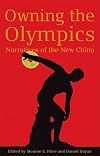
Owning the Olympics is a dense, academic set of essays that discuss the 2008 Olympics in terms of China's rising global influence. Although it takes some effort to get through, the book does offer some insight into how the Olympics work and an overview of how the games could have longterm impacts for the host nation. As other reviewers indicated, this book has less relevance now that the 2008 Olympics have ended. Still, it will be interesting to see if the information/conjecture about China and its use of the Olympics will hold up over time.
This review was written for LibraryThing Early Reviewers.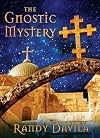
The Gnostic Mystery is a deceptively simple book. The plot is simple enough, a tourist's experience learning about the Gnostics in the Holy Land. However, the plot obscures the book's deeper purpose of conveying Gnostic ideas. I would have rated this book more highly if the plot had been skipped in favor of an academic discussion of the Gnostics, but the author included a list of such books in the back for further study. Still, The Gnostic Mystery would serve a young (~early high school) audience well and spur them toward a greater understanding of Christian history and Gnostic thought.
This review was written for LibraryThing Early Reviewers.
The Cellist of Sarajevo is an enthralling book that depicts a city under siege in modern times. It provides a glimpse of war that is hard to find written so vividly or deeply. The author successfully develops three different characters (four if you count the cellist) and leads the reader through their daily lives in war-torn Sarajevo. The author expands on the meaning of death in war while also capturing the mundane aspects of life. All around, well worth the read and enjoyable even if the topic is depressing.
This review was written for LibraryThing Early Reviewers.Twenty Years' Crisis, 1919-1939: An Introduction to the Study of International Relations by E. H. Carr
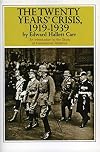
As relevant today as it was in 1939. This book should be read by any serious student of international relations, or politics more generally. Carr uses history of political thought to derive an understanding of how politics, power, and morality interplay to create reality among states. As the subject of the book implies, it is an intense read--expect to spend time sifting through the text to understand Carr fully. I've read this book twice founding greater depth each time and new meaning both times. I suspect a third read will produce similar results.
Franklin and Lucy: President Roosevelt, Mrs. Rutherfurd, and the Other Remarkable Women in His Life by Joseph E. Persico
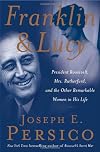
A fascinating look into FDR's personal life--namely the women that affected him the most. Having read a number of histories on WWII and one on FDR, I still found the book enlightening. Persico weaves the stories from FDR's female companions and love interests into the familiar narrative of FDR's life to reveal interesting details. The downside of the book is that while it expounds upon the personal details of FDR's life in a new way, it does not dig too deeply into how these relationships affected his major geopolitical decisions. There are some notable exceptions--e.g. his decision to stay with Eleanor for political/family reasons. However, to bump this book from four to five stars, the author should have tried to demonstrate what, if any, link existed between the women and FDR's actions. Overall, the writing and depth of research were excellent and the book is well worth the effort to read.
This review was written for LibraryThing Early Reviewers.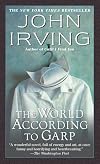
After reading this book in High School and thinking it was the best thing ever, I reread it recently--9 years later. I was amazed by how well developed each character was. On the surface, the plot seems both fanciful and typical. However, the way Irving uses and describes the characters and their surroundings makes this book the experience that it is. It is more than worth the time it takes to read.
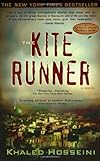
It has been a long time since a book captured my attention and thoughts as much as this. Occassionally, the plot was predictable and/or too fast-paced, but Hosseini's superb writing makes up for any other deficiencies. The Kite Runner covers numerous themes--subjects we all deal with in life--religioun, love, children/parents, and secrets/lies. Somehow, none of these themes is shortchanged. Rather, Hosseini treats each of these (and more) in great depth without becoming over-bearing or diluted. This is one of the few books that came highly recommended by others that I found lived up to the hype.
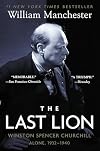
The Last Lion: Alone is remarkable in its depth, accessibility, and scholarship. Manchester spends nearly 700 pages developing not just the individual--Churchill--but also an extensive analysis of the people and events that shaped the man in the interwar period. The process that led to war is presented clearly and in vivid detail. There are few contemporary books that reach this level. No complaints.
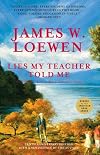
I got this book when it came out in 1995 and stuck it on a shelf. I was in middle school at the time and my teacher recommended, but it was way more than I was up for. Thirteen years and a masters degree later, I finally read it and I was not disappointed. Loewen covers ten specific components of American History to describe how they differ from what a sample of twelve widely-used high school textbooks describe. No textbook comes out as a winner from this evaluation. My high school text, The American Pageant didn't fair well, but I kept hoping it would pull through in the end.
In the end, Loewen seeks to discover the underlying reason why textbooks portray history inaccurately--what motivates authors, teachers, editors, publishers, parents, and society to act this way? An intriguing read that is well worth the effort and has given me some food for thought as I contemplate parenthood in the not-to-distant future.
In the end, Loewen seeks to discover the underlying reason why textbooks portray history inaccurately--what motivates authors, teachers, editors, publishers, parents, and society to act this way? An intriguing read that is well worth the effort and has given me some food for thought as I contemplate parenthood in the not-to-distant future.
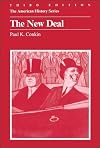
Quality introduction to the New Deal. The focus is on Roosevelt and how he did/didn't manage the creation of the New Deal legislation. By concentrating on Roosevelt's influence and decision-making, the author has more of a traditional history feel to the book than an economic-centric perspective that I'll seek out in my next book on the New Deal. If you are looking for a quick, relatively easy look at the New Deal's policies and how they helped/hurt the recovery from the Depression, this book is a good choice.
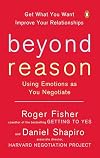
An interesting, but lacking book. The two authors give common sense advice on how to handle negotiations and the emotions that result from negotiations. At face value, this seems useful and any new insight into this realm should be helpful. However, while they are able to describe what emotions arise and how they hurt negotiations, I found their recommendations limited to either traditional responses (e.g. take a break to cool off) or nothing that a little common sense could derive (e.g. put yourself in their shoes to see what emotions you could invoke in them). A good topic to discuss, but I was looking for something deeper than was presented. I'm not sure who would even find this discussion useful--unless s/he never participated in a negotiation before.
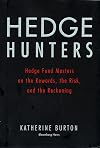
I am not someone that knows a lot about investing. I had not heard of anyone profiled in this book prior to reading it. However, due to Burton's excellent writing, I was able to feel connected to this distant world--if only for the length of her book. If nothing else, this was a fun read about investing. For anyone even remotely considering a career in a hedge fund, there is hope in this book as most of the successful people in the field come from a wide array of backgrounds and experiences. As someone just beginning a career, I find that sort of information useful.
The drawback to the book is the lack of overarching message about what makes hedge fund managers succeed in their careers. Is it the ability of the individual to be contrarian? Is it their interpersonal skills? Are they fortune-tellers? Luck? Burton gets somewhat close to answering this question with each interview, but falls short of providing a comprehensive theme. Thus, the book is clunky and seems disjointed--each chapter could live independent of the others rather than flowing seemlessly.
Still, if you want an easy overview of what hedge fund managers do each day and how they got there, this is a good weekend read.
The drawback to the book is the lack of overarching message about what makes hedge fund managers succeed in their careers. Is it the ability of the individual to be contrarian? Is it their interpersonal skills? Are they fortune-tellers? Luck? Burton gets somewhat close to answering this question with each interview, but falls short of providing a comprehensive theme. Thus, the book is clunky and seems disjointed--each chapter could live independent of the others rather than flowing seemlessly.
Still, if you want an easy overview of what hedge fund managers do each day and how they got there, this is a good weekend read.
This review was written for LibraryThing Early Reviewers.The Civil War: The complete text of the bestselling narrative history of the Civil War--based on the celebrated PBS tele by Geoffrey C. Ward
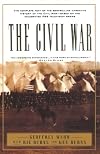
The American Civil War is one of those things we concentrated on (repeatedly) in my K-12 education, but I haven't thought much about it since then. I bought this book when it first came out in paperback and I was a freshman in High School on a camping trip in Gettysburg. It took me twelve years to open it. However, this book, based on the Ken Burns PBS documentary on the Civil War from the 1990s, reminded me of what I had forgotten over the years (or never learned because I wasn't paying attention).
Without going into excessive detail, the authors walk the reader through the Civil War from its political beginnings through the last battles. Although I missed the depth I've come to expect from history books, I felt this was an excellent primer for someone looking to learn more about the American Civil War elsewhere. It help me comprehend and realign the fragments left from my earlier education.
Without going into excessive detail, the authors walk the reader through the Civil War from its political beginnings through the last battles. Although I missed the depth I've come to expect from history books, I felt this was an excellent primer for someone looking to learn more about the American Civil War elsewhere. It help me comprehend and realign the fragments left from my earlier education.

Dress Your Family was a great read. At times, I found it a little lacking when compared with his previous book, Me Talk Pretty, but it seems on par with Holidays on Ice. Overall, it is an interesting collection of essays. Some are hilarious, others are a man reflecting on his family. The beauty of Sedaris is that we all can relate to his family to some extent and he finds humor and meaning in situations that I would ignore. If you are are looking for something light and fun to read, this book will work.
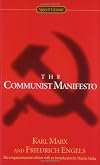
Do not go looking here for a lengthy explanation about why Marx believes what he does. Rather, read the Manifesto to learn how he sold his ideas. For what it was designed to do, this book is excellent. For actually understanding Marx, the Manifesto is lacking. A closer look at some of his other works is required.

This book has many important themes that I find pertinent in my grown life and that I missed in earlier readings of the book. The text praises individuality as a source of pleasure and joy. It describes the importance of feeling and experience all the ups and downs that life has to offer. It is a great testament to humanity and all its potential. It is one of those books, like The Prophet, that left me feeling changed for the better--I feel like I have a deeper and greater appreciation for the gift that is life once again.

Where Do We Go from Here: Chaos or Community was a worthwhile read. There are large sections that only provide historical information about the status of the Civil Rights Movement in 1967. This extended case study provides some valuable insights into disappointment, powerful campaigns for change, and economic stratification in modern America.
Up until the last chapter, it appeared Dr. King maintained race as the central issue defining his movement. However, he closed with a chapter on the importance of realizing economic disparity in order to fix the ills of the world. A book concentrating solely on how he planned on shifting the movement from one of race to one of economic improvements for all lower income people of America would have proved much more pertinent into the future and relieved some of the racial tensions that exist to this day. Perhaps if he had lived longer to make changes within the movement, or start a new raceless movement toward economic reforms, the problems that exist today could have been avoided. At least I now have something to fall back on when some makes a racial comment toward me; or when I see someone spit at the bus driver after refusing to ride the bus because she is white. I know that even one of the leaders of the Civil Rights Movement tested the waters of a raceless foray into economic change--hopefully someone will continue his work soon.
Up until the last chapter, it appeared Dr. King maintained race as the central issue defining his movement. However, he closed with a chapter on the importance of realizing economic disparity in order to fix the ills of the world. A book concentrating solely on how he planned on shifting the movement from one of race to one of economic improvements for all lower income people of America would have proved much more pertinent into the future and relieved some of the racial tensions that exist to this day. Perhaps if he had lived longer to make changes within the movement, or start a new raceless movement toward economic reforms, the problems that exist today could have been avoided. At least I now have something to fall back on when some makes a racial comment toward me; or when I see someone spit at the bus driver after refusing to ride the bus because she is white. I know that even one of the leaders of the Civil Rights Movement tested the waters of a raceless foray into economic change--hopefully someone will continue his work soon.
Strategies of Containment: A Critical Appraisal of American National Security Policy during the Cold War by John Lewis Gaddis
This exceedingly dense book recounts the Cold War policies of the United States from Truman through Reagan. This is one of the better history book I have read as it refuses to repeat the same themes at every opportunity. Rather, Gaddis slowly recounts the major players in American and Soviet foreign policy during the Cold War allowing the reader to glean insights into the policy making process and the personalities that render major decisions.
Unlike other writers about the cold war, Gaddis goes through great lengths to remain balanced in his appraisal of policies. Rather than simply stating whether an idea was good or bad, he states the outcomes without qualification--something I value highly in historical works. In the end, this is an extremely valuable book for anyone interested in what happen during the Cold War--as far as we know with many documents classified to this day--or desiring insights into the fundamentals of high-level foreign policy making.
Unlike other writers about the cold war, Gaddis goes through great lengths to remain balanced in his appraisal of policies. Rather than simply stating whether an idea was good or bad, he states the outcomes without qualification--something I value highly in historical works. In the end, this is an extremely valuable book for anyone interested in what happen during the Cold War--as far as we know with many documents classified to this day--or desiring insights into the fundamentals of high-level foreign policy making.

Great early Cold War book.
Of note for us today is the concept they construct of many little pieces being the foundation of a winning foreign policy. They claim that in the mid-1950s, the Soviets were much better at this in SE Asia than the US. That is why they were able to win the Vietnamese and others to communism without (arguably) military force whereas the Americas and French were failing while using force. The authors claim that in the effort to secure the big picture--capitalism over communism--diplomats were missing the little things that could secure their victory--like simple capitalist advances (i.e. industry) in the countries they hoped to win.
Does this offer some insight into the War on Terror as well? Is the key here to understand those we wish to affect with a positive image of America by more fully understanding them and what they need to be successful and then using foreign policy to help them accomplish their needs? Seems like this could also extend as far as the immigration debate currently swirling around Washington. It seems Secretary of State Rice was beginning a move toward this kind of Foreign Service recently, but I have yet to hear how it will pan out in the long run.
Of note for us today is the concept they construct of many little pieces being the foundation of a winning foreign policy. They claim that in the mid-1950s, the Soviets were much better at this in SE Asia than the US. That is why they were able to win the Vietnamese and others to communism without (arguably) military force whereas the Americas and French were failing while using force. The authors claim that in the effort to secure the big picture--capitalism over communism--diplomats were missing the little things that could secure their victory--like simple capitalist advances (i.e. industry) in the countries they hoped to win.
Does this offer some insight into the War on Terror as well? Is the key here to understand those we wish to affect with a positive image of America by more fully understanding them and what they need to be successful and then using foreign policy to help them accomplish their needs? Seems like this could also extend as far as the immigration debate currently swirling around Washington. It seems Secretary of State Rice was beginning a move toward this kind of Foreign Service recently, but I have yet to hear how it will pan out in the long run.
The Peace of Illusions: American Grand Strategy from 1940 to the Present (Cornell Studies in Security Affairs) by Christopher Layne
Even though I may be biased having taken Christopher Layne's class on International Law in graduate school (where I learned there was no such thing as international law), I must admit that the book was both fascinating and insightful. Anyone that really wishes to understand how the Wilsonian ideology of liberalism has affected all aspects of American Foreign policy since WWI should read this book. Not only does Layne offer a straight-forward, often blunt analysis of American policy--often stating things as they are rather than how policymaker's rhetoric claim things are--he offers a vision of improvements needed in U.S. foreign policy.
He argues that rather than seeking to maintain our role as global ("extra-regional") hegemon, the U.S. needs to focus on becoming an offshore balancer. Rather than fighting unnecessary wars on the periphery, policymakers should work on foster a multipolar emergence on the Eurasian continent freeing the U.S. from needing to safeguard states from potential wars fought in those areas. Until convinced otherwise, I am a huge fan of this plan. What purpose can U.S. hegemony serve in Eurasia? Is the threat to U.S. economic interests real given a great power rivalry elsewhere? When has the U.S. suffered because Europe was multipolar in the past?
By deinvesting American forces from both sides of the Eurasian landmass, the U.S. can more effectively serve as both a balancer to any potential new hegemon in those areas and avoid costs associated with any show more internal rivalries in regions outside U.S. interests. Why do American policymakers insist that troops need to be maintained to protect Taiwan when it poses limited benefit to U.S. interests? Aren't we just asking for trouble (something the U.S. is notorious for doing--see the two World Wars)?
To avoid unnecessary overstretch, avoid hegemony and become an off-shore balancer. Hopefully this book and classical realism begins to catch on in policymaking circles in the wake of the Iraq War to ensure less ideology and more morally rooted realism permeates decisions. Can you tell this book helped make me an unabashed interantional realist? show less
He argues that rather than seeking to maintain our role as global ("extra-regional") hegemon, the U.S. needs to focus on becoming an offshore balancer. Rather than fighting unnecessary wars on the periphery, policymakers should work on foster a multipolar emergence on the Eurasian continent freeing the U.S. from needing to safeguard states from potential wars fought in those areas. Until convinced otherwise, I am a huge fan of this plan. What purpose can U.S. hegemony serve in Eurasia? Is the threat to U.S. economic interests real given a great power rivalry elsewhere? When has the U.S. suffered because Europe was multipolar in the past?
By deinvesting American forces from both sides of the Eurasian landmass, the U.S. can more effectively serve as both a balancer to any potential new hegemon in those areas and avoid costs associated with any show more internal rivalries in regions outside U.S. interests. Why do American policymakers insist that troops need to be maintained to protect Taiwan when it poses limited benefit to U.S. interests? Aren't we just asking for trouble (something the U.S. is notorious for doing--see the two World Wars)?
To avoid unnecessary overstretch, avoid hegemony and become an off-shore balancer. Hopefully this book and classical realism begins to catch on in policymaking circles in the wake of the Iraq War to ensure less ideology and more morally rooted realism permeates decisions. Can you tell this book helped make me an unabashed interantional realist? show less
Even with my reservations about Woodward the journalist, I found his Bush at War offered a valuable insight into how the NSC and the Bush Administration operated between September 11th and late 2002. Surprisingly, I found myself agreeing with some of the comments from principles whose policies toward Iraq I find deplorable, yet they got the immediate response correct. The means employed in Afghanistan seemed correct and proper given the reality of the country at the time (regardless of how things are continuing to deteriorate as attention continues to concentrate elsewhere).
Nonetheless, much of the time I found myself wondering why Gary's advice--CIA operative on the ground--did not travel up the chain of command? It seemed like, as many NSC committees apparently do, this NSC group spent a lot of time arguing the same points continuously rather than seeking new information from the ground proactively in an effort to move the process forward. The more I read about the working of the NSC, the more I understand where the bureaucratic political theorists come from. This is just a group of people working with varied tools and beliefs to solve complex problems--something duplicated in numerous organizations everywhere. Understanding this process and how to game it correctly seems to contain a piece of the puzzle to understanding foreign policy formation in the U.S.
Nonetheless, much of the time I found myself wondering why Gary's advice--CIA operative on the ground--did not travel up the chain of command? It seemed like, as many NSC committees apparently do, this NSC group spent a lot of time arguing the same points continuously rather than seeking new information from the ground proactively in an effort to move the process forward. The more I read about the working of the NSC, the more I understand where the bureaucratic political theorists come from. This is just a group of people working with varied tools and beliefs to solve complex problems--something duplicated in numerous organizations everywhere. Understanding this process and how to game it correctly seems to contain a piece of the puzzle to understanding foreign policy formation in the U.S.
Running The World: the Inside Story of the National Security Council and the Architects of American Power by David Rothkopf
I was disappointed with the overall effect of the book. The first half makes an excellent argument about the importance of the structure of the NSC and its ability to craft the U.S.'s involvement in international affairs--the better the working of the NSC, the more the U.S. is able to control events for its perceived good. Unfortunately, this controlled analysis decayed by the end of the book. Most notably, by the last chapter, Rothkopf was more occupied identifying the errors made in the run up to Iraq rather than summarizing overall lessons learned from the evolutionary process the NSC has undergone since 1947. Perhaps this is more a critique of his writing style than the actual content. It was a "mission drift" of sorts within a book.
Nonetheless, if you want to understand the key methods involved in forming U.S. foreign policy since the advent of the NSC process, this book helps a lot. Probably not as much as something like Strategies of Containment by John Lewis Gaddis, or one of LaFeber's books on Diplomatic History. Still useful for delving even deeper into some of the personal relationships behind the policy making itself.
Nonetheless, if you want to understand the key methods involved in forming U.S. foreign policy since the advent of the NSC process, this book helps a lot. Probably not as much as something like Strategies of Containment by John Lewis Gaddis, or one of LaFeber's books on Diplomatic History. Still useful for delving even deeper into some of the personal relationships behind the policy making itself.
For anyone that wants a revisionist look at Johnson based on the recently released tapes of Johnson's phone recordings, this is a worthy read. Lerner's perspective of U.S. foreign policy during this era is something that I agree with--as do most of the authors of this book. It sees him as accomplishing a lot within the context of the Cold War and that the pretext was set up by Eisenhower and Kennedy long before Johnson committed the numbers of troops that he did (albeit that Eisenhower counselled him to contribute much more than he did).
The domestic analysis of Johnson's programs was, as expected, rather favorable. He made some serious progress on the domestic front that is overshadowed by the situation in Vietnam. In the end, he is one of the most misunderstood of our recent presidents and I look forward to learning more as research continues in his archives. Hopefully, he will get a much fairer treatment over the coming generations.
The domestic analysis of Johnson's programs was, as expected, rather favorable. He made some serious progress on the domestic front that is overshadowed by the situation in Vietnam. In the end, he is one of the most misunderstood of our recent presidents and I look forward to learning more as research continues in his archives. Hopefully, he will get a much fairer treatment over the coming generations.
At times philosophical and at others practical, Yunus does a good job outlining his trial-and-error method for creating the Grameen Bank microfinance system. However, the picture he paints is not complete. The actually effectiveness of microfinance is more mixed than Yunus portrays in this book. Still, it is a good starting point to understand how it works and how the idea came into existence.
Below are some additional thoughts on Yunus and his approach to poverty reduction:
Capitalism can be used to overcome the faults of capitalism. This is the most fundamentally inspiring aspect of Yunus' work. He recognized the serious problems associated with poverty perpetuated by the economic system in Bangladesh and globally. Rather than seek some sort of communist revolution (a.k.a. Bolshevik problem solving), he decided to use the system to fix the problem. Rather than become jaded at the poor distribution mechanisms of capitalism, he found creative ways to overcome the institutionalized problems by lending to those without physical collateral. This is the true genius of Yunus: he used a broken system to fix the system. In doing so, countless lives have improved greatly.
Microcredit's potential lies in its flexibility. By showing how similar concepts have worked in both rural Bangladesh and inner-city Chicago, Yunus demonstrates the adaptable and flexible nature of microcredit lending to lift the poorest of the poor out of poverty. However, there are still regions and areas that show more need creative people to expand microcredit to their poor. This is the exciting area of microfinance (one in which I hope to spend some of my career ;) ).
Developed countries institutionalized the status of the poor more than developing nations. Thanks to the well-intentioned programs of social welfare in developed nations (especially Europe, in this case), people are unable to work to bring themselves out of poverty. Yunus describes how he was unable to extend loans to some people because then they would lose their government benefits before they were able to survive on their earned income. This is disappointing. By trying to fix the problem, developed nations have perpetuated the problem. Finding a way to fix this is needed. However, I don't claim to have anything close to the answer (although I will be mulling this over in my head for some time).
We all can make a difference. Extreme poverty is fixable. We each can work to make a difference by finding sustainable solutions to the problems that keep the poor poor. Yunus has only one example--more need to be found. Learn more.
Although I know this post sounds like I've drunk the microcredit Kool-Aid, it is incredibly exciting to hear about a development economics program that actually works. Too often, there are only temporary solutions to a long-term problem. It is easy to fix things in the short-term, but it requires more creative work to fix things permanently. Yunus may have the beginning of an answer to one of humankind's greatest problems. Finally, there are still some questions left unanswered: what are the long-term effects of not having a poorest of the poor in an economy; do prices rise at the same rate that the poor increase their income negating any potential standard of living increase; and what is the limit to whom microcredit can apply--when is enough enough? show less
Below are some additional thoughts on Yunus and his approach to poverty reduction:
Capitalism can be used to overcome the faults of capitalism. This is the most fundamentally inspiring aspect of Yunus' work. He recognized the serious problems associated with poverty perpetuated by the economic system in Bangladesh and globally. Rather than seek some sort of communist revolution (a.k.a. Bolshevik problem solving), he decided to use the system to fix the problem. Rather than become jaded at the poor distribution mechanisms of capitalism, he found creative ways to overcome the institutionalized problems by lending to those without physical collateral. This is the true genius of Yunus: he used a broken system to fix the system. In doing so, countless lives have improved greatly.
Microcredit's potential lies in its flexibility. By showing how similar concepts have worked in both rural Bangladesh and inner-city Chicago, Yunus demonstrates the adaptable and flexible nature of microcredit lending to lift the poorest of the poor out of poverty. However, there are still regions and areas that show more need creative people to expand microcredit to their poor. This is the exciting area of microfinance (one in which I hope to spend some of my career ;) ).
Developed countries institutionalized the status of the poor more than developing nations. Thanks to the well-intentioned programs of social welfare in developed nations (especially Europe, in this case), people are unable to work to bring themselves out of poverty. Yunus describes how he was unable to extend loans to some people because then they would lose their government benefits before they were able to survive on their earned income. This is disappointing. By trying to fix the problem, developed nations have perpetuated the problem. Finding a way to fix this is needed. However, I don't claim to have anything close to the answer (although I will be mulling this over in my head for some time).
We all can make a difference. Extreme poverty is fixable. We each can work to make a difference by finding sustainable solutions to the problems that keep the poor poor. Yunus has only one example--more need to be found. Learn more.
Although I know this post sounds like I've drunk the microcredit Kool-Aid, it is incredibly exciting to hear about a development economics program that actually works. Too often, there are only temporary solutions to a long-term problem. It is easy to fix things in the short-term, but it requires more creative work to fix things permanently. Yunus may have the beginning of an answer to one of humankind's greatest problems. Finally, there are still some questions left unanswered: what are the long-term effects of not having a poorest of the poor in an economy; do prices rise at the same rate that the poor increase their income negating any potential standard of living increase; and what is the limit to whom microcredit can apply--when is enough enough? show less