
Nicholas Awde
Author of The Arabic Alphabet: How to Read & Write It
About the Author
Nicholas Awde is a linguist who was raised in Kenya and now resides in London
Works by Nicholas Awde
Dari: Dari-English English-Dari Dictionary & Phrasebook (Hippocrene Dictionary & Phrasebooks) (2003) 45 copies
Pashto-English/English-Pashto Dictionary & Phrasebook (Hippocrene Dictionary & Phrasebooks) (2003) 44 copies
Swahili-English/English-Swahili Dictionary & Phrasebook (Hippocrene Dictionary & Phrasebooks) (2002) 29 copies
Georgian-English/English-Georgian Dictionary and Phrasebook (Hippocrene Dictionary and Phrasebook Series) (1997) 28 copies
Farsi-English/English-Farsi (Persian) Dictionary & Phrasebook (Hippocrene Dictionary & Phrasebooks) (2006) 27 copies
Modern Aramaic-English/English-Modern Aramaic Dictionary & Phrasebook: Assyrian/Syriac (2007) 21 copies
Igbo-English English-Igbo Dictionary and Phrasebook (Hippocrene Dictionary & Phrasebook) (1999) 18 copies
Serbian-English/English-Serbian Dictionary & Phrasebook: Romanized (Hippocrene Dictionary & Phrasebooks) (2004) 16 copies
Uzbek-English/English-Uzbek Dictionary and Phrasebook: Romanized (Hippocrene Dictionary & Phrasebooks) (2002) 16 copies
Western Armenian Dictionary & Phrasebook: Armenian-English/English-Armenian (Hippocrene Dictionary and Phrasebook) (2006) 9 copies
Turkmen-English/English-Turkmen Dictionary & Phrasebook (Hippocrene Dictionary & Phrasebooks) (English and Turkmen Edition) (2005) 3 copies
Tagged
Common Knowledge
- Canonical name
- Awde, Nicholas
- Legal name
- Hill, Nicholas Awde
- Other names
- Awde, Nick
Awde, N. - Birthdate
- 1961-12-29
- Gender
- male
- Nationality
- UK (Birth)
- Associated Place (for map)
- UK
Members
Reviews
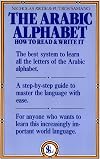
The Arabic Alphabet: How to Read It & Write It by Nicholas Awde and Putros Samano is a very accessible introduction to Arabic writing. Of the books I've read on Arabic writing, this one has been the most useful in terms of helping me decipher Arabic inscriptions and the logic of the writing system in terms of pronunciation, word construction, etc.
This slim volume (95 pages including a map) opens with "A Word to the Reader," which indicates its target audience and goals, starting with the show more assertion that Arabic classes that immerse the student in grammar and writing system simultaneously are problematic, and that a better approach is to make knowledge of the alphabet a prerequisite for an Arabic language class. The book is intended to provide a basic grasp of Arabic writing so that travelers have minimal survival skills in terms of reading signs, menus, etc. and language students can concentrate on grammar and vocabulary in class. It provides sufficient background on the language to better understand the writing system, and covers the individual letters and sounds, which other books I've read also address. But it also moves into such issues as ligatures, numbers, punctuation, case endings, definite and indefinite articles, and aspects of pronunciation--accent, stress, and so on that I have not seen addressed in other books.
The introduction discusses the different forms of Arabic, how Semitic languages differ from Romance and Germanic languages, and how the writing system fits the spoken language, plus tips for the English speaker to remember. Chapter 2 introduces the individual letters and their pronunciation. It has the best descriptions I've encountered so far of the additional sounds that are beyond the scope of the English language. The Arabic alphabet has 29 letters: 26 consonants and three vowels, two of which can also function as consonants--one fairly equivalent to the English "y" and the other similar to the English "w". In effect, there are two forms of "h," "s," "d," and "t," and as someone who is relying solely on books right now, the distinctions between these range from challenging to impossible. Chapter 2 closes with general writing tips.
Chapter 3 focuses on writing the individual letters. Little arrows show how to create each letter, which is displayed in each form: in isolation, initial, medial, and final positions. It is also written with each of the vowel diacriticals, and reminders on pronunciation, letter shape, and other details are provided. Finally, each letter section ends with representative vocabulary, building upon earlier letters and vowels. This section also goes into detail on the use and pronunciation of definite articles and how this is shaped by whether the first letter of the relevant word is a "sun letter" or "moon letter." This was tremendously helpful and the first time I had encountered this explanation. Moreover, time was spent exploring the intricacies of alif as a carrier, the complications created by hamza, and how such situations influence how words are written. Once again, tremendously helpful, because my attempts to puzzle out written Arabic have been hampered by coming across terms that do not appear in basic alphabet descriptions.
Chapter 4 spent more time with hamza, then spent time with one of the most commonly recited verses from the Qur'an as an example to work with, in terms of testing basic understanding of written Arabic--the verse in Arabic is followed by a transliteration and then a translation. This exercise is followed by "A Note on Handwriting" that demonstrates the most common differences between hand-written and typeset letters (for example, siin and shiin). The book closes with the basic reference table of the alphabet and a map of the main Arabic-speaking regions. show less
This slim volume (95 pages including a map) opens with "A Word to the Reader," which indicates its target audience and goals, starting with the show more assertion that Arabic classes that immerse the student in grammar and writing system simultaneously are problematic, and that a better approach is to make knowledge of the alphabet a prerequisite for an Arabic language class. The book is intended to provide a basic grasp of Arabic writing so that travelers have minimal survival skills in terms of reading signs, menus, etc. and language students can concentrate on grammar and vocabulary in class. It provides sufficient background on the language to better understand the writing system, and covers the individual letters and sounds, which other books I've read also address. But it also moves into such issues as ligatures, numbers, punctuation, case endings, definite and indefinite articles, and aspects of pronunciation--accent, stress, and so on that I have not seen addressed in other books.
The introduction discusses the different forms of Arabic, how Semitic languages differ from Romance and Germanic languages, and how the writing system fits the spoken language, plus tips for the English speaker to remember. Chapter 2 introduces the individual letters and their pronunciation. It has the best descriptions I've encountered so far of the additional sounds that are beyond the scope of the English language. The Arabic alphabet has 29 letters: 26 consonants and three vowels, two of which can also function as consonants--one fairly equivalent to the English "y" and the other similar to the English "w". In effect, there are two forms of "h," "s," "d," and "t," and as someone who is relying solely on books right now, the distinctions between these range from challenging to impossible. Chapter 2 closes with general writing tips.
Chapter 3 focuses on writing the individual letters. Little arrows show how to create each letter, which is displayed in each form: in isolation, initial, medial, and final positions. It is also written with each of the vowel diacriticals, and reminders on pronunciation, letter shape, and other details are provided. Finally, each letter section ends with representative vocabulary, building upon earlier letters and vowels. This section also goes into detail on the use and pronunciation of definite articles and how this is shaped by whether the first letter of the relevant word is a "sun letter" or "moon letter." This was tremendously helpful and the first time I had encountered this explanation. Moreover, time was spent exploring the intricacies of alif as a carrier, the complications created by hamza, and how such situations influence how words are written. Once again, tremendously helpful, because my attempts to puzzle out written Arabic have been hampered by coming across terms that do not appear in basic alphabet descriptions.
Chapter 4 spent more time with hamza, then spent time with one of the most commonly recited verses from the Qur'an as an example to work with, in terms of testing basic understanding of written Arabic--the verse in Arabic is followed by a transliteration and then a translation. This exercise is followed by "A Note on Handwriting" that demonstrates the most common differences between hand-written and typeset letters (for example, siin and shiin). The book closes with the basic reference table of the alphabet and a map of the main Arabic-speaking regions. show less
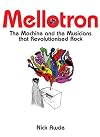
At the core of this book is a number of extended interviews with musicians who have some connection with Mellotrons, but it isn't really a book about the Mellotron except as a central motif in the evolving world of rock. Specifically, it explores the British Prog movement through the eyes of some of its key players.
To bookend the interviews Awde treats us to some philosophising journalese during which he writes "I wanted to know where the musicians and songwriters in this book had come from, show more how they grew up, how they got their first breaks", but my retort to that is "I wanted to read about the Mellotron"!
Excellent contributions come from Pinder, Banks, Webb and McCluskey in particular, whose many stories and anecdotes are interesting and illuminating. Sadly though, large chunks of most interviews are more concerned with musicians' pasts and views on music in general, which are OK in their place but I expected a book more focussed on the Mellotron.
Some interviewees are bizarre - neither Greg Lake nor Bill Bruford are exactly noted for being leading exponents of the 'Tron, yet they are given a far larger slice of the pie than Andy Thompson, who must have a huge wealth of interesting things to say yet is tacked on at the end almost as an afterthought.
It's worth reading, and you will learn something, but for me there is simply too much 'filler'! show less
To bookend the interviews Awde treats us to some philosophising journalese during which he writes "I wanted to know where the musicians and songwriters in this book had come from, show more how they grew up, how they got their first breaks", but my retort to that is "I wanted to read about the Mellotron"!
Excellent contributions come from Pinder, Banks, Webb and McCluskey in particular, whose many stories and anecdotes are interesting and illuminating. Sadly though, large chunks of most interviews are more concerned with musicians' pasts and views on music in general, which are OK in their place but I expected a book more focussed on the Mellotron.
Some interviewees are bizarre - neither Greg Lake nor Bill Bruford are exactly noted for being leading exponents of the 'Tron, yet they are given a far larger slice of the pie than Andy Thompson, who must have a huge wealth of interesting things to say yet is tacked on at the end almost as an afterthought.
It's worth reading, and you will learn something, but for me there is simply too much 'filler'! show less
Arabic Practical Dictionary: Arabic-English English-Arabic (Hippocrene Practical Dictionaries) by Nicholas Awde
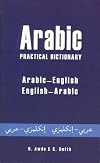
This is the best portable and up-to-date Arabic-English/English-Arabic dictionary I have been able to find in recent years. Yes, there are better dictionaries, but they are quite large (al Mawrid) and not practical to carry around in a backpack. The Hans Wehr is excellent but only goes from Arabic to English. I give this 4 stars for portability, modernity, and versatility.
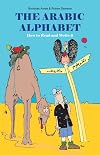
This is a lovely little book which clarified so much about the Arabic language for me. Highly recommended.
You May Also Like


Associated Authors
Statistics
- Works
- 36
- Members
- 1,191
- Popularity
- #21,588
- Rating
- 3.4
- Reviews
- 9
- ISBNs
- 49
- Languages
- 2