

Frank Hampson (1918–1985)
Author of Dan Dare: Man from Nowhere
About the Author
Series
Works by Frank Hampson
Dan Dare - Raumschiffpilot: Band 2 (enthält die Abenteuer: "Das Geheimnis des Roten Mondes" und "Gestrandet auf Merkur") (2010) 2 copies
In die dagen in Judea... 1 copy
De woeste planeet 1 copy
Dan Dare: The Voyage to Venus — Creator — 1 copy
Associated Works
Tagged
Common Knowledge
- Birthdate
- 1918-12-21
- Date of death
- 1985-07-08
- Gender
- male
- Education
- King George V School, Southport
Victoria College of Arts and Science, Southport
Southport School of Arts and Crafts
Open University - Occupations
- soldier
printer
illustrator
writer - Organizations
- Royal Army Service Corps
- Awards and honors
- Yellow Kid Life Achievement Award (1975)
Ally Sloper Award (1976) - Nationality
- UK
- Birthplace
- Audenshaw, Lancashire, England, UK
- Places of residence
- Epsom, Surrey, England, UK
Southport, Lancashire, England, UK - Place of death
- Surrey, England, UK
- Map Location
- England, UK
Members
Reviews

'Eagle' was launched in 1950 as a wholesome, uplifting comic for British boys, as a counter to the American comics, especially "horror comics", then being imported. The headline strip was 'Dan Dare', a clean-cut British hero straight out of the popular imagination of what a World War 2 RAF flying officer would look, sound and behave like. This is a facsimile reprint of the first Dan Dare adventure, 'Voyage to Venus', all about the collapse of food supply on Earth and an expedition to Venus show more to ascertain if conditions there were suitable to allow food for Earth to be grown there. This ran for 77 weeks over the first eighteen months of the comic's life.
Of course, we knew nothing of the true nature of Venus then, so this was an opportunity for the artist, Frank Hampson, to allow his imagination to run riot. And run riot it did, populating the planet with not only diverse and strange (but not too strange) flora and fauna, but also with three intelligent races; the Treen, the Therons and the Atlantines. Human pluck and ingenuity wins the day over the ultra-rational Treen, and the human example inspires the downtrodden Atlantines (descended from human stock taken from Earth in prehistory) and the ever-so-slightly decadent Therons to aspire to greatness.
Hampson's style quickly evolved; early strips were fairly conventional, though the very first one shows the launch of a space rocket from the perspective of looking down back to the launch pad, an image that became much more familiar from the impressive film taken from the top of the Apollo launch towers nearly twenty years later. He soon began to find ways of breaking out of the restrictions of frame and page layout. Hampson was also quick to begin engaging in world-building; interludes from the world (usually England) of the strip were inserted and some side stories involving other characters in the strip were pointed at.
This first adventure was also written by Hampson. Whilst the art soon began to show signs of innovation, the same cannot be said of the writing. Dialogue in this first adventure is firmly located in the 1940s/50s; some of it will be almost incomprehensible to more modern readers. And the attitudes on display, whilst fairly enlightened for 1950, are certainly not in accord with modern sensibilities. Yes, there is a female lead character, Professor Peabody; she only dissolves into tears once, and under circumstances where a modern male might experience the odd emotional outburst, but in 1950, men weren't supposed to do such things. She is, however, the only woman in the Spacefleet scenes, and is usually the equal of the men (whether some of them like it or not).. Later, Digby's aunt plays an important role in unmasking the Treen plot to invade the Earth by her correct interpretation of hidden messages in Digby's forced propaganda message from Venus; whilst the formidable elderly aunt is something of a stock character in middle-class British fiction, the presence of a second female character with an important plot role is noteworthy. (It's also illuminating that the false message concerns a holiday trip where the young Digby is falsely arrested as a suspect to murder through mistaken identity; again, not quite the blanket acceptance of authority figures always being in the right that might have been expected.)
Matters of race also crop up - as long as the people with different skins are green or blue. There are no Earth minorities in Spacefleet. But at least Dan's attitude to the races of Venus is accepting, if a bit condescending in our view. Other non-British characters tend to be slightly comic stereotypes.
The one area where our modern viewpoint is definitely challenged is that of class. The Spacefleet characters are all from the RAF officer class. Dan's batman, Digby, is the only character from the "other ranks", and he is referred to as such. He is depicted as thoroughly working class, Northern and whilst displaying adequate quantities of British spirit, is not depicted in the mould of the public school sporting ethos of the other characters. This is perhaps the most glaring example of the change in our sensibilities.
As a character, Dan Dare has survived, in one form or another and in different publications and incarnations up to the present day. Any such character will go through evolution and development in a 65-year history. For all the quirks and pitfalls of such a character's first appearance, in a different milieu to our own, examination of the roots of such a character is always worthwhile, if only for what it tells us about ourselves as well as about the back story of the character. show less
Of course, we knew nothing of the true nature of Venus then, so this was an opportunity for the artist, Frank Hampson, to allow his imagination to run riot. And run riot it did, populating the planet with not only diverse and strange (but not too strange) flora and fauna, but also with three intelligent races; the Treen, the Therons and the Atlantines. Human pluck and ingenuity wins the day over the ultra-rational Treen, and the human example inspires the downtrodden Atlantines (descended from human stock taken from Earth in prehistory) and the ever-so-slightly decadent Therons to aspire to greatness.
Hampson's style quickly evolved; early strips were fairly conventional, though the very first one shows the launch of a space rocket from the perspective of looking down back to the launch pad, an image that became much more familiar from the impressive film taken from the top of the Apollo launch towers nearly twenty years later. He soon began to find ways of breaking out of the restrictions of frame and page layout. Hampson was also quick to begin engaging in world-building; interludes from the world (usually England) of the strip were inserted and some side stories involving other characters in the strip were pointed at.
This first adventure was also written by Hampson. Whilst the art soon began to show signs of innovation, the same cannot be said of the writing. Dialogue in this first adventure is firmly located in the 1940s/50s; some of it will be almost incomprehensible to more modern readers. And the attitudes on display, whilst fairly enlightened for 1950, are certainly not in accord with modern sensibilities. Yes, there is a female lead character, Professor Peabody; she only dissolves into tears once, and under circumstances where a modern male might experience the odd emotional outburst, but in 1950, men weren't supposed to do such things. She is, however, the only woman in the Spacefleet scenes, and is usually the equal of the men (whether some of them like it or not).. Later, Digby's aunt plays an important role in unmasking the Treen plot to invade the Earth by her correct interpretation of hidden messages in Digby's forced propaganda message from Venus; whilst the formidable elderly aunt is something of a stock character in middle-class British fiction, the presence of a second female character with an important plot role is noteworthy. (It's also illuminating that the false message concerns a holiday trip where the young Digby is falsely arrested as a suspect to murder through mistaken identity; again, not quite the blanket acceptance of authority figures always being in the right that might have been expected.)
Matters of race also crop up - as long as the people with different skins are green or blue. There are no Earth minorities in Spacefleet. But at least Dan's attitude to the races of Venus is accepting, if a bit condescending in our view. Other non-British characters tend to be slightly comic stereotypes.
The one area where our modern viewpoint is definitely challenged is that of class. The Spacefleet characters are all from the RAF officer class. Dan's batman, Digby, is the only character from the "other ranks", and he is referred to as such. He is depicted as thoroughly working class, Northern and whilst displaying adequate quantities of British spirit, is not depicted in the mould of the public school sporting ethos of the other characters. This is perhaps the most glaring example of the change in our sensibilities.
As a character, Dan Dare has survived, in one form or another and in different publications and incarnations up to the present day. Any such character will go through evolution and development in a 65-year history. For all the quirks and pitfalls of such a character's first appearance, in a different milieu to our own, examination of the roots of such a character is always worthwhile, if only for what it tells us about ourselves as well as about the back story of the character. show less
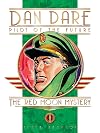
Thought I had better read at least one Dan Dare Pilot of the Future. This one seemed to have events following on from a previous story, where alien contact has already been made, with some friends and some enemies. The language used is certainly part of the feel of these comic scripts, dated and very English:
"The radio's gone for a Burton too, but my instruments went on working..." (said Professor Peabody), "Sizzling satellites!", "Can we use the freight nacelles of the space trains?", show more "Gosh, sir - it's like Clapham Junction.", "Well blow me down with a jerky jet.", "I wish I had some witchhazel. I bet I'm bruised ..", "It's a junk heap - a graveyard - a Sargasso sea of space"
The settings and instruments used in the story also give an insight into the astronomy of the 1950s, for example, the Aldis signal lamp, the Clarke scale of gravity, and the Royal Observatory at Herstmonceux in Sussex. This volume contains an introduction by Chris Claremont, how his grandmother posted him copies of the Eagle that so inspired him as a child; a short biography on Frank Hampson, focusing on his departure from the strip, and Frank Bellamy's take-over; and part 2 of an interview with Frank Hampson, with particularly interesting stills of photos and models the character illustrations were based on.
Overall a comic strip not to be missed.
"They're going to be right narked". show less
"The radio's gone for a Burton too, but my instruments went on working..." (said Professor Peabody), "Sizzling satellites!", "Can we use the freight nacelles of the space trains?", show more "Gosh, sir - it's like Clapham Junction.", "Well blow me down with a jerky jet.", "I wish I had some witchhazel. I bet I'm bruised ..", "It's a junk heap - a graveyard - a Sargasso sea of space"
The settings and instruments used in the story also give an insight into the astronomy of the 1950s, for example, the Aldis signal lamp, the Clarke scale of gravity, and the Royal Observatory at Herstmonceux in Sussex. This volume contains an introduction by Chris Claremont, how his grandmother posted him copies of the Eagle that so inspired him as a child; a short biography on Frank Hampson, focusing on his departure from the strip, and Frank Bellamy's take-over; and part 2 of an interview with Frank Hampson, with particularly interesting stills of photos and models the character illustrations were based on.
Overall a comic strip not to be missed.
"They're going to be right narked". show less
Huzzah for Dan Dare!
Dan, Digby and all their friends risk life, limb and a stiff upper lip to save the Earth from a giant red asteroid that is intent on stripping the planet bare.
With all the lovely little touches of proper Dan Dare like Didby's mum saying it is all her sons fault and mad Englishmen abounding across the solar system. Its how space should be.
Dan, Digby and all their friends risk life, limb and a stiff upper lip to save the Earth from a giant red asteroid that is intent on stripping the planet bare.
With all the lovely little touches of proper Dan Dare like Didby's mum saying it is all her sons fault and mad Englishmen abounding across the solar system. Its how space should be.
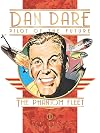
This is the weakest of the series that I have read so far, begins well but the end is disappointing, it felt very rushed and as if the ideas had run out.
Lists
You May Also Like


Associated Authors
Statistics
- Works
- 29
- Also by
- 4
- Members
- 588
- Popularity
- #42,663
- Rating
- 3.8
- Reviews
- 5
- ISBNs
- 41
- Languages
- 4
- Favorited
- 1