
Alex Raymond (1909–1956)
Author of Flash Gordon Bd. 5. Zwischen kriegerischen Welten
About the Author
Image credit: http://en.wikipedia.org/wiki/Alex_Raymond
Series
Works by Alex Raymond
Flash Gordon 1936-37 5 copies
Blixt Gordon i strid med örnmännen 4 copies
Blixt Gordon i kejsar Mings klor 3 copies
Blixt Gordon och pansarvargarna 3 copies
Blixt Gordon i kamp på liv och död 3 copies
Flash Gordon in the ice world of Mongo: Based on the famous newspaper strip (The Better little book) (1942) 3 copies
Flash Gordon Deel 2 3 copies
Rendez-vous avec le destin 2 copies
Rip Kirby. L'or du capitaine Stone. Tome 9 — Author — 2 copies
Blixt Gordon på havets botten 2 copies
Jens Lyn-serien 2 copies
Gordon n. 13: La spada rossa 2 copies
Flash Gordon 3 2 copies
Flash Gordon 4 2 copies
Le réveil du cormoran 2 copies
Les deux mères 2 copies
La rançon de velours 2 copies
Blixt Gordon i dödsraketen 2 copies
Lyn Gordon 1934-1960 2 copies
La disparition de Melody Lane 2 copies
La valise aux dollars 2 copies
La fille du gangster 2 copies
فلاش جوردن 2 copies
The Official Jungle Jim Sundays: Death in the Jungle, Volume Two: May 16, 1937 through March 12, 1939 (1989) 1 copy
RIP KIRBY II 1 copy
Agente segreto X9 1 copy
Jungle Jim 30 1 copy
Jungle Jim 2A Serie:1 1 copy
Jungle Jim 2A Serie:3 1 copy
Jungle Jim 2A Serie: 8 1 copy
Jungle Jim 14 1 copy
Jungle Jim 15 1 copy
Jungle Jim 29 1 copy
Jungle Jim 31 1 copy
Jungle Jim 32 1 copy
Jungle Jim 33 1 copy
Jungle Jim 35 1 copy
Eureka Pocket n. 3: Gordon 1 copy
The Free Press: An essay on the manipulation of news and opinion, and how to counter it. (Timeless Classic Books) (2010) 1 copy
Ming wordt gevangen genomen 1 copy
Oorlog op Mongo 1 copy
Jim da selva 1 copy
Aventures de l'Âge d'Or 2 1 copy
Flash Gordon by Alex Raymond 1 copy
Flash Gordon Volume 4 1 copy
Rip Kirby 01 (1946-1947) 1 copy
Nick Holmes 1 copy
Gordon - 11: Guerra su Mongo 1 copy
Gordon - 12: Mongo è libera! 1 copy
Flash Gordon - Rip Kirby 1 copy
Flash Gordon - nº 1 1 copy
Flash Gordon - nº 2 1 copy
Flash Gordon (1975) #9 1 copy
Lyn Gordon : 1937 1 copy
Flash Gordon #7 1 copy
Associated Works
Tagged
Common Knowledge
- Legal name
- Raymond, Alexander Gillespie
- Birthdate
- 1909-10-02
- Date of death
- 1956-09-06
- Gender
- male
- Education
- Iona Preparatory School
Grand Central School of Art, New York - Occupations
- cartoonist
artist - Organizations
- US Marine Corps
- Awards and honors
- Reuben Award (1949)
- Nationality
- USA
- Birthplace
- New Rochelle, New York, USA
- Places of residence
- New York, New York, USA
- Place of death
- Westport, Connecticut, USA
- Burial location
- St. John's Roman Catholic Cemetery, Darien, Connecticut, USA
- Associated Place (for map)
- USA
Members
Reviews
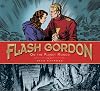
I was surprised at how closely the Buster Crabbe Flash Gordon movie serial adheres to its source material, presented in sumptuous style in this collection. Created as an answer to the science fiction, space opera adventures of the Buck Rogers newspaper serial, I think Flash's adventures owe a greater debt to the planetary romance and lost world genres of Edgar Rice Burroughs' John Carter and Caspak novels, the war-torn planet of Mongo with its many-coloured peoples standing in for Barsoom, show more and the wild lands tormented by giant monsters (Devourosaurus being a particular personal favourite!) reminiscent of Caprona.
There's also a Ruritanian feel to some of the political machinations and empire building plots; an unreflective acceptance of Flash's imperialistic ambitions. Ming is 'Merciless' and a despotic tyrant, but when he promises to make Flash a king, only to reveal that the promised country is not held under his sway, Flash glibly recruits an army and takes his weapons of mass destruction to slaughter and subdue a people of whose existence he had previously been unaware, and whose right of self-determination is not considered and clearly of no consequence to him. Published in the mid 1930s, it sadly seems that many politicians still hold these attitudes today.
Anyway, dubious politics aside, the adventures are inevitably episodic and wholly action-oriented, with no character development and the main motivations given as obsessive passions of love, hate and revenge. This is a weakness or a strength depending on one's preferences. For me it's a venture into juvenile escapism that I sometimes feel the need for. While the story lines are fairly static and formulaic, though not without charm, the artwork definitely does evolve. Tightly contained in gridiron panels for the initial six months of the original publication schedule, there starts to be a slight freeing of the page layout, although it takes a further six months or so for Raymond to really gain confidence (if, indeed, that was what was previously lacking, rather than, perhaps, some restriction of the newspaper medium he was working in) and to start presenting his panels in a more fluid, less linear fashion. The detail and intricacy of the artwork certainly benefits from the change, capturing a certain epic sweep which looks like it might be story boards for Hollywood historical blockbusters like Ben Hur.
Naturally, the book ends in the middle of an adventure - Flash is always enmired in some plot, the resolution of one thread leading immediately into another perilous cliffhanger. I could easily go on to read the next volume without pause, while at the same time feeling no urgency to do so: every pause in reading has been at a pivotal moment of danger, so I've become inured to that narrative device. Whether or not I'm there to read it, I'm confident that Dale will be kidnapped, that Flash will hunt down and kill/befriend the abductor, that whatever life-threatening position Flash finds himself in, Zarkov will build a ray-machine out of brown paper and string which will save the day. The only question in my mind is whether, after four years of prevarication and more romantic entanglements with exotic women than Captain Kirk could shake a phaser at, Flash will ever make good on his promise to marry Dale! show less
There's also a Ruritanian feel to some of the political machinations and empire building plots; an unreflective acceptance of Flash's imperialistic ambitions. Ming is 'Merciless' and a despotic tyrant, but when he promises to make Flash a king, only to reveal that the promised country is not held under his sway, Flash glibly recruits an army and takes his weapons of mass destruction to slaughter and subdue a people of whose existence he had previously been unaware, and whose right of self-determination is not considered and clearly of no consequence to him. Published in the mid 1930s, it sadly seems that many politicians still hold these attitudes today.
Anyway, dubious politics aside, the adventures are inevitably episodic and wholly action-oriented, with no character development and the main motivations given as obsessive passions of love, hate and revenge. This is a weakness or a strength depending on one's preferences. For me it's a venture into juvenile escapism that I sometimes feel the need for. While the story lines are fairly static and formulaic, though not without charm, the artwork definitely does evolve. Tightly contained in gridiron panels for the initial six months of the original publication schedule, there starts to be a slight freeing of the page layout, although it takes a further six months or so for Raymond to really gain confidence (if, indeed, that was what was previously lacking, rather than, perhaps, some restriction of the newspaper medium he was working in) and to start presenting his panels in a more fluid, less linear fashion. The detail and intricacy of the artwork certainly benefits from the change, capturing a certain epic sweep which looks like it might be story boards for Hollywood historical blockbusters like Ben Hur.
Naturally, the book ends in the middle of an adventure - Flash is always enmired in some plot, the resolution of one thread leading immediately into another perilous cliffhanger. I could easily go on to read the next volume without pause, while at the same time feeling no urgency to do so: every pause in reading has been at a pivotal moment of danger, so I've become inured to that narrative device. Whether or not I'm there to read it, I'm confident that Dale will be kidnapped, that Flash will hunt down and kill/befriend the abductor, that whatever life-threatening position Flash finds himself in, Zarkov will build a ray-machine out of brown paper and string which will save the day. The only question in my mind is whether, after four years of prevarication and more romantic entanglements with exotic women than Captain Kirk could shake a phaser at, Flash will ever make good on his promise to marry Dale! show less
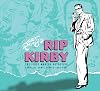
Rip Kirby stands out among the superheroes, action heroes, and hardboiled detectives of post-war American pulp and comics; he's a mild-mannered brainiac whose cases, while still pulpy in their romanticizing of organized crime and unbelievable coincidences, ring with a richness you don't often see in comics today. You'll get used to the shouty lettering and the redundant exposition (this was, after all, a serial comic) pretty quickly. This was one of my favorite childhood comics, and I'm glad show more to see that it holds up pretty well since the 1980s… and the 1940s! show less

I read this because I read the 80s novelisation by Arthur Byron Cover and loved it to death, and also because I was curious as to how this version would hold up in comparison. I wasn't disapointed. It was a fun read and had some truly wonderful moments, the little copper robot being just one of them. These novels were based on a cartoon strip that appeared in newspapers way back in the 30s, drawn by Alex Raymond, whose name is credited on the cover. The actual author's name only appears show more inside however, a 'Con Steffanson'.
It's not high-brow literature by any stretch but rather a fun, fast-paced adventure in a futuristic place as imagined a long time ago(I'm referring the 30s strips the novel is based on rather than the 1974 publication date of the actual novel). It really does hold up well though, a good part of the reason for that being that Flash Gordon was always going to be a pulp-style sci-fi adventure and so fits in quite well with other pulp-style sci-fi no matter when they were written, pulp is still pulp after all whether it was written 100 years ago or 1 year ago.
I loved it, for what it was. It's a good deal less cheeky than the 80s novelisation(Dale, a swinger? Are you sure? OMG! ) but I was expecting that anyway, not because it was published in the 70s of course, but because it's based on that 30s cartoon strip I was talking about, so if they're going to base it on that and stick to it as best they can then I suppose there's going to be that air of innocence about it.
OK. I liked it more than I thought I would. It was very enjoyable and had some very cute moments, and whats more, there are 6 in the series that I know of so I'm looking forward to reading the rest.
Very good. show less
It's not high-brow literature by any stretch but rather a fun, fast-paced adventure in a futuristic place as imagined a long time ago(I'm referring the 30s strips the novel is based on rather than the 1974 publication date of the actual novel). It really does hold up well though, a good part of the reason for that being that Flash Gordon was always going to be a pulp-style sci-fi adventure and so fits in quite well with other pulp-style sci-fi no matter when they were written, pulp is still pulp after all whether it was written 100 years ago or 1 year ago.
I loved it, for what it was. It's a good deal less cheeky than the 80s novelisation(
OK. I liked it more than I thought I would. It was very enjoyable and had some very cute moments, and whats more, there are 6 in the series that I know of so I'm looking forward to reading the rest.
Very good. show less
The first years of Flash Gordon (January 1934 to April 1937) established the groundwork for everything to come, and you watch month to month as Alex Raymond develops from good artist into a legend. Flash Gordon was one of the most influential works of the imagination in the 20th century, and these stories are both exciting and visually rich. The reproductions are as good as you'll find right now, which isn't always great. Fine intro by Alex Ross plus a historical essay.
Lists
Awards

You May Also Like


Associated Authors
Statistics
- Works
- 289
- Also by
- 2
- Members
- 1,654
- Popularity
- #15,535
- Rating
- 3.7
- Reviews
- 42
- ISBNs
- 200
- Languages
- 10
- Favorited
- 2