
Jason Hazeley
Author of How it Works: The Husband
About the Author
Series
Works by Jason Hazeley
How it Works: The Baby (Ladybird for Grown-Ups) (Ladybirds for Grown-Ups) (2017) 21 copies, 1 review
The Wonderful World of Ladybird Books for Grown-Ups (Ladybirds for Grown-Ups) (2018) 16 copies, 1 review
Tagged
Common Knowledge
- Other names
- Hazelby, Jason
- Birthdate
- 1971-09-24
- Gender
- male
- Occupations
- television writer
humourist
singer-songwriter - Agent
- Nick Barron
- Nationality
- UK
- Associated Place (for map)
- UK
Members
Reviews
Plus ca change…
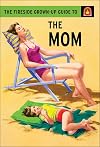
The Fireside Grown Up Guide to the Mom is a delightful admixture of early 1960s art and 2016 situations. There are references to ipads, but the paintings are of Telefunken radios. On every page there is a knowing laugh to be had, as kids and parenting really haven’t changed as much, despite technology, and presuming we have learned anything at all from our own parents. Hazely and Morris (and their cast of artists) score point after point with pinpoint accuracy.
My favorite: show more The mom does not like hearing her own voice. That is because it does not sound like her voice anymore. It sounds like her mom’s.
Do you laugh – or do you cry?
David Wineberg show less
The Fireside Grown Up Guide to the Mom is a delightful admixture of early 1960s art and 2016 situations. There are references to ipads, but the paintings are of Telefunken radios. On every page there is a knowing laugh to be had, as kids and parenting really haven’t changed as much, despite technology, and presuming we have learned anything at all from our own parents. Hazely and Morris (and their cast of artists) score point after point with pinpoint accuracy.
My favorite: show more The mom does not like hearing her own voice. That is because it does not sound like her voice anymore. It sounds like her mom’s.
Do you laugh – or do you cry?
David Wineberg show less
Free for Kindle today.
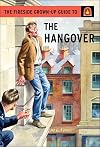
Not only did I grow up surrounded by books of this ilk, I still have a few. This might not be so funny if you didn't read in this style as a child, but I enjoyed a wry chuckle. The art is magnificent. There are several pictures that killed me, the cover is one. Some of the art, framed, would be awesome in the library next to my childhood Nancy Drews, or arranged above the drinks cabinet.*
*These are a purely theoretical library and drinks cabinet. Currently the shelves show more are randomly distributed throughout the house, decorated with too many books and ten years worth of dust, and I haven't hung any art in the fridge over my box of wine, but I can envision a minimalist modernity above with both.
Thanks to Chris' Fish Place for the hot tip! show less
Not only did I grow up surrounded by books of this ilk, I still have a few. This might not be so funny if you didn't read in this style as a child, but I enjoyed a wry chuckle. The art is magnificent. There are several pictures that killed me, the cover is one. Some of the art, framed, would be awesome in the library next to my childhood Nancy Drews, or arranged above the drinks cabinet.*
*These are a purely theoretical library and drinks cabinet. Currently the shelves show more are randomly distributed throughout the house, decorated with too many books and ten years worth of dust, and I haven't hung any art in the fridge over my box of wine, but I can envision a minimalist modernity above with both.
Thanks to Chris' Fish Place for the hot tip! show less
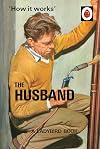
My guess is that this book is designed for anyone who is not a husband -- the wife, the fiancée, the boy in need of a role model, extraterrestrial visitors and the like -- but, speaking as a husband, I found much to enlighten me within these pages. Like many practical manuals it describes the subject's strengths and weaknesses, gives insights into his interior workings and pictures him at work and play, following lone pursuits and attempting to socialise. What it doesn't do, however, is to show more suggest ways to improve or maintain the husband; quite the opposite -- in its otherwise comprehensive thoroughness it seems to implicitly advise a take-it-or-leave-it approach. It's a rather fatalistic and bleak picture that's painted.
This is one of the original series of "Ladybird books for grown-ups" which have graced bookshop displays for a couple of years now, especially at Christmas. With titles like The Ladybird Book of the Mid-Life Crisis, The Ladybird Book of Mindfulness and The Ladybird Book of the Hipster they took original illustrations from mid-20th-century Ladybird Books for children and fitted them to new themes, to which they've added a world-weary commentary. All in simple language. For simple adult minds. A typical example is
"The husband has a very big memory. He can remember football scores, all his old car number plates, and most of the film Withnail & I. But he cannot remember what his wife asked him to bring back from the shops ..."
This is illustrated with a kilted first footer at Hogmanay triumphantly bearing, as he comes through the front door, an unpleasant-looking object (a lump of coal, I assume, but it looks suspiciously like a dog's visiting card). He's clearly forgotten to take the shopping list with him.
There are many kinds of humour that aim to tickle the funny bone. Much of it is aggressive, such as is common with political satire, or when some laugh at pratfalls or when certain comics pick on others because of difference. Wit -- such as puns, riddles and other wordplay -- is similarly cruel in that it involves acute dislocations in expectations, though it's rarely directed personally (sample: "My uncle had to give up tap dancing -- he kept falling in the sink.") Observational humour can be more gentle despite being as exaggerated as the more aggressive humour. It usually features self-deprecation -- in which we laugh at ourselves, at our habits, our foibles, our idiosyncrasies -- rather than those seen to be outsiders or belonging to out-groups.
Much of the humour in these Ladybird books for grown-ups is essentially observational. "The husband hears as much as 30% of what is said to him," is typical. Or take Jim, who after thirty-one years of marriage still doesn't know what his wife Rebecca likes for Christmas and continues to get her the same present every year (in this case, a clutch bag). And again: "Glyn explains himself very badly. This is so he can say he is misunderstood."
You either find this kind of thing achingly funny or absolutely cringeworthy. In short bursts it amuses, but repeated familiarity can render it tedious. The only way to decide is to sample it yourself. Myself, I enjoyed the small print more: Jason Hazeley's N.S.F.W. qualification could stand for Not Suitable for Wife, Joel Morris O.M.G. doesn't necessarily have some obscure honorific title, while 'the publishers' (clearly the writers themselves) claim they are the authors of the unlikely title Eat Yourself Fat. 'The Publishers' also acknowledge assistance from the Executive Secretary of the British Society of Husbands, Sir Penius Wroughshod, and the book is Printed in England; if wet, Italy.
Is it worth a perusal, let alone a purchase? I'll leave you to be the judge. show less
This is one of the original series of "Ladybird books for grown-ups" which have graced bookshop displays for a couple of years now, especially at Christmas. With titles like The Ladybird Book of the Mid-Life Crisis, The Ladybird Book of Mindfulness and The Ladybird Book of the Hipster they took original illustrations from mid-20th-century Ladybird Books for children and fitted them to new themes, to which they've added a world-weary commentary. All in simple language. For simple adult minds. A typical example is
"The husband has a very big memory. He can remember football scores, all his old car number plates, and most of the film Withnail & I. But he cannot remember what his wife asked him to bring back from the shops ..."
This is illustrated with a kilted first footer at Hogmanay triumphantly bearing, as he comes through the front door, an unpleasant-looking object (a lump of coal, I assume, but it looks suspiciously like a dog's visiting card). He's clearly forgotten to take the shopping list with him.
There are many kinds of humour that aim to tickle the funny bone. Much of it is aggressive, such as is common with political satire, or when some laugh at pratfalls or when certain comics pick on others because of difference. Wit -- such as puns, riddles and other wordplay -- is similarly cruel in that it involves acute dislocations in expectations, though it's rarely directed personally (sample: "My uncle had to give up tap dancing -- he kept falling in the sink.") Observational humour can be more gentle despite being as exaggerated as the more aggressive humour. It usually features self-deprecation -- in which we laugh at ourselves, at our habits, our foibles, our idiosyncrasies -- rather than those seen to be outsiders or belonging to out-groups.
Much of the humour in these Ladybird books for grown-ups is essentially observational. "The husband hears as much as 30% of what is said to him," is typical. Or take Jim, who after thirty-one years of marriage still doesn't know what his wife Rebecca likes for Christmas and continues to get her the same present every year (in this case, a clutch bag). And again: "Glyn explains himself very badly. This is so he can say he is misunderstood."
You either find this kind of thing achingly funny or absolutely cringeworthy. In short bursts it amuses, but repeated familiarity can render it tedious. The only way to decide is to sample it yourself. Myself, I enjoyed the small print more: Jason Hazeley's N.S.F.W. qualification could stand for Not Suitable for Wife, Joel Morris O.M.G. doesn't necessarily have some obscure honorific title, while 'the publishers' (clearly the writers themselves) claim they are the authors of the unlikely title Eat Yourself Fat. 'The Publishers' also acknowledge assistance from the Executive Secretary of the British Society of Husbands, Sir Penius Wroughshod, and the book is Printed in England; if wet, Italy.
Is it worth a perusal, let alone a purchase? I'll leave you to be the judge. show less
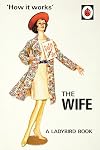
Like most Brits of my age, Ladybird books were a staple of my childhood, and I still have many at home: inexpensive, varied subjects (fiction, history, science, general knowledge), different reading levels, hard covered, and conveniently small.
Another reason for their success and enduring popularity is the distinctive font and style of illustration.
“The authors would like to thank the illustrators whose work they have so mercilessly ribbed, and whose glorious craftsmanship was the show more set-dressing of their childhoods. The inspiration they sparked has never faded.”
However, modern children are unlikely to find them appealing, so Penguin Books commissioned humorous new titles for adults, but using artwork from the original children’s books. Titles include: The Shed, The Hipster, Mindfulness, The Meeting, and The Zombie Apocalypse. See list here.
These spoofs have been so successful, there are spoofs of the spoofs - which are far better than this. See Dungbeetle’s We Go To The Gallery, which I reviewed HERE.
I think these Ladybirds will only appeal to those who want to indulge and gently prod fond childhood memories, and I doubt many would want to read more than a handful. I think two is my limit. The titles and concept are more fun than the content (except for some of the small print). The exception is A Ladybird Book About Donald Trump (my review HERE).
Stereotype Alert
All the humour in the Husband and Wife books is based on the sort of gently demeaning stereotypes - of men and women - that were common when the pictures were drawn, when mother-in-law jokes and Benny Hill were all the rage. Not so zeitgeisty now: what was once mainstream now feels easy but risky.
If you read just one of the books in this pair, you might splutter in indignation, but reading them together, I saw the balance, and smiled a little in recognition - and especially at how far most of society has moved on since I was a child.
There are two illustrations that appear in both books - but with different words. Here’s one:
The Wife
Wives need wine and chocolate to cope with husbands and children. Well, I don’t like chocolate, and I prefer gin to wine, but wine will do. And friends (yes!) and shopping (not so much).
Hints about sex are even vaguer and more euphemistic in this than The Husband. And not sufficient to raise a smile.
Spoiler alert:
The Husband
I’m not sure what to make of the fact my father and his partner gave me this as a stocking-filler at Christmas!
You can guess the gist: a husband just needs sausages, beer, and time to indulge hobbies, like watching sport. He doesn’t care about his clothes, finds it difficult to express his feelings, and rarely listens to, let alone remembers, what his wife says. I’m not offended, but I don’t find that funny.
Although these are adult books, there’s no explicit mention of sex. This caption was presumably inspired by his awkward pose in the original illustration:
I was also amused to recognise one of the illustrations. It’s of a Scotsman in a kilt, coming into a house, bearing a piece of coal. He’s first-footing, and it was in a Ladybird book about traditional customs around the UK (possibly Stories of Special Days and Customs). show less
Another reason for their success and enduring popularity is the distinctive font and style of illustration.
“The authors would like to thank the illustrators whose work they have so mercilessly ribbed, and whose glorious craftsmanship was the show more set-dressing of their childhoods. The inspiration they sparked has never faded.”
However, modern children are unlikely to find them appealing, so Penguin Books commissioned humorous new titles for adults, but using artwork from the original children’s books. Titles include: The Shed, The Hipster, Mindfulness, The Meeting, and The Zombie Apocalypse. See list here.
These spoofs have been so successful, there are spoofs of the spoofs - which are far better than this. See Dungbeetle’s We Go To The Gallery, which I reviewed HERE.
I think these Ladybirds will only appeal to those who want to indulge and gently prod fond childhood memories, and I doubt many would want to read more than a handful. I think two is my limit. The titles and concept are more fun than the content (except for some of the small print). The exception is A Ladybird Book About Donald Trump (my review HERE).
Stereotype Alert
All the humour in the Husband and Wife books is based on the sort of gently demeaning stereotypes - of men and women - that were common when the pictures were drawn, when mother-in-law jokes and Benny Hill were all the rage. Not so zeitgeisty now: what was once mainstream now feels easy but risky.
If you read just one of the books in this pair, you might splutter in indignation, but reading them together, I saw the balance, and smiled a little in recognition - and especially at how far most of society has moved on since I was a child.
There are two illustrations that appear in both books - but with different words. Here’s one:
The Wife
Wives need wine and chocolate to cope with husbands and children. Well, I don’t like chocolate, and I prefer gin to wine, but wine will do. And friends (yes!) and shopping (not so much).
Hints about sex are even vaguer and more euphemistic in this than The Husband. And not sufficient to raise a smile.
Spoiler alert:
The Husband
I’m not sure what to make of the fact my father and his partner gave me this as a stocking-filler at Christmas!
You can guess the gist: a husband just needs sausages, beer, and time to indulge hobbies, like watching sport. He doesn’t care about his clothes, finds it difficult to express his feelings, and rarely listens to, let alone remembers, what his wife says. I’m not offended, but I don’t find that funny.
Although these are adult books, there’s no explicit mention of sex. This caption was presumably inspired by his awkward pose in the original illustration:
I was also amused to recognise one of the illustrations. It’s of a Scotsman in a kilt, coming into a house, bearing a piece of coal. He’s first-footing, and it was in a Ladybird book about traditional customs around the UK (possibly Stories of Special Days and Customs). show less
Awards


You May Also Like


Associated Authors
Statistics
- Works
- 46
- Members
- 2,744
- Popularity
- #9,354
- Rating
- 3.7
- Reviews
- 37
- ISBNs
- 114
- Languages
- 7