
Darrel R. Falk
Author of Coming to Peace with Science
About the Author
Darrel R. Falk is professor of biology and associate provost for research at Point Loma Nazarene University, Point Loma, California.
Works by Darrel R. Falk
Tagged
Common Knowledge
Members
Reviews
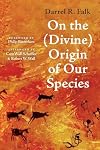
“Humans are an accidental species, the product of a whole series of lucky breaks”
This is a message which has been advanced in the published literature of evolutionary biology, and delivered to the public by its’ chief popularizers. Largely as a consequence of this, the Christian church has a fraught relationship with the science of human evolution, entailing a variety of negative responses.
“Humans are the product of providential interaction with a loving God through his Spirit”
This show more is the competing hypothesis developed and presented in this book by Dr. Darrel Falk.
A lifelong Christian, trained in the science of genetics, Dr. Falk has spent the past twenty years teaching courses in human evolution, and draws on his extensive knowledge of the latest advances in human evolutionary biology and his Christian formation and faith to present a radically different perspective on human origins.
Dr. Falk summarizes the current strain between the church and evolutionary science in the Introduction to the book as follows (pg 11):
(1) There has been a long running disconnect between the science of biology and biblically grounded Christianity stretching back more than 160 years [to the publication of Darwin’s “Origin of Species”]
(2) In part, the disconnect is a result of the worldview of the leading spokespersons of the evolutionary sciences
(3) In part, the disconnect is the result of conservative Christians trying to pick apart the science of evolution, when the real issue is the unwarranted philosophical convictions of many of its practitioners
(4) In part, the disconnect is the result of conservative Christians not yet theologically addressing the nature of divine activity in human creation in a manner that is informed by the scientific analysis of human evolution
(5) This book seeks to build a bridge across the 160-year-old gap, by showing how human evolutionary science is thoroughly consistent with orthodox Christian theology
What will strike many as most surprising in this book is the good fit between the empirical scientific data so ably presented and explained and the robust Christian re-interpretation developed by Dr. Falk. This is not some bland, vague assertion of divine activity, but rather a detailed, highly plausible mechanism whereby a loving creator-God fosters the emergence of beings capable of carrying the divine image.
Creating a Level Playing Field
I thought the first chapter justified the cost of the book as a stand-alone essay. Dr. Falk begins by explaining the nature of science – how it operates to obtain its results, and the limitations it must assume to preserve the integrity of its methods and results. Chief amongst these is the assumption of “methodological naturalism” – restricting scientific methods and interpretations to physical causes and effects which can be observed or manipulated by experiments. He clearly presents the concept of “scientism” – an overreach of the methodological practice of science, whereby inferences are drawn (often presented as flat factual conclusions) which delve into questions of purpose or meaning. In this guise science becomes a “worldview” where naturalism is assumed to be the only valid avenue to truth. One consequence of the application of this worldview is to minimize or disparage the possible truth or significance of the Christian faith. Dr. Falk ably defends the historicity and intellectual credibility of the foundational claims of Christianity – the incarnation of God in the man Jesus of Nazareth and his resurrection. The combination of this exposition of the legitimate limits of scientific investigation and the strength of key Christian claims seeks to remove the common presumption of the sweeping, unopposed triumph of popular assertions drawn from evolutionary science. In my opinion this effort is successful, and creates a level playing field, a conceptual opening where scientific data may be interpreted in a new way through engagement with and reflection upon the best of contemporary Christian theology, and the timeless messages of Scripture.
Developing and Presenting the New Hypothesis
Dr. Falk in the next several chapters of the book presents recent scientific data on the origin of the genus Homo and our species, Homo sapiens. The science is fascinating and wonderfully presented. There is discussion of recently discovered mutations which in the human lineage may have led to expansion in brain size, and increasing neuronal connections to each other (while also delaying this process until after birth to allow incorporation of learned experience). There is discussion of genetic changes which may have led to the refinement of human facial features, with increasingly subtle emotional messaging possible. Again, somewhat surprisingly, this suite of skeletal changes may have coincided with a marked gentling of our temperament. The tremendous and apparently unique features of human mental capacity, such as the “theory of mind” which allows us to infer the thoughts and intentions of others, and the development of superior powers of cooperativity are also examined. Each aspect of the science is presented in a highly readable and accessible fashion by a master teacher. Although myself trained in another subspecialty of science (cell biology) much of this content was new to me and I found it delightful.
Throughout there is emphasis on the perhaps surprising scientific consensus that humans emerged and became successful as a species not because of conflict or violence, but rather because of the development of superior powers of social perception, cooperation, and reduction of aggression (sometimes summarized as “Survival of the Friendliest”).
Within this running narrative of what science can tell us about the changes leading to our species, Dr. Falk intersperses sections of theological reflections where he brings the Christian worldview to bear. He advances the hypothesis that small populations of human ancestors would have been progressively influenced by the Spirit of God to live together in a more loving and harmonious fashion. This would have led to both cultural and genetic changes which would have worked synergistically to reinforce and continue this process across multiple generations.
Dr. Falk summarizes his hypothesis, using Christian language, in Chapter 5 (pg 159):
Principle 1: God is love; communities where love was prevalent functioned more harmoniously than those where it wasn’t.
Principle 2: Because God is love, communities where love flourished would have been drawn into the presence of the Spirit of God. (Even when their conception of God was rudimentary or even non-existent).
Principle 3: Communities that lived in harmony with the Spirit of God and each other would have thrived, increasing in population size faster than those that did not.
Principle 4: At least one community lived like this for a succession of generations. (At least for several hundred years).
Principle 5: Genetic variants which enhanced cooperation would gradually increase in such a community
Principle 6: The Spirit of God, in partnership with humankind, would have brought a whole new way of being into existence.
[Dr. Falk presents a more scientifically oriented version of this same hypothesis, in Chapter 3 (pg 91).]
The Pivot Point
In Chapter 6 Dr. Falk presents key results from the natural history of the earth (history of the land and living things contained there) which comprise a series of “contingent” events – that is, things that resulted from unexpected or unpredictable events, which together are often used by scientific popularizers to justify the statements that humans are the product of a series of lucky accidents. Rather, Dr. Falk then engages deeply with and thinks carefully about recent scholarship in the area of divine providence. He concludes that such “contingent” events are fully compatible with a robust conception of divine sovereignty. His conclusion is that God can and has worked within this history.
Our Present and Possible Futures
Dr. Falk concludes the book by a careful examination of the entrance of human evil (sin) into the world and how this impacts us in the present. He emphasizes the power of culture to bring about rapid evolutionary change, and the sobering fact that we are on the cusp of technologies which can work both through culture and through genetic change to alter the future trajectory of our species. This is a situation where an ethic rooted in classic Christianity has much to contribute to helping to guide our way forward.
A Final Appeal to Potential Opponents
Christians: If you have always believed that evolutionary science is inherently “anti-Christian”, and have therefore avoided the subject, I urge you to give this book a chance. I think you will be surprised at how well a robustly Christian interpretation matches the findings of the best evolutionary science so ably explained in these pages. It is not necessary to interpret the evolutionary science through a “scientistic” lens derived from a naturalistic worldview which then reaches conclusions which are probably repellant to your faith.
Skeptics: If you have always thought that Christianity requires its adherents to “check their brains at the door”, I urge you to give this book a chance. I think you will be surprised at the degree of intellectual rigor displayed in the Christian thinking in this book, and with how well a Christian interpretation can match the best empirical scientific evolutionary data. You may find Christianity to be a more worthy conversation partner than you have previously believed, even if you find yourself unable to accept it for yourself. show less
This is a message which has been advanced in the published literature of evolutionary biology, and delivered to the public by its’ chief popularizers. Largely as a consequence of this, the Christian church has a fraught relationship with the science of human evolution, entailing a variety of negative responses.
“Humans are the product of providential interaction with a loving God through his Spirit”
This show more is the competing hypothesis developed and presented in this book by Dr. Darrel Falk.
A lifelong Christian, trained in the science of genetics, Dr. Falk has spent the past twenty years teaching courses in human evolution, and draws on his extensive knowledge of the latest advances in human evolutionary biology and his Christian formation and faith to present a radically different perspective on human origins.
Dr. Falk summarizes the current strain between the church and evolutionary science in the Introduction to the book as follows (pg 11):
(1) There has been a long running disconnect between the science of biology and biblically grounded Christianity stretching back more than 160 years [to the publication of Darwin’s “Origin of Species”]
(2) In part, the disconnect is a result of the worldview of the leading spokespersons of the evolutionary sciences
(3) In part, the disconnect is the result of conservative Christians trying to pick apart the science of evolution, when the real issue is the unwarranted philosophical convictions of many of its practitioners
(4) In part, the disconnect is the result of conservative Christians not yet theologically addressing the nature of divine activity in human creation in a manner that is informed by the scientific analysis of human evolution
(5) This book seeks to build a bridge across the 160-year-old gap, by showing how human evolutionary science is thoroughly consistent with orthodox Christian theology
What will strike many as most surprising in this book is the good fit between the empirical scientific data so ably presented and explained and the robust Christian re-interpretation developed by Dr. Falk. This is not some bland, vague assertion of divine activity, but rather a detailed, highly plausible mechanism whereby a loving creator-God fosters the emergence of beings capable of carrying the divine image.
Creating a Level Playing Field
I thought the first chapter justified the cost of the book as a stand-alone essay. Dr. Falk begins by explaining the nature of science – how it operates to obtain its results, and the limitations it must assume to preserve the integrity of its methods and results. Chief amongst these is the assumption of “methodological naturalism” – restricting scientific methods and interpretations to physical causes and effects which can be observed or manipulated by experiments. He clearly presents the concept of “scientism” – an overreach of the methodological practice of science, whereby inferences are drawn (often presented as flat factual conclusions) which delve into questions of purpose or meaning. In this guise science becomes a “worldview” where naturalism is assumed to be the only valid avenue to truth. One consequence of the application of this worldview is to minimize or disparage the possible truth or significance of the Christian faith. Dr. Falk ably defends the historicity and intellectual credibility of the foundational claims of Christianity – the incarnation of God in the man Jesus of Nazareth and his resurrection. The combination of this exposition of the legitimate limits of scientific investigation and the strength of key Christian claims seeks to remove the common presumption of the sweeping, unopposed triumph of popular assertions drawn from evolutionary science. In my opinion this effort is successful, and creates a level playing field, a conceptual opening where scientific data may be interpreted in a new way through engagement with and reflection upon the best of contemporary Christian theology, and the timeless messages of Scripture.
Developing and Presenting the New Hypothesis
Dr. Falk in the next several chapters of the book presents recent scientific data on the origin of the genus Homo and our species, Homo sapiens. The science is fascinating and wonderfully presented. There is discussion of recently discovered mutations which in the human lineage may have led to expansion in brain size, and increasing neuronal connections to each other (while also delaying this process until after birth to allow incorporation of learned experience). There is discussion of genetic changes which may have led to the refinement of human facial features, with increasingly subtle emotional messaging possible. Again, somewhat surprisingly, this suite of skeletal changes may have coincided with a marked gentling of our temperament. The tremendous and apparently unique features of human mental capacity, such as the “theory of mind” which allows us to infer the thoughts and intentions of others, and the development of superior powers of cooperativity are also examined. Each aspect of the science is presented in a highly readable and accessible fashion by a master teacher. Although myself trained in another subspecialty of science (cell biology) much of this content was new to me and I found it delightful.
Throughout there is emphasis on the perhaps surprising scientific consensus that humans emerged and became successful as a species not because of conflict or violence, but rather because of the development of superior powers of social perception, cooperation, and reduction of aggression (sometimes summarized as “Survival of the Friendliest”).
Within this running narrative of what science can tell us about the changes leading to our species, Dr. Falk intersperses sections of theological reflections where he brings the Christian worldview to bear. He advances the hypothesis that small populations of human ancestors would have been progressively influenced by the Spirit of God to live together in a more loving and harmonious fashion. This would have led to both cultural and genetic changes which would have worked synergistically to reinforce and continue this process across multiple generations.
Dr. Falk summarizes his hypothesis, using Christian language, in Chapter 5 (pg 159):
Principle 1: God is love; communities where love was prevalent functioned more harmoniously than those where it wasn’t.
Principle 2: Because God is love, communities where love flourished would have been drawn into the presence of the Spirit of God. (Even when their conception of God was rudimentary or even non-existent).
Principle 3: Communities that lived in harmony with the Spirit of God and each other would have thrived, increasing in population size faster than those that did not.
Principle 4: At least one community lived like this for a succession of generations. (At least for several hundred years).
Principle 5: Genetic variants which enhanced cooperation would gradually increase in such a community
Principle 6: The Spirit of God, in partnership with humankind, would have brought a whole new way of being into existence.
[Dr. Falk presents a more scientifically oriented version of this same hypothesis, in Chapter 3 (pg 91).]
The Pivot Point
In Chapter 6 Dr. Falk presents key results from the natural history of the earth (history of the land and living things contained there) which comprise a series of “contingent” events – that is, things that resulted from unexpected or unpredictable events, which together are often used by scientific popularizers to justify the statements that humans are the product of a series of lucky accidents. Rather, Dr. Falk then engages deeply with and thinks carefully about recent scholarship in the area of divine providence. He concludes that such “contingent” events are fully compatible with a robust conception of divine sovereignty. His conclusion is that God can and has worked within this history.
Our Present and Possible Futures
Dr. Falk concludes the book by a careful examination of the entrance of human evil (sin) into the world and how this impacts us in the present. He emphasizes the power of culture to bring about rapid evolutionary change, and the sobering fact that we are on the cusp of technologies which can work both through culture and through genetic change to alter the future trajectory of our species. This is a situation where an ethic rooted in classic Christianity has much to contribute to helping to guide our way forward.
A Final Appeal to Potential Opponents
Christians: If you have always believed that evolutionary science is inherently “anti-Christian”, and have therefore avoided the subject, I urge you to give this book a chance. I think you will be surprised at how well a robustly Christian interpretation matches the findings of the best evolutionary science so ably explained in these pages. It is not necessary to interpret the evolutionary science through a “scientistic” lens derived from a naturalistic worldview which then reaches conclusions which are probably repellant to your faith.
Skeptics: If you have always thought that Christianity requires its adherents to “check their brains at the door”, I urge you to give this book a chance. I think you will be surprised at the degree of intellectual rigor displayed in the Christian thinking in this book, and with how well a Christian interpretation can match the best empirical scientific evolutionary data. You may find Christianity to be a more worthy conversation partner than you have previously believed, even if you find yourself unable to accept it for yourself. show less
Summary: Accepting the evidence for our evolutionary origins, considers God’s providential activity through his hovering Spirit and how that shaped our evolution.
It may be helpful at the outset to say what this book is not, due to the title. It is not a polemic defending some form of young (or old) earth creationism. Darrel R. Falk spent his career as a biology professor and accepts the evidence of our evolutionary rise from some common ancestor we share with the great apes. He also show more believes this does not conflict with belief in God as Creator who works in and through evolutionary processes. But how specifically does that operate? Is it possible to move beyond vague claims of providence. Falk believes that is possible, based both on findings of how our species evolved, and basic Christian theological convictions about the nature of God and God’s working in creation.
Before proceeding to make his case, Falk clears some ground, distinguishing what science can and cannot know and the difference between science and scientism. This is important to discern when scientists have crossed a line, often in the denial of God, claiming science as a basis. It may have been equally helpful to discuss when Christians cross the line between good and bad science in their attempts to uphold their beliefs or show some concordance.
Chapters 2 and 3 chart the rise of our genus and species, focusing on anatomical changes, especially changes in the brain, arguing that a critical feature that distinguishes our species is our “social” brain, our capacity for cooperation, which better explains our rise than a superior fighting capacity. This is related to another significant development, that of a “theory of mind,” that we understand that others have minds and to understand the thinking and intentions of others.
This, for Falk, represents a key turning point, where it may also be possible for humans to perceive another mind, that of God, and perhaps to perceive the loving intentions of the Triune God who lives in a communally as Three in One. Particularly, Falk believes our ancestors were able to perceive the Spirit’s prompting toward loving, cooperative behavior, which had a selective advantage that may also have selected genetic variants that further enhanced cooperation. He also explores an intriguing idea that our imaginative capacities developed despite awareness of death because we could imagine, through the Spirit’s loving promptings, a reality beyond death.
Falk shows that Darwin himself identified this how cooperation, enhanced further by our language capabilities, was critical in our evolutionary development. What Falk is proposing is an explanation for this cooperative character grounded in and reflective of God’s character. Darwin, while never becoming an atheist, denied providence in creation, both disbelieving in the idea of God as a master designer and struggling with the reality of animal as well as human suffering. Falk raises the question of whether the problem is with providence, or with an inadequate understanding of the interaction of providence and evolution.
Falk’s final chapter considers the biblical story from beginning to end, from the garden-temple, to the fall and sin’s violation of cooperative relationships through the reconciling work of Christ, making one new, global body that images and extends these cooperative capacities on a greater scale than ever, anticipating the consummation of all things.
Falk offers an intriguing integration of theology and evolutionary science. In particular, Falk “makes sense” of our human cooperative character and suggests how the Spirit’s “hovering” may have contributed to the further evolution of this quality, connected to brain capacity and theory of mind, that so enabled us to flourish. Of course, none of this is scientifically provable. What Falk offers is something at once more modest and more provocative, a plausible explanation of God’s involvement in the origin of our species that is consistent both with evolutionary science and Christian belief.
This is not “evidence” that “demands” belief but something just as valuable, an account showing a seamless relationship between the science of human origins and theistic belief. Such proposals are crucial in bringing an end to the “warfare” between science and faith, a conflict that has spilled so much needless ink, and absorbed so much creative energy at the very moment our creation is groaning from the burdens we’ve placed on it, jeopardizing the very existence of so many of God’s beloved creatures.
____________________
Disclosure of Material Connection: I received a complimentary copy of this book from the publisher for review. show less
It may be helpful at the outset to say what this book is not, due to the title. It is not a polemic defending some form of young (or old) earth creationism. Darrel R. Falk spent his career as a biology professor and accepts the evidence of our evolutionary rise from some common ancestor we share with the great apes. He also show more believes this does not conflict with belief in God as Creator who works in and through evolutionary processes. But how specifically does that operate? Is it possible to move beyond vague claims of providence. Falk believes that is possible, based both on findings of how our species evolved, and basic Christian theological convictions about the nature of God and God’s working in creation.
Before proceeding to make his case, Falk clears some ground, distinguishing what science can and cannot know and the difference between science and scientism. This is important to discern when scientists have crossed a line, often in the denial of God, claiming science as a basis. It may have been equally helpful to discuss when Christians cross the line between good and bad science in their attempts to uphold their beliefs or show some concordance.
Chapters 2 and 3 chart the rise of our genus and species, focusing on anatomical changes, especially changes in the brain, arguing that a critical feature that distinguishes our species is our “social” brain, our capacity for cooperation, which better explains our rise than a superior fighting capacity. This is related to another significant development, that of a “theory of mind,” that we understand that others have minds and to understand the thinking and intentions of others.
This, for Falk, represents a key turning point, where it may also be possible for humans to perceive another mind, that of God, and perhaps to perceive the loving intentions of the Triune God who lives in a communally as Three in One. Particularly, Falk believes our ancestors were able to perceive the Spirit’s prompting toward loving, cooperative behavior, which had a selective advantage that may also have selected genetic variants that further enhanced cooperation. He also explores an intriguing idea that our imaginative capacities developed despite awareness of death because we could imagine, through the Spirit’s loving promptings, a reality beyond death.
Falk shows that Darwin himself identified this how cooperation, enhanced further by our language capabilities, was critical in our evolutionary development. What Falk is proposing is an explanation for this cooperative character grounded in and reflective of God’s character. Darwin, while never becoming an atheist, denied providence in creation, both disbelieving in the idea of God as a master designer and struggling with the reality of animal as well as human suffering. Falk raises the question of whether the problem is with providence, or with an inadequate understanding of the interaction of providence and evolution.
Falk’s final chapter considers the biblical story from beginning to end, from the garden-temple, to the fall and sin’s violation of cooperative relationships through the reconciling work of Christ, making one new, global body that images and extends these cooperative capacities on a greater scale than ever, anticipating the consummation of all things.
Falk offers an intriguing integration of theology and evolutionary science. In particular, Falk “makes sense” of our human cooperative character and suggests how the Spirit’s “hovering” may have contributed to the further evolution of this quality, connected to brain capacity and theory of mind, that so enabled us to flourish. Of course, none of this is scientifically provable. What Falk offers is something at once more modest and more provocative, a plausible explanation of God’s involvement in the origin of our species that is consistent both with evolutionary science and Christian belief.
This is not “evidence” that “demands” belief but something just as valuable, an account showing a seamless relationship between the science of human origins and theistic belief. Such proposals are crucial in bringing an end to the “warfare” between science and faith, a conflict that has spilled so much needless ink, and absorbed so much creative energy at the very moment our creation is groaning from the burdens we’ve placed on it, jeopardizing the very existence of so many of God’s beloved creatures.
____________________
Disclosure of Material Connection: I received a complimentary copy of this book from the publisher for review. show less
Lists
Statistics
- Works
- 3
- Members
- 159
- Popularity
- #132,374
- Rating
- 3.2
- Reviews
- 2
- ISBNs
- 5