
Nicklaus Suino
Author of The Art of Japanese Swordsmanship: A Manual of Eishin-Ryu Iaido
About the Author
Nicklaus Suino is currently codirector of the iaido division and director of the judo division of the Shudokan Martial Arts Association, and is a regional director of the North American branch of the International Martial Arts Federation
Works by Nicklaus Suino
Arts Of Strength, Arts Of Serenity: Martial Arts Training For Mental, Physical, And Spiritual Health (1996) 13 copies, 1 review
Associated Works
Japanese Swords: Cultural Icons of a Nation; The History, Metallurgy and Iconography of the Samurai Sword (2010) — Foreword — 37 copies, 2 reviews
Tagged
Common Knowledge
- Gender
- male
Members
Reviews
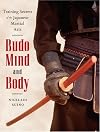
Budo Mind and Body is an excellent book for all practitioners of martial arts, especially those who seek to go beyond just the physical skills to a life-long study of the philosophy of budo. Based on his own training and wide reading, Suino has distilled the essence of what he describes as necessary for the proper study of budo. Be warned: he does not offer an easy or short road: real commitment is physically and mentally demanding. Suino lays out the key elements of both, including some of show more the pitfalls that await. The benefits, however, can be felt not just within the martial art itself, but also in one's broader approach to life.
I particularly liked Suino's criticism of those who are more talk than action in teaching or studying martial arts, and those who are focused more on badges and belts than truly studying the art in all respects. His message is not an easy one for a society focused on quick gratification, self-importance and short attention spans. In addition to the life-long commitment, his call is essentially one of modesty in all aspects: deference for teachers in learning and developing techniques over a period of time, concern for fellow students, modesty in behaviour in the dojo, understanding that learning can evolve and shift its focus but that it has no end point, and modesty in realizing that one is part of, and building upon, very ancient traditions.
Appendices include capsule summaries of the key martial arts and a useful bibliography for further reading.
This is a book to be re-read and contemplated. show less
I particularly liked Suino's criticism of those who are more talk than action in teaching or studying martial arts, and those who are focused more on badges and belts than truly studying the art in all respects. His message is not an easy one for a society focused on quick gratification, self-importance and short attention spans. In addition to the life-long commitment, his call is essentially one of modesty in all aspects: deference for teachers in learning and developing techniques over a period of time, concern for fellow students, modesty in behaviour in the dojo, understanding that learning can evolve and shift its focus but that it has no end point, and modesty in realizing that one is part of, and building upon, very ancient traditions.
Appendices include capsule summaries of the key martial arts and a useful bibliography for further reading.
This is a book to be re-read and contemplated. show less
Budo, or traditional Japanese martial arts for self-culitvation is about more than learning how to fight; true budo is a way of seeking and grasping meaning in life. Traditional Japanese martial arts have close ties to Zen Buddhism, and students of such arts as iaido, kendo, aikido, judo, kyudo, and karate-do are required to work tirelessly to refine body, mind, and spirit.
Here, Nicklaus Suino, one of the leading iaido teachers in North America, gives expert advice on how to get the most show more from training in traditional Japnese martial arts. He reveals the essential components of budo training, including:
How to determine the principles behind techniques
How to develop physical strength, technical strength, and strength of character
How to discipine your mind to really focus and be in the present moment
Originally publushed as Arts of Strength, Arts of Serenity, this revised and updated edition gives advice on training and etiquette that will be indispensable to beginning students, and a potent reminder to more seasoned practitioners. Advanced students will particularly appreciate Suino's explanation of budo philosophy.
Nicklaus Suino is a sixth-degree black belt in Muso Jikiden Eishin Ryu iaido. He is currently codirector of the iaido division and director of the judo division of the Shudokan Martial Arts Association, and is a regional director of the North American branch of the International Martial Arts Federation. He lives in Traverse City, Michigan, and teaches iaido and other martial arts at seminars throughout North America.
'The real secret to becoming an expert in martial arts is realizing that training is a process of self-discovery. Further, it is a means of modifying your personality to make yourself healthier, more well-balanced, and more efficient.'-from Budo Mind and Body
Contents
Preface
Introduction
1 Training the body
2 Training the mind
3 Budo culture
4 Three martial virtues
5 Training the spirit
Appendix 1: The Japanese martial arts
Appendix 2: Eight essential texts
Bibliography
Resources show less
Here, Nicklaus Suino, one of the leading iaido teachers in North America, gives expert advice on how to get the most show more from training in traditional Japnese martial arts. He reveals the essential components of budo training, including:
How to determine the principles behind techniques
How to develop physical strength, technical strength, and strength of character
How to discipine your mind to really focus and be in the present moment
Originally publushed as Arts of Strength, Arts of Serenity, this revised and updated edition gives advice on training and etiquette that will be indispensable to beginning students, and a potent reminder to more seasoned practitioners. Advanced students will particularly appreciate Suino's explanation of budo philosophy.
Nicklaus Suino is a sixth-degree black belt in Muso Jikiden Eishin Ryu iaido. He is currently codirector of the iaido division and director of the judo division of the Shudokan Martial Arts Association, and is a regional director of the North American branch of the International Martial Arts Federation. He lives in Traverse City, Michigan, and teaches iaido and other martial arts at seminars throughout North America.
'The real secret to becoming an expert in martial arts is realizing that training is a process of self-discovery. Further, it is a means of modifying your personality to make yourself healthier, more well-balanced, and more efficient.'-from Budo Mind and Body
Contents
Preface
Introduction
1 Training the body
2 Training the mind
3 Budo culture
4 Three martial virtues
5 Training the spirit
Appendix 1: The Japanese martial arts
Appendix 2: Eight essential texts
Bibliography
Resources show less
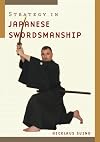
After years of practicing persistently and developoing technical prowess, advanced students in the Japanese sword arts need to cultivate a strategic mind if they are to advance to the rarified level of master swordsperson. Rather than passively absorbing the sword techniques, the student needs to focus more directly on the two ultimate goals of the art-to cut the opponent while avoiding being cut and to move toward perfection of character.
Here, in the third volume in his invaluable series on show more Japaneses swordsmanship, Nicklaus Suino, one of the most respected swordsmen in the United States, clearly and concisely presents a tactical approach to training, grounded in these two objectives. He provides a framework for learning strategy in swordsmanship, and demonstrates techniques that help put the strategies into practice.
Some of the topics Suino covers include:
The nature of strategy.
Sword handling.
The importance of vision and state of mind.
Timing and distancing.
Reading an opponent's intention.
Suino shows how through careful consideration of the technical issues, consistent practice, and ceaseless reflection, a diligent student can cultivate a strategic mind and learn how to achieve mastery over any opponent.
Niclaus Suino is a sixth-degree black belt in Muso Jikiden Eishin Ryu iaido. He is currently codirector of the iaido division and director of the judo division of the Shudokan Martial Arts Association, and is a regional director of the North American branch of the International Martial arts Federation. He teaches iaido and other martial arts at seminars througout North America. Information on his seminars can be found at wwww.artofjapaneseswordsmanship.com.
Conents
Acknowledgments
Introduction
1 Maegaki (Introductory matters)
What is strategy?
Tactics and techniques
State of mind
2 Shoden (Fundamental concepts)
Vision
Visual acuity drills
The big picture
Sword handling
Sword-handling drills
3 Chuden (Intermediate concepts)
Distancing
Distancing drills
Angles
Angle drills
Timing
Timing drills
4 Okuden (Advanced concepts)
Reading an opponent
Oppoonent-reading drills
Developing stratagems for opponent control
Mastering swordsmanship
Index show less
Here, in the third volume in his invaluable series on show more Japaneses swordsmanship, Nicklaus Suino, one of the most respected swordsmen in the United States, clearly and concisely presents a tactical approach to training, grounded in these two objectives. He provides a framework for learning strategy in swordsmanship, and demonstrates techniques that help put the strategies into practice.
Some of the topics Suino covers include:
The nature of strategy.
Sword handling.
The importance of vision and state of mind.
Timing and distancing.
Reading an opponent's intention.
Suino shows how through careful consideration of the technical issues, consistent practice, and ceaseless reflection, a diligent student can cultivate a strategic mind and learn how to achieve mastery over any opponent.
Niclaus Suino is a sixth-degree black belt in Muso Jikiden Eishin Ryu iaido. He is currently codirector of the iaido division and director of the judo division of the Shudokan Martial Arts Association, and is a regional director of the North American branch of the International Martial arts Federation. He teaches iaido and other martial arts at seminars througout North America. Information on his seminars can be found at wwww.artofjapaneseswordsmanship.com.
Conents
Acknowledgments
Introduction
1 Maegaki (Introductory matters)
What is strategy?
Tactics and techniques
State of mind
2 Shoden (Fundamental concepts)
Vision
Visual acuity drills
The big picture
Sword handling
Sword-handling drills
3 Chuden (Intermediate concepts)
Distancing
Distancing drills
Angles
Angle drills
Timing
Timing drills
4 Okuden (Advanced concepts)
Reading an opponent
Oppoonent-reading drills
Developing stratagems for opponent control
Mastering swordsmanship
Index show less
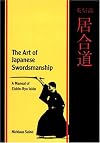
A clear, wonderful book that lists, describes, explains, illustrates and shows the kanji for all pertinent sword waza in the system.
You May Also Like


Associated Authors
Statistics
- Works
- 5
- Also by
- 1
- Members
- 308
- Popularity
- #76,455
- Rating
- 3.9
- Reviews
- 7
- ISBNs
- 9