

Greg L. Bahnsen (1948–1995)
Author of Always Ready: Directions for Defending the Faith
About the Author
Image credit: By WhiteKnight138 - Own work, CC BY-SA 4.0, https://commons.wikimedia.org/w/index.php?curid=61334547
Works by Greg L. Bahnsen
The Great Debate - Does God Exist? Dr. Greg L. Bahnsen Vs. Dr. Gordon Stein (Advanced Apologetics) (1985) 18 copies
Against All Opposition 5 copies
College Preparation in Apologetics: Focusing on the Myth of Neutrality and Worldviews in Conflict (1985) 3 copies
Michael Martin Under the Microscope: An Intensive Seminar in Apologietics (12 Audio Cassettes) (1994) 2 copies
An Answer to Frame's Critique of Van Til: Profound Differences Between the Traditional and Presuppositional Methods (1988) 2 copies
Hot Potatoes TAPE 2 copies
The Problem of Evil TAPE 2 copies
Thanksgiving TAPE 1 copy
The Christian Mission TAPE 1 copy
Reformation Sunday TAPE 1 copy
Church Membership VHS 1 copy
Evangelize or Fossilize TAPE 1 copy
The Sacraments TAPE 1 copy
A Short Synopsis of Van Til 1 copy
He Lives: The Promise of Christ's Resurrection, The Last Enemy Disarmed, The Day Death Died TAPE 1 copy
Biblical Baptism 1 copy
Presionando la antítesis: Defendiendo la cosmovisión cristiana (Greg L Bahnsen en español) (Spanish Edition) (2023) 1 copy
Critical Thinking Course 1 copy
Lectures on Hermeneutics 1 copy
Ethical Issues (8 Discs) 1 copy
Gadfly 73 1 copy
Associated Works
Tagged
Common Knowledge
- Other names
- Bahnsen, Gregory Lyle
- Birthdate
- 1948-09-17
- Date of death
- 1995-12-11
- Gender
- male
- Education
- University of Southern California, Ph.D.
Westminster Theological Seminary, M.Div., M.Th.
Westmont College, B.A. magna cum laude (1970) - Occupations
- philosopher
minister
debater - Organizations
- Reformed Theological Seminary, Jackson, Mississippi, USA
Orthodox Presbyterian Church - Relationships
- Bahnsen, David L. (son)
Van Til, Cornelius (teacher) - Nationality
- USA
- Birthplace
- Auburn, Washington, USA
- Places of residence
- Pico Rivera, California, USA
- Place of death
- Santa Ana, California, USA
- Burial location
- Rose Hills Memorial Park, Whittier, California, USA
- Associated Place (for map)
- California, USA
Members
Reviews

Some of his explanations are not the best, and he has a (commonly held) incorrect view about a certain historical leader, but the main thesis of this book is solid (something said historical leader would have agreed with) and his summary at the end nails the points well.
Despite my problems with it, I would say it's required reading for anyone who wants to seriously understand the foundation of Christian Ethics. Most of the chapters near the end are where most of the best stuff is, I show more remember first making a mental note at chapter 23 to review it because it was full of useful stuff. The first half took me much longer to read, but the patience was worth it in the end. show less
Despite my problems with it, I would say it's required reading for anyone who wants to seriously understand the foundation of Christian Ethics. Most of the chapters near the end are where most of the best stuff is, I show more remember first making a mental note at chapter 23 to review it because it was full of useful stuff. The first half took me much longer to read, but the patience was worth it in the end. show less

A very fine entry point into Presuppositional Apologetics, and one I would recommend to any Christian. Cornelius Van Til, who was most instrumental in restoring this approach to the church, is not the easiest man the read. English was his second language, and his prose is very dense. Bahnsen, a student of Van Til, is faithful to his mentor's understanding of biblical apologetics, but is much more accessible to the average reader.
This approach, at its core, is the recognition that everyone is show more bringing a set of presuppositions or worldview to a debate. However, most people are very inconsistent with their arguments and worldview. For example, an atheist will speak of atrocities happening around the world, but the atheist really has no foundation on which to base any sort of moral standard except that he likes one moral code over another. In a purely materialistic framework, there is no rational explanation of a standard moral code. In fact, the very mechanisms of evolution (survival of the fittest, etc) argue against moral declarations. The consistent atheist can say that he disagrees with Hitler, but he cannot say that Hitler was wrong.
Since only one worldview can be right, Bahnsen’s assertion is that only one will actually work. Therefore Bahnsen, when in conversation with an unbeliever, will cut through the other issues and try to challenge the worldview of the person with him.
The problem with other forms of apologetics, according to Bahnsen, is that it assumes the unbeliever capable of reasoning his way to God from a worldly starting point. They will make the world the authority over the Bible by seeking to prove the Bible by way of false and contradictory worldviews. Bahnsen will correct us here and remind us that God is our authority, and we may not put something above him. When we make the foundation of our apologetic the reason of the unbeliever and use that as a launching point, that is what we are doing.
That is not to say that presuppositionalists will not engage in reason. Bahnsen will say we using reason more consistently than others. It is also not to say that we would not use evidences and proofs. The question here is one of foundation. What is our assumption going into a conversation? Is it that the unbeliever is basically right and just needs a nudge here or there, or is it that the unbeliever needs correction at the very core of his worldview? show less
This approach, at its core, is the recognition that everyone is show more bringing a set of presuppositions or worldview to a debate. However, most people are very inconsistent with their arguments and worldview. For example, an atheist will speak of atrocities happening around the world, but the atheist really has no foundation on which to base any sort of moral standard except that he likes one moral code over another. In a purely materialistic framework, there is no rational explanation of a standard moral code. In fact, the very mechanisms of evolution (survival of the fittest, etc) argue against moral declarations. The consistent atheist can say that he disagrees with Hitler, but he cannot say that Hitler was wrong.
Since only one worldview can be right, Bahnsen’s assertion is that only one will actually work. Therefore Bahnsen, when in conversation with an unbeliever, will cut through the other issues and try to challenge the worldview of the person with him.
The problem with other forms of apologetics, according to Bahnsen, is that it assumes the unbeliever capable of reasoning his way to God from a worldly starting point. They will make the world the authority over the Bible by seeking to prove the Bible by way of false and contradictory worldviews. Bahnsen will correct us here and remind us that God is our authority, and we may not put something above him. When we make the foundation of our apologetic the reason of the unbeliever and use that as a launching point, that is what we are doing.
That is not to say that presuppositionalists will not engage in reason. Bahnsen will say we using reason more consistently than others. It is also not to say that we would not use evidences and proofs. The question here is one of foundation. What is our assumption going into a conversation? Is it that the unbeliever is basically right and just needs a nudge here or there, or is it that the unbeliever needs correction at the very core of his worldview? show less
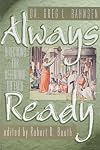
This is an accessible introduction to defending the Christian faith from a presuppositional point of view. Very strong argument for why the Christian must never "set aside" their convictions when defending the Christianity. Our goal is two-fold:
1. To demonstrate the unreasonableness of anti-Christianity
2. To demonstrate the certainty of truth found in God's word
While there is a lot of good stuff in this book, my main complaints would be:
1. Repetitive, often belaboring the same point in show more different places.
2. Focused mainly for discussing Christianity with an atheist, and tends to be philosophically minded. In many apologetic encounters, the reasoning might go over the person's head.
3. A bit too dogmatic about requiring presuppositionalism as our method of argument instead of highlighting the importance of being presuppositional in our heart convictions. While we must reject neutrality and stand firmly on God's authority, making use of the arguments of other apologetic methods during our discourses is entirely appropriate. show less
1. To demonstrate the unreasonableness of anti-Christianity
2. To demonstrate the certainty of truth found in God's word
While there is a lot of good stuff in this book, my main complaints would be:
1. Repetitive, often belaboring the same point in show more different places.
2. Focused mainly for discussing Christianity with an atheist, and tends to be philosophically minded. In many apologetic encounters, the reasoning might go over the person's head.
3. A bit too dogmatic about requiring presuppositionalism as our method of argument instead of highlighting the importance of being presuppositional in our heart convictions. While we must reject neutrality and stand firmly on God's authority, making use of the arguments of other apologetic methods during our discourses is entirely appropriate. show less

Uma explicação clara, concisa e convincente. Neste livro, Greg Bahnsen confronta a questão emocionalmente carregada do homossexualismo e as questões fundamentais a ele vinculadas ? os direitos individuais e a autoridade bíblica. Em face das pressões sociais de permitir a prática homossexual sem restrições legais, Bahnsen esclarece a questão da liberdade individual com base em diretivas legais e bíblicas. A argumentação de Bahnsen é solidamente evangélica em meio a atitudes show more divergentes na igreja cristã acerca do homossexualismo. As igrejas, todavia, são encorajadas a aceitar e a apoiar homossexuais que se arrependem e confessam a Cristo como salvador. show less
Lists
You May Also Like


Associated Authors
Statistics
- Works
- 73
- Also by
- 1
- Members
- 3,147
- Popularity
- #8,113
- Rating
- 4.2
- Reviews
- 7
- ISBNs
- 27
- Languages
- 2
- Favorited
- 4