
Geerhardus Vos (1862–1949)
Author of Biblical Theology
About the Author
Geerhardus Vos (1862-1949) became Princeton Theological Seminary's first professor of biblical theology in 1893 and continued at that post until retirement
Series
Works by Geerhardus Vos
Redemptive History and Biblical Interpretation: The Shorter Writings of Geerhardus Vos (1980) 398 copies
The Self-Disclosure of Jesus: The Modern Debate about the Messianic Consciousness (Student Library) (2002) 196 copies
Reformed Dogmatics (Single Volume Edition): A System of Christian Theology (2020) 171 copies, 1 review
A Geerhardus Vos Anthology: Biblical and Theological Insights Alphabetically Arranged (2005) 125 copies
Teologia Biblica del Antiguo y Nuevo Testamento: El desarrollo organico, historico y progresivo del plan de Dios (Spanish Edition) (2021) 6 copies
The Journal Writings of Geerhardus Vos, Volume 3: New Testament Theology and Background (2018) 2 copies
The Eschatology of the Psalter 2 copies
The Teaching of Jesus 1 copy
Eschatology of the Psalter 1 copy
Teologia natural 1 copy
Ecclesiology, the Means of Grace, Eschatology — Author — 1 copy
Tagged
Common Knowledge
- Canonical name
- Vos, Geerhardus
- Legal name
- Vos, Geerhardus Johannes
- Other names
- 霍志恆
- Birthdate
- 1862-03-14
- Date of death
- 1949-08-13
- Gender
- male
- Education
- Strassburg University (PhD ∙ Arabic Studies ∙ 1888)
University of Berlin
Princeton Theological Seminary
Christian Reformed Church Theological School - Occupations
- clergyman
professor - Organizations
- Princeton Theological Seminary
Christian Reformed Church Theological School - Relationships
- Vos, Johannes Geerhardus (son)
Vos, Catherine (wife) - Nationality
- USA
- Birthplace
- Heerenveen, Netherlands
- Places of residence
- Grand Rapids, Michigan, USA
- Place of death
- Hessel Convalescent Home, Grand Rapids, Michigan, USA
- Burial location
- Griffin Cemetery, Roaring Branch, Pennsylvania, USA
- Associated Place (for map)
- USA
Members
Reviews
A glorious collection. Rarely have I read sermons that pulled so insistently on both my mind and affections. I really have no context for Vos other than "redemptive-historical preaching," and I barely know what that means, but if this is a consummate example of the latter, then...I need more.
I wish I could have given this more than three stars. The author was not only an accomplished man, but clearly a person with great empathy and sensitivity. But I didn’t quite connect with a lot of his poems. It’s a bit hard to explain really. I’d still recommend this to other readers. The poems cover a wide range of topics, some of which are spiritual, others are just about life, with both its sorrows and joys.

Short book on the defense that the Kingdom of God is biblically rooted in the person and work of Christ, and that the Kingdom is an already and not yet reality that is both eschatologically future and present for the visible and invisible church today. Defense from the Old Testament, the Church, and the moral nature of God’s Kingdom are all discussed here.
This book is classic Vos, in the sense that it is unapologetically dense; mining some of the great wisdom here is going to take some show more deep dives into the spirals that Vos brings you down. Vos expects you to keep pace with him, so be ready to be undistracted while reading. If you’re patient to take the time to ponder his arguments(this is 100 pg. book, but think of it as a 200 pager to keep up); there is a robustness there that can serve the church well in foundational theological truth. Real life application isn’t Vos’ goal, but the broad principles here forces the reader to assume their own application of Vos’ arguments. A good day read. show less
This book is classic Vos, in the sense that it is unapologetically dense; mining some of the great wisdom here is going to take some show more deep dives into the spirals that Vos brings you down. Vos expects you to keep pace with him, so be ready to be undistracted while reading. If you’re patient to take the time to ponder his arguments(this is 100 pg. book, but think of it as a 200 pager to keep up); there is a robustness there that can serve the church well in foundational theological truth. Real life application isn’t Vos’ goal, but the broad principles here forces the reader to assume their own application of Vos’ arguments. A good day read. show less
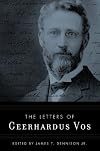
In The Letters of Geerhardus Vos James Dennison takes readers on a guided tour into the personality and thought of one of the most profound Reformed theologians of the 20th century. It is a really outstanding book and I greatly enjoyed reading it. It is divided into four sections.
The first is biographical. Dennison has complied what is the most thorough biography written of Vos, in a mere 73 pages. The fact is that Vos preferred to stay in the background and rarely, if ever, sought show more publicity for himself. Additionally, when requested of him, Vos only provided the most skeletal of biographical details. Dennison has thoroughly dug into the everything he could find in order to compile his biography, which is enriched by intermittent reflections on VOs at various stages of his life. I found this to be most interesting as Dennison works through the actions of Vos at the time of the reorganization of Princeton Seminary in 1929, when a number of faculty, many of whom were Vos' students, left Princeton to found Westminster Seminary. Vos chose to stay and Dennison sheds light on the rationale for Vos' decision.
The second section is bibliographical, with a listing of the publications of Vos in his lifetime, as well as things that were published posthumously , along with addition works titles about him and his work.
The third section is the letters. Approximately 75% of the published letters were written to just three correspondents: B.B. Warfield, Abraham Kuyper and Herman Bavinck. In the letters we have an opportunity to see Vos in his own words, and it is a remarkable picture. His learning was extensive, yet he seeks to learn from others. He is cordial to a fault, and generous with his personal time as he shares life with others. He is also very committed to what might be called "old-school Calvinism," being highly sensitive and rightly suspicious of the winds of change blowing through Reformed theology of his day. I have no doubt that he would not be surprised by the downward spiral that has occurred into our day, and perhaps pleased at the glimmers of hope for the future, through such things as the recent publication of Bavinck's Reformed Dogmatics in English.
The final section contains a few of Vos' poetry. Fluent as a scholar in nine languages Vos wrote poetry throughout his career and his retirement. It was primarily for his own enjoyment and to share with a few friends. Frankly, I "don't get" poetry but I did enjoy the few pieces included in this volume.
Vos is a giant of biblical theology from a Reformed perspective. This book provides a clearer picture of the man and the mind behind his writing. I highly recommend it. show less
The first is biographical. Dennison has complied what is the most thorough biography written of Vos, in a mere 73 pages. The fact is that Vos preferred to stay in the background and rarely, if ever, sought show more publicity for himself. Additionally, when requested of him, Vos only provided the most skeletal of biographical details. Dennison has thoroughly dug into the everything he could find in order to compile his biography, which is enriched by intermittent reflections on VOs at various stages of his life. I found this to be most interesting as Dennison works through the actions of Vos at the time of the reorganization of Princeton Seminary in 1929, when a number of faculty, many of whom were Vos' students, left Princeton to found Westminster Seminary. Vos chose to stay and Dennison sheds light on the rationale for Vos' decision.
The second section is bibliographical, with a listing of the publications of Vos in his lifetime, as well as things that were published posthumously , along with addition works titles about him and his work.
The third section is the letters. Approximately 75% of the published letters were written to just three correspondents: B.B. Warfield, Abraham Kuyper and Herman Bavinck. In the letters we have an opportunity to see Vos in his own words, and it is a remarkable picture. His learning was extensive, yet he seeks to learn from others. He is cordial to a fault, and generous with his personal time as he shares life with others. He is also very committed to what might be called "old-school Calvinism," being highly sensitive and rightly suspicious of the winds of change blowing through Reformed theology of his day. I have no doubt that he would not be surprised by the downward spiral that has occurred into our day, and perhaps pleased at the glimmers of hope for the future, through such things as the recent publication of Bavinck's Reformed Dogmatics in English.
The final section contains a few of Vos' poetry. Fluent as a scholar in nine languages Vos wrote poetry throughout his career and his retirement. It was primarily for his own enjoyment and to share with a few friends. Frankly, I "don't get" poetry but I did enjoy the few pieces included in this volume.
Vos is a giant of biblical theology from a Reformed perspective. This book provides a clearer picture of the man and the mind behind his writing. I highly recommend it. show less
Lists
You May Also Like


Associated Authors
Statistics
- Works
- 58
- Members
- 5,730
- Popularity
- #4,308
- Rating
- 4.2
- Reviews
- 12
- ISBNs
- 98
- Languages
- 3
- Favorited
- 3
