
John Murray (1) (1898–1975)
Author of Redemption Accomplished and Applied
For other authors named John Murray, see the disambiguation page.
About the Author
John Murray (1898-1975) was born in Scotland and educated in Glasgow, Edinburgh, and Princeton. He spent most of his distinguished career teaching systematic theology at Westminster Theological Seminary in Philadelphia. His other books include Principles of Conduct: Aspects of Biblical Ethics.
Image credit: By Source, Fair use, https://en.wikipedia.org/w/index.php?curid=45587774
Series
Works by John Murray
Epistle to the Romans: The English Text With Introduction, Exposition, and Notes (NEW INTERNATIONAL COMMENTARY ON THE NEW TESTAMENT) (1959) 1,466 copies, 2 reviews
The Covenant of Grace: A Biblico-Theological Study (Biblical & Theological Studies) (1987) 297 copies, 1 review
Institutes of the Christian Religion 4 copies
Life; Sermons; Reviews Vol.3 1 copy
Romans, The Epistle to 1 copy
Associated Works
Institutes of the Christian Religion (1536) — Introduction, some editions — 8,459 copies, 34 reviews
The Infallible Word: A Symposium by the Members of the Faculty of Westminster Theological Seminary (1946) — Contributor — 302 copies
Tagged
Common Knowledge
- Canonical name
- Murray, John
- Other names
- 麥約翰
- Birthdate
- 1898-10-14
- Date of death
- 1975-05-08
- Gender
- male
- Education
- University of Glasgow
Princeton Theological Seminary - Occupations
- theologian
professor - Organizations
- Banner of Truth Trust (trustee)
Westminster Theological Seminary (1930-1966)
Free Church of Scotland - Relationships
- Knowlton, Valerie (wife)
- Nationality
- UK
- Birthplace
- Bonar Bridge, Sutherland, Scotland, UK
- Places of residence
- Scotland, UK
USA - Burial location
- Creich Cemetery, Little Creich, Sutherland, Scotland, UK
- Map Location
- Scotland, UK
Members
Reviews

Until about 3 years ago, I held the dogmatic "no divorce, no remarriage" position that is espoused by Carl Laney in his book "The Divorce Myth." (I've also reviewed The Divorce Myth.) However, that position began to moderate when I realized that the instruction "it is better to marry than to burn" in 1st Corinthians 7:9 was not written solely regarding virgins (or widows), but that the word "unmarried" also (and more likely in the immediate context) applied to those who were previously show more married (probably before their salvation), but now are "unmarried." Once I had arrived at that interpretation and understanding, my entire position on divorce and remarriage had to be re-evaluated.
I've read several different books on divorce and remarriage in the last couple of years. John Murray's book is undoubtedly the best. The book is primarily the work of six articles that he wrote for the Westminster Theological Journal from 1946-1949. There are several things which I would say about Murray and this book, before giving a brief summary of his views.
- He believes the design of God for marriage is "one man, one woman, one lifetime."
- His exegesis and hermeneutics are nearly irrefutable (in my opinion).
- His belief in the authority of Scripture is absolute.
- He does not appear to start with a conclusion to be supported, but forms logical conclusions and applications based on what the Scripture says.
The Forward to the book asserts the nature of marriage according to God's design.
Chapter One explains the O.T. instruction for divorce and remarriage as given to Israel in Deuteronomy 24:1-4. It would take too much time to elaborate on everything Murray wrote here, but it is sufficient to say that religious society in Jesus day was misusing the provision in order to divorce and remarry at will. However, the primary purpose was not to grant the right of divorce, but to declare that a divorced couple could not remarry after they each had been married to another. (The protasis is 24:1-3 and the apodosis is 24:4.) Murray's conclusion regarding the passage follows, "within the limits of this passage we have exemplified and confirmed the principle that while divorce was suffered [tolerated] in the Mosaic economy, we have no warrant to suppose that under any circumstances was it sanctioned or approved as the intrinsic right or prerogative of the husband."
Chapter 2 explains the teaching of Jesus in Matthew 5 and 19, Mark 10 and Luke 16. Again, I won't re-write everything Murray said, but a couple of salient points are these:
- He very effectively harmonizes the context and language of each of the four places that Jesus taught on divorce. There are no contradictions, just different contexts and therefore different assertions.
- He shows that Jesus' removal of the "any cause" for divorce, by which the Pharisees were living out their lusts, was actually a strengthening of the intent of the permanency of marriage.
- He demonstrates grammatically that the exception clause of fornication by an unfaithful spouse, not only permits divorce, but consequently remarriage (for the innocent party). It is possible to hold a high view of marriage, but still recognize that fornication will sometimes destroy the marriage bond and that an innocent party may be granted the option of remarriage without it being considered adultery.
Chapter 3 presents the interpretations of Paul's writings on divorce from 1st Corinthians 7 and Romans 7. In this chapter, Murray:
From 1st Corinthians,
- Carefully harmonizes the teachings of Paul with those of Jesus. As before, they are complimentary, not contradictory. They deal in a different contexts with different recipients.
- Clearly explains marital obligations and their purpose.
- Differentiates between the instructions to believing couples and mixed couples (one believing and one unbelieving spouse).
- Explains the "not under bondage" phrase as it applies to a believing spouse abandoned by an unbelieving partner.
- Warns of the problem and implications of a believing spouse divorcing an unbelieving spouse. On the contrary, he asserts the value of a believing spouse's influence on an unbelieving spouse and the witness of God's grace to them.
From Romans 7,
- He expresses the fact that verses 2-3 are an illustration of men being dead to the law. A light view of marriage would undermine the illustration's power. Paul uses the general law (without feeling the necessity to explain any exceptions), to prove his theological point.
Chapter 4 is a presentation of cases and practical applications. These are actually pretty straightforward. However, there is a bit of a practical disconnect since the book was written several decades ago. For example, he explains that in the state of South Carolina divorce was illegal and there could be conflict in the case where someone might actually have a legitimate and Biblical reason for divorce.
In conclusion, Murray does believe that there are very limited exceptions for divorce and the exception of divorce in those cases does allow for remarriage. However, he continually asserts that God's design is for a marriage to be permanent. His appeal is always to Scripture and takes great care to make sure that he is accurately interpreting each passage of Scripture. This is the most Scriptural, logical, and balanced treatment of this subject that I have read. show less
I've read several different books on divorce and remarriage in the last couple of years. John Murray's book is undoubtedly the best. The book is primarily the work of six articles that he wrote for the Westminster Theological Journal from 1946-1949. There are several things which I would say about Murray and this book, before giving a brief summary of his views.
- He believes the design of God for marriage is "one man, one woman, one lifetime."
- His exegesis and hermeneutics are nearly irrefutable (in my opinion).
- His belief in the authority of Scripture is absolute.
- He does not appear to start with a conclusion to be supported, but forms logical conclusions and applications based on what the Scripture says.
The Forward to the book asserts the nature of marriage according to God's design.
Chapter One explains the O.T. instruction for divorce and remarriage as given to Israel in Deuteronomy 24:1-4. It would take too much time to elaborate on everything Murray wrote here, but it is sufficient to say that religious society in Jesus day was misusing the provision in order to divorce and remarry at will. However, the primary purpose was not to grant the right of divorce, but to declare that a divorced couple could not remarry after they each had been married to another. (The protasis is 24:1-3 and the apodosis is 24:4.) Murray's conclusion regarding the passage follows, "within the limits of this passage we have exemplified and confirmed the principle that while divorce was suffered [tolerated] in the Mosaic economy, we have no warrant to suppose that under any circumstances was it sanctioned or approved as the intrinsic right or prerogative of the husband."
Chapter 2 explains the teaching of Jesus in Matthew 5 and 19, Mark 10 and Luke 16. Again, I won't re-write everything Murray said, but a couple of salient points are these:
- He very effectively harmonizes the context and language of each of the four places that Jesus taught on divorce. There are no contradictions, just different contexts and therefore different assertions.
- He shows that Jesus' removal of the "any cause" for divorce, by which the Pharisees were living out their lusts, was actually a strengthening of the intent of the permanency of marriage.
- He demonstrates grammatically that the exception clause of fornication by an unfaithful spouse, not only permits divorce, but consequently remarriage (for the innocent party). It is possible to hold a high view of marriage, but still recognize that fornication will sometimes destroy the marriage bond and that an innocent party may be granted the option of remarriage without it being considered adultery.
Chapter 3 presents the interpretations of Paul's writings on divorce from 1st Corinthians 7 and Romans 7. In this chapter, Murray:
From 1st Corinthians,
- Carefully harmonizes the teachings of Paul with those of Jesus. As before, they are complimentary, not contradictory. They deal in a different contexts with different recipients.
- Clearly explains marital obligations and their purpose.
- Differentiates between the instructions to believing couples and mixed couples (one believing and one unbelieving spouse).
- Explains the "not under bondage" phrase as it applies to a believing spouse abandoned by an unbelieving partner.
- Warns of the problem and implications of a believing spouse divorcing an unbelieving spouse. On the contrary, he asserts the value of a believing spouse's influence on an unbelieving spouse and the witness of God's grace to them.
From Romans 7,
- He expresses the fact that verses 2-3 are an illustration of men being dead to the law. A light view of marriage would undermine the illustration's power. Paul uses the general law (without feeling the necessity to explain any exceptions), to prove his theological point.
Chapter 4 is a presentation of cases and practical applications. These are actually pretty straightforward. However, there is a bit of a practical disconnect since the book was written several decades ago. For example, he explains that in the state of South Carolina divorce was illegal and there could be conflict in the case where someone might actually have a legitimate and Biblical reason for divorce.
In conclusion, Murray does believe that there are very limited exceptions for divorce and the exception of divorce in those cases does allow for remarriage. However, he continually asserts that God's design is for a marriage to be permanent. His appeal is always to Scripture and takes great care to make sure that he is accurately interpreting each passage of Scripture. This is the most Scriptural, logical, and balanced treatment of this subject that I have read. show less
Without a doubt, "Redemption Accomplished and Applied" is the best summary of Reformed sotierology I have ever found. Equally profound and digestible, this book will leave you in awe of God's grace and love but also lead you in new ways to practically apply the theological import of the ordo salutis in your daily life.
The first half on redemption accomplished is a straightforward defense of substitutionary atonement--a much maligned doctrine but a necessary one that is commensurate with show more God's character and mission. One cannot fathom the depth of God's love in Christ's sacrificial death until he soberly assesses the seriousness of his own sin. That Christ willingly offered himself on the cross to pay the penalty of sin on your behalf is a marvelous truth that the church must defend at all costs.
The second half on redemption applied is a step-by-step analysis of the ordo salutis as it is represented in Romans 8:30 and the Westminster Standards. Again, the emphasis is on God's divine activity on behalf of sinners dead in their trespasses. The sinner brings nothing to the table; his is a justification by faith alone in Christ alone. That does not excuse a kind of passive Christianity, but rightly characterizes faith as the instrument of salvation, not the grounds.
The author's commitment to orthodox trinitarianism is to be appreciated. Being rooted in Westminsterian theology, Murray is always quick to remind his reader that it is the Father who elects, the Son who saves, and the Spirit who applies--each person of the economic Trinity involves himself in your salvation which is both deeply mysterious and assuring. show less
The first half on redemption accomplished is a straightforward defense of substitutionary atonement--a much maligned doctrine but a necessary one that is commensurate with show more God's character and mission. One cannot fathom the depth of God's love in Christ's sacrificial death until he soberly assesses the seriousness of his own sin. That Christ willingly offered himself on the cross to pay the penalty of sin on your behalf is a marvelous truth that the church must defend at all costs.
The second half on redemption applied is a step-by-step analysis of the ordo salutis as it is represented in Romans 8:30 and the Westminster Standards. Again, the emphasis is on God's divine activity on behalf of sinners dead in their trespasses. The sinner brings nothing to the table; his is a justification by faith alone in Christ alone. That does not excuse a kind of passive Christianity, but rightly characterizes faith as the instrument of salvation, not the grounds.
The author's commitment to orthodox trinitarianism is to be appreciated. Being rooted in Westminsterian theology, Murray is always quick to remind his reader that it is the Father who elects, the Son who saves, and the Spirit who applies--each person of the economic Trinity involves himself in your salvation which is both deeply mysterious and assuring. show less
A wonderful discussion of what the sacrifice of Christ on the Cross really (and fully) means. Murray makes the case methodically and wisely that we are helpless to save ourselves, that we deserve death for our sins, that these sins are serious and deserving of justice, and that Jesus took the punishment that God's children deserve for their sins upon himself on the Cross.
And then, in the second part, he explains how that redemption, already earned, is applied to us.
A wonderful volume. It is show more not easy reading, but I would encourage Christians to make the effort to understand it. That may be a frustrating process if you are unused to deep writing, but it is worthwhile. show less
And then, in the second part, he explains how that redemption, already earned, is applied to us.
A wonderful volume. It is show more not easy reading, but I would encourage Christians to make the effort to understand it. That may be a frustrating process if you are unused to deep writing, but it is worthwhile. show less
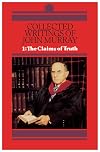
This volume contains the most important of John Murray's shorter writings and addresses between the years 1935 and 1973. They have been placed together in this opening volume of his Collected Writings as the best introduction to his thought on wide range of Christian truth. Murray's belief was that, while the expression of truth 'may be expanded indefinitely and furnish nourishment for the highest intellects to eternity', it is also capable of presentation in popular and generally-understood show more terms. Accordingly, he speaks in these pages not so much to students as to the church at large in this critical century of her history. Such chapters as 'Some Necessary Emphases in Preaching', The Power of the Holy Spirit', and The Church of Mission', show how thoroughly he understood the great inadequacies of much contemporary Christianity.
This material (none of which has been previously published in book form) gives the quintessence of the convictions which were characteristic of his mature thought. Their appeal in written form is increased by the pervasive influence of his belief that theology should be 'shot through with warmth of ardent devotion'. He addresses himself to the needs of both mind and heart, believing that when Scripture is opened there should be both light and heat. His overriding concern is that the Word of God should challenge every area where thinking and living can be shown to be deficient and that the traditions of men should give way to 'the claims of truth'. show less
This material (none of which has been previously published in book form) gives the quintessence of the convictions which were characteristic of his mature thought. Their appeal in written form is increased by the pervasive influence of his belief that theology should be 'shot through with warmth of ardent devotion'. He addresses himself to the needs of both mind and heart, believing that when Scripture is opened there should be both light and heat. His overriding concern is that the Word of God should challenge every area where thinking and living can be shown to be deficient and that the traditions of men should give way to 'the claims of truth'. show less
Lists
You May Also Like


Associated Authors
Statistics
- Works
- 37
- Also by
- 2
- Members
- 9,547
- Popularity
- #2,520
- Rating
- 4.3
- Reviews
- 18
- ISBNs
- 233
- Languages
- 8
- Favorited
- 8


