
Herman Bavinck (1854–1921)
Author of Reformed Dogmatics, Vol. 1: Prolegomena
About the Author
Image credit: Used by permission of Baker Publishing Group, copyright © 2008. All rights to this material are reserved. Materials are not to be distributed to other web locations for retrieval, published(see © info.)
Series
Works by Herman Bavinck
Reformed Social Ethics: Perspectives on Society, Culture, State, Church, and the Kingdom of God (Reformed Ethics) (2025) 89 copies
The Foremost Problems of Contemporary Dogmatics: On Faith, Knowledge, and the Christian Tradition (2025) 35 copies
Magnalia Dei : onderwijzing in de christelijke religie naar gereformeerde belijdenis (1909) 9 copies
Beginselen der psychologie 6 copies
Teologia Sistemática 4 copies
Christelijke wetenschap 4 copies
Paedagogische beginselen 4 copies
Cosmovisão cristã 3 copies
The Order of Salvation 3 copies
Het Christelijk huisgezin 3 copies
The Wonderful Works of God 2 copies
Magnalia Dei 2 copies
'Als Bavinck nu maar eens kleur bekende' : aantekeningen van H. Bavinck over de zaak-Netelenbos, het Schriftgezag en de (1994) — Author — 2 copies
De nieuwe opvoeding 2 copies
Death and the Fall 2 copies
Selected Works of Herman Bavinck 2 copies
Gereformeerde Dogmatiek 1 copy
Philosophie des geloofs 1 copy
De welsprekendheid : eene lezing voor de studenten der Theol. School te Kampen, 28 November 1889 1 copy
De algemeene genade 1 copy
Foundations of Psychology 1 copy
Tagged
Common Knowledge
- Legal name
- Bavinck, Herman
- Other names
- 赫爾曼.巴文克
- Birthdate
- 1854-12-13
- Date of death
- 1921-07-29
- Gender
- male
- Relationships
- Bavinck, J.H. (nephew)
- Nationality
- Netherlands
- Birthplace
- Hoogeveen, Netherlands
- Place of death
- Amsterdam, Netherlands
- Associated Place (for map)
- Netherlands
Members
Reviews

This is the second volume of Herman Bavinck's four-part systematic theology. While the sub-title of this volume is God and Creation, the writing contained within these pages is divided in six parts; Part 1: Knowing God (The Incomprehensibility of God; The Knowledge of God); Part 2: The Living, Acting God (The names of God; God's Incommunicable Attributes; God's Communicable Attributes; The Holy Trinity); Part 3: God's Will On Earth As It Is In Heaven (The Divine Counsel, Creation); Part 4: show more Maker Of Heaven And Earth (Heaven: The Spiritual World; Earth: The Material World); Part 5: The Image Of God (Human Origins, Human Nature, Human Destiny); and Part 6: God's Fatherly Care (Providence).
Bavinck is a master of Reformed theology. He is extremely well-read in Christian theology, from the time of the church fathers through his own day, the late 19th century. He is also thoroughly familiar with writing in philosophy, from the ancient Greeks through the philosophers of his age. His depth of knowledge with such a wide breadth of work allows him to dig deeply into each of his topic areas, pointing out strengths and weaknesses of various arguments, before arriving at a place of understanding that is grounded in the Reformed tradition.
Bavinck is thoroughly biblical as he works thorough a topic. He acknowledges strengths of the positions of others, and also gently probes their weaknesses. One of the strengths of his writing, besides its depth and breadth, is that he is consistently irenic. Where I might describe a position I disagree with in harsh or condescending terms, Bavinck's writing consistently displays a sense of peace, as if he was inviting a person with a differing view to reconsider their position in favor his own, and not because his own position is intrinsically better, but because he believes that at the end of the day his position will be found to be thoroughly biblical. For Bavinck, the biblical text is the place we continually place our feet on, not matter what the winds are that blow through our culture.
I'll confess that I am a bit of a fan of Bavinck, having read Part 2 of this book while in seminary. In that section Bavinck presents a rich and compelling view of God from a Reformed perspective that I just didn't see in other theological frameworks. It was the writing that drew me whole-heartedly into the Reformed camp. It was a delight not only to re-read that section but to read everything else that this profound theologian, professor and pastor has worked out in a systematic way about God and Creation. show less
Bavinck is a master of Reformed theology. He is extremely well-read in Christian theology, from the time of the church fathers through his own day, the late 19th century. He is also thoroughly familiar with writing in philosophy, from the ancient Greeks through the philosophers of his age. His depth of knowledge with such a wide breadth of work allows him to dig deeply into each of his topic areas, pointing out strengths and weaknesses of various arguments, before arriving at a place of understanding that is grounded in the Reformed tradition.
Bavinck is thoroughly biblical as he works thorough a topic. He acknowledges strengths of the positions of others, and also gently probes their weaknesses. One of the strengths of his writing, besides its depth and breadth, is that he is consistently irenic. Where I might describe a position I disagree with in harsh or condescending terms, Bavinck's writing consistently displays a sense of peace, as if he was inviting a person with a differing view to reconsider their position in favor his own, and not because his own position is intrinsically better, but because he believes that at the end of the day his position will be found to be thoroughly biblical. For Bavinck, the biblical text is the place we continually place our feet on, not matter what the winds are that blow through our culture.
I'll confess that I am a bit of a fan of Bavinck, having read Part 2 of this book while in seminary. In that section Bavinck presents a rich and compelling view of God from a Reformed perspective that I just didn't see in other theological frameworks. It was the writing that drew me whole-heartedly into the Reformed camp. It was a delight not only to re-read that section but to read everything else that this profound theologian, professor and pastor has worked out in a systematic way about God and Creation. show less
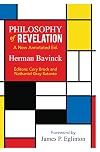
Summary: A new annotated edition of Dutch Reformed theologian Herman Bavinck's 1908 Stone Lectures at Princeton, arguing that revelation is a warranted basic belief.
Herman Bavinck (1854-1921) was a Dutch Reformed theologian, writing mostly in Dutch, from the late nineteenth, early twentieth century. With the translation of his Reformed Dogmatics in 2003, studies of Bavinck's work has flourished. This work represents an expanded version of Bavinck's Stone Lectures at Princeton, first show more translated in 1908 by Geerhardus Vos. Two contemporary Bavinck scholars recognized the importance of this work to discussions of Reformed epistemology, and have given us this new annotated edition of the work. The annotations to the work are found in the footnotes and address everything from alternate translations of the text to explanations and context for Bavinck's arguments, a tremendous asset to any modern scholar-theologian studying Bavinck. This is particularly important because Bavinck is engaging philosophers, scientists, and historians of his day, who are often not a part of contemporary academic and theological discourse.
Bavinck's basic argument, anticipating the work of Alvin Plantinga, is that revelation is a warranted basic belief. The lectures argue this inductively from the disciplines of philosophy, natural science, history, religion and religious experience, culture, the Christian faith, and our teleology, our understanding of the future. Revelation in its general form (the things we can't not know), and particularly around religious experience and Christian faith, special revelation, are shown to be basic to human experience and actually foundational to science, history, and philosophy.
Bavinck writes in a period where modernism had theology on its heels. Scientific research exalted the materialistic, rational explanation of all. What I was most intrigued with in the work was how Bavinck anticipated much of the developments of the last one hundred years in the movement from materialism to various forms of pantheistic monism in shaping our view of reality. Bavinck is one of the first I have observed to address the questions of the one and the many and how revelation, and the Christian faith offers the only satisfying explanation about connections between material and spiritual reality, and the sources both of oneness and true diversity. He is also prescient, in his discussion of revelation and the future, in anticipating the eugenics movement, and more recent efforts in genetic modification or even trans-humanism, human efforts to control our future.
The strength of this work is the basic argument Bavinck is making, and its connection to later thinkers from Van Til to Plantinga and Wolterstorff. An important aspect of this philosophy of revelation is the argument for how revelation serves as the basis of the coherence of all intellectual inquiry. This is desperately needed good news for our modern, fragment university world, as well as our fragmented modern lives, and even sense of self.
Sometimes, Bavinck's engagement with scholars of his day makes it harder for those of us unfamiliar with them to keep track of his argument. The annotations are quite helpful in this regard. While it may have felt like meddling in the text, some form of subheadings or marginal summaries would have been helpful to this reader in keeping track of the thread of his argument. In some cases, such as critiquing Darwin, it felt that he might have been relying on apologetic arguments of his day that are less helpful with the advances of biological science. I realize that such a criticism simply reflects the problem of engaging any scholarly work from one hundred years ago.
None of this takes away from the compelling case he makes for a warranted basic belief in revelation, addressing both the philosophy of revelation, and the philosophy of revelation. We continue to live and move and work in an incoherent culture that divorces reason and revelation. Bavinck offers a significant extended argument for reconciling these, summarized well in one of his concluding statements:
"Revelation in nature and revelation in Scripture form, in alliance (verband) with each other, a harmonious unity which satisfies the requirements of the intellect and the needs of the heart alike." (p. 242)
[By the way, don't overlook the editors explanation, in their introductory essay (pp. xxxii-xxxiii), of the use of Piet Mondrian's work on the cover of this work!]
_____________________________________
Disclosure of Material Connection: I received this book free from the publisher. I was not required to write a positive review. The opinions I have expressed are my own. show less
Herman Bavinck (1854-1921) was a Dutch Reformed theologian, writing mostly in Dutch, from the late nineteenth, early twentieth century. With the translation of his Reformed Dogmatics in 2003, studies of Bavinck's work has flourished. This work represents an expanded version of Bavinck's Stone Lectures at Princeton, first show more translated in 1908 by Geerhardus Vos. Two contemporary Bavinck scholars recognized the importance of this work to discussions of Reformed epistemology, and have given us this new annotated edition of the work. The annotations to the work are found in the footnotes and address everything from alternate translations of the text to explanations and context for Bavinck's arguments, a tremendous asset to any modern scholar-theologian studying Bavinck. This is particularly important because Bavinck is engaging philosophers, scientists, and historians of his day, who are often not a part of contemporary academic and theological discourse.
Bavinck's basic argument, anticipating the work of Alvin Plantinga, is that revelation is a warranted basic belief. The lectures argue this inductively from the disciplines of philosophy, natural science, history, religion and religious experience, culture, the Christian faith, and our teleology, our understanding of the future. Revelation in its general form (the things we can't not know), and particularly around religious experience and Christian faith, special revelation, are shown to be basic to human experience and actually foundational to science, history, and philosophy.
Bavinck writes in a period where modernism had theology on its heels. Scientific research exalted the materialistic, rational explanation of all. What I was most intrigued with in the work was how Bavinck anticipated much of the developments of the last one hundred years in the movement from materialism to various forms of pantheistic monism in shaping our view of reality. Bavinck is one of the first I have observed to address the questions of the one and the many and how revelation, and the Christian faith offers the only satisfying explanation about connections between material and spiritual reality, and the sources both of oneness and true diversity. He is also prescient, in his discussion of revelation and the future, in anticipating the eugenics movement, and more recent efforts in genetic modification or even trans-humanism, human efforts to control our future.
The strength of this work is the basic argument Bavinck is making, and its connection to later thinkers from Van Til to Plantinga and Wolterstorff. An important aspect of this philosophy of revelation is the argument for how revelation serves as the basis of the coherence of all intellectual inquiry. This is desperately needed good news for our modern, fragment university world, as well as our fragmented modern lives, and even sense of self.
Sometimes, Bavinck's engagement with scholars of his day makes it harder for those of us unfamiliar with them to keep track of his argument. The annotations are quite helpful in this regard. While it may have felt like meddling in the text, some form of subheadings or marginal summaries would have been helpful to this reader in keeping track of the thread of his argument. In some cases, such as critiquing Darwin, it felt that he might have been relying on apologetic arguments of his day that are less helpful with the advances of biological science. I realize that such a criticism simply reflects the problem of engaging any scholarly work from one hundred years ago.
None of this takes away from the compelling case he makes for a warranted basic belief in revelation, addressing both the philosophy of revelation, and the philosophy of revelation. We continue to live and move and work in an incoherent culture that divorces reason and revelation. Bavinck offers a significant extended argument for reconciling these, summarized well in one of his concluding statements:
"Revelation in nature and revelation in Scripture form, in alliance (verband) with each other, a harmonious unity which satisfies the requirements of the intellect and the needs of the heart alike." (p. 242)
[By the way, don't overlook the editors explanation, in their introductory essay (pp. xxxii-xxxiii), of the use of Piet Mondrian's work on the cover of this work!]
_____________________________________
Disclosure of Material Connection: I received this book free from the publisher. I was not required to write a positive review. The opinions I have expressed are my own. show less
In Reformed Dogmatics, Vol. 3: Sin and Salvation in Christ, Herman Bavinck continues the project begun in volume 1 and 2, which is to masterfully expound the doctrines of a robust Reformed theology. His broad topics in this work are: The Fallen World; Christ the Redeemer; the Work of Christ, ; and Salvation in Christ. Bavinck writes comprehensively on sin, including its origin, spread, nature and punishment; the covenant of grace and the person of Christ; Christ's humiliation and exaltation; show more and the order of salvation.
Bavinck is a master of the literature available in his time, including not just his contemporaries but also the Reformers, the Church Fathers, the Scholastics, and the work of other fields, such as classical Greek and Roman thought as well as 18th and 19th century philosophy. As he works his way, methodically and comprehensively, through each subject of dogmatics he starts with a broad survey of the topic, goes through the strengths and weaknesses of various positions, be they historical or current, and then arrives at a Reformed understanding of the topic. For Bavinck, Reformed doesn’t mean a caricature of Calvinism but a theology that is always grounded in God's Word as the final word. He is confessionally Reformed and so his positions are also consistent with the theology of the Heidelberg Catechism, the Belgic Confession and the Canons of Dordt.
While Bavinck's Dogmatics are now about 100 years old I find his writing to be a breath of fresh air, as many of the subjects he addresses continue to be issues of concern, and occasional divisiveness, for many in the church today. As a pastor I found that he describes theology clearly and in ways that are relevant and useful for strengthening the faith of the congregation I care for. Alongside Calvin's Institutes I would recommend Bavinck's Reformed Dogmatics as an essential reference for the Reformed pastor, as well as for anyone wanting to dig more deeply into theology and see the glory of God as it comes through a Reformed perspective. show less
Bavinck is a master of the literature available in his time, including not just his contemporaries but also the Reformers, the Church Fathers, the Scholastics, and the work of other fields, such as classical Greek and Roman thought as well as 18th and 19th century philosophy. As he works his way, methodically and comprehensively, through each subject of dogmatics he starts with a broad survey of the topic, goes through the strengths and weaknesses of various positions, be they historical or current, and then arrives at a Reformed understanding of the topic. For Bavinck, Reformed doesn’t mean a caricature of Calvinism but a theology that is always grounded in God's Word as the final word. He is confessionally Reformed and so his positions are also consistent with the theology of the Heidelberg Catechism, the Belgic Confession and the Canons of Dordt.
While Bavinck's Dogmatics are now about 100 years old I find his writing to be a breath of fresh air, as many of the subjects he addresses continue to be issues of concern, and occasional divisiveness, for many in the church today. As a pastor I found that he describes theology clearly and in ways that are relevant and useful for strengthening the faith of the congregation I care for. Alongside Calvin's Institutes I would recommend Bavinck's Reformed Dogmatics as an essential reference for the Reformed pastor, as well as for anyone wanting to dig more deeply into theology and see the glory of God as it comes through a Reformed perspective. show less

A conveniência deste livro, publicado primeiramente em 1901, é vista pelo grande número de textos acadêmicos que o citam. A certeza da fé é um dos pequenos porém poderosos clássicos escritos por um dos maiores teólogos que a Holanda já produziu. Bavinck examina de maneira histórica, bíblica e teológica a diferença entre a certeza da ciência e a certeza da religião. É essencial, para a fé e para a vida da fé, estudar pormenorizadamente a área dos princípios básicos, show more porque as questões aqui levantadas são de fundamental importância para todos. Não há questão mais importante do que aquela que diz respeito ao fundamento de nossa fé, à certeza de nossa salvação, ao embasamento de nossa esperança na vida eterna. Que benefício há no conhecimento, poder e honra se não podemos responder a questão acerca de nosso único conforto?
Top Highlights
“Não há ciência sem a confiança pessoal no testemunho alheio.” (Page 45)
“Todos, em algum ponto de suas existências, são surpreendidos pelo mistério da vida, pelo poder da morte, pelo pavor do julgamento ou pelo temor do Senhor.” (Page 31)
“A religião é, em primeiro lugar, fé: isto é, humildade, confiança, dependência, obediência, simplicidade e docilidade” (Page 43)
“nossos corações foram criados por Deus e permanecem inquietos até que encontrem descanso nele” (Page 36)
“A certeza existe quando o espírito encontra repouso absoluto em seu objeto de conhecimento.” (Page 39) show less
Top Highlights
“Não há ciência sem a confiança pessoal no testemunho alheio.” (Page 45)
“Todos, em algum ponto de suas existências, são surpreendidos pelo mistério da vida, pelo poder da morte, pelo pavor do julgamento ou pelo temor do Senhor.” (Page 31)
“A religião é, em primeiro lugar, fé: isto é, humildade, confiança, dependência, obediência, simplicidade e docilidade” (Page 43)
“nossos corações foram criados por Deus e permanecem inquietos até que encontrem descanso nele” (Page 36)
“A certeza existe quando o espírito encontra repouso absoluto em seu objeto de conhecimento.” (Page 39) show less
You May Also Like


Associated Authors
Statistics
- Works
- 78
- Members
- 8,863
- Popularity
- #2,704
- Rating
- 4.5
- Reviews
- 25
- ISBNs
- 108
- Languages
- 6
- Favorited
- 9