
J. Gresham Machen (1881–1937)
Author of Christianity and Liberalism
About the Author
J. Gresham Machen (1881-1937) was professor of New Testament at Westminster Theological Seminary in Philadelphia. He was also the author of Christian Faith in the Modern World, What Is Faith? and The Origin of Paul's Religion.
Works by J. Gresham Machen
Learn or Review New Testament Greek: Answers to the Exercises in New Testament Greek for Beginners By J. Gresham Machem (1996) 92 copies
The Glorious History of Redemption: A Compact Summary of the Old and New Testaments (2013) 31 copies
"The Separateness of the Church." 2 copies
Christianity in Conflict. 2 copies
Foi chrétienne et libéralisme: avec des articles de présentation de la revue «Tabletalk» (French Edition) (2023) 1 copy
The New Testament Account of the Birth of Jesus and Other Essays on the Birth of Christ (2018) 1 copy
History and Faith. 1 copy
My idea of God 1 copy
基督教真偽辯 1 copy
Tagged
Common Knowledge
- Legal name
- Machen, John Gresham
- Other names
- 梅欽
梅晨 - Birthdate
- 1881-07-28
- Date of death
- 1937-01-01
- Gender
- male
- Education
- Johns Hopkins University (BA|1901)
Princeton Theological Seminary (BD|1905) - Occupations
- professor (New Testament)
- Organizations
- Orthodox Presbyterian Church
Princeton Theological Seminary
Westminster Theological Seminary - Nationality
- USA
- Birthplace
- Baltimore, Maryland, USA
- Places of residence
- Princeton, New Jersey, USA
Philadelphia, Pennsylvania, USA - Place of death
- Bismarck, North Dakota, USA
- Burial location
- Green Mount Cemetery, Baltimore, Maryland, USA
- Associated Place (for map)
- USA
Members
Reviews
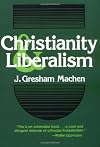
So, I dug into my Presby roots a little and decided that J. Gresham Machen was made of awesome.
It is fascinating to see how Machen makes his case that early 20th century theological liberalism and (proto-evangelical-coalition) traditional Christianity were essentially two different religions. But, more than that, it's amazing how prescient Machen seems; in 1923, he anticipated much of what has come to divide denominations today (which is fairly continuous with the early show more Fundamentalist/liberal skirmishes of the last century). I don't think one has to agree with his "two religions" thesis to find the book historically illuminating; and even with that argument, he's not polemical in the way one might expect. I think it's possible that the book could provide a basis for a quite interesting dialogue between theologically liberal and traditional Christians.
I thought he was right on target in identifying conception of God and view of human sin as the two primary points of division. show less
It is fascinating to see how Machen makes his case that early 20th century theological liberalism and (proto-evangelical-coalition) traditional Christianity were essentially two different religions. But, more than that, it's amazing how prescient Machen seems; in 1923, he anticipated much of what has come to divide denominations today (which is fairly continuous with the early show more Fundamentalist/liberal skirmishes of the last century). I don't think one has to agree with his "two religions" thesis to find the book historically illuminating; and even with that argument, he's not polemical in the way one might expect. I think it's possible that the book could provide a basis for a quite interesting dialogue between theologically liberal and traditional Christians.
I thought he was right on target in identifying conception of God and view of human sin as the two primary points of division. show less

I have always found Machen a relief to read: his words seem to be always current, far from outdated, and clear, succinct, and nourishing to the soul. The first time I picked up a Machen book from a college library, I turned to the copyright date before reading more than two or three pages. It seemed impossible that it had been written so long ago. Forty years later, I read him again, and again am struck with the timelessness of his words. These are radio talks, given to a general show more unbelieving, but thoughtful, audience. Each talk covers a key Christian belief, its reliability and how it differs from other systems of thought. His tone is courteous and careful, and he doesn't waste words. Read him. show less
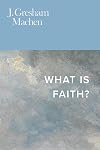
Summary: An exposition of the Bible’s teaching on what constitutes vibrant and saving Christian faith.
“Believe in Jesus!” “Saved by faith!” “I don’t have enough faith.” “We just have to have faith.”
The language of faith, even in our secular age, is bandied about a great deal. But are we all talking about the same thing? Sometimes, it seems like faith simply means some sense of the transcendent or a “religious sentiment of the heart.” At the other end of the spectrum, show more “faith” may be connected with affirmation of a particular set of doctrines–the faith. Faith is spoken in Hebrews 11:1 as the “substance of things hoped for, the evidence of things not seen” and yet in many minds faith is a vague feeling rather than substance and a hope in what one is pretty sure is not true.
It seems that this treatise by J. Gresham Machen, nearly 100 years old has never been so needed. He decries the fuzzy thinking, the lack of clear thinking, and the attack upon intellect in general and among Christians specifically in his own day. Nowhere is this so evident as in understanding the true nature of biblical faith, and this is what he sets out to address in this biblically grounded and carefully reasoned work.
He begins by observing that faith must have some object. For the Christian, this is the triune God. To believe in God (or any personal being), one most know the character of the one believed. This is both “doctrine,” and as it is understood becomes personal trust. All this is predicated on the idea that God has revealed God’s self. It also concerns our standing with God as sinners and how God, consistently revealed as loving Father, has addressed that standing through his Son, in whom there is redemption.
What then does faith involve? Faith combines knowledge of the truth with belief that the God may be trusted, and acceptance as undeserved gift what God has accomplished through his Son. As he sets forth these classic ideas, he engages the modernist challenge of his day with its “Fatherhood of God and brotherhood of man,” emphasizing humanitarian good works and imitating Christ as a good teacher. He speaks bitingly of the “Good American” character education of his day and argued that spiritual and moral education was not the work of schools but churches and comparable religious institutions. For those who think this is a way to Christianize society, he argues that this moralism inoculates people against a genuine awareness of sin and need of the saving work of Christ.
He continues to address modernist challenges in his chapter on faith and salvation, really a classic exposition of justification by faith, answering the question of how we may hope for right standing with God. He addresses the ever-present temptation to combine faith with our works as salvific. Rather, those saved by faith work, with work arising from, rather than contributing to their faith. In the final chapter he addresses “faith and hope” and the experience of “weak” faith. He emphasizes that while the object for all Christians is to grow in their confident faith in God, it is not the size of our faith, as if it were some spiritual force, but the gracious and powerful character off God that matters.
This is a rich work filled with practical examples as well as careful reasoning. While some of the controversies today are different (and some not so much), Machen’s insights are important to anyone committed to the task of making disciples: from communicating the gospel, through conversion, and in encouraging the life of faith. As with so many classic works, Banner of Truth has served the church well in the re-publication of this work, soon to be joined by two others, God Transcendent and The Christian View of Man. show less
“Believe in Jesus!” “Saved by faith!” “I don’t have enough faith.” “We just have to have faith.”
The language of faith, even in our secular age, is bandied about a great deal. But are we all talking about the same thing? Sometimes, it seems like faith simply means some sense of the transcendent or a “religious sentiment of the heart.” At the other end of the spectrum, show more “faith” may be connected with affirmation of a particular set of doctrines–the faith. Faith is spoken in Hebrews 11:1 as the “substance of things hoped for, the evidence of things not seen” and yet in many minds faith is a vague feeling rather than substance and a hope in what one is pretty sure is not true.
It seems that this treatise by J. Gresham Machen, nearly 100 years old has never been so needed. He decries the fuzzy thinking, the lack of clear thinking, and the attack upon intellect in general and among Christians specifically in his own day. Nowhere is this so evident as in understanding the true nature of biblical faith, and this is what he sets out to address in this biblically grounded and carefully reasoned work.
He begins by observing that faith must have some object. For the Christian, this is the triune God. To believe in God (or any personal being), one most know the character of the one believed. This is both “doctrine,” and as it is understood becomes personal trust. All this is predicated on the idea that God has revealed God’s self. It also concerns our standing with God as sinners and how God, consistently revealed as loving Father, has addressed that standing through his Son, in whom there is redemption.
What then does faith involve? Faith combines knowledge of the truth with belief that the God may be trusted, and acceptance as undeserved gift what God has accomplished through his Son. As he sets forth these classic ideas, he engages the modernist challenge of his day with its “Fatherhood of God and brotherhood of man,” emphasizing humanitarian good works and imitating Christ as a good teacher. He speaks bitingly of the “Good American” character education of his day and argued that spiritual and moral education was not the work of schools but churches and comparable religious institutions. For those who think this is a way to Christianize society, he argues that this moralism inoculates people against a genuine awareness of sin and need of the saving work of Christ.
He continues to address modernist challenges in his chapter on faith and salvation, really a classic exposition of justification by faith, answering the question of how we may hope for right standing with God. He addresses the ever-present temptation to combine faith with our works as salvific. Rather, those saved by faith work, with work arising from, rather than contributing to their faith. In the final chapter he addresses “faith and hope” and the experience of “weak” faith. He emphasizes that while the object for all Christians is to grow in their confident faith in God, it is not the size of our faith, as if it were some spiritual force, but the gracious and powerful character off God that matters.
This is a rich work filled with practical examples as well as careful reasoning. While some of the controversies today are different (and some not so much), Machen’s insights are important to anyone committed to the task of making disciples: from communicating the gospel, through conversion, and in encouraging the life of faith. As with so many classic works, Banner of Truth has served the church well in the re-publication of this work, soon to be joined by two others, God Transcendent and The Christian View of Man. show less
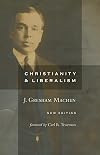
It would appear that little has changed in the 90 years since this book was first published. Or, perhaps more accurately, the capitulation of large segments of the evangelical church to the relentless tide of what Machen termed "liberalism" has gone unchecked. Either way, the result is the same. Confessing churches have decreasing adherence to their confessions and much of what is labeled as "Christianity" bears little resemblance to the model of faith held up in the Bible.
Machen knows this show more territory well, being on the faculty of Princeton Seminary when the trustees went all in as the philosophy we know today as Modernity swept through society. As a result, he and several of his colleagues left Princeton to found a seminary and a denomination, Westminster Theological Seminary and the Orthodox Presbyterian Church. Their purpose was to continue to teach and uphold those things which had long been essential to the church and were clearly affirmed in its confessions, such as the Westminster and Belgic confessions. Today virtually every denomination that was considered mainline in his day has rolled over to the trends driving society, and the church is infinitely poorer and weaker for it.
I found much in this book that rings true, in part because I am a member of perhaps the last mainline denomination that hasn't gone completely off track. But some days it seems as if we are in a car going through a corner at high speed and with only three wheels on the ground. Rollover seems a heartbeat away. I highly recommend this book for anyone who is in church leadership and wonders about the threat to the church from the culture. It is a threat that feels more immediate today than when Machen wrote these words. Yet I also believe, with Machen, that the church itself will survive, for God has always preserved for himself a remnant of the faithful, to be his witnesses in an unbelieving world. show less
Machen knows this show more territory well, being on the faculty of Princeton Seminary when the trustees went all in as the philosophy we know today as Modernity swept through society. As a result, he and several of his colleagues left Princeton to found a seminary and a denomination, Westminster Theological Seminary and the Orthodox Presbyterian Church. Their purpose was to continue to teach and uphold those things which had long been essential to the church and were clearly affirmed in its confessions, such as the Westminster and Belgic confessions. Today virtually every denomination that was considered mainline in his day has rolled over to the trends driving society, and the church is infinitely poorer and weaker for it.
I found much in this book that rings true, in part because I am a member of perhaps the last mainline denomination that hasn't gone completely off track. But some days it seems as if we are in a car going through a corner at high speed and with only three wheels on the ground. Rollover seems a heartbeat away. I highly recommend this book for anyone who is in church leadership and wonders about the threat to the church from the culture. It is a threat that feels more immediate today than when Machen wrote these words. Yet I also believe, with Machen, that the church itself will survive, for God has always preserved for himself a remnant of the faithful, to be his witnesses in an unbelieving world. show less
Lists
Awards

You May Also Like


Associated Authors
Statistics
- Works
- 55
- Members
- 8,972
- Popularity
- #2,681
- Rating
- 4.3
- Reviews
- 27
- ISBNs
- 130
- Languages
- 7
- Favorited
- 14