
Sia Figiel (1967–2026)
Author of Where We Once Belonged
About the Author
Image credit: Sia Figiel
Works by Sia Figiel
Freelove [short story] 1 copy
Associated Works
Tagged
Common Knowledge
- Birthdate
- 1967
- Date of death
- 2026-01-26
- Gender
- female
- Education
- Whitworth College
- Occupations
- novelist
painter
poet - Nationality
- Samoa
- Birthplace
- Matautu Tai, Samoa
- Places of residence
- Samoa
New Zealand
Utah, USA - Associated Place (for map)
- Samoa
Members
Reviews
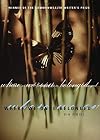
This is a coming of age memoir written by a Samoan woman about Alofa, a teenager in her transformative years in the village of Malaefou. The narrative is completely unique and its refreshing to see an original voice and style in the literary world. The book is non-linear and infused with the Samoan language which can be off putting to some readers. I was fine with allowing myself to just read the words without meaning because maybe some things are meant to not be understood by palagi (we show more have never had to live it so how could we fully understand anyways). There is a small translation section in the back for important words but she does a great job of telling the story that I eventually stopped looking and just enjoyed a look into a different style of storytelling. There are a few breaks in the narrative that tell stories of the Gods before Jesus came to the island. It's through these stories that I found the poetic nature of the novel to be reflection of traditional story telling in Samoa. Its sad to see how colonization has hurt these traditions. We cant change history but we can learn from and about our mistakes. show less
Where We Once Belonged adapts the participative Samoan storytelling form of su'ifefiloi to tell the story of Alofa Filiga, an adolescent girl navigating Samoan society and the treacherous waters of near-adulthood. Su'ifefiloi means a woven garland of flowers. As a narrative technique, it refers to the stringing together of individual stories or episodes, each separate and unrelated like flower blossoms, but coming together to create a cohesive whole. In Where We Once Belonged, unlike in a show more traditional bildungsroman with its characteristic single transformative episode, anecdotes and poetry follow one another without regard to order or continuity. The story emerges slowly, and there are a multitude of turning points. This piecemeal style is particularly well-suited to a portrayal of adolescence, teetering on the edge of adulthood, the battery of experience juxtaposed with a sustained innocence, the difficulties of becoming an adult, and more specifically of becoming a woman, revealed slowly and partially.
This is an excerpt from a longer review on my blog, Around the World in 2000 Books. show less
This is an excerpt from a longer review on my blog, Around the World in 2000 Books. show less
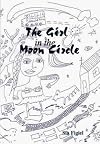
pages:132
Published in 1996.
Publishers : Mana Publication, Suva , Fiji.
ISBN:982-02-0125-X
Sia Figiel's 'The Girl in the Moon Circle' , a novella, is an uninhibited account of Samoan life full of family details and the world of intrigue, church and violence. It is mostly adult stuff, though it is narrated through the eyes of 10-13 year old girls. It seems, due to open Fale style houses, girls learn serious truths of life early on. They pick the details of adult world in a natural way and learn show more what is a taboo.
'The Girl...' is Sia's second creative attempt after 'Where we Once we Belonged' which was a novel and was much talked about. she comes with a sharp analytical observations of situations and makes it appear comic at times but actually it is quipped with a lash. she uses simple language with metaphors . Write ups are more fit for performances too.
It has about 64 different topics for short novella like write ups. I enjoyed 'English Homwork-My Sefl'. It starts : "My name is Samoana Pili. I tan yaer old. I living at Malaefou. I has a dog. My dog name is Uisiki. (whisky)...I has a big (pig) too. I have thre animas. Dog. Big. And cat. ...it ends...: Ti Ant. (The end)"
The interview by Subramani at the end is a kind of a help to better understand the work. a good read, mostly for the Samoans/ Pacific Islanders. show less
Published in 1996.
Publishers : Mana Publication, Suva , Fiji.
ISBN:982-02-0125-X
Sia Figiel's 'The Girl in the Moon Circle' , a novella, is an uninhibited account of Samoan life full of family details and the world of intrigue, church and violence. It is mostly adult stuff, though it is narrated through the eyes of 10-13 year old girls. It seems, due to open Fale style houses, girls learn serious truths of life early on. They pick the details of adult world in a natural way and learn show more what is a taboo.
'The Girl...' is Sia's second creative attempt after 'Where we Once we Belonged' which was a novel and was much talked about. she comes with a sharp analytical observations of situations and makes it appear comic at times but actually it is quipped with a lash. she uses simple language with metaphors . Write ups are more fit for performances too.
It has about 64 different topics for short novella like write ups. I enjoyed 'English Homwork-My Sefl'. It starts : "My name is Samoana Pili. I tan yaer old. I living at Malaefou. I has a dog. My dog name is Uisiki. (whisky)...I has a big (pig) too. I have thre animas. Dog. Big. And cat. ...it ends...: Ti Ant. (The end)"
The interview by Subramani at the end is a kind of a help to better understand the work. a good read, mostly for the Samoans/ Pacific Islanders. show less
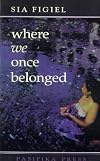
Samoan novel of the life of an adolescent girl. Tries a little too hard to be provocative.
Read in Samoa May 2002
Read in Samoa May 2002
Lists
Awards


You May Also Like


Associated Authors
Statistics
- Works
- 6
- Also by
- 4
- Members
- 250
- Popularity
- #91,400
- Rating
- 3.5
- Reviews
- 7
- ISBNs
- 26
- Languages
- 4