
Marty Rhodes Figley
Author of Santa's Underwear
Works by Marty Rhodes Figley
Who Was William Penn?: And Other Questions about the Founding of Pennsylvania (Six Questions of American History) (2012) 14 copies, 1 review
John Greenwood's Journey to Bunker Hill (History Speaks: Picture Books Plus Reader's Theater) (2010) 10 copies
Tagged
Common Knowledge
There is no Common Knowledge data for this author yet. You can help.
Members
Reviews
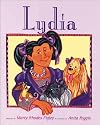
Lydia by Marty Rhoads Figley. Age: Pre-K. Library section 11 A: Pre-K, Religion and Character-Building. With so few biblical role models for girls I was especially happy to find this book about Lydia, an early Christian who was a merchant of purple cloth. This particular purple dye was very costly – it came from a sea crustacean and thousands had to be harvested to get enough dye for use. Fabrics dyed with it were therefore costly, precious, and mostly reserved for royalty. In this book show more Lydia loves purple – flowers, fruit, clothes, the purple shadows at dusk. She loves “purple everything,” but she also loves God. Can there be room for both?
When she and her friends meet by the river to worship, missionaries Paul and Silas come upon them. They baptize Lydia and her friends and she offers her house for worship. Then she hears that Paul and Silas have been imprisoned so she and her friends meet to pray for their release. Suddenly the earth rocks and all her pretty purple house decor goes flying. Who cares? God caused the earthquake which freed Paul and Silas, and Lydia realized her prayers had been answered. She rushed to them, wiping their faces with, guess what? Purple cloth! The last page states that, “Friends, not purple things, are most precious of all.”
This is an excellent book for our little ones. It shows girls, in particular, that they have important roles to play in worship, and that females can also have a strong faith in God and God’s promises. show less
When she and her friends meet by the river to worship, missionaries Paul and Silas come upon them. They baptize Lydia and her friends and she offers her house for worship. Then she hears that Paul and Silas have been imprisoned so she and her friends meet to pray for their release. Suddenly the earth rocks and all her pretty purple house decor goes flying. Who cares? God caused the earthquake which freed Paul and Silas, and Lydia realized her prayers had been answered. She rushed to them, wiping their faces with, guess what? Purple cloth! The last page states that, “Friends, not purple things, are most precious of all.”
This is an excellent book for our little ones. It shows girls, in particular, that they have important roles to play in worship, and that females can also have a strong faith in God and God’s promises. show less
President Lincoln, Willie Kettles, and the Telegraph Machine (History Speaks: Picture Books Plus Reader's Theater) by Marty Rhodes Figley
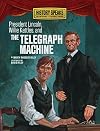
This book is set during the time of Abraham Lincoln's presidency, four years after the start of the Civil War, and tells of the role of the telegraph machine during this time. I liked the picturesque illustrations, and the afterword offers additional information about the telegraph machine and the people that the characters in the book portray.
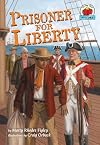
Based on the line breaks, one would think Figley intended to write this book in poetic form. However, it does not read as great poetry. The story of James Forten is a cool one, but much of the more interesting, significant details get left out. This book is part of a series including other less known historic people and events, which I appreciate. However, since I didn't care for the portrayal of James Forten nor the structure of the book, I have no desire to read any others of the series.
Who Was William Penn?: And Other Questions about the Founding of Pennsylvania (Six Questions of American History) by Marty Rhodes Figley
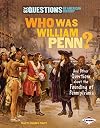
William Penn was only twenty-two years old the first time he went to prison. He had attended a meeting of the Quakers, people who practiced a religion forbidden in Britain during the 1600s. Despite the dangers, Penn became a Quaker leader, and he dreamed of a place where people could freely practice religion. Britain's king later gave Penn one of the British colonies in North America. In Pennsylvannia, Penn organized a new kind of government―a place where people had individual rights, show more freedom of religion, freedom of the press, and trial by jury. show less
Lists
Awards


You May Also Like


Associated Authors
Statistics
- Works
- 18
- Members
- 1,120
- Popularity
- #22,934
- Rating
- 3.2
- Reviews
- 9
- ISBNs
- 63
- Languages
- 1