

Michel Odent (1930–2025)
Author of Birth Reborn
About the Author
Michel Odent is the founder of the Primal Health Research Centre, in London, whose objective is to study correlations between what happens during the 'primal period' (from conception until the first birthday) and health and behaviour later on in life.
Works by Michel Odent
Birth and Breastfeeding: Rediscovering the Needs of Women During Pregnancy and Childbirth (2000) 53 copies, 1 review
Primal Health: Understanding the Critical Period Between Conception and the First Birthday (2002) 18 copies
Tagged
Common Knowledge
- Legal name
- Odent, Michel Robert Fortuné
- Birthdate
- 1930-07-07
- Date of death
- 2025-08-19
- Gender
- male
- Occupations
- general surgeon
obstetrician - Organizations
- Pithiviers Hospital, Pithiviers, France
Primal Health Research Centre, London (founder) - Short biography
- As a practitioner Michel Odent developed the maternity unit at Pithiviers Hospital in France in the 1960s and '70s.
He is familiarly known as the obstetrician who introduced the concept of birthing pools and home-like birthing rooms. His approach has been featured in eminent medical journals such as Lancet, and in TV documentaries such as the BBC film Birth Reborn. With six midwives Odent was in charge of about one thousand births a year and could achieve ideal statistics with low rates of intervention. After his hospital career he practiced home birth. - Nationality
- France
- Birthplace
- Bresles, France
- Places of residence
- Bresles, France
- Place of death
- London, England, UK
- Associated Place (for map)
- Bresles, France
Members
Reviews

For over 40 years Michel Odent has been the world's leading 'birth guru'. He has pioneered a new philosophy of childbirth, making it a natural experience for women and providing settings that allow a woman to give birth her own way. Women become their own birthing experts, if they follow their instincts they can birth naturally, with the minimal intervention of medical science. Many of the birthing practices that Michel Odent has advocated are now common usage, including the creation of more show more homely birthing rooms, birthing pools and water births, labour without drugs and ensuring that the mother plays the key role in the experience of birth. Michel Odent has returned birth to how it should be. 'Birth Reborn' gives expectant mothers the confidence and information they need in order to trust themselves to give birth without the drugs and medical procedures that are being increasingly recognised as harmful to the mother and to the baby's future development. show less
Birth and Breastfeeding: Rediscovering the Needs of Women During Pregnancy and Childbirth by Michel Odent
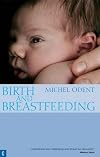
Until recently a woman could not have had a baby without releasing a complex cocktail of 'love hormones'. Most women give birth without relying on the release of such a flow of hormones. Some give birth via caesarean section, while others use drugs. Humanity, the author argues stands at crossroads in the history of childbirth.

“Las funciones de los orgasmos” nos habla del clímax, el estado orgásmico, identificándolo con tres momentos de la vida de los seres humanos, principalmente de las mujeres: la genitalidad masculina y femenina, el reflejo de eyección del feto (en el nacimiento) y el reflejo de eyección de la leche (en la lactancia). Sugiere además que el clímax es una escalera coronada por el parto/nacimiento y los primeros contactos entre el bebé y la mamá.
A lo largo del libro se basa en que el show more cóctel hormonal que rodea todos estos acontecimientos es el mismo y cómo el resultado puede ser distinto. La segregación de una hormona u otra en un momento dado puede ser crucial en el desarrollo de los acontecimientos.
Hace también un repaso a la represión sexual y el control de los orgasmos por parte de las sociedades y culturas a lo largo de la historia y la repercusión que esto tiene en nuestros días. Además todas las culturas, en mayor o menor medida, han encontrado una forma de interferir en los primeros momentos del nacimiento o durante el parto con rituales o intervenciones que interrumpen la respuesta del sistema endocrino y del sistema nervioso. show less
A lo largo del libro se basa en que el show more cóctel hormonal que rodea todos estos acontecimientos es el mismo y cómo el resultado puede ser distinto. La segregación de una hormona u otra en un momento dado puede ser crucial en el desarrollo de los acontecimientos.
Hace también un repaso a la represión sexual y el control de los orgasmos por parte de las sociedades y culturas a lo largo de la historia y la repercusión que esto tiene en nuestros días. Además todas las culturas, en mayor o menor medida, han encontrado una forma de interferir en los primeros momentos del nacimiento o durante el parto con rituales o intervenciones que interrumpen la respuesta del sistema endocrino y del sistema nervioso. show less
Dec 1, 2017Spanish
Esta nueva edición de la obra emblemática del Dr. Michel Odent se publica precisamente ahora que se está concretando un nuevo salto hacia adelante, aún más espectacular si cabe que el anterior. Se trata de «la revolución microbioma». La bacteriología moderna nos lleva inevitablemente a observar que es precisamente el período del nacimiento la fase de la vida moderna que ha sufrido más cambios radicales. Debemos recordar que hasta una época reciente todos los bebés humanos show more nacían por la vía perineal, cuya característica es su riqueza en microorganismos. Además, habitualmente nacían en el lugar donde transcurría la vida cotidiana de la madre. De modo que el cuerpo del recién nacido era colonizado inmediatamente por microbios familiares para el sistema inmunitario de la madre. Es importante que el cuerpo del bebé sea colonizado en primer lugar por microbios familiares. Ahora bien, hoy día la mayoría de los bebés no nace en un entorno familiar para la madre. Además, una proporción cada vez mayor de la población no nace por la vía vaginal y/o se le administran antibióticos durante el período que rodea show less
Sep 18, 2025Spanish
You May Also Like


Statistics
- Works
- 41
- Members
- 398
- Popularity
- #60,945
- Rating
- 4.3
- Reviews
- 6
- ISBNs
- 93
- Languages
- 12