
Anni Albers (1899–1994)
Author of On Weaving: New Expanded Edition
About the Author
Works by Anni Albers
Notebook 1970-1980 1 copy
Associated Works
Tagged
Common Knowledge
- Birthdate
- 1899-06-12
- Date of death
- 1994-05-10
- Gender
- female
- Education
- Bauhaus in Weimar
- Occupations
- artist
printmaker
textile artist
textile designer
weaver
writer - Relationships
- Albers, Josef (husband)
Klee, Paul (teacher) - Short biography
- Anni Albers was born Annelise Else Frieda Fleischmann in Berlin, Germany, to an affluent family of Jewish descent. She began painting and drawing at an early age, encouraged by her parents. She attended at the Kunstgewerbeschule in Hamburg for two months in 1920 before going to the Bauhaus at Weimar in 1922.
She took up weaving because her first choice, glassmaking, was closed to women, but came to love it. She experimented with new materials and became a bold abstract artist and modernist pioneer. In 1925, she married Josef Albers, 11 years her senior, a teacher at the Bauhaus. That year, the Bauhaus moved to Dessau to a building designed by Walter Gropius, the architect who had founded the school. Anni and her husband became friends with Paul and Lily Klee, Wassily and Nina Kandinsky, Oscar and Tut Schlemmer and Lyonel and Julia Feininger. The Bauhaus was forced to close in 1933 following the rise of the Nazi regime in Germany, and Anni and her husband went to the USA to teach at the experimental Black Mountain College in North Carolina. Her textiles were shown throughout the United States, culminating in her 1949 solo show at the Museum of Modern Art, the first textile artist to be so honored by MOMA. After the couple left Black Mountain College in 1949, Anni began to work from their new home in Connecticut. In 1963, she experimented with printmaking at the Tamarind Lithography Workshop in Los Angeles and then focused most of her time on printmaking and textile design. She published the influential books On Designing (1959) and On Weaving (1965). After her husband's death in 1975, she helped oversee his legacy and had several more exhibitions of her own art. A further collection of her theoretical work, Selected Writings on Design (2000), was published posthumously. - Nationality
- USA
Germany (birth) - Birthplace
- Berlin, Germany
- Places of residence
- Dessau, Germany
Black Mountain, North Carolina, USA - Place of death
- Orange, Connecticut, USA
- Associated Place (for map)
- Germany
Members
Reviews

A superb facsimile of the only known notebook of legendary artist Anni Albers, this publication offers insight into the methodology of a modern master.
Beginning in 1970, Anni Albers filled her graph-paper notebook regularly until 1980. This rare and previously unpublished document of her working process contains intricate drawings for her large body of graphic work, as well as studies for her late knot drawings. The notebook follows Albers's deliberations and progression as a draftsman in show more their original form. It reveals the way she went about making complex patterns, exploring them piece by piece, line by line in a visually dramatic and mysteriously beautiful series of geometric arrangements.
An afterword by Brenda Danilowitz, Chief Curator of The Josef and Anni Albers Foundation, contextualizes the notebook and explores the role studies played in the development of her work. show less
Beginning in 1970, Anni Albers filled her graph-paper notebook regularly until 1980. This rare and previously unpublished document of her working process contains intricate drawings for her large body of graphic work, as well as studies for her late knot drawings. The notebook follows Albers's deliberations and progression as a draftsman in show more their original form. It reveals the way she went about making complex patterns, exploring them piece by piece, line by line in a visually dramatic and mysteriously beautiful series of geometric arrangements.
An afterword by Brenda Danilowitz, Chief Curator of The Josef and Anni Albers Foundation, contextualizes the notebook and explores the role studies played in the development of her work. show less
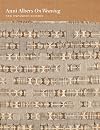
New expanded edition with an afterword by Nicholas Fox Weber and contributions by Manuel Cirauqui and T'ai Smith.
Contenido: Introductory note -- Preface -- Weaving, hand -- The loom -- Draft notation -- The fundamental constructions -- Modified and composite weaves -- Early techniques of thread interlacing -- Interrelation of fiber and construction -- Tactile sensibility -- Tapestry -- Designing as visual organization -- Afterword / Nicholas Fox Weber -- The two faces of weaving / Manuel show more Cirauqui -- On reading on weaving / T'ai Smith. show less
Contenido: Introductory note -- Preface -- Weaving, hand -- The loom -- Draft notation -- The fundamental constructions -- Modified and composite weaves -- Early techniques of thread interlacing -- Interrelation of fiber and construction -- Tactile sensibility -- Tapestry -- Designing as visual organization -- Afterword / Nicholas Fox Weber -- The two faces of weaving / Manuel show more Cirauqui -- On reading on weaving / T'ai Smith. show less

Approaching weaving from a visual and structural perspective, Albers—a Bauhaus School student and teacher who was among the primary forces in achieving recognition for weaving as an art form—surveys textile fundamentals and methods from prehistoric to modern times. Coverage includes hand weaving, the loom, draft notation, modified and composite weaves, interrelation of fiber and construction, tactile sensibility, tapestry, and design. Well-illustrated in b&w with nine color plates; the show more Dover volume is an unabridged reprint of the 1965 Wesleyan U. Press edition. Annotation ©2004 Book News, Inc., Portland, OR show less
Lists
You May Also Like


Associated Authors
Statistics
- Works
- 19
- Also by
- 1
- Members
- 771
- Popularity
- #33,005
- Rating
- 4.6
- Reviews
- 4
- ISBNs
- 23
- Languages
- 2