

John Flagg (1885–1970)
Author of The Velvet Well
About the Author
Works by John Flagg
Using Latin 1 copy
Associated Works
Tagged
Common Knowledge
- Canonical name
- Flagg, John
- Legal name
- Gearon, John
- Birthdate
- 1885
- Date of death
- 1970
- Gender
- male
- Occupations
- Salesman
journalist
scriptwriter - Nationality
- USA
- Birthplace
- Chicago, Illinois, USA
- Places of residence
- New Jersey, USA
- Associated Place (for map)
- USA
Members
Reviews

Horny Hart Muldoon, after losing his money gambling, is coerced into taking on another secret mission for British intelligence--trying to find out what became of a missing British bomber in Egypt. His reputation having been deliberately sullied by the British, Horny Hart is taken into the employ of a shady former acquaintance and sets out for Egypt with the purpose of sleeping with a beautiful Italian (Gina) now married to a German in Egypt. Finding the bomber is only secondary for Horny show more Hart. Unfortunately, his immediate path to the bed of his target is complicated by the presence of two other women--a young, French singer under the protection of Gina and set to debut at a Cairo nightclub and a cold-as-ice blonde whose allegiances are hard to figure. With the aid of a few friends, he finds himself in the middle of an uprising against King Farouk and the British (the lead up to the Suez crisis) and the target of more than one bullet. And on it goes, as the almost thoroughly unlikeable Horny Hart manages to beat (and worse) his woman of the moment or fail to protect her when she needs it most. Because Horny Hart is thinking about himself all the time, or about his John Thomas as the British would say. Still, there is a lot of action, and like the best of the Gold Medal books, there is atmosphere galore as Horny Hart wanders or is chased through Cairo. And there's a pretty good conclusion as well. Despite the rampant sexism here, Flagg was good at putting words together. show less

Interesting book, this, if dated. It was John Gearon's first thriller and it shows some lack of polish which may have improved with experience. It was published in 1946 at a time when Hollywood was turning out film noir thrillers with psychoanalytic story lines (think of The Spiral Staircase or Hitchcock's Spellbound) and, significantly, just after the end of WW2.
The main protagonist, Jacques Deran, is introduced to the reader via a dossier created by the Brazilian security services. Son of show more a radical economist from a well-to-do Brazilian family, Deran joins the fight against Fascism by joining the Spanish Republican Army. At the start of WW2 he joins the French Army, is captured and interned in a PoW camp before escaping and joining FFI (Forces Francaise de l'Interieure). At the end of the war, we learn that he had a nervous breakdown and had needed psychiatric care. After the very brief back-story we find Deran in New York carrying important documents from an exiled Brazilian dissident group. He is to hand these over to Dr Bartel. a Nobel prizewinning scientist who supports the anti-government faction in Brazil. On entering Bartel's hotel room he finds him dead, stabbed in the neck. While coming to terms with this, he receives a threatening phone call from an unknown woman urging him to hand over the papers he is carrying. The story is told in the first person in a stream of consciousness style and it is very clear that Deran has not recovered from his 'breakdown' - what would now, I suppose, be classified as Post-Traumatic Stress Disorder. He makes his escape from the hotel with the timely aid of a young woman who had eyed him up in the hotel lobby and sets off to find his only other contact who lives in Long Island. Arriving there he discovers that the contact has been shot, apparently by Deran's cousin, Maurice, who he knows to be sympathetic to the Fascist cause and to the Brazilian government. Deran, as well as being understandably paranoid, is having trouble in clinging to reality and starts to doubt Bartel's death and then is almost persuaded that he could have killed him himself. We meet Deran's wife, the unscrupulous psychiatrist who had treated him in France, an exotic dancer called Pepita, a dwarf French countess as well as assorted plug-uglies: his rescuer from the hotel continues to play a major role. Poor confused Deran only slowly becomes aware of which of these is friend and which foe, The Velvet Well of the title is a metaphorical pit into which Deran slips from time to time when things get too much for him. Towards the end of the book Deran writes down all his unanswered questions only to find that, while he had slept, a sheet carrying all the answers has been attached!
I am sure that Gearon had the film rights in mind when he wrote the book: my mental images were all firmly in black-and-white. I haven't decided on the casting for the main roles but the psychiatrist has an unpleasant little minder who would have suited Elisha J Cook Jr. to a T. The blurb on my Pengiun copy notes that a film version was in preparation, but the only movie connection I can find is with Un papillon sur l'epaule, a French language colour film made in 1978 by director Jacques Deray (interesting similarity with the name of the hero). The IMDb strapline is: "Mystery film about a man who finds there is another world to the one we know" - the attached review describes a plot very loosely based on Gearon's book. show less
The main protagonist, Jacques Deran, is introduced to the reader via a dossier created by the Brazilian security services. Son of show more a radical economist from a well-to-do Brazilian family, Deran joins the fight against Fascism by joining the Spanish Republican Army. At the start of WW2 he joins the French Army, is captured and interned in a PoW camp before escaping and joining FFI (Forces Francaise de l'Interieure). At the end of the war, we learn that he had a nervous breakdown and had needed psychiatric care. After the very brief back-story we find Deran in New York carrying important documents from an exiled Brazilian dissident group. He is to hand these over to Dr Bartel. a Nobel prizewinning scientist who supports the anti-government faction in Brazil. On entering Bartel's hotel room he finds him dead, stabbed in the neck. While coming to terms with this, he receives a threatening phone call from an unknown woman urging him to hand over the papers he is carrying. The story is told in the first person in a stream of consciousness style and it is very clear that Deran has not recovered from his 'breakdown' - what would now, I suppose, be classified as Post-Traumatic Stress Disorder. He makes his escape from the hotel with the timely aid of a young woman who had eyed him up in the hotel lobby and sets off to find his only other contact who lives in Long Island. Arriving there he discovers that the contact has been shot, apparently by Deran's cousin, Maurice, who he knows to be sympathetic to the Fascist cause and to the Brazilian government. Deran, as well as being understandably paranoid, is having trouble in clinging to reality and starts to doubt Bartel's death and then is almost persuaded that he could have killed him himself. We meet Deran's wife, the unscrupulous psychiatrist who had treated him in France, an exotic dancer called Pepita, a dwarf French countess as well as assorted plug-uglies: his rescuer from the hotel continues to play a major role. Poor confused Deran only slowly becomes aware of which of these is friend and which foe, The Velvet Well of the title is a metaphorical pit into which Deran slips from time to time when things get too much for him. Towards the end of the book Deran writes down all his unanswered questions only to find that, while he had slept, a sheet carrying all the answers has been attached!
I am sure that Gearon had the film rights in mind when he wrote the book: my mental images were all firmly in black-and-white. I haven't decided on the casting for the main roles but the psychiatrist has an unpleasant little minder who would have suited Elisha J Cook Jr. to a T. The blurb on my Pengiun copy notes that a film version was in preparation, but the only movie connection I can find is with Un papillon sur l'epaule, a French language colour film made in 1978 by director Jacques Deray (interesting similarity with the name of the hero). The IMDb strapline is: "Mystery film about a man who finds there is another world to the one we know" - the attached review describes a plot very loosely based on Gearon's book. show less

Picked up at random off one of my shelves of used books, this one turned out to be a lot of fun. The unsatisfactorily named hero, Hart Muldoon, is assigned to prevent anything violent from happening to an Arab Prince, soon to inherit the throne, or to his love, who happens to be an Israeli. Lots of interesting characters skulk about trying to either advance or thwart the romance, and they'll stop at nothing to get their way. Most of the book is set in Venice before moving to Spain for its show more climax. The Venetian atmosphere is well done, and there are some good scenes. Still, nothing quite raises this one to the level of a classic; it is just a very good read. Perhaps one reason is that the supporting characters are almost without exception more interesting than Muldoon. Flagg wrote a few other Gold Medal originals, and I will leap at the chance to pick up any others I come across. show less
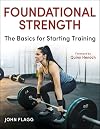
I love the level of detail that John Flagg includes for each move and explains why that level of detail is important. You can tell that John wants to ensure that readers are not injured completing these moves incorrectly. The pictures, instructions, and highlighting the common errors all will help the reader achieve each lift safely.
You May Also Like
Associated Authors
Statistics
- Works
- 12
- Also by
- 1
- Members
- 61
- Popularity
- #274,233
- Rating
- 3.2
- Reviews
- 6
- ISBNs
- 6
- Languages
- 1