
Humphrey Burton (1931–2025)
Author of Leonard Bernstein
About the Author
Humphrey Burton read Music and History at Cambridge University and entered the BBC as a sound studio manager in 1955. In 1958 he joined the groundbreaking TV arts magazine Monitor. He has won many international awards, including three from the British Academy, four Emmies, and the Italia Pria (for show more The Making of West Side Story). Twice in charge of Music and Arts for BBC Television, Burton was also a founding member of London Weekend Television, where he edited and presented the ITV arts series Aquarius. He is still active in the fields of radio and television. Burton worked with Yehudi Menuhin on many radio and television programs, including a twenty-part radio series for Classic FM. He was awarded a CBE in the Millennium Honors. show less
Works by Humphrey Burton
Metropolitan Opera HD Live : 01.04 : Tchaikovsky : Eugene Onegin {2007 film} (2007) — Director — 11 copies
Elgar [1962 TV episode] — Director — 7 copies
Handel : Rodelinda {video recording} {1998 television film} {Glyndebourne} (1998) — Film director — 6 copies
Britten : Peter Grimes {video recording} {1978 Royal Opera Covent Garden} (1978) — Executive producer — 4 copies
Berg : Lulu {video recording} {1996 television film} {Glyndebourne} (1996) — Film director — 3 copies
Mozart : The marriage of Figaro {video recording} {1973 television film} {Glyndebourne} (1973) — Film producer — 3 copies
Beethoven : Symphony no.9 in D minor, Op.125 'Choral' {Ode to freedom} [video recording] — Director — 2 copies
Monteverdi : The return of Ulysses {video recording} {2002 film} {Festival d'Aix-en-Provence} (2002) — Film director — 2 copies
Mozart : Idomeneo {video recording}{1974 television film} {Glyndebourne} (1974) — Television producer — 2 copies
Verdi : Macbeth {video recording} {1972 television film} {Glyndebourne} (1972) — Producer — 2 copies
Rossini : Ermione {video recording} {1995 television film} {Glyndebourne} (1995) — Television director — 1 copy
Tchaikovsky : Eugene Onegin {video recording} {1994 television film} {Glyndebourne} (1994) — Film director — 1 copy
Beethoven's Birthday: A Celebration in Vienna with Leonard Bernstein [1970 film] (1998) — Director — 1 copy
Glenn Gould: Hereafter 1 copy
Charles Mingus : Epitaph 1 copy
Annees de Pelerinage 1 copy
Associated Works
Tagged
Common Knowledge
- Legal name
- Burton, Humphrey
- Birthdate
- 1931-03-25
- Date of death
- 2025-12-17
- Gender
- male
- Occupations
- television director
television producer
television presenter - Awards and honors
- CBE
- Nationality
- UK
- Birthplace
- Trowbridge, Wiltshire, England, UK
- Associated Place (for map)
- England, UK
Members
Reviews
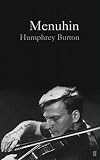
"A detailed chronicle of Menuhin's life which will be an indispensable source. Mostly Burton allows the material to tell its own extraordinary tale, but he keeps a firm hand and weaves the many paradoxes of Menuhin's charmed and radiant life into a richly satisfying narrative." - Times Literary Supplement.
Like Burton's previous biography of Leonard Bernstein, Yehudi Menuhin: A Life is sympathetic but candid, especially about the role Menuhin's parents played in his early career. Burton, who show more differs from the vast majority of critics in hearing "very little falling off" in the quality of Menuhin's postwar playing, does not understand the technical problems with which the violinist was beset from the 40's on. But his book contains enough well-informed testimony to indicate why the most celebrated prodigy of his time failed to fulfill his seemingly miraculous promise.
IN A SENSE, every classical musician is a prodigy, for exceptional musical talent always manifests itself early in life, and it is not uncommon for a gifted youngster to begin studying violin or piano around the age of six. Unlike "ordinarily" gifted children, however, prodigies develop nearprofessional techniques within an unusually brief time, perhaps as little as three or four years. What happens next depends on their parents.
"Believe me, when you find a prodigy, you find an ambitious parent in the background," said the violinist Ruggiero Ricci, a prodigy himself and one who knew whereof he spoke. Some parents have scrupulously kept their young charges out of the spotlight of publicity, but such restraint is comparatively rare; the rule is more or less shameless exploitation. Yehudi Menuhin's parents were exceptional only in their lifelong insistence that they had never exploited their son. The facts tell a different story.
Moshe and Marutha Mnuchin were Russian Jews who arrived in the U.S. by way of Palestine, eventually settling in San Francisco and changing the family name when Moshe took American citizenship in 1919. Though they taught Hebrew for a living, the Mnuchins were wholly secularized, loathing the insularity of the ghettoes from which they came. They also had (in Burton's inadvertently revealing phrase) "a progressive outlook on Zionism," meaning that they were opposed to it. At the same time, however, they never tried to shed their Jewish identities, and when a New York landlord, mistaking them for Gentiles, sought to entice them by explaining that no Jews were allowed in his apartment house, Marutha vowed on the spot that she would name her first-born son "Yehudi," the Hebrew word for a Jew.
According to the later testimony of Yaltah Menuhin, the younger of Yehudi's two sisters, Marutha "believed her destiny was to give birth to a genius." His parents began taking him to concerts when he was two years old; by 1921, aged five, he was studying the violin in earnest, first with Sigmund Anker, one of San Francisco's leading teachers, then with Louis Persinger, a pupil of the great Belgian violinist Eugene Ysaye.(*) He made his formal debut in 1924 at eight; two years later, he performed Lalo's Symphonie espaghole with the San Francisco Symphony, of which Persinger was the concertmaster.
For all his popularity in the concert hall, it was Menuhin's records that made him an international superstar. Between 1928 and 1939, he recorded works for violin and orchestra by Bach, Bruch, Chausson, Dvorak, Elgar, Lalo, Mozart, Mendelssohn, Paganini, and Schumann, as well as a large number of sonatas and shorter pieces, including the very first complete set of Bach's unaccompanied sonatas and partitas. Most of the piano-accompanied sonatas also featured Hephzibah Menuhin, who had made her own debut at the age of eight and with whom Yehudi performed frequently in the 30's.
What is most immediately striking about these recordings is that outside of certain deliberate (and brilliant) evocations of Heifetz and Kreisler--like Bazzini's La Ronde des &tins and Kreisler's own Caprice viennois and Tambourin chinois--Menuhin does not resemble any other violinist, not even Busch or Enesco. The big, sweet tone, the wide but beautifully controlled vibrato, the forceful attack and frank emotionalism: all add up to a style that is both instantly recognizable and irresistibly personal. Except for Heifetz, no other child prodigy has had so individual a manner of playing.
Moreover, none of Menuhin's early recordings sounds like the work of a child, though some are plainly the work of an unformed young man. Thus, his 1936 performance of the Bach A-Minor Sonata, attractive enough in its own uncomplicated terms, cannot stand up to comparison with the lean, incisive tone and boldly asymmetrical phrasing of the masterly version recorded three years earlier by Joseph Szigeti. Next to such deeply considered playing, Menuhin sounds almost naive.
But if the austere rigor of unaccompanied Bach was just beyond the young Menuhin's intellectual grasp, he was altogether at home in romantic music, and it is in a quartet of romantic works recorded between 1931 and 1933 that he comes completely into his own. Bruch's GMinor Concerto, Sir Edward Elgar's B-Minor Concerto (conducted by the seventy-five-year-old composer, who called his sixteen-year-old soloist "the most wonderful artist I have ever heard"), Ravel's Tzigane (accompanied by the peerless ensemble pianist Artur Balsam), and the Symphonie espagnole (conducted by Enesco) are direct, open-hearted, and unaffectedly expressive. They rank among the greatest performances ever given by any violinist, at any age. show less
Like Burton's previous biography of Leonard Bernstein, Yehudi Menuhin: A Life is sympathetic but candid, especially about the role Menuhin's parents played in his early career. Burton, who show more differs from the vast majority of critics in hearing "very little falling off" in the quality of Menuhin's postwar playing, does not understand the technical problems with which the violinist was beset from the 40's on. But his book contains enough well-informed testimony to indicate why the most celebrated prodigy of his time failed to fulfill his seemingly miraculous promise.
IN A SENSE, every classical musician is a prodigy, for exceptional musical talent always manifests itself early in life, and it is not uncommon for a gifted youngster to begin studying violin or piano around the age of six. Unlike "ordinarily" gifted children, however, prodigies develop nearprofessional techniques within an unusually brief time, perhaps as little as three or four years. What happens next depends on their parents.
"Believe me, when you find a prodigy, you find an ambitious parent in the background," said the violinist Ruggiero Ricci, a prodigy himself and one who knew whereof he spoke. Some parents have scrupulously kept their young charges out of the spotlight of publicity, but such restraint is comparatively rare; the rule is more or less shameless exploitation. Yehudi Menuhin's parents were exceptional only in their lifelong insistence that they had never exploited their son. The facts tell a different story.
Moshe and Marutha Mnuchin were Russian Jews who arrived in the U.S. by way of Palestine, eventually settling in San Francisco and changing the family name when Moshe took American citizenship in 1919. Though they taught Hebrew for a living, the Mnuchins were wholly secularized, loathing the insularity of the ghettoes from which they came. They also had (in Burton's inadvertently revealing phrase) "a progressive outlook on Zionism," meaning that they were opposed to it. At the same time, however, they never tried to shed their Jewish identities, and when a New York landlord, mistaking them for Gentiles, sought to entice them by explaining that no Jews were allowed in his apartment house, Marutha vowed on the spot that she would name her first-born son "Yehudi," the Hebrew word for a Jew.
According to the later testimony of Yaltah Menuhin, the younger of Yehudi's two sisters, Marutha "believed her destiny was to give birth to a genius." His parents began taking him to concerts when he was two years old; by 1921, aged five, he was studying the violin in earnest, first with Sigmund Anker, one of San Francisco's leading teachers, then with Louis Persinger, a pupil of the great Belgian violinist Eugene Ysaye.(*) He made his formal debut in 1924 at eight; two years later, he performed Lalo's Symphonie espaghole with the San Francisco Symphony, of which Persinger was the concertmaster.
For all his popularity in the concert hall, it was Menuhin's records that made him an international superstar. Between 1928 and 1939, he recorded works for violin and orchestra by Bach, Bruch, Chausson, Dvorak, Elgar, Lalo, Mozart, Mendelssohn, Paganini, and Schumann, as well as a large number of sonatas and shorter pieces, including the very first complete set of Bach's unaccompanied sonatas and partitas. Most of the piano-accompanied sonatas also featured Hephzibah Menuhin, who had made her own debut at the age of eight and with whom Yehudi performed frequently in the 30's.
What is most immediately striking about these recordings is that outside of certain deliberate (and brilliant) evocations of Heifetz and Kreisler--like Bazzini's La Ronde des &tins and Kreisler's own Caprice viennois and Tambourin chinois--Menuhin does not resemble any other violinist, not even Busch or Enesco. The big, sweet tone, the wide but beautifully controlled vibrato, the forceful attack and frank emotionalism: all add up to a style that is both instantly recognizable and irresistibly personal. Except for Heifetz, no other child prodigy has had so individual a manner of playing.
Moreover, none of Menuhin's early recordings sounds like the work of a child, though some are plainly the work of an unformed young man. Thus, his 1936 performance of the Bach A-Minor Sonata, attractive enough in its own uncomplicated terms, cannot stand up to comparison with the lean, incisive tone and boldly asymmetrical phrasing of the masterly version recorded three years earlier by Joseph Szigeti. Next to such deeply considered playing, Menuhin sounds almost naive.
But if the austere rigor of unaccompanied Bach was just beyond the young Menuhin's intellectual grasp, he was altogether at home in romantic music, and it is in a quartet of romantic works recorded between 1931 and 1933 that he comes completely into his own. Bruch's GMinor Concerto, Sir Edward Elgar's B-Minor Concerto (conducted by the seventy-five-year-old composer, who called his sixteen-year-old soloist "the most wonderful artist I have ever heard"), Ravel's Tzigane (accompanied by the peerless ensemble pianist Artur Balsam), and the Symphonie espagnole (conducted by Enesco) are direct, open-hearted, and unaffectedly expressive. They rank among the greatest performances ever given by any violinist, at any age. show less
Lists
Awards

You May Also Like


Associated Authors
Statistics
- Works
- 38
- Also by
- 1
- Members
- 401
- Popularity
- #60,557
- Rating
- 4.3
- Reviews
- 1
- ISBNs
- 29
- Languages
- 3