
Tom Chaffin
Author of Sea of Gray: The Around-the-World Odyssey of the Confederate Raider Shenandoah
About the Author
Tom Chaffin is the author of, among other books, Giant's Causeway: Frederick Douglass's Irish Odyssey and the Making of an American Visionary; Sea of Gray: The Around-the-World Odyssey of the Confederate Raider Shenandoah; and Pathfinder: John Charles Fremont and the Course of American Empire. His show more writing has also appeared in The New York Times, the Oxford American, Time, Harper's, and other publications. He lives in Atlanta. show less
Works by Tom Chaffin
Sea of Gray: The Around-the-World Odyssey of the Confederate Raider Shenandoah (2006) 243 copies, 3 reviews
Revolutionary Brothers: Thomas Jefferson, the Marquis de Lafayette, and the Friendship that Helped Forge Two Nations (2019) 88 copies, 1 review
Associated Works
Oxford American: The Southern Magazine of Good Writing. No. 57 (2007): Best of the South (2007) — Contributor — 1 copy
Tagged
Common Knowledge
- Birthdate
- 1952-11-21
- Gender
- male
- Occupations
- journalist
professor (history|Emory University) - Nationality
- USA
- Associated Place (for map)
- USA
Members
Reviews
Revolutionary Brothers: Thomas Jefferson, the Marquis de Lafayette, and the Friendship that Helped Forge Two Nations by Tom Chaffin
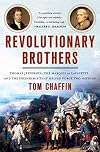
For a book that's supposed to be about two men's "brotherhood," there turns out not to be too much of that.
Sure, Jefferson and Lafayette worked together some in Paris and communicated over decades. But I didn't get the sense that they were as close as, say, Jefferson and John Adams (not withstanding their falling out for some years). They hardly saw each other on American soil and for the years they were both in France, there didn't seem to be a great deal of time spent with each other. No show more doubt they had great respect and admiration for each other, but I never got the feeling like they were "brothers."
I far more enjoyed the first third of the book—the part that takes place in America during the Revolution. Once Jefferson arrives in France, things bogged down quite a bit for me. This is more a reflection of my ignorance of French pronunciation and geography than that of the author's skill and research.
I did like the book's frequent breaks and relatively small chapters. As unacademic as that is, the writing was not. The style was not much to my liking. And don't get me started on the author's overuse of parenthetical phrases.
That said, "Revolutionary Brothers" does offer some excellent insight into the minds of both protagonists, much of which I'd not encountered before. show less
Sure, Jefferson and Lafayette worked together some in Paris and communicated over decades. But I didn't get the sense that they were as close as, say, Jefferson and John Adams (not withstanding their falling out for some years). They hardly saw each other on American soil and for the years they were both in France, there didn't seem to be a great deal of time spent with each other. No show more doubt they had great respect and admiration for each other, but I never got the feeling like they were "brothers."
I far more enjoyed the first third of the book—the part that takes place in America during the Revolution. Once Jefferson arrives in France, things bogged down quite a bit for me. This is more a reflection of my ignorance of French pronunciation and geography than that of the author's skill and research.
I did like the book's frequent breaks and relatively small chapters. As unacademic as that is, the writing was not. The style was not much to my liking. And don't get me started on the author's overuse of parenthetical phrases.
That said, "Revolutionary Brothers" does offer some excellent insight into the minds of both protagonists, much of which I'd not encountered before. show less
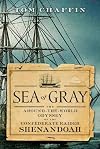
An interesting historical viewpoint into the cruise of the last confederate commerce raider and her round the world journey. Detailed enough for the historian without bogging down. A good read.
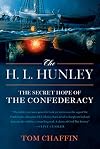
I should perhaps preface my review by saying I am not a civil war buff. My interest in war history is minimal, but I'm trying to expand my horizons for 2013 and picked this book up when my mom recommended it. I struggled in places where I needed some more background on the war and its players. As xenchu wrote, it's not a scholarly work, which I very much benefitted from. It is a quite factual book. Unfortunately, the facts around the Hunley and its submarine predecessors are few. Not being a show more (civil war) history buff, I found myself extremely frustrated by how often there were no source documents or accounts. I felt like I was reading a lot of "well this is what might have happened... or it could have been this." There were some lovely turns of phrase (porpoiselike aplomb!), I'd certainly recommend this to anyone who enjoys reading about the civil war or maritime history. show less
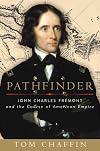
At its best, this book is a close examination of an enigmatic figure who deserves to be better remembered. At its worst, it has a certain prefunctory quality to it. These extremes roughly coincide with Fremont the explorer versus Fremont in his roles as military officer, politician and businessman. One could say that Fremont's real talents as an expedition leader and scientist allowed him to rise to the level where his incapacity to be an organization man was exposed. Still, if nothing else, show more Chaffin does do a good job of putting Fremont in context as an American conquistador. show less
You May Also Like


Associated Authors
Statistics
- Works
- 8
- Also by
- 1
- Members
- 689
- Popularity
- #36,712
- Rating
- 3.8
- Reviews
- 11
- ISBNs
- 33
- Languages
- 1