

Cate Tiernan
Author of Sundays at Tiffany's
About the Author
Cate Tiernan is the pen name of Gabrielle Charbonnet, who was born on July 24, 1961 in New Orleans, Louisiana. She studied writing and Russian language and literature at New York University before eventually graduating with a degree in Russian from Loyola University. While working as an assistant show more at Random House in New York City, she wrote her first children's book and assisted in editing The Secret Circle by L. J. Smith. During this time, she wrote several chapter books and middle-grade books under different names, and ghost-wrote for some popular series. After 8 years in New York, she moved back to New Orleans and started her Sweep series. She also writes the Balefire series and the Immortal Beloved series. (Bowker Author Biography) show less
Disambiguation Notice:
Cate Tiernan is the pen name of Gabrielle Charbonnet
Series
Works by Cate Tiernan
These Eyes 3 copies
Associated Works
Tagged
Common Knowledge
- Canonical name
- Tiernan, Cate
- Legal name
- Charbonnet, Gabrielle
- Birthdate
- 1961-07-24
- Gender
- female
- Occupations
- author
- Nationality
- USA
- Birthplace
- New Orleans, Louisiana, USA
- Disambiguation notice
- Cate Tiernan is the pen name of Gabrielle Charbonnet
- Associated Place (for map)
- Louisiana, USA
Members
Reviews
“I miss you already.”
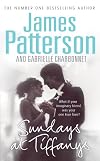
This light and lovely piece of fiction has more in common with Robert Nathan’s tender stories from the 1930s and 1940s than it does modern day romances. It is a charming but nearly undefinable romantic novel which is light and breezy, yet touches the heart. I’m usually not a big fan of Patterson, and have to wonder if co-author Gabrielle Charbonnet (Cate Tiernan) did more of the actual writing here, working from an outline and story provided by Patterson. At any show more rate, both receive credit for an old-style romantic fantasy marred only by one scene, which I’ll talk about later in the review.
Having seen the film starring Alyssa Milano a couple of years ago, I finally got around to reading this. I wish I’d opted to read it much sooner, because it is utterly charming. The basic premise is that those imaginary friends some children have are actually angels that only they can see. These angels exist to make it easier for a child to fit into the world, so they’ll feel less alone, and won’t be afraid. Michael is such an angel, and one of his assignments is little Jane Margaux, the lonely daughter of an overbearing and famous mother. Why Jane needs an angel during her youth is hinted at early on as her mother takes a bow onstage after a performance:
“I stood up too, and clapped the hardest, and I loved her so much I could hardly bear it. Someday she would love me back just as much, I was sure of it.”
There is something special about Michael’s connection to Jane, and hers to him. At the age of nine, when he has to move on, she is supposed to forget him, as all the others have. But she doesn’t. He continues his “work” for twenty-three years. He lives as normal humans do between “assignments” and everyone can see him. He boxes and enjoys life, but never forgets Jane. Though nowhere near as resonant, this is definitely Robert Nathan-land, at least in conception. There is nothing even remotely tawdry or inappropriate in tone, nor is there anything "creepy" about the story as some have suggested. This is rather an old-fashioned and innocent otherworldly fantasy, updated to modern times. It would have been quite at home in a more innocent, less uber-sensitive-to-everything era.
Years pass. Michael spots the grown up Jane (now in her early thirties) and is flabbergasted. In all the years — hundreds, thousands? — he’s been doing this, he’s never run into one of his former assignments as an adult. He observes that poor little Jane is still getting hurt; by her mother, Vivienne, and by a loser boyfriend named Hugh. Because we get moments from both Jane’s and Michael’s viewpoint, we know that unlike all the others, Jane never forgot Michael. Once they meet again, it is new territory for Michael, who realizes there must be a reason she didn’t forget him, and that reason could be heartbreaking.
Sweet and hopeful, and with a very special ending that fills the heart, this is almost a throwback story from another era. But there is a caveat. Either Patterson had some formula he wanted his co-author to adhere to, or one or both of these writers didn’t trust that modern readers would accept a romantic fantasy without a fully described sex scene.
I’m perfectly fine with sexual intimacy in "some" books, "some" series, especially if it’s beautifully realized, sensual or sexy. I myself write a series where sensuality is a major component to the visualized dystopian world I've created, but it happens to fit that story, that world. I understand, as an author, that even if you write a series that has no sex, graphically described or otherwise, but has interaction between the sexes, that someone will take exception in the current male-unfriendly climate. Don't misunderstand me, I'm not doing that at all.
It's unfair to criticize any book for being true to its genre, but I'm doing the exact opposite here; I'm criticizing the scene because it was very untrue to its genre. It's obvious that a lot of readers had not read the type of story from the 30s and 40s that Sunday at Tiffany's aspires to be. But I had, and that's why in this particular instance, the sex scene, which is relatively mild, but graphically described, is contrary to the old-fashioned romantic fantasy genre to which Sunday at Tiffany's is paying homage. If the author(s) had not done such a nice job up to that point in the story, it would be okay, but because they had, the sex scene inserted here just did not belong, not in the type of story they'd created. It didn't fit with the narrative which had preceded it at all. It felt so out of place for anyone familiar with this older style of story that it was jarring, taking the reader out of the older romantic fantasy and pulling them back into the modern world from which the story had been an escape.
Having become immersed into the grove and older style of the story, when I suddenly came upon the scene, it took me completely by surprise. It felt like something dropped in by parachute from a different book — or perhaps from a James Patterson formula? It was totally unexpected, like a slap in the face with a wet towel. Not because it was tawdry, or badly written, or unduly explicit; but because it was there, in THIS type of story.
These authors (or perhaps just Patterson, who most likely didn’t have time to write it by himself) wanted to tell an old-fashioned, Robert Nathan-like story, but I had to wonder if either of these authors had ever actually read one of Nathan’s books. To give readers an idea of how awkward that scene felt within this sweet and magical narrative, imagine Robert Nathan's Portrait of Jennie with an explicit sex scene between Eben and Jennie. Yeah, it was like that. Either fortunately, or maddeningly — I’ve still yet to decide — it was only a blip on the radar, and the ending was so lovely and heartwarming it almost made up for it. Almost.
This is still a wonderful read, and I highly recommend it. However, “formula” over appreciation for a style, a certain type of story and its mood, and its boundaries, force me to give Sunday at Tiffany’s four stars rather than the five I wanted to give it. Charming and wonderful overall, but it just missed being timeless because it was afraid to remain true to its origins, and the type of story to which it was paying homage. show less
This light and lovely piece of fiction has more in common with Robert Nathan’s tender stories from the 1930s and 1940s than it does modern day romances. It is a charming but nearly undefinable romantic novel which is light and breezy, yet touches the heart. I’m usually not a big fan of Patterson, and have to wonder if co-author Gabrielle Charbonnet (Cate Tiernan) did more of the actual writing here, working from an outline and story provided by Patterson. At any show more rate, both receive credit for an old-style romantic fantasy marred only by one scene, which I’ll talk about later in the review.
Having seen the film starring Alyssa Milano a couple of years ago, I finally got around to reading this. I wish I’d opted to read it much sooner, because it is utterly charming. The basic premise is that those imaginary friends some children have are actually angels that only they can see. These angels exist to make it easier for a child to fit into the world, so they’ll feel less alone, and won’t be afraid. Michael is such an angel, and one of his assignments is little Jane Margaux, the lonely daughter of an overbearing and famous mother. Why Jane needs an angel during her youth is hinted at early on as her mother takes a bow onstage after a performance:
“I stood up too, and clapped the hardest, and I loved her so much I could hardly bear it. Someday she would love me back just as much, I was sure of it.”
There is something special about Michael’s connection to Jane, and hers to him. At the age of nine, when he has to move on, she is supposed to forget him, as all the others have. But she doesn’t. He continues his “work” for twenty-three years. He lives as normal humans do between “assignments” and everyone can see him. He boxes and enjoys life, but never forgets Jane. Though nowhere near as resonant, this is definitely Robert Nathan-land, at least in conception. There is nothing even remotely tawdry or inappropriate in tone, nor is there anything "creepy" about the story as some have suggested. This is rather an old-fashioned and innocent otherworldly fantasy, updated to modern times. It would have been quite at home in a more innocent, less uber-sensitive-to-everything era.
Years pass. Michael spots the grown up Jane (now in her early thirties) and is flabbergasted. In all the years — hundreds, thousands? — he’s been doing this, he’s never run into one of his former assignments as an adult. He observes that poor little Jane is still getting hurt; by her mother, Vivienne, and by a loser boyfriend named Hugh. Because we get moments from both Jane’s and Michael’s viewpoint, we know that unlike all the others, Jane never forgot Michael. Once they meet again, it is new territory for Michael, who realizes there must be a reason she didn’t forget him, and that reason could be heartbreaking.
Sweet and hopeful, and with a very special ending that fills the heart, this is almost a throwback story from another era. But there is a caveat. Either Patterson had some formula he wanted his co-author to adhere to, or one or both of these writers didn’t trust that modern readers would accept a romantic fantasy without a fully described sex scene.
I’m perfectly fine with sexual intimacy in "some" books, "some" series, especially if it’s beautifully realized, sensual or sexy. I myself write a series where sensuality is a major component to the visualized dystopian world I've created, but it happens to fit that story, that world. I understand, as an author, that even if you write a series that has no sex, graphically described or otherwise, but has interaction between the sexes, that someone will take exception in the current male-unfriendly climate. Don't misunderstand me, I'm not doing that at all.
It's unfair to criticize any book for being true to its genre, but I'm doing the exact opposite here; I'm criticizing the scene because it was very untrue to its genre. It's obvious that a lot of readers had not read the type of story from the 30s and 40s that Sunday at Tiffany's aspires to be. But I had, and that's why in this particular instance, the sex scene, which is relatively mild, but graphically described, is contrary to the old-fashioned romantic fantasy genre to which Sunday at Tiffany's is paying homage. If the author(s) had not done such a nice job up to that point in the story, it would be okay, but because they had, the sex scene inserted here just did not belong, not in the type of story they'd created. It didn't fit with the narrative which had preceded it at all. It felt so out of place for anyone familiar with this older style of story that it was jarring, taking the reader out of the older romantic fantasy and pulling them back into the modern world from which the story had been an escape.
Having become immersed into the grove and older style of the story, when I suddenly came upon the scene, it took me completely by surprise. It felt like something dropped in by parachute from a different book — or perhaps from a James Patterson formula? It was totally unexpected, like a slap in the face with a wet towel. Not because it was tawdry, or badly written, or unduly explicit; but because it was there, in THIS type of story.
These authors (or perhaps just Patterson, who most likely didn’t have time to write it by himself) wanted to tell an old-fashioned, Robert Nathan-like story, but I had to wonder if either of these authors had ever actually read one of Nathan’s books. To give readers an idea of how awkward that scene felt within this sweet and magical narrative, imagine Robert Nathan's Portrait of Jennie with an explicit sex scene between Eben and Jennie. Yeah, it was like that. Either fortunately, or maddeningly — I’ve still yet to decide — it was only a blip on the radar, and the ending was so lovely and heartwarming it almost made up for it. Almost.
This is still a wonderful read, and I highly recommend it. However, “formula” over appreciation for a style, a certain type of story and its mood, and its boundaries, force me to give Sunday at Tiffany’s four stars rather than the five I wanted to give it. Charming and wonderful overall, but it just missed being timeless because it was afraid to remain true to its origins, and the type of story to which it was paying homage. show less
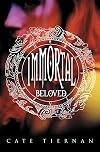
What first caught my eye about this book was that Nastasya, the main character, had to make the epic choice between light and darkness. I've always been intrigued by this choice. It's one that all people, both fictional and real of course, end up facing at some point. When it comes right down to it one wrong choice can send you skittering off towards disaster. Since my life seems to be at that point right now, I thought I might find some connection with Nastasya and her journey.
As a show more character, Nastasya was dynamic and vivid. I loved the multiple facets of her personality. She felt pain, regret, anger, lust, and all the other emotions that so often get ignored in favor of more the more pleasurable ones. I also appreciated how much Cate Tiernan focused on the Nastasya's inner thoughts. It was easy to get to know her as a character, and to become invested in her struggle. Truth be told I ended up rooting for her half way through the story and I wouldn't give up on her. The more she struggled, the more I felt connected to her. It isn't often a long book like this can fly by, but this one did, and all too soon it was over.
To those you haven't yet read this book, you desperately need to pick up a copy! Everything about Nastasya and her fellow characters is real. Everything about them makes you feel as though you're right there, walking among them. Although they're immortal, they tackle very human emotions and problems. I appreciated the tense relationships between some of the characters so much. I think a lot of times relationships in books are too easily forged. In this book Nastasya has to fight her inner self to do what is good for her. She shows a great amount of perseverance and gives the reader a glimpse into the reality of making a life altering decision.
I could go on and on about how passionate I felt about this book, but I won't. I'll leave you with the fact that it was a refreshing change from so many other angst-driven and romance fueled young adult novels that I've read recently. What Nastasya goes through felt real to me, and her journey spoke to me in a way that I haven't felt in a long time. I'm in love with this book friends, and I cannot wait to see what happens next. Thank goodness this is only book one! show less
As a show more character, Nastasya was dynamic and vivid. I loved the multiple facets of her personality. She felt pain, regret, anger, lust, and all the other emotions that so often get ignored in favor of more the more pleasurable ones. I also appreciated how much Cate Tiernan focused on the Nastasya's inner thoughts. It was easy to get to know her as a character, and to become invested in her struggle. Truth be told I ended up rooting for her half way through the story and I wouldn't give up on her. The more she struggled, the more I felt connected to her. It isn't often a long book like this can fly by, but this one did, and all too soon it was over.
To those you haven't yet read this book, you desperately need to pick up a copy! Everything about Nastasya and her fellow characters is real. Everything about them makes you feel as though you're right there, walking among them. Although they're immortal, they tackle very human emotions and problems. I appreciated the tense relationships between some of the characters so much. I think a lot of times relationships in books are too easily forged. In this book Nastasya has to fight her inner self to do what is good for her. She shows a great amount of perseverance and gives the reader a glimpse into the reality of making a life altering decision.
I could go on and on about how passionate I felt about this book, but I won't. I'll leave you with the fact that it was a refreshing change from so many other angst-driven and romance fueled young adult novels that I've read recently. What Nastasya goes through felt real to me, and her journey spoke to me in a way that I haven't felt in a long time. I'm in love with this book friends, and I cannot wait to see what happens next. Thank goodness this is only book one! show less
For some reason, possibly because I watched a movie with the same title, I thought that this book was going to involve Beethoven. Perhaps that is why I took so long to read it. I am a fan, but not so much that I was moved to read a book about him. Alas, I was wrong. This book had nothing to do with Beethoven and everything to do with utter awesomeness.
The immortals in this book are not vampires, not some crazy creatures. They are born like anyone, and are just exceptionally hard to kill. show more This does not mean that they make great decisions and choices after having lied hundreds of years. Lots are old, yes, but few seem truly wise.
Nastasya is one such immortal. In this first book of the planned triology, she's 449 years old. Old enough to have lost loved ones, to have lived through plagues and dictators, to have pushed back tragic memories from her early years. You see, only two immortals can have an immortal child. So, Nastasya's parents and siblings should still be with her. But they're not. Because they were killed when she was just a little girl. And, try as she might with alcohol and meaningless excess, Nastasya cannot escape the pain and fear of that dark night. The night she lost everyone she truly cared about.
Now, Nastasya has left behind her reckless (and potentially evil) best friend and has checked into a sort of rehab for immortals. Here, she'll be expected to practice being "in the now" by doing lots of farming-related chores. Not this city girl's idea of a fun time. But, she'll also have a chance to learn more about her powers--the magick that affects her more than anyone else. She thinks she's just no good at it, but might surprise herself once she hones her skills.
As Nastasya opens herself to understanding more about her power and her potential, she starts to remember the details of the worst nights of her life. And, just because Nastasya doesn't understand her powers and her value does not mean that others don't. They might come looking for her.
* * *
I could not put this book down. It's one of those reads that I wanted to last forever. I kinda felt cheated that it was only a little more than 400 pages--Why couldn't it have gone on and on? I've never read any of Cate Tiernan's work, but am now a huge fan. She has this ease of narration and dialogue that sounds like actual people talking and thinking. Her characters are great, and this plot is absolutely engaging and riveting.
Moreover, I could completely picture everything that was happening in this book. Even the scenes where magick was used were crystal clear to me. This is not always the case for me. I cannot wait to continue this story and find out what happens--There are so very many possibilities! Alas, the next book does not come out until September of 2011. At least the New Year has started and I'm that much closer...Not really comforting, but it'll have to do. show less
The immortals in this book are not vampires, not some crazy creatures. They are born like anyone, and are just exceptionally hard to kill. show more This does not mean that they make great decisions and choices after having lied hundreds of years. Lots are old, yes, but few seem truly wise.
Nastasya is one such immortal. In this first book of the planned triology, she's 449 years old. Old enough to have lost loved ones, to have lived through plagues and dictators, to have pushed back tragic memories from her early years. You see, only two immortals can have an immortal child. So, Nastasya's parents and siblings should still be with her. But they're not. Because they were killed when she was just a little girl. And, try as she might with alcohol and meaningless excess, Nastasya cannot escape the pain and fear of that dark night. The night she lost everyone she truly cared about.
Now, Nastasya has left behind her reckless (and potentially evil) best friend and has checked into a sort of rehab for immortals. Here, she'll be expected to practice being "in the now" by doing lots of farming-related chores. Not this city girl's idea of a fun time. But, she'll also have a chance to learn more about her powers--the magick that affects her more than anyone else. She thinks she's just no good at it, but might surprise herself once she hones her skills.
As Nastasya opens herself to understanding more about her power and her potential, she starts to remember the details of the worst nights of her life. And, just because Nastasya doesn't understand her powers and her value does not mean that others don't. They might come looking for her.
* * *
I could not put this book down. It's one of those reads that I wanted to last forever. I kinda felt cheated that it was only a little more than 400 pages--Why couldn't it have gone on and on? I've never read any of Cate Tiernan's work, but am now a huge fan. She has this ease of narration and dialogue that sounds like actual people talking and thinking. Her characters are great, and this plot is absolutely engaging and riveting.
Moreover, I could completely picture everything that was happening in this book. Even the scenes where magick was used were crystal clear to me. This is not always the case for me. I cannot wait to continue this story and find out what happens--There are so very many possibilities! Alas, the next book does not come out until September of 2011. At least the New Year has started and I'm that much closer...Not really comforting, but it'll have to do. show less
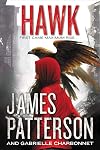
God, Mr. Patterson, can you just please fucking stop? I read the original When the Wind Blows duology, and that was much, much, MUCH better than the Maximum Ride series.
I don't know why Mr. Patterson chose to not continue the When the Wind Blows story, that had much more depth. I grabbed Maximum Ride #1 from the grocery store shelf years ago when it was newly released because it looked interesting, but the story was choppy and crappy, like so many of the author's other books.
I DNFed when I show more ran out of the sample that I downloaded from Amazon. I expected it to be crappy, but I'm a rubbernecker and I wanted to know what the fuck this was because I thought the series was supposed to be over?
It was just as shitty as I expected. The author really needs to retire, or at least take the time to develop his stories more.
He seems like a okay guy overall, he's a big supporter of charity-related literacy (donating to universities, libraries, independent bookstores, etc etc) Good on him and I certainly don't wish him poor health or anything, but god fucking damn it, he really needs to slow down as far as his writing goes because the quality of it really suffers. I'd love to see him actually finish the When the Wind Blows/Lake House story, the ending of the duology made it seem obvious there should have been another book, but he apparently abandoned that.
Fuck Maximum Ride. It just feels like really, REALLY dumbed-down YA sci fi that was churned out for money, which is also apparently why Hawk was also published.
Quality over quantity, man! show less
I don't know why Mr. Patterson chose to not continue the When the Wind Blows story, that had much more depth. I grabbed Maximum Ride #1 from the grocery store shelf years ago when it was newly released because it looked interesting, but the story was choppy and crappy, like so many of the author's other books.
I DNFed when I show more ran out of the sample that I downloaded from Amazon. I expected it to be crappy, but I'm a rubbernecker and I wanted to know what the fuck this was because I thought the series was supposed to be over?
It was just as shitty as I expected. The author really needs to retire, or at least take the time to develop his stories more.
He seems like a okay guy overall, he's a big supporter of charity-related literacy (donating to universities, libraries, independent bookstores, etc etc) Good on him and I certainly don't wish him poor health or anything, but god fucking damn it, he really needs to slow down as far as his writing goes because the quality of it really suffers. I'd love to see him actually finish the When the Wind Blows/Lake House story, the ending of the duology made it seem obvious there should have been another book, but he apparently abandoned that.
Fuck Maximum Ride. It just feels like really, REALLY dumbed-down YA sci fi that was churned out for money, which is also apparently why Hawk was also published.
Quality over quantity, man! show less
Lists
Awards


You May Also Like


Associated Authors
Statistics
- Works
- 81
- Also by
- 5
- Members
- 23,031
- Popularity
- #919
- Rating
- 3.8
- Reviews
- 561
- ISBNs
- 643
- Languages
- 12
- Favorited
- 30

