
Elizabeth Linington (1921–1988)
Author of Exploit of Death
About the Author
Disambiguation Notice:
Dell Shannon was a pen name of Elizabeth Linington. She also used Anne Blaisdell, Lesley Egan, Egan O'Neill. She also published under her own name. Do not combine her with Del Shannon (1934–1990), the singer-songwriter.
Series
Works by Elizabeth Linington
The First Linington Quartet: Greenmask!; No Evil Angel; Date with Death; Something Wrong (1964) 23 copies, 1 review
Forging an Empire: Queen Elizabeth 2 copies
Motive in Shadow 1 copy
Flash Attachment 1 copy
Double Bluff 1 copy
Death odf a BusyBody 1 copy
The Anglophile 1 copy
Associated Works
Hammer Films Double Feature Volume Three: Maniac / Die! Die! My Darling! — Author — 2 copies
Tagged
Common Knowledge
- Canonical name
- Linington, Elizabeth
- Legal name
- Linington, Barbara Elizabeth
- Other names
- Linington, Elizabeth
Blaisell, Anne (pen name)
Egan, Lesley (pen name)
O'Neill, Egan (pen name)
Shannon, Dell (pen name) - Birthdate
- 1921-03-11
- Date of death
- 1988-04-05
- Gender
- female
- Education
- Glendale College (BA|1942)
- Occupations
- crime novelist
historical novelist
writer - Short biography
- Elizabeth Linington was a prolific novelist and writer, producing about 80 books in her career. Called the "queen of the procedurals," she was one of the first American women to write police procedurals — a male-dominated genre before that. Her novel Case Pending (1960), which introduced her most popular series character, Lieutenant Luis Mendoza, head of the Los Angeles Police Department's homicide squad, was awarded runner-up for Best First Mystery Novel from the Mystery Writers of America. Nightmare (1961) and Knave of Hearts (1962), in the same series, both were nominated for Edgar Awards in the Best Novel category. Her interests in archaeology, the occult, gemstones, antique weapons, and languages were reflected in her works. As noted below, she wrote under numerous pen names.
- Nationality
- USA
- Birthplace
- Aurora, Illinois, USA
- Places of residence
- Glendale, California, USA
- Place of death
- Arroyo Grande, California, USA
- Disambiguation notice
- Dell Shannon was a pen name of Elizabeth Linington. She also used Anne Blaisdell, Lesley Egan, Egan O'Neill. She also published under her own name. Do not combine her with Del Shannon (1934–1990), the singer-songwriter.
- Associated Place (for map)
- California, USA
Members
Reviews

“Death was wanton. There was no sense at all to where or when or how death came.”
Barbara Linington, a.k.a. Dell Shannon, Anne Blaisdell, Lesley Egan, Egan O’Neill, and Elizabeth Linington, is most certainly one of the finest and most prolific writers of mystery fiction in its long and storied history. Her Lt. Luis Mendoza police procedurals broke fresh ground in 1960, portraying a Mexican cop as the chief protagonist in Los Angeles of the era. It also broke new ground in that it show more blended an almost cozy type of domesticity between Luis and wife Alison, and their cats, with the gritty on the street investigation of crimes. Along with Ed McBain, her American police procedurals created a new sub-genre in mystery fiction.
But even as popular as her Luis Mendoza series was, Linington didn’t stop there. She had the wonderful Vic Varallo series set in Glendale, and her stylish Maddox/Carstairs police procedurals set around the Hollywood station. I’m slowly going through each after many years and finding them incredibly enjoyable. In an era that had mystery greats already established, and a slew of new ones emerging, Linington stood out; both for her gifts as a writer, and her prolific output. The New York Herald Tribune critic called her his favorite American crime writer, and no less than Anthony Boucher, who loved her work, called the 1967 Maddox/Carstairs outing, Something Wrong, the best police procedural of the year.
That said, The Death-Bringers from 1964 is one of the most exciting and enjoyable entries of the Luis Mendoza series. Hackett is still in the hospital following the events in Mark of Murder, so Palliser and Higgins are more prominent in this one — though even in a hospital bed, Hackett doesn’t stop being a cop, and helps out. Bert Dwyer also plays a more prominent role in this one, which has three main cases, each as baffling and hard to solve as the other — even for Mendoza, with his famous hunches. Lead after lead is run down, hunch after hunch explored, solid police work on each case ending up in blind alleys. And then Luis loses one of his own, the dying cop’s last word “Two” hanging over the lives of those he left behind. Linington poignantly portrays the dangerous and difficult life of police officers, especially those in Los Angeles. From the narrative, and Luis Mendoza’s thoughts:
“The city had tripled its population in the last ten years; the chief was clamoring for more money to hire more cops. The city was policing a territory ten times the size of New York City with a quarter as many cops, and the city had the top police force in the world; but it could only stretch so far and do so much. And of all the public services the city fathers granted money to, the cops were always last on the list. Naturally.”
Refreshingly, though she didn’t shy away from showing the bad with the good, Linington portrayed cops in the favorable light they deserve, as the good guys trying to keep a lid on things. They were not without compassion, but they also had a job to do. By putting their domestic lives — much more prominently than McBain, who also gave glimpse into the private lives of his 87th Precinct cops — nearly as front and center as the crimes and the investigations, Linington put a human face to those charged with keeping law and order. And as she did so, Linington showed Los Angeles as it was then, and is now:
“It was an old frame house on a block of old frame houses. This was one of the oldest sections of L.A., and while you couldn’t exactly call it a slum, you couldn’t exactly say it wasn’t, either. Whether or not a given block fell into the category of slum depended a lot on what kind of people lived there. Negro section or white section or Oriental, that held true.”
It’s a still very hot September as this entry opens, and Luis and his team are soon engulfed in several separate mysteries. The fourth bank robbery in 27 days has just occurred, and there has been violence. They’re calling him invisible because no one seems to remember him in exactly the same way. A skid-row drifter has been murdered, and a young gas station attendant has been tragically and needlessly killed in a holdup gone wrong. Saddest of all, a young pretty colored girl named Carol, in her second year of college because she wanted to be a teacher, has been shot dead in her home, with no apparent reason, or suspects. All have leads that go nowhere; the search for a Ford Anglia DeLuxe; the search for the “right” owner of a special gun, which has a broken trigger-guard; and the dying clue from one of their own which leads the detectives astray until something finally clicks for Luis.
Best Sellers said of this book in real time, “Well done, so well done that one feels a part of the force.” That aptly describes The Death-Bringers. The reader hangs on every effort made by Luis and his team as they scatter in every direction trying to bring about justice. We feel their anguish and frustration, but also their determination. And we feel their loss when a detective who has been a regular in the series goes down shooting, and with his last breath tries to point them in the right direction of the bank robber(s). But we also get Luis and Alison and their young kids, Terry and Johnny. And of course, for anyone who follows this series, their four cats of various lineage and temperament are always around when Luis is home. Someone on the aged side interested in the Mendoza’s housekeeper/nurse will provide a clue as well.
There isn’t one climax, but three in this one, and it’s very satisfying. There is a bit of coincidence in one case for a few to whinge on about, but this is a terrific and involving police procedural. Going back through these three series after all these years has made me appreciate to a greater degree what a wonderful writer Linington was. Her sense of movement within the narrative, her ability to strike a balance between the domestic and the day-to-day life of cops, and her ear for dialog — having people speak as they actually do, rather than how other writers have them talk in books — is superlative. She is my go-to crime writer when I just want to enjoy myself. My highest recommendation for The Death-Bringers. show less
Barbara Linington, a.k.a. Dell Shannon, Anne Blaisdell, Lesley Egan, Egan O’Neill, and Elizabeth Linington, is most certainly one of the finest and most prolific writers of mystery fiction in its long and storied history. Her Lt. Luis Mendoza police procedurals broke fresh ground in 1960, portraying a Mexican cop as the chief protagonist in Los Angeles of the era. It also broke new ground in that it show more blended an almost cozy type of domesticity between Luis and wife Alison, and their cats, with the gritty on the street investigation of crimes. Along with Ed McBain, her American police procedurals created a new sub-genre in mystery fiction.
But even as popular as her Luis Mendoza series was, Linington didn’t stop there. She had the wonderful Vic Varallo series set in Glendale, and her stylish Maddox/Carstairs police procedurals set around the Hollywood station. I’m slowly going through each after many years and finding them incredibly enjoyable. In an era that had mystery greats already established, and a slew of new ones emerging, Linington stood out; both for her gifts as a writer, and her prolific output. The New York Herald Tribune critic called her his favorite American crime writer, and no less than Anthony Boucher, who loved her work, called the 1967 Maddox/Carstairs outing, Something Wrong, the best police procedural of the year.
That said, The Death-Bringers from 1964 is one of the most exciting and enjoyable entries of the Luis Mendoza series. Hackett is still in the hospital following the events in Mark of Murder, so Palliser and Higgins are more prominent in this one — though even in a hospital bed, Hackett doesn’t stop being a cop, and helps out. Bert Dwyer also plays a more prominent role in this one, which has three main cases, each as baffling and hard to solve as the other — even for Mendoza, with his famous hunches. Lead after lead is run down, hunch after hunch explored, solid police work on each case ending up in blind alleys. And then Luis loses one of his own, the dying cop’s last word “Two” hanging over the lives of those he left behind. Linington poignantly portrays the dangerous and difficult life of police officers, especially those in Los Angeles. From the narrative, and Luis Mendoza’s thoughts:
“The city had tripled its population in the last ten years; the chief was clamoring for more money to hire more cops. The city was policing a territory ten times the size of New York City with a quarter as many cops, and the city had the top police force in the world; but it could only stretch so far and do so much. And of all the public services the city fathers granted money to, the cops were always last on the list. Naturally.”
Refreshingly, though she didn’t shy away from showing the bad with the good, Linington portrayed cops in the favorable light they deserve, as the good guys trying to keep a lid on things. They were not without compassion, but they also had a job to do. By putting their domestic lives — much more prominently than McBain, who also gave glimpse into the private lives of his 87th Precinct cops — nearly as front and center as the crimes and the investigations, Linington put a human face to those charged with keeping law and order. And as she did so, Linington showed Los Angeles as it was then, and is now:
“It was an old frame house on a block of old frame houses. This was one of the oldest sections of L.A., and while you couldn’t exactly call it a slum, you couldn’t exactly say it wasn’t, either. Whether or not a given block fell into the category of slum depended a lot on what kind of people lived there. Negro section or white section or Oriental, that held true.”
It’s a still very hot September as this entry opens, and Luis and his team are soon engulfed in several separate mysteries. The fourth bank robbery in 27 days has just occurred, and there has been violence. They’re calling him invisible because no one seems to remember him in exactly the same way. A skid-row drifter has been murdered, and a young gas station attendant has been tragically and needlessly killed in a holdup gone wrong. Saddest of all, a young pretty colored girl named Carol, in her second year of college because she wanted to be a teacher, has been shot dead in her home, with no apparent reason, or suspects. All have leads that go nowhere; the search for a Ford Anglia DeLuxe; the search for the “right” owner of a special gun, which has a broken trigger-guard; and the dying clue from one of their own which leads the detectives astray until something finally clicks for Luis.
Best Sellers said of this book in real time, “Well done, so well done that one feels a part of the force.” That aptly describes The Death-Bringers. The reader hangs on every effort made by Luis and his team as they scatter in every direction trying to bring about justice. We feel their anguish and frustration, but also their determination. And we feel their loss when a detective who has been a regular in the series goes down shooting, and with his last breath tries to point them in the right direction of the bank robber(s). But we also get Luis and Alison and their young kids, Terry and Johnny. And of course, for anyone who follows this series, their four cats of various lineage and temperament are always around when Luis is home. Someone on the aged side interested in the Mendoza’s housekeeper/nurse will provide a clue as well.
There isn’t one climax, but three in this one, and it’s very satisfying. There is a bit of coincidence in one case for a few to whinge on about, but this is a terrific and involving police procedural. Going back through these three series after all these years has made me appreciate to a greater degree what a wonderful writer Linington was. Her sense of movement within the narrative, her ability to strike a balance between the domestic and the day-to-day life of cops, and her ear for dialog — having people speak as they actually do, rather than how other writers have them talk in books — is superlative. She is my go-to crime writer when I just want to enjoy myself. My highest recommendation for The Death-Bringers. show less
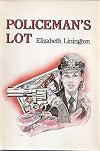
Maddox finally realizes how great Carstairs is, a woman D’Arcy is dating finally figures out D’Arcy’s rather unusual first name, and the Hollywood Wilcox Precinct is busier than ever in this marvelous entry in the Ivor Maddox/Susan Carstairs police procedural series penned by the Queen of police procedurals, Elizabeth Linington.
The cases come fast and furious for the gang at the Hollywood Wilcox station. Linington does a wonderful job of keeping track of it all; the reader can simply show more relax and enjoy the ride. A nice young man working at a gas station is murdered, a respected doctor who no one would seemingly want to harm is missing without a clue, a string of vandalism has to be dealt with, a bank is robbed, an angry man accosted and propositioned by another male in a non-gay bar wants charges filed. Just about any crime you can imagine, big or small, is thrown at Maddox, D’Arcy, the always-mystery-reading Céaser Rodriguez, Daisy and Sue, and a new man full of charm and blarney who raises Maddox’s hackles because he seems to be making a play for Carstairs — and getting somewhere.
Maddox has his Maserati in this one, but seemingly doesn’t have a clue what’s really bothering him about the attention Johnny is heaping on Officer Carstairs. He also doesn’t have a clue how to get to the bottom of more than one case puzzling the entire precinct, including the murder of a medium with a gun that’s gone through more hands than a seasoned working girl. D’Arcy’s exhausting legwork in backtracking the weapon will eventually lead to another body, and a break in a totally — on the surface — unrelated case. As will Maddox finally figuring out the identity of the man who propositioned for money a truck driver connect with a very different and much more serious open case.
A couple of cases are connected in ways unforeseeable, yet completely logical and true-to-life when unraveled in the fifth entry of this marvelous series. Blending the personal lives of her officers with the arduous and often — from the public — thankless task of investigating crime and protecting the city’s citizenry was something Linington did better than any other writer. Whether she was writing under her Dell Shannon moniker, her Lesley Egan pseudonym, Anne Blaisdell or Elizabeth Linington, she never failed to make it work. Her gift for dialog, how people actually speak, the broken sentences and jumping around, is so good as to be jarring at first to todays readers — because you so rarely come across it portrayed so accurately in fiction in our day.
She was also conservative, refreshingly pro-police, and not afraid to portray accurately the views of the majority, including cops, about segments of society. More than once — actually several times as I recall — a cop notes the decline of society, and remarks on Satan working overtime, lamenting what the country’s populous is coming to. In essence, this has the effect, by the end, of making the story feel remarkably fresh, as if it was written last week rather than in 1968. Her conservatism and her honesty are perhaps the reason, in my opinion, this wildly popular in her own time — for decades — writer is so rarely championed, or given a paperback reprint, as her contemporary, Ed McBain, recently had. She is however widely available on Kindle; all four series and several one-off mysteries are available to download and enjoy.
Some latitude as to police methods of the time must naturally be allowed for by the reader when devouring a McBain or Linington police procedural. Any book chronicling the methods of crime detection from a different era must. All too often, however, readers bandy about the overused term, “out of date” because they’ve applied it to morality and social views brought forth in the narrative which are more in line with traditional values, common sense, and various religious teachings (both Christian and otherwise) that they personally no longer believe. Those values are what you’ll find within the pages of Policeman’s Lot — and in fact, all her police procedurals written from the 1960s thru the 1980s. Different and more traditional views from your own, does not always make them “out of date.” Linington might, were she alive today, be of the opinion that it is the tried-and-failed “values” and “morality” of ancient Sodom and Gomorrah that are “out of date.”
This is a terrific read and a terrific series, as is her Luis Mendoza (writing as Dell Shannon) and Vic Varallo (writing as Lesley Egan) series. Mendoza in fact broke barriers and forged new ground when she created a Hispanic cop in Los Angeles who was in a position of authority way back when. I can’t recommend this book, or Linington’s work, any more highly than I do on as regular a basis as is possible. Policeman’s Lot was an excellent read and well-worth the trouble I had to go to in order to obtain a decent hardback copy with dust jacket. Of another time before all the uber-sensitive, victimhood embracing, PC, SJW, moral free-for-all madness, so absolutely Timeless. show less
The cases come fast and furious for the gang at the Hollywood Wilcox station. Linington does a wonderful job of keeping track of it all; the reader can simply show more relax and enjoy the ride. A nice young man working at a gas station is murdered, a respected doctor who no one would seemingly want to harm is missing without a clue, a string of vandalism has to be dealt with, a bank is robbed, an angry man accosted and propositioned by another male in a non-gay bar wants charges filed. Just about any crime you can imagine, big or small, is thrown at Maddox, D’Arcy, the always-mystery-reading Céaser Rodriguez, Daisy and Sue, and a new man full of charm and blarney who raises Maddox’s hackles because he seems to be making a play for Carstairs — and getting somewhere.
Maddox has his Maserati in this one, but seemingly doesn’t have a clue what’s really bothering him about the attention Johnny is heaping on Officer Carstairs. He also doesn’t have a clue how to get to the bottom of more than one case puzzling the entire precinct, including the murder of a medium with a gun that’s gone through more hands than a seasoned working girl. D’Arcy’s exhausting legwork in backtracking the weapon will eventually lead to another body, and a break in a totally — on the surface — unrelated case. As will Maddox finally figuring out the identity of the man who propositioned for money a truck driver connect with a very different and much more serious open case.
A couple of cases are connected in ways unforeseeable, yet completely logical and true-to-life when unraveled in the fifth entry of this marvelous series. Blending the personal lives of her officers with the arduous and often — from the public — thankless task of investigating crime and protecting the city’s citizenry was something Linington did better than any other writer. Whether she was writing under her Dell Shannon moniker, her Lesley Egan pseudonym, Anne Blaisdell or Elizabeth Linington, she never failed to make it work. Her gift for dialog, how people actually speak, the broken sentences and jumping around, is so good as to be jarring at first to todays readers — because you so rarely come across it portrayed so accurately in fiction in our day.
She was also conservative, refreshingly pro-police, and not afraid to portray accurately the views of the majority, including cops, about segments of society. More than once — actually several times as I recall — a cop notes the decline of society, and remarks on Satan working overtime, lamenting what the country’s populous is coming to. In essence, this has the effect, by the end, of making the story feel remarkably fresh, as if it was written last week rather than in 1968. Her conservatism and her honesty are perhaps the reason, in my opinion, this wildly popular in her own time — for decades — writer is so rarely championed, or given a paperback reprint, as her contemporary, Ed McBain, recently had. She is however widely available on Kindle; all four series and several one-off mysteries are available to download and enjoy.
Some latitude as to police methods of the time must naturally be allowed for by the reader when devouring a McBain or Linington police procedural. Any book chronicling the methods of crime detection from a different era must. All too often, however, readers bandy about the overused term, “out of date” because they’ve applied it to morality and social views brought forth in the narrative which are more in line with traditional values, common sense, and various religious teachings (both Christian and otherwise) that they personally no longer believe. Those values are what you’ll find within the pages of Policeman’s Lot — and in fact, all her police procedurals written from the 1960s thru the 1980s. Different and more traditional views from your own, does not always make them “out of date.” Linington might, were she alive today, be of the opinion that it is the tried-and-failed “values” and “morality” of ancient Sodom and Gomorrah that are “out of date.”
This is a terrific read and a terrific series, as is her Luis Mendoza (writing as Dell Shannon) and Vic Varallo (writing as Lesley Egan) series. Mendoza in fact broke barriers and forged new ground when she created a Hispanic cop in Los Angeles who was in a position of authority way back when. I can’t recommend this book, or Linington’s work, any more highly than I do on as regular a basis as is possible. Policeman’s Lot was an excellent read and well-worth the trouble I had to go to in order to obtain a decent hardback copy with dust jacket. Of another time before all the uber-sensitive, victimhood embracing, PC, SJW, moral free-for-all madness, so absolutely Timeless. show less
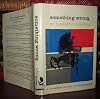
He thought of the principal saying, “Right back to Sodom and Gomorrah.” Once in a while Maddox the pessimist took a long look at the average crowd along any street in the city, and the thought crossed his mind, Are they worth saving? — Something Wrong
What may be wrong, is that in our day, Barbara “Elizabeth” Linington, also known to crime and mystery aficionados as Dell Shannon and Lesley Egan, has not had the same renaissance as other mystery writers of the past, many of whom were show more neither as prolific, nor as talented, much less as successful. Series featuring Luis Mendoza, Vic Varallo, and Ivor Maddox and Sue Carstairs were both acclaimed by critics and gobbled up by the reading public, keeping her pen names of Dell Shannon and Lesley Egan, along with Elizabeth Linington, at the top of mystery bestseller charts for decades. Yes, decades. She was a favorite of mystery book clubs, because her crime and police procedurals were not only groundbreaking in helping shape the genre, but terrifically entertaining reads. Something Wrong was in fact touted as the finest police procedural of 1967 by none other than Anthony Boucher, a name familiar to any mystery and crime lover worth his or her salt.
Very much set in the 1960s at the outset, the Ivor Maddox series was distinguishable from others Linington wrote because it had a slightly younger and hipper vibe, and a somewhat breezier tone. Though it seems tame today, the Maddox/Carstairs series has a swingin’ ‘60s hue to it. Making Ivor Maddox a mystery book collector as well as a cop added to the fun. He’s old enough to wonder if he should marry soon, but still young enough to be enthused about high-end sports cars. He’s also a virtual magnet for every female he comes into contact with — other than policewoman Sue Carstairs, who likes Maddox, but plays it cool. This, in spite of what he himself and D’Arcy and Rodriguez consider rather ordinary looks, has them all wondering how he does it. Maddox sometimes finds the attention annoying, especially when it becomes a distraction during a case. Of course there’s good old Carstairs, reliable, pretty, yet seemingly uninterested.
A lot is going on at the Wilcox station in Hollywood in Something Wrong. A supermarket heist gone bad, and deadly, compete with the apparent suicide of a young girl jilted by her beau, a service station robbery, the random shooting of an elderly man from the window of a car, and a missing baby. A few other crimes pop up as well, including a shoplifting ring of young girls who may not be acting on their own. Ivor and the men try to get to the bottom of each case, especially the missing baby, because it won’t be long before the Feds take over. A hard woman named Janet Henry has a creepy, almost unnatural attachment to her vicious dobermans, and Maddox fears for the worst. And then there is Carol Ann Fisher, who was only fifteen and pregnant. How did she get the Quinidine? Was it cold blooded murder, or tragedy?
Linington is marvelous at juggling it all, keeping the narrative and the cases moving swiftly along, even when leads turn into dead ends. As always, Linington highlights the difficulties and the dangers of being a cop. Here, a patrolman named Bill Chernowsky is painted in a manner that’s real, and makes us like him. And then…he’s gone, shot during a holdup. He leaves behind a pregnant wife, the shock bringing about more tragedy, and a station keener than ever to find a cop killer. Linington knew how the silent majority of the public, and cops felt, which still holds true today. As a writer, she used the situation to give cops a voice, through Ivor’s boss, Captain Edwards:
“That was a good man,” he said. “One of my bright young men. This worthless bas*ard of a punk hood! This two-bit son-of-a-b*tch pro! And you know what’ll happen boys, you know it— Catch him and try him and a bunch of bleeding-heart do-gooders get up a petition—mustn’t gas the poor fellow, he came from a broken home, he’s got phobias, he might be rehabilitated! Let them for Christ’s sweet sake try to rehabilitate Bill Chernowsky from being dead! Let them—”
Finally there are breaks in the cases, each wrapping up with good police work, a bit of luck, and something Carstairs says to Maddox which makes something click. Carstairs has some fine moments in this one, and Linington has Maddox wondering if he should settle down while he searches for a snazzy new replacement for his aging Frazer-Nash. Because Maddox has gotten Rodriguez hooked on mysteries, he’s either reading The Saint Magazine, or, in a tip of the hat to Linington's chief rival in the genre, Ed McBain, he's engrossed in the 87th Precinct entry, Ax.
No one, and I mean no one, ever balanced the daily personal lives of cops with their professional lives any better than Linington. She was also very unique in her style — perhaps as unique as Bradbury. I’ve never read another writer in the mystery and crime field who used more hyphens in dialog; to convey thoughts of her protagonists in real time within the narrative. She understood how people thought, and how they spoke in real life, which is often in fits and spurts. Once you get into the rhythm of it, it’s marvelous, true-to-life, and for mystery fiction, quite unique.
It is in the conclusion, however, where Linington really shines as a writer. The solution to one crime is very dark — occult dark. The true horror of the aforementioned is made all the more powerful due to the adept manner Linington chooses to frame it; she suggests what happened, painting everything up to the act in such nuanced tones that she need not go into grisly detail. Linington the writer understood that what the mind could imagine, was far more horrific and disturbing than any graphic description. It is an important lesson to other writers that blood and gore and graphically described violence is not only unnecessary, it is a shortcut for writers either not skilled enough in their craft, or industrious enough in their work ethic, to paint with suggestion, and make the act all the more poignant and powerful for it’s very lack of gratuitous and graphic violence.
César Rodriguez will play a pivotal role in uncovering a murderer in the solution to the remaining unsolved case, which is more than a touch spooky. It leads to this exchange between Carstairs, Maddox, and D’Arcy near the end:
“I think psychiatrists are all mad,” said Sue. “Themselves.”
“ ‘I know a hawk from a handsaw,’ ” muttered Maddox. “No. No, Sue. But they’ve committed themselves to the premise that there’s no such thing as good and evil per se. All is relative. Which is right where their spectacles get fogged up and they stop seeing clear.”
“It looks to me,” said D’Arcy seriously, “that a lot of people nowadays, they’re trying to stay neutral—uncommitted—between God and Satan. Which same—I’m telling you—cannot be done forever. Or even a while.”
Fifty-plus years on, that insightful exchange rings even truer. But not all is gloom and doom in this outing. Maddox gets a new sports car, and you can sense him gradually gravitating toward the terrific Carstairs. Much will happen between them in coming books in this wonderful series. Highly recommended. show less
What may be wrong, is that in our day, Barbara “Elizabeth” Linington, also known to crime and mystery aficionados as Dell Shannon and Lesley Egan, has not had the same renaissance as other mystery writers of the past, many of whom were show more neither as prolific, nor as talented, much less as successful. Series featuring Luis Mendoza, Vic Varallo, and Ivor Maddox and Sue Carstairs were both acclaimed by critics and gobbled up by the reading public, keeping her pen names of Dell Shannon and Lesley Egan, along with Elizabeth Linington, at the top of mystery bestseller charts for decades. Yes, decades. She was a favorite of mystery book clubs, because her crime and police procedurals were not only groundbreaking in helping shape the genre, but terrifically entertaining reads. Something Wrong was in fact touted as the finest police procedural of 1967 by none other than Anthony Boucher, a name familiar to any mystery and crime lover worth his or her salt.
Very much set in the 1960s at the outset, the Ivor Maddox series was distinguishable from others Linington wrote because it had a slightly younger and hipper vibe, and a somewhat breezier tone. Though it seems tame today, the Maddox/Carstairs series has a swingin’ ‘60s hue to it. Making Ivor Maddox a mystery book collector as well as a cop added to the fun. He’s old enough to wonder if he should marry soon, but still young enough to be enthused about high-end sports cars. He’s also a virtual magnet for every female he comes into contact with — other than policewoman Sue Carstairs, who likes Maddox, but plays it cool. This, in spite of what he himself and D’Arcy and Rodriguez consider rather ordinary looks, has them all wondering how he does it. Maddox sometimes finds the attention annoying, especially when it becomes a distraction during a case. Of course there’s good old Carstairs, reliable, pretty, yet seemingly uninterested.
A lot is going on at the Wilcox station in Hollywood in Something Wrong. A supermarket heist gone bad, and deadly, compete with the apparent suicide of a young girl jilted by her beau, a service station robbery, the random shooting of an elderly man from the window of a car, and a missing baby. A few other crimes pop up as well, including a shoplifting ring of young girls who may not be acting on their own. Ivor and the men try to get to the bottom of each case, especially the missing baby, because it won’t be long before the Feds take over. A hard woman named Janet Henry has a creepy, almost unnatural attachment to her vicious dobermans, and Maddox fears for the worst. And then there is Carol Ann Fisher, who was only fifteen and pregnant. How did she get the Quinidine? Was it cold blooded murder, or tragedy?
Linington is marvelous at juggling it all, keeping the narrative and the cases moving swiftly along, even when leads turn into dead ends. As always, Linington highlights the difficulties and the dangers of being a cop. Here, a patrolman named Bill Chernowsky is painted in a manner that’s real, and makes us like him. And then…he’s gone, shot during a holdup. He leaves behind a pregnant wife, the shock bringing about more tragedy, and a station keener than ever to find a cop killer. Linington knew how the silent majority of the public, and cops felt, which still holds true today. As a writer, she used the situation to give cops a voice, through Ivor’s boss, Captain Edwards:
“That was a good man,” he said. “One of my bright young men. This worthless bas*ard of a punk hood! This two-bit son-of-a-b*tch pro! And you know what’ll happen boys, you know it— Catch him and try him and a bunch of bleeding-heart do-gooders get up a petition—mustn’t gas the poor fellow, he came from a broken home, he’s got phobias, he might be rehabilitated! Let them for Christ’s sweet sake try to rehabilitate Bill Chernowsky from being dead! Let them—”
Finally there are breaks in the cases, each wrapping up with good police work, a bit of luck, and something Carstairs says to Maddox which makes something click. Carstairs has some fine moments in this one, and Linington has Maddox wondering if he should settle down while he searches for a snazzy new replacement for his aging Frazer-Nash. Because Maddox has gotten Rodriguez hooked on mysteries, he’s either reading The Saint Magazine, or, in a tip of the hat to Linington's chief rival in the genre, Ed McBain, he's engrossed in the 87th Precinct entry, Ax.
No one, and I mean no one, ever balanced the daily personal lives of cops with their professional lives any better than Linington. She was also very unique in her style — perhaps as unique as Bradbury. I’ve never read another writer in the mystery and crime field who used more hyphens in dialog; to convey thoughts of her protagonists in real time within the narrative. She understood how people thought, and how they spoke in real life, which is often in fits and spurts. Once you get into the rhythm of it, it’s marvelous, true-to-life, and for mystery fiction, quite unique.
It is in the conclusion, however, where Linington really shines as a writer. The solution to one crime is very dark — occult dark. The true horror of the aforementioned is made all the more powerful due to the adept manner Linington chooses to frame it; she suggests what happened, painting everything up to the act in such nuanced tones that she need not go into grisly detail. Linington the writer understood that what the mind could imagine, was far more horrific and disturbing than any graphic description. It is an important lesson to other writers that blood and gore and graphically described violence is not only unnecessary, it is a shortcut for writers either not skilled enough in their craft, or industrious enough in their work ethic, to paint with suggestion, and make the act all the more poignant and powerful for it’s very lack of gratuitous and graphic violence.
César Rodriguez will play a pivotal role in uncovering a murderer in the solution to the remaining unsolved case, which is more than a touch spooky. It leads to this exchange between Carstairs, Maddox, and D’Arcy near the end:
“I think psychiatrists are all mad,” said Sue. “Themselves.”
“ ‘I know a hawk from a handsaw,’ ” muttered Maddox. “No. No, Sue. But they’ve committed themselves to the premise that there’s no such thing as good and evil per se. All is relative. Which is right where their spectacles get fogged up and they stop seeing clear.”
“It looks to me,” said D’Arcy seriously, “that a lot of people nowadays, they’re trying to stay neutral—uncommitted—between God and Satan. Which same—I’m telling you—cannot be done forever. Or even a while.”
Fifty-plus years on, that insightful exchange rings even truer. But not all is gloom and doom in this outing. Maddox gets a new sports car, and you can sense him gradually gravitating toward the terrific Carstairs. Much will happen between them in coming books in this wonderful series. Highly recommended. show less
Shannon's Choice: Root of All Evil; Mark of Murder; The Death-Bringers; Coffin C by Elizabeth Linington

Capped off by the fabulous Coffin Corner, these four entries in the groundbreaking Luis Mendoza series of police procedurals (a smart Hispanic cop in a position of authority), written by pioneer Elizabeth Linington under her Dell Shannon alias, are as great today as they were back when. The Queen of the police procedural, who along with Ed McBain helped shape and define the genre, blended the personal lives of her detectives with a slew of cases thrown at them in riveting style.
Linington show more wrote all her procedurals with class, never resorting to gore or graphically described violence or crass vulgarity to tell her riveting and enjoyable stories; Linington didn’t need to because she had talent, a splendid work ethic, and a moral compass so lacking in mainstream writers of today — a reflection of society’s decay.
Reading a Luis Mendoza or Ivor Maddox police procedural will in fact make you lament what passes for police and detective stories in our day. Police procedurals today are filled with hideous content, and usually focused on a single case or perpetrator, often told in graphically violent scenes, sometimes even through the eyes and thoughts of the psychotic.
Linington’s cops juggled many cases at once. Overwhelmed at times, they worked tirelessly, tracking down every lead in order to serve and protect their city — even when liberal judges and courts seemed to be working against them. The complaints from her cops about such, and the moral decay of society, the abandonment of common sense, make these refreshing reading, even more pertinent now that when they were written.
Linington didn’t need to insert torture porn into her narratives because she was an excellent writer with a fine work ethic, and she cared about her characters. Her reasoned moral and traditional views came through loud and clear through the voices of her cops, who were decent men and women who had lives like everyone else, but served the citizenry despite the often resentful attitude of the public.
Though I recall some of the doings in the stellar Coffin Corner, too much time has passed for me to do it justice here. The other three included in this compilation however, I have re-read and reviewed over the last few years :
ROOT OF ALL EVIL —
“This had been, in all probability, a deliberately planned murder; and contrary to all the fiction, a big-city homicide bureau didn’t run into that sort of thing very often.” — Luis Mendoza’s thoughts
Coming just before Mark of Murder, Root of All Evil is Elizabeth Linington at her crime-writing best; which is to say better than just about anyone before or since. This one is very complex, as a couple of cases take on lives of their own expanding and eventually intertwining. John Palliser has a larger role in this one, his smart hunches and lateral thinking paying off big dividends for Mendoza and Hackett. Commies, a burglar/rapist, a young murdered girl, and a six year old murder will eventually come to a head in Arizona, across the border, as Mendoza tries to figure out how prostitution, blackmail, and a Commie spy named Thronwald brought about the death of pretty young blonde, Valerie Ellis, whose body was dumped on a parochial school playground. Even how her drugged body got there is a mystery for much of this book.
Meanwhile, Hackett and Palliser are desperately searching for a rapist/burglar the papers are calling Lover Boy. All they know is he’s a big black man with a pockmarked face. Because there was much racial tension at the time — this one is from 1964 — Hackett is trying not to stir up more trouble in Los Angeles’s Black community, than the Muslim factions within same community are already stirring up. But he has a job to do, and he intends to do it. The Commie angle comes to light fairly early in the Valerie Ellis case Mendoza is working, as does her hooking. When Valerie’s notebook comes to light and the Feds become involved, Mendoza is more surprised that the cool and seemingly uninterested-in-sex rich girl Valerie Ellis was hooking, than he is at her falling in with Commies. Mendoza’s unspoken thoughts:
“Because, look at it from that angle — Valerie, spoiled, used to having money, and only nineteen — a lot of mixed-up kids that age got caught up by the ideals of Communism. The impossible ideals. Communism, Socialism — two sides of the same coin. Sounding just fine, a wonderful idea — only the catch was, neither remotely workable until human nature got entirely changed around.” Like I said earlier, these procedurals are realistic and filled with common sense lacking in much of today’s society.
Blackmail, false leads, a bottle of drugged wine, two lovers of foreign folk music, a phone conversation that has a bearing on both cases, and a murder at first attributed to the rapist/burglar all play a part in this intricate and complex narrative. Linington uses both Mendoza and Hackett to comment on society and its relationship to the law, and policemen, who carry out the arduous and difficult task that often goes thankless by those they are protecting. This moment is a staple of all Linington’s police procedurals.
When interviewing a girl Luis is certain knew about a badger game Valerie was running with a pimp, Mendoza ponders why he hasn’t quit the force, since he and Alison are secure financially. Mendoza’s thoughts on this subject go on in fact, for three or four paragraphs. His thoughts are a sharp and damning indictment of the honest citizenry, who are unappreciative of the muck and mire cops have to probe in so that honest citizens can sleep safely at night. Worse, that same citizenry react with glee when a single cop occasionally falls victim to the muck. Just like Mendoza’s insightful musings on Communism and Socialism, and its appeal to the inexperienced and naive youth, his thoughts are as apropos for current times as they were in 1964. Perhaps even more so.
“For some five seconds Mendoza succumbed to a prevalent disease among police officers and hated the honest citizenry with a beautiful savagery.”
As Mendoza learns more and more about Valerie Ellis in life, through interviews and evidence, both Mendoza and the reader form a mental picture of her —
“I’ll tell you no lie, gentlemen, that one was bad medicine. There was a streak in her kind of scared me, you want to know. A wild streak — real wild. Especially when she was lit up a little.” — Eddy Warren, Valerie’s pimp
Mendoza wonders if it was her wildness or her greed that got her killed. Or was it the Commie angle? Just how wild was the cool young blonde?
“Anything went with Valerie, so long as it brought in the cold cash. — I remember once she was telling me how a guy passed out on her, and she laughed and said all of a sudden she wondered how it’d feel to stick the bread knife in him. That kind of wild…” — Eddy Warren
Nothing here is a spoiler. I could quote pages from this one and you still wouldn’t figure it out because the cases have so many tendrils and unexpected connections. One case ends in a way which will offend the delicate sensibilities of some, but it rings true for the time period, and is actually quite sad. Luis’s case turns out to have at its core a story-line which could have been ripped from today’s headlines, yet still comes as a surprise to the reader because of Linington’s deft slight of hand. But there is still that tip, the phone call. How does a six-year old murder play into it all, and what murder? If this fabulous Luis Mendoza mystery had ever been published with an alternate title, it might well have been Blackmail City.
Linington always weaved the domestic life of her cops into the narrative, and there is just as much happening on that front as with the various cases! Alison’s had the twins, and they’re keeping Luis and Alison up at night. Luis wants Alison to get a nanny, but that proves to be no easy chore. One nanny even dares to kick Bast, one of the Mendoza’s four cats. Sheba and Nefertiti don’t see a lot of action in this one, but the half Siamese, half Abyssinian cat El Señor’s encounter with a big stray tom in the neighborhood will finally lead Alison straight to her nanny. And it will be that encounter which gives Luis the final piece of the puzzle he needs to wrap everything up tidily, just as he likes.
MARK OF MURDER —
“She spoke like a woman of some education; but he thought that, whatever emotions she’d once had, they’d been driven out of her, or wasted away, somehow, for some time.”
Mark of Murder is the eighth entry in the terrific Lt. Luis Mendoza series, which spanned the ‘60s, ’70’s and ‘80s. This entry from the Queen of the police procedurals is from 1967, when the prolific Elizabeth Linington was writing several series at once, under various pseudonyms; Dell Shannon is the best remembered today, with Lesley Egan not too far behind.
The Mendozas have embarked on a cruise to the Bahamas, Luis taking vacation for the first time in many years. While Alison is enjoying the sparkling sea air and a rest from the twins, Luis feels uncomfortable sans suit and tie, and can’t keep his mind away from the squad room in Los Angeles. Having to duck the boring Kirchners aboard ship doesn’t make the prospect of being out of touch for three weeks any more appealing to Luis. The detective has trouble even finding a paper, but once he does, things begin happening quickly. A little hotel murder he left Hackett, Palliser and Higgins to attend to has turned into something major, with a slasher is on the loose in the City of Angels. And then comes the call…
Hackett is near death in the hospital, and they have no idea how it happened. Hackett can’t tell them, because he’s in a coma and might not wake up. Needless to say, Mendoza’s vacation comes to an abrupt end.
Mendoza tries to figure out whether a doctor’s murder or something connected to the slasher case got Hackett into more trouble than even a cop of his size and experience could handle. Because Linington was never afraid to kill off a major character, we really don’t know how it will turn out for Hackett. His wife, Angel, whom Luis has never been fond of — and likewise — shows herself to be of more import than Luis believed, earning his respect. In turn, Angel sees Luis working around the clock to find out who did this to Hackett and also changes her mind about him.
While Linington never shied away from showing that some cops were better or more qualified at their jobs than others, there was always a respect for the tough job in her work. Cops were refreshingly shown in a positive light, a force for good unappreciated by the public it served to protect. There’s a big dose of that here as Hackett’s situation has everyone working feverishly to find out what happened. It’s the same feeling conveyed sometimes by Ed McBain in his 87th Precinct series, but Linington focused even more so on the domestic life of her cops, correctly portraying them as human beings with families and lives outside the badge.
While Mendoza attempts to figure out what Hackett saw or did that led him to be attacked, he must deal with a disfigured slasher with a twisted grudge against everyone, and a doctor’s murder. Luis, who has been on the force for twenty-two years, tells Alison that he’ll retire if Hackett dies. But Luis hasn’t retired yet, and he realizes too late that the media reports might lead the slasher to escalate his attacks. Also, there is a seemingly insignificant clue:
“Now this I don’t believe. The clue straight out of Edgar Wallace.”
It proves to be an important clue, however, one which might lead Mendoza to Hackett’s attacker. How it does, or why, will have to remain a mystery. Mark of Murder contains a very well-written and exciting shootout and chase involving the slasher.
Seven people go down in Mark of Murder — some of them cops — but the ending is worth it. Definitely a top-notch entry in this long-running series. The blending of cozy mystery, domestic life and police procedural was never done better than by Linington, which is why this popular series spanned decades, not just years.
THE DEATH-BRINGERS —
“Death was wanton. There was no sense at all to where or when or how death came.”
The Death-Bringers from 1964 is one of the most exciting and enjoyable entries of the Luis Mendoza series. Hackett is still in the hospital following the events in Mark of Murder, so Palliser and Higgins are more prominent in this one — though even in a hospital bed, Hackett doesn’t stop being a cop, and helps out. Bert Dwyer also plays a more prominent role in this one, which has three main cases, each as baffling and hard to solve as the other — even for Mendoza, with his famous hunches.
Lead after lead is run down, hunch after hunch explored, solid police work on each case ending up in blind alleys. And then Luis loses one of his own, the dying cop’s last word “Two” hanging over the lives of those he left behind. Linington poignantly portrays the dangerous and difficult life of police officers, especially those in Los Angeles. From the narrative, and Luis Mendoza’s thoughts :
“The city had tripled its population in the last ten years; the chief was clamoring for more money to hire more cops. The city was policing a territory ten times the size of New York City with a quarter as many cops, and the city had the top police force in the world; but it could only stretch so far and do so much. And of all the public services the city fathers granted money to, the cops were always last on the list. Naturally.”
Refreshingly, though Linington didn’t shy away from showing the bad with the good, she always portrayed the vast majority of cops in the favorable light they deserve; they were the good guys trying to keep a lid on things in her police procedurals. They were human being, and not without compassion, but they also had a job to do. By putting their domestic lives much more prominently in her narratives than McBain did the boys of the 87th, Linington put a human face to those charged with keeping law and order. And as she did so, Linington showed Los Angeles as it was then, and is now :
“It was an old frame house on a block of old frame houses. This was one of the oldest sections of L.A., and while you couldn’t exactly call it a slum, you couldn’t exactly say it wasn’t, either. Whether or not a given block fell into the category of slum depended a lot on what kind of people lived there. Negro section or white section or Oriental, that held true.”
It’s a still very hot September as this entry opens, and Luis and his team are soon engulfed in several separate mysteries. The fourth bank robbery in 27 days has just occurred, and there has been violence. They’re calling the robber Invisible; no one seems to remember him in exactly the same way. Meanwhile a skid-row drifter has been murdered, and a young gas station attendant has been tragically and needlessly killed in a holdup gone wrong. Saddest of all, a young pretty colored girl named Carol, in her second year of college because she wanted to be a teacher, has been shot dead in her home, with no apparent reason, or suspects. Each of the cases has leads that go nowhere; the search for a Ford Anglia DeLuxe; the search for the “right” owner of a special gun, which has a broken trigger-guard; and the dying clue from one of their own which leads the detectives astray until something finally clicks for Luis.
Best Sellers said of this book in real time, “Well done, so well done that one feels a part of the force.” That aptly describes The Death-Bringers. The reader hangs on the effort made by Luis and his team as they scatter in every direction trying to bring about justice. Linington and her skill allow us to feel their anguish and frustration, but also their determination. And when a detective who has been a regular in the series goes down shooting, and with his last breath tries to point them in the right direction of the bank robber(s), the reader feels his loss.
Of course we also get the domestic side, with Luis and Alison and their young kids, Terry and Johnny. And of course, for anyone who follows this series, their four cats of various lineage and temperament are always around when Luis is home.
There isn’t one climax, but three in this one, and it’s extremely rewarding for the reader. There is a bit of coincidence in one case for a few to whinge on about, but this is a terrific and involving police procedural. Linington was a wonderful writer. Her sense of movement within the narrative, her ability to strike a balance between the domestic and the day-to-day life of cops, and her ear for dialog — having people speak as they actually do, rather than how other writers have them talk in books — is superlative. She is my go-to crime writer when I just want to enjoy myself.
While my favorite series by Linington is probably the Ivor Maddox/Sue Carstairs police procedurals, the Luis Mendoza series was her longest-running and probably most popular for good reason. I’ve yet to read a procedural in any of her series that wasn’t a good one, and some of them are better than good. Just a fabulous writer beloved for decades by mystery lovers, who devoured everything she wrote. Linington today has sadly become a literary casualty of political and social bias by those who believe that the insertion of morality, God, traditional values, and common sense truth in her narratives, and in the thoughts of her cops, has made them out of date…
Fabulous, and highly recommended! show less
Linington show more wrote all her procedurals with class, never resorting to gore or graphically described violence or crass vulgarity to tell her riveting and enjoyable stories; Linington didn’t need to because she had talent, a splendid work ethic, and a moral compass so lacking in mainstream writers of today — a reflection of society’s decay.
Reading a Luis Mendoza or Ivor Maddox police procedural will in fact make you lament what passes for police and detective stories in our day. Police procedurals today are filled with hideous content, and usually focused on a single case or perpetrator, often told in graphically violent scenes, sometimes even through the eyes and thoughts of the psychotic.
Linington’s cops juggled many cases at once. Overwhelmed at times, they worked tirelessly, tracking down every lead in order to serve and protect their city — even when liberal judges and courts seemed to be working against them. The complaints from her cops about such, and the moral decay of society, the abandonment of common sense, make these refreshing reading, even more pertinent now that when they were written.
Linington didn’t need to insert torture porn into her narratives because she was an excellent writer with a fine work ethic, and she cared about her characters. Her reasoned moral and traditional views came through loud and clear through the voices of her cops, who were decent men and women who had lives like everyone else, but served the citizenry despite the often resentful attitude of the public.
Though I recall some of the doings in the stellar Coffin Corner, too much time has passed for me to do it justice here. The other three included in this compilation however, I have re-read and reviewed over the last few years :
ROOT OF ALL EVIL —
“This had been, in all probability, a deliberately planned murder; and contrary to all the fiction, a big-city homicide bureau didn’t run into that sort of thing very often.” — Luis Mendoza’s thoughts
Coming just before Mark of Murder, Root of All Evil is Elizabeth Linington at her crime-writing best; which is to say better than just about anyone before or since. This one is very complex, as a couple of cases take on lives of their own expanding and eventually intertwining. John Palliser has a larger role in this one, his smart hunches and lateral thinking paying off big dividends for Mendoza and Hackett. Commies, a burglar/rapist, a young murdered girl, and a six year old murder will eventually come to a head in Arizona, across the border, as Mendoza tries to figure out how prostitution, blackmail, and a Commie spy named Thronwald brought about the death of pretty young blonde, Valerie Ellis, whose body was dumped on a parochial school playground. Even how her drugged body got there is a mystery for much of this book.
Meanwhile, Hackett and Palliser are desperately searching for a rapist/burglar the papers are calling Lover Boy. All they know is he’s a big black man with a pockmarked face. Because there was much racial tension at the time — this one is from 1964 — Hackett is trying not to stir up more trouble in Los Angeles’s Black community, than the Muslim factions within same community are already stirring up. But he has a job to do, and he intends to do it. The Commie angle comes to light fairly early in the Valerie Ellis case Mendoza is working, as does her hooking. When Valerie’s notebook comes to light and the Feds become involved, Mendoza is more surprised that the cool and seemingly uninterested-in-sex rich girl Valerie Ellis was hooking, than he is at her falling in with Commies. Mendoza’s unspoken thoughts:
“Because, look at it from that angle — Valerie, spoiled, used to having money, and only nineteen — a lot of mixed-up kids that age got caught up by the ideals of Communism. The impossible ideals. Communism, Socialism — two sides of the same coin. Sounding just fine, a wonderful idea — only the catch was, neither remotely workable until human nature got entirely changed around.” Like I said earlier, these procedurals are realistic and filled with common sense lacking in much of today’s society.
Blackmail, false leads, a bottle of drugged wine, two lovers of foreign folk music, a phone conversation that has a bearing on both cases, and a murder at first attributed to the rapist/burglar all play a part in this intricate and complex narrative. Linington uses both Mendoza and Hackett to comment on society and its relationship to the law, and policemen, who carry out the arduous and difficult task that often goes thankless by those they are protecting. This moment is a staple of all Linington’s police procedurals.
When interviewing a girl Luis is certain knew about a badger game Valerie was running with a pimp, Mendoza ponders why he hasn’t quit the force, since he and Alison are secure financially. Mendoza’s thoughts on this subject go on in fact, for three or four paragraphs. His thoughts are a sharp and damning indictment of the honest citizenry, who are unappreciative of the muck and mire cops have to probe in so that honest citizens can sleep safely at night. Worse, that same citizenry react with glee when a single cop occasionally falls victim to the muck. Just like Mendoza’s insightful musings on Communism and Socialism, and its appeal to the inexperienced and naive youth, his thoughts are as apropos for current times as they were in 1964. Perhaps even more so.
“For some five seconds Mendoza succumbed to a prevalent disease among police officers and hated the honest citizenry with a beautiful savagery.”
As Mendoza learns more and more about Valerie Ellis in life, through interviews and evidence, both Mendoza and the reader form a mental picture of her —
“I’ll tell you no lie, gentlemen, that one was bad medicine. There was a streak in her kind of scared me, you want to know. A wild streak — real wild. Especially when she was lit up a little.” — Eddy Warren, Valerie’s pimp
Mendoza wonders if it was her wildness or her greed that got her killed. Or was it the Commie angle? Just how wild was the cool young blonde?
“Anything went with Valerie, so long as it brought in the cold cash. — I remember once she was telling me how a guy passed out on her, and she laughed and said all of a sudden she wondered how it’d feel to stick the bread knife in him. That kind of wild…” — Eddy Warren
Nothing here is a spoiler. I could quote pages from this one and you still wouldn’t figure it out because the cases have so many tendrils and unexpected connections. One case ends in a way which will offend the delicate sensibilities of some, but it rings true for the time period, and is actually quite sad. Luis’s case turns out to have at its core a story-line which could have been ripped from today’s headlines, yet still comes as a surprise to the reader because of Linington’s deft slight of hand. But there is still that tip, the phone call. How does a six-year old murder play into it all, and what murder? If this fabulous Luis Mendoza mystery had ever been published with an alternate title, it might well have been Blackmail City.
Linington always weaved the domestic life of her cops into the narrative, and there is just as much happening on that front as with the various cases! Alison’s had the twins, and they’re keeping Luis and Alison up at night. Luis wants Alison to get a nanny, but that proves to be no easy chore. One nanny even dares to kick Bast, one of the Mendoza’s four cats. Sheba and Nefertiti don’t see a lot of action in this one, but the half Siamese, half Abyssinian cat El Señor’s encounter with a big stray tom in the neighborhood will finally lead Alison straight to her nanny. And it will be that encounter which gives Luis the final piece of the puzzle he needs to wrap everything up tidily, just as he likes.
MARK OF MURDER —
“She spoke like a woman of some education; but he thought that, whatever emotions she’d once had, they’d been driven out of her, or wasted away, somehow, for some time.”
Mark of Murder is the eighth entry in the terrific Lt. Luis Mendoza series, which spanned the ‘60s, ’70’s and ‘80s. This entry from the Queen of the police procedurals is from 1967, when the prolific Elizabeth Linington was writing several series at once, under various pseudonyms; Dell Shannon is the best remembered today, with Lesley Egan not too far behind.
The Mendozas have embarked on a cruise to the Bahamas, Luis taking vacation for the first time in many years. While Alison is enjoying the sparkling sea air and a rest from the twins, Luis feels uncomfortable sans suit and tie, and can’t keep his mind away from the squad room in Los Angeles. Having to duck the boring Kirchners aboard ship doesn’t make the prospect of being out of touch for three weeks any more appealing to Luis. The detective has trouble even finding a paper, but once he does, things begin happening quickly. A little hotel murder he left Hackett, Palliser and Higgins to attend to has turned into something major, with a slasher is on the loose in the City of Angels. And then comes the call…
Hackett is near death in the hospital, and they have no idea how it happened. Hackett can’t tell them, because he’s in a coma and might not wake up. Needless to say, Mendoza’s vacation comes to an abrupt end.
Mendoza tries to figure out whether a doctor’s murder or something connected to the slasher case got Hackett into more trouble than even a cop of his size and experience could handle. Because Linington was never afraid to kill off a major character, we really don’t know how it will turn out for Hackett. His wife, Angel, whom Luis has never been fond of — and likewise — shows herself to be of more import than Luis believed, earning his respect. In turn, Angel sees Luis working around the clock to find out who did this to Hackett and also changes her mind about him.
While Linington never shied away from showing that some cops were better or more qualified at their jobs than others, there was always a respect for the tough job in her work. Cops were refreshingly shown in a positive light, a force for good unappreciated by the public it served to protect. There’s a big dose of that here as Hackett’s situation has everyone working feverishly to find out what happened. It’s the same feeling conveyed sometimes by Ed McBain in his 87th Precinct series, but Linington focused even more so on the domestic life of her cops, correctly portraying them as human beings with families and lives outside the badge.
While Mendoza attempts to figure out what Hackett saw or did that led him to be attacked, he must deal with a disfigured slasher with a twisted grudge against everyone, and a doctor’s murder. Luis, who has been on the force for twenty-two years, tells Alison that he’ll retire if Hackett dies. But Luis hasn’t retired yet, and he realizes too late that the media reports might lead the slasher to escalate his attacks. Also, there is a seemingly insignificant clue:
“Now this I don’t believe. The clue straight out of Edgar Wallace.”
It proves to be an important clue, however, one which might lead Mendoza to Hackett’s attacker. How it does, or why, will have to remain a mystery. Mark of Murder contains a very well-written and exciting shootout and chase involving the slasher.
Seven people go down in Mark of Murder — some of them cops — but the ending is worth it. Definitely a top-notch entry in this long-running series. The blending of cozy mystery, domestic life and police procedural was never done better than by Linington, which is why this popular series spanned decades, not just years.
THE DEATH-BRINGERS —
“Death was wanton. There was no sense at all to where or when or how death came.”
The Death-Bringers from 1964 is one of the most exciting and enjoyable entries of the Luis Mendoza series. Hackett is still in the hospital following the events in Mark of Murder, so Palliser and Higgins are more prominent in this one — though even in a hospital bed, Hackett doesn’t stop being a cop, and helps out. Bert Dwyer also plays a more prominent role in this one, which has three main cases, each as baffling and hard to solve as the other — even for Mendoza, with his famous hunches.
Lead after lead is run down, hunch after hunch explored, solid police work on each case ending up in blind alleys. And then Luis loses one of his own, the dying cop’s last word “Two” hanging over the lives of those he left behind. Linington poignantly portrays the dangerous and difficult life of police officers, especially those in Los Angeles. From the narrative, and Luis Mendoza’s thoughts :
“The city had tripled its population in the last ten years; the chief was clamoring for more money to hire more cops. The city was policing a territory ten times the size of New York City with a quarter as many cops, and the city had the top police force in the world; but it could only stretch so far and do so much. And of all the public services the city fathers granted money to, the cops were always last on the list. Naturally.”
Refreshingly, though Linington didn’t shy away from showing the bad with the good, she always portrayed the vast majority of cops in the favorable light they deserve; they were the good guys trying to keep a lid on things in her police procedurals. They were human being, and not without compassion, but they also had a job to do. By putting their domestic lives much more prominently in her narratives than McBain did the boys of the 87th, Linington put a human face to those charged with keeping law and order. And as she did so, Linington showed Los Angeles as it was then, and is now :
“It was an old frame house on a block of old frame houses. This was one of the oldest sections of L.A., and while you couldn’t exactly call it a slum, you couldn’t exactly say it wasn’t, either. Whether or not a given block fell into the category of slum depended a lot on what kind of people lived there. Negro section or white section or Oriental, that held true.”
It’s a still very hot September as this entry opens, and Luis and his team are soon engulfed in several separate mysteries. The fourth bank robbery in 27 days has just occurred, and there has been violence. They’re calling the robber Invisible; no one seems to remember him in exactly the same way. Meanwhile a skid-row drifter has been murdered, and a young gas station attendant has been tragically and needlessly killed in a holdup gone wrong. Saddest of all, a young pretty colored girl named Carol, in her second year of college because she wanted to be a teacher, has been shot dead in her home, with no apparent reason, or suspects. Each of the cases has leads that go nowhere; the search for a Ford Anglia DeLuxe; the search for the “right” owner of a special gun, which has a broken trigger-guard; and the dying clue from one of their own which leads the detectives astray until something finally clicks for Luis.
Best Sellers said of this book in real time, “Well done, so well done that one feels a part of the force.” That aptly describes The Death-Bringers. The reader hangs on the effort made by Luis and his team as they scatter in every direction trying to bring about justice. Linington and her skill allow us to feel their anguish and frustration, but also their determination. And when a detective who has been a regular in the series goes down shooting, and with his last breath tries to point them in the right direction of the bank robber(s), the reader feels his loss.
Of course we also get the domestic side, with Luis and Alison and their young kids, Terry and Johnny. And of course, for anyone who follows this series, their four cats of various lineage and temperament are always around when Luis is home.
There isn’t one climax, but three in this one, and it’s extremely rewarding for the reader. There is a bit of coincidence in one case for a few to whinge on about, but this is a terrific and involving police procedural. Linington was a wonderful writer. Her sense of movement within the narrative, her ability to strike a balance between the domestic and the day-to-day life of cops, and her ear for dialog — having people speak as they actually do, rather than how other writers have them talk in books — is superlative. She is my go-to crime writer when I just want to enjoy myself.
While my favorite series by Linington is probably the Ivor Maddox/Sue Carstairs police procedurals, the Luis Mendoza series was her longest-running and probably most popular for good reason. I’ve yet to read a procedural in any of her series that wasn’t a good one, and some of them are better than good. Just a fabulous writer beloved for decades by mystery lovers, who devoured everything she wrote. Linington today has sadly become a literary casualty of political and social bias by those who believe that the insertion of morality, God, traditional values, and common sense truth in her narratives, and in the thoughts of her cops, has made them out of date…
Fabulous, and highly recommended! show less
Lists
Awards


You May Also Like


Associated Authors
Statistics
- Works
- 110
- Also by
- 5
- Members
- 3,727
- Popularity
- #6,796
- Rating
- 3.0
- Reviews
- 63
- ISBNs
- 359
- Languages
- 3
- Favorited
- 4