
Jeri Ferris
Author of Go Free or Die: A Story About Harriet Tubman
About the Author
Works by Jeri Ferris
Native American Doctor: The Story of Susan Laflesche Picotte (Trailblazer Biographies) (1991) 109 copies, 2 reviews
What I Had Was Singing: The Story of Marian Anderson (Trailblazer Biographies) (1994) 47 copies, 1 review
Tagged
Common Knowledge
There is no Common Knowledge data for this author yet. You can help.
Members
Reviews
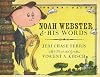
I was inspired to pick up this book after reading "The Right Word: Roget and his Thesaurus" because it seemed to be a similar concept. The author Jerri Ferris is a practiced writer of biographies for children and considers this book, too, to be a "BI-OG-RA-PHY [noun: a written history of a person's life]" of Webster. The book not only chronicles Webster's life, starting with his humble farm town beginnings, but also capture his personality. In addition, it provides a general history of the show more formation of the United States and the shaping of American English.
The structure of the story is wonderfully circular, beginning and ending with a Noah Webster who "always knew he was right." It does lag a bit in the middle, where the author's use of the dictionary structure interrupts the flow of the story and begins to feel gimmicky: "it SOARED [verb: flew]." However, the author's and illustrator's sense of humor win out. The big-headed, watercolored sketches are entertaining and pair nicely with the author's one-liners.
Personally, as a lover of the history of language, I most appreciated the ending of the book, which examines the long-lasting effects of Webster's work, highlighting its omnipresence throughout American history. "When the pioneers went west in the early 1800s, Noah's blue-backed speller was in their covered wagons. When the Civil War ended in 1865, the newly freed slaves learned to read from Noah's speller." The creative historical timeline in the appendix also contributes to creating a sense of historical and cultural importance. The author emphasizes that Webster was a man who "loved his country passionately," and, whether we realize it or not, our continued use of the language today makes it clear the we love him back. show less
The structure of the story is wonderfully circular, beginning and ending with a Noah Webster who "always knew he was right." It does lag a bit in the middle, where the author's use of the dictionary structure interrupts the flow of the story and begins to feel gimmicky: "it SOARED [verb: flew]." However, the author's and illustrator's sense of humor win out. The big-headed, watercolored sketches are entertaining and pair nicely with the author's one-liners.
Personally, as a lover of the history of language, I most appreciated the ending of the book, which examines the long-lasting effects of Webster's work, highlighting its omnipresence throughout American history. "When the pioneers went west in the early 1800s, Noah's blue-backed speller was in their covered wagons. When the Civil War ended in 1865, the newly freed slaves learned to read from Noah's speller." The creative historical timeline in the appendix also contributes to creating a sense of historical and cultural importance. The author emphasizes that Webster was a man who "loved his country passionately," and, whether we realize it or not, our continued use of the language today makes it clear the we love him back. show less

64 page biography of Noah Webster. Fairly uninteresting black and white illustrations. This is at least partly due to the subject matter, Noah Webster wrote spellers and dictionaries, he didn't have cool apparatus, like Benjamin Franklin.
The narrative tries to help the reader relate by describing, a bit too speculatively, the subjects feelings. It gives a reasonable outline of Noah Webster's life. He was rather young to be a "Founding Father", he was still in college during the War for show more American Independence and didn't drop out to be an officer with nearly the same enthusiasm as Alexander Hamilton.
Still, definitely worth the read if you know as little about Noah Webster as I do. show less
The narrative tries to help the reader relate by describing, a bit too speculatively, the subjects feelings. It gives a reasonable outline of Noah Webster's life. He was rather young to be a "Founding Father", he was still in college during the War for show more American Independence and didn't drop out to be an officer with nearly the same enthusiasm as Alexander Hamilton.
Still, definitely worth the read if you know as little about Noah Webster as I do. show less
This book barely made it in under the wire, but I'm happy it did arrive in time for me to read it for the Cybils. The charm of this book is the novel way Ferris tells Webster's story, using big words that are written like dictionary entries. Absolutely Absolutely cap·ti·vating [kap-tuh-veyt] 1. to attract and hold the attention or interest of, as by beauty or excellence; enchant.
This was one of my favorite books I have read so far! The first reason this book positively caught my attention is for the way it strings definitions into the text. Because Noah Webster is the original author of the Webster’s Dictionary, the author must have known he would have to be creative with the definitions in the book, and he was! All throughout the story, if there was a long or obscure word that may be difficult for young readers, the author wrote it out just as it would appear in show more the dictionary. For example, when the text was talking about Webster always thought we was right ever since he was a child, the author wrote Webster was “’full of CON-FI-DENCE’ [noun: belief that one is right].” The author continued this trend for words like “EM-BAR-RASS-MENT,” “EX-PEN-SIVE,” and “SUR-REN-DERED.” I loved this because it was so creative to do, especially when talking about the individual who created the dictionary and it kept my interest all throughout the story. I also adored this book for its choice of font. The font that was used throughout the entire book looked as if it was written with a quill pen. This was also a very creative aspect of the book because Webster was depicted using a quill pen several times throughout the book and it would have been the writing instrument that he used to write his books. This creativity truly kept me reading in anticipation for the next page, and it even motivated me to read the timeline that was located in the back of the book which is something I would never do on my own unless I was conducting research on Webster. Overall, the big idea of this book was to provide the reader with a timeline and highlights of the man who created the dictionary that, more than likely, the reader has held in their hand at one point in their life. show less
Lists
Awards


You May Also Like


Associated Authors
Statistics
- Works
- 12
- Members
- 1,980
- Popularity
- #12,984
- Rating
- 3.9
- Reviews
- 29
- ISBNs
- 58