

Gay Su Pinnell
Author of Lunch (High-Frequency Readers, Book 2)
About the Author
Image credit: via Heinemann
Works by Gay Su Pinnell
Guiding Readers and Writers (Grades 3-6): Teaching, Comprehension, Genre, and Content Literacy (2000) 277 copies
Word Matters: Teaching Phonics and Spelling in the Reading/Writing Classroom (1998) 165 copies, 1 review
Systems for Change in Literacy Education: A Guide to Professional Development (2001) 55 copies, 2 reviews
Sing a Song of Poetry: Grade 1: A Teaching Resource for Phonics, Word Study, and Fluency (2003) 28 copies
Voices on Word Matters: Learning About Phonics and Spelling in the Literacy Classroom (1999) — Editor — 25 copies, 1 review
Guiding Readers and Writers (Grades 3-6): Teaching Comprehension, Genre, and Content Literacy 12 copies
Learning from Teaching in Literacy Education: New Perspectives on Professional Development (2002) 12 copies
Sing a Song of Poetry: Grade 2: A Teaching Resource for Phonics, Word Study, and Fluency (2003) 9 copies
Engaging Stories for Children to Practice Reading High-Frequency Words (High-Frequency Readers) (2000) 4 copies
The Fountas and Pinnell Prompting Guide, Part 1: Spanish Edition (Fountas & Pinnell Leveled Literacy Intervention) (2009) 4 copies
Focus: Nonfiction - Teacher's Guide (Scholastic Guided Reading Program Blue Edition) (2002) 2 copies
My Backpack 2 copies
My Mom Likes Blue 2 copies
MUGS 1 copy
Colección Amanecer Level 3 1 copy
The New Baby 1 copy
Word Study: Phonics &Spelling Minilessons - Buddy Study System (DVD Guide) (Primary Literacy Video Collection) (2005) 1 copy
My Map 1 copy
My Map (Keep Books) 1 copy
My Packback (Keep Books) 1 copy
Our Bus 1 copy
Mi escuela 1 copy
Tagged
Common Knowledge
- Birthdate
- 1944-06-18
Members
Reviews
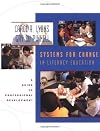
Twice before, Carol Lyons and Gay Su Pinnell teamed up as coauthors and helped tens of thousands of literacy educators transform classroom practice. Now, with their latest collaboration, Lyons and Pinnell turn their eye to K-6 literacy teachers' professional development, offering the theories, designs, guidelines, examples, and materials needed to bring about schoolwide, long-lasting change.
Lyons and Pinnell asked themselves: "What if we could create more and better ways for teachers to show more learn from their own teaching? What if we could provide high-quality, ongoing professional development and coaching for literacy teachers that result in improving their students' achievement?" Well, they could . . . and they did.
Systems for Change offers specific - and, quite often, unique - suggestions for planning and implementing a literacy professional development course. Everything is covered, including how to get started the right way, what materials are needed and where to find them, what are the best activities for effective, hands-on practice, and how to develop K-6 inservice courses throughout the year. Particular emphasis is placed on how to help teachers of the reading and writing processes improve via coaching.
Most books about teacher-education processes are generic in their descriptions. This one is different. It is uniquely designed to enable staff developers and teacher educators to help teachers become effective in their teaching of the reading and writing processes. A framework for conceptualizing professional development programs is presented, along with guidelines, descriptions, and examples for using this framework to create a comprehensive K-6 professional development literacy program. show less
Lyons and Pinnell asked themselves: "What if we could create more and better ways for teachers to show more learn from their own teaching? What if we could provide high-quality, ongoing professional development and coaching for literacy teachers that result in improving their students' achievement?" Well, they could . . . and they did.
Systems for Change offers specific - and, quite often, unique - suggestions for planning and implementing a literacy professional development course. Everything is covered, including how to get started the right way, what materials are needed and where to find them, what are the best activities for effective, hands-on practice, and how to develop K-6 inservice courses throughout the year. Particular emphasis is placed on how to help teachers of the reading and writing processes improve via coaching.
Most books about teacher-education processes are generic in their descriptions. This one is different. It is uniquely designed to enable staff developers and teacher educators to help teachers become effective in their teaching of the reading and writing processes. A framework for conceptualizing professional development programs is presented, along with guidelines, descriptions, and examples for using this framework to create a comprehensive K-6 professional development literacy program. show less
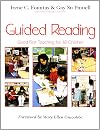
Among the many changes to sweep American literacy education has been a move toward whole class instruction. Nonetheless, children still bring to literacy a wide range of experiences and competencies. How, then, might teachers best support a literate community yet still meet the needs of individual readers? For Fountas and Pinnell, the answer lies in guided reading, which allows children to develop as individual readers within the context of a small group. Their new book is the richest, most show more comprehensive guided reading resource available today and the first systematic offering of instructional support for guided reading adherents.
Guided Reading was written for K-3 classroom teachers, reading resource teachers, teacher educators, preservice teachers, researchers, administrators, and staff developers. Based on the authors' nine years of research and development, it explains how to create a balanced literacy program based on guided reading and supported by read aloud, shared reading, interactive writing, and other approaches. While there is an entire chapter devoted solely to the process by which children become literate, every chapter clearly presents the theoretical underpinnings of the practices it suggests. Also included are guidelines for:
observation and assessment
dynamic grouping of readers
creating sets of leveled books
selecting and introducing books
teaching for strategies
classroom management.
Best of all, there are well over 2,500 leveled books in the Appendixes, along with many other reproducible resources that teachers will use for years to come.
"Good first teaching is the foundation of education and the right of every child," assert the authors. With the publication of this book, educators themselves will find the foundation in reading skills instruction they so rightly deserve. show less
Guided Reading was written for K-3 classroom teachers, reading resource teachers, teacher educators, preservice teachers, researchers, administrators, and staff developers. Based on the authors' nine years of research and development, it explains how to create a balanced literacy program based on guided reading and supported by read aloud, shared reading, interactive writing, and other approaches. While there is an entire chapter devoted solely to the process by which children become literate, every chapter clearly presents the theoretical underpinnings of the practices it suggests. Also included are guidelines for:
observation and assessment
dynamic grouping of readers
creating sets of leveled books
selecting and introducing books
teaching for strategies
classroom management.
Best of all, there are well over 2,500 leveled books in the Appendixes, along with many other reproducible resources that teachers will use for years to come.
"Good first teaching is the foundation of education and the right of every child," assert the authors. With the publication of this book, educators themselves will find the foundation in reading skills instruction they so rightly deserve. show less
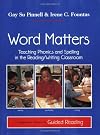
n 1996, Gay Su Pinnell and Irene Fountas presented Guided Reading, the most comprehensive guided reading resource ever published. Hailed for its practical, systematic approach, the book showed hundreds of thousands of teachers how to address the needs of the whole classroom as well as individual readers. Now, with the publication of Word Matters, Pinnell and Fountas offer K-3 teachers the same unparalleled support, this time focusing on phonics and spelling instruction.
Word Matters presents show more essential information on designing and implementing a high-quality, systematic literacy program to help children learn about letters, sounds, and words. The central goal is to teach children to become "word solvers": readers who can take words apart while reading for meaning, and writers who can construct words while writing to communicate. Where similar books are narrow in focus, Word Matters presents the theoretical underpinnings and practical wherewithal of word study in three contexts:
word study that includes systematically planned and applied experiences focusing on the elements of letters and words
writing, including how children use phoneme-grapheme relationships, word patterns, and principles to develop spelling ability
reading, including teaching children how to solve words with the use of phonics and visual-analysis skills as they read for meaning.
Each topic is supported with a variety of practical tools: reproducible sheets for a word study system and for writing workshop; lists of spelling minilessons; and extensive word lists, including frequently used words, antonyms, synonyms, and more. Armed with these tools-and the tried-and-true wisdom of Gay Su Pinnell and Irene Fountas-teachers can help students develop not just the "essential skills," but also a joyful appreciation of their own literacy. show less
Word Matters presents show more essential information on designing and implementing a high-quality, systematic literacy program to help children learn about letters, sounds, and words. The central goal is to teach children to become "word solvers": readers who can take words apart while reading for meaning, and writers who can construct words while writing to communicate. Where similar books are narrow in focus, Word Matters presents the theoretical underpinnings and practical wherewithal of word study in three contexts:
word study that includes systematically planned and applied experiences focusing on the elements of letters and words
writing, including how children use phoneme-grapheme relationships, word patterns, and principles to develop spelling ability
reading, including teaching children how to solve words with the use of phonics and visual-analysis skills as they read for meaning.
Each topic is supported with a variety of practical tools: reproducible sheets for a word study system and for writing workshop; lists of spelling minilessons; and extensive word lists, including frequently used words, antonyms, synonyms, and more. Armed with these tools-and the tried-and-true wisdom of Gay Su Pinnell and Irene Fountas-teachers can help students develop not just the "essential skills," but also a joyful appreciation of their own literacy. show less
Voices on Word Matters: Learning About Phonics and Spelling in the Literacy Classroom by Irene C. Fountas
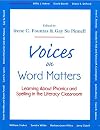
If you're interested in learning more about implementing an effective phonics and spelling program, this follow-up to Word Matters provides all the information. This edited collection is a rich extension of Fountas and Pinnell's instructional system for word study, featuring chapters by the field's most important scholars and practitioners. These educators explore letter and word learning in a variety of reading, writing, and language contexts-with articles that range from detailed show more observations of individual readers and writers to full-scale analyses of classroom processes and student work. The book includes practical information on how to engage in interactive writing and shared reading, how to use a word wall and word sorting, and how to use effective assessment tools.
Special guest authors include: Billie J. Askew - David Booth - Diane E. DeFord - Dorothy P. Hall and Patricia M. Cunningham - Justina Henry - Susan Hundley and Diane Powell - Carol B. Jenkins - Carol A. Lyons - Andrea McCarrier and Ida Patacca - William Stokes - Sandra Wilde - Barbara Joan Wiley - Jerry Zutell.
Voices on Word Matters will extend your learning as it takes you into rich literacy classrooms, provides you with concrete learning activities, and expands your understanding of Fountas and Pinnell's instructional framework. There are also reproducible sheets and lists for classroom application as well as end-of-chapter professional development activities to support you in your work and in your collegiality. show less
Special guest authors include: Billie J. Askew - David Booth - Diane E. DeFord - Dorothy P. Hall and Patricia M. Cunningham - Justina Henry - Susan Hundley and Diane Powell - Carol B. Jenkins - Carol A. Lyons - Andrea McCarrier and Ida Patacca - William Stokes - Sandra Wilde - Barbara Joan Wiley - Jerry Zutell.
Voices on Word Matters will extend your learning as it takes you into rich literacy classrooms, provides you with concrete learning activities, and expands your understanding of Fountas and Pinnell's instructional framework. There are also reproducible sheets and lists for classroom application as well as end-of-chapter professional development activities to support you in your work and in your collegiality. show less
Lists
You May Also Like


Associated Authors
Statistics
- Works
- 71
- Members
- 2,988
- Popularity
- #8,543
- Rating
- 4.1
- Reviews
- 14
- ISBNs
- 131
- Languages
- 1
- Favorited
- 1