
Christine Poulson
Author of William Morris Comprehensive Survey of His Life
About the Author
Christine Poulson is a research fellow at the Centre for Nineteenth-Century Studies at Sheffield University and chair of the William Morris Society.
Image credit: Christine Poulson
Series
Works by Christine Poulson
What if? (Short story) 1 copy
A Tour of the Tower 1 copy
Associated Works
The Book of Extraordinary Impossible Crimes and Puzzling Deaths (2020) — Contributor — 19 copies, 1 review
Tagged
Common Knowledge
- Gender
- female
- Education
- PhD in History of Art
- Occupations
- art historian
museum curator
crime fiction writer
university professor - Organizations
- now a research fellow at the Centre for Nineteenth-Century Studies at Sheffield University
chair of the William Morris Society - Agent
- David Grossman Literary Agency
- Nationality
- UK (birth)
- Birthplace
- North Yorkshire, England, UK
- Places of residence
- Derbyshire, England
- Associated Place (for map)
- UK
Members
Reviews
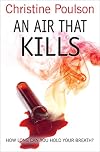
I love brainy British mysteries — those that make you think while you are trying to figure out whodunit! The third book in Christine Poulson’s series featuring researcher Katie Flanagan, An Air That Kills, does just that. At first I was reluctant to read this book with the blurb promising a threat of pandemic, but you needn’t be worried about that. Yes, there are deadly viruses involved in the book, but it is the murderous humans that the characters really have to worry about. Katie show more impersonates a lab tech to discover if anything is going on with the research at the Cat 3 infectious lab that studies, among other things, influenza. And plenty is. I have to admit, I trusted no one! The remote island location with its mists sets up a very mysterious atmosphere that made the story even more enjoyable. Katie is an atheist, but is perhaps a bit of a seeker as well, though her journey towards faith is very slow — and realistic. The theme of the novel — public persona vs. hidden self — is explored in more than one character. While this is the third in the series, it is not necessary to read the first two to enjoy the complex twistings. However, I recommend beginning at the beginning 😉 . This book refers to Cold, Cold Heart a lot. I have it on my Kindle, and now I have to read it too!
Please note: An Air That Kills is published by a British imprint that focuses on Christian fiction. However, CF outside of the US may contain some elements not all American CF readers like. There is no adult language in this book, but there is some off-stage sex that is hinted at. If that bothers you, I would skip this book.
Recommended.
Audience: adults.
(Thanks to Lion Fiction for a complimentary copy. All opinions expressed are mine alone.) show less
Please note: An Air That Kills is published by a British imprint that focuses on Christian fiction. However, CF outside of the US may contain some elements not all American CF readers like. There is no adult language in this book, but there is some off-stage sex that is hinted at. If that bothers you, I would skip this book.
Recommended.
Audience: adults.
(Thanks to Lion Fiction for a complimentary copy. All opinions expressed are mine alone.) show less
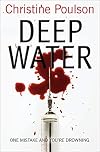
When I signed up to review Deep Water by Christine Poulson, I’m not sure what I expected. I guess I thought this book would be a medical thriller with lots of action, but short on character development. I was very pleasantly surprised by the depth of characterization, the complexity of the plot, the ethical and moral themes, and the very good writing of this thinking man’s mystery. Deep Water is a gem, and I am hopeful Christine Poulson will have a long fiction career.
Let’s first look show more at setting. Deep Water is set in Ely, England a place sometimes described as Silicon Fen. This very old cathedral town set in the marshes is home to high tech and biotech firms and labs. I liked that the author spent time describing the city and cathedral — it definitely added to the book. The characters are complex, flawed and very likable. I became invested in their lives. The mystery involves a clinical trial and patent case with some irregularities — an interesting premise that kept the pages turning. But this book has a bit more than the average mystery. There are moral and ethical questions that keep the characters and the reader engaged and thinking. While not an overtly Christian book as one would define it here in the US, Deep Water has a foundation based on a Christian worldview. Life has value, whether it is pre-born or born, healthy or medically fragile. The issues the characters deal with are not easy, but they are true to life. Deep Water is published by a British house, so there is a bit of language and social drinking that may not appeal to those who read only Christian fiction. I did not have any trouble with it.
A great blend of mystery and ethical questions, Deep Water gets a recommended rating from me.
Recommended.
Audience: adults.
(Thanks to Kregel and Lion Hudson for a complimentary copy. All opinions expressed are mine alone.) show less
Let’s first look show more at setting. Deep Water is set in Ely, England a place sometimes described as Silicon Fen. This very old cathedral town set in the marshes is home to high tech and biotech firms and labs. I liked that the author spent time describing the city and cathedral — it definitely added to the book. The characters are complex, flawed and very likable. I became invested in their lives. The mystery involves a clinical trial and patent case with some irregularities — an interesting premise that kept the pages turning. But this book has a bit more than the average mystery. There are moral and ethical questions that keep the characters and the reader engaged and thinking. While not an overtly Christian book as one would define it here in the US, Deep Water has a foundation based on a Christian worldview. Life has value, whether it is pre-born or born, healthy or medically fragile. The issues the characters deal with are not easy, but they are true to life. Deep Water is published by a British house, so there is a bit of language and social drinking that may not appeal to those who read only Christian fiction. I did not have any trouble with it.
A great blend of mystery and ethical questions, Deep Water gets a recommended rating from me.
Recommended.
Audience: adults.
(Thanks to Kregel and Lion Hudson for a complimentary copy. All opinions expressed are mine alone.) show less
How far over the line would you go with millions at stake? Millions of lives, millions of dollars...
Very tightly plotted scientific/medical thriller with a focus on the ethics of the laboratory scientist. The fast paced narrative also relates the degree of pressure that researchers are under to get new treatments and therapies to those who need them -- the patients, and to those who want them -- for profit.
This suspenseful novel has a large cast of characters and quite a few parallel plots show more that the author cleverly navigates with ease. The main character is Katie Flanagan, a post doc, newly hired at Calliope Biotech to work on a biotech cure for a rare blood disorder. Her cell lines and western blot are a disaster and she's on a deadline. Attorney Daniel Marchmont is a patent lawyer, hired after an accident kills the former attorney handling the case involving a dispute of which lab was first to produce a substance that might cure obesity. It so happens that Daniel's daughter, Chloe, has that very rare blood disease (the first of several major coincidences that had potential to defy belief). There is a lot happening in this short book (252 pages), but the essence of the science is related to the reader through very effective narration and description by the author so is easily understandable.
The main focus of the story is that many things are going wrong in the lab and there are several who could be responsible for the bad luck and negative results. Without spoilers, just know that Katie is trying to figure out what is going on with the lab and the blood disorder research while also trying to figure out why her experiments are total failures.
Easy to read and thoroughly enjoyable, I'm glad I finally picked this up after reading a review by a Goodreads "friend" (Rachel). I had won this from LibraryThing a long time ago as an ARC and I'm sorry it took me so long to get to it. Medical thrillers are my favorites in the mystery and suspense genre so I'm always happy to find a new author. In fact, I'm reading the second book in this series next! show less
Very tightly plotted scientific/medical thriller with a focus on the ethics of the laboratory scientist. The fast paced narrative also relates the degree of pressure that researchers are under to get new treatments and therapies to those who need them -- the patients, and to those who want them -- for profit.
This suspenseful novel has a large cast of characters and quite a few parallel plots show more that the author cleverly navigates with ease. The main character is Katie Flanagan, a post doc, newly hired at Calliope Biotech to work on a biotech cure for a rare blood disorder. Her cell lines and western blot are a disaster and she's on a deadline. Attorney Daniel Marchmont is a patent lawyer, hired after an accident kills the former attorney handling the case involving a dispute of which lab was first to produce a substance that might cure obesity. It so happens that Daniel's daughter, Chloe, has that very rare blood disease (the first of several major coincidences that had potential to defy belief). There is a lot happening in this short book (252 pages), but the essence of the science is related to the reader through very effective narration and description by the author so is easily understandable.
The main focus of the story is that many things are going wrong in the lab and there are several who could be responsible for the bad luck and negative results. Without spoilers, just know that Katie is trying to figure out what is going on with the lab and the blood disorder research while also trying to figure out why her experiments are total failures.
Easy to read and thoroughly enjoyable, I'm glad I finally picked this up after reading a review by a Goodreads "friend" (Rachel). I had won this from LibraryThing a long time ago as an ARC and I'm sorry it took me so long to get to it. Medical thrillers are my favorites in the mystery and suspense genre so I'm always happy to find a new author. In fact, I'm reading the second book in this series next! show less
 This review was written for LibraryThing Early Reviewers.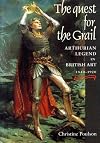
The author, a now moderately successful crime-writer, was at the time of writing a Fellow of the Centre for Nineteenth-century Studies at the University of Sheffield, but The Quest for the Grail is no dry-as-dust academic publication. Plentifully illustrated with fourteen colour and sixty monochrome plates, this is an engrossing enquiry into the 19th-century renaissance of the Arthurian legend in representational art, stimulated by the 1817 re-publication of Malory and by Tennyson’s later show more reworkings of the tales. Frescoes by William Dyce in the robing rooms at Westminster Palace and murals by Rossetti and others in the library of the Oxford Union Society opened the floodgates for further works of art developing the often difficult themes of the legends, right through to the early twentieth century.
The treatment of the legends naturally reflected the obsessions and outlook of the Victorian period. Adultery, seduction and other sexual misdemeanours were not easy topics then for public consumption, and examination of the traditional Arthurian stories revealed few moral virtues that could safely be appropriated in national works of art without some adjustments. And yet the High Church movement in Anglicanism, occult ideas, concepts of Saxon stereotypes, women’s increasing financial independence in the eyes of the law, solar mythology, all these and other topics of debate were somehow incorporated in the Arthurian art of the period, however anachronistic that may now seem. (And of course, the same process continues apace in our own times, as countless TV series and films illustrate only too well.)
It is to Christine Poulson’s credit that this study entertains as well as educating the reader on how Victorian attitudes shaped the way we still view the legends in our mind’s eye. The often disturbing visions of the Pre-Raphaelites, the questing imagery of war memorials, the orientalism of Beardsley, sentimental views of the fate of the Lady of Shalott, the curious representations of Lancelot or Galahad with fantastic horned Viking helmets and Saxon hosiery: the responses are varied and surprising and rarely predictable, despite our apparent familiarity with them a century and more later.
http://calmgrove.wordpress.com/2012/12/12/quest/ show less
The treatment of the legends naturally reflected the obsessions and outlook of the Victorian period. Adultery, seduction and other sexual misdemeanours were not easy topics then for public consumption, and examination of the traditional Arthurian stories revealed few moral virtues that could safely be appropriated in national works of art without some adjustments. And yet the High Church movement in Anglicanism, occult ideas, concepts of Saxon stereotypes, women’s increasing financial independence in the eyes of the law, solar mythology, all these and other topics of debate were somehow incorporated in the Arthurian art of the period, however anachronistic that may now seem. (And of course, the same process continues apace in our own times, as countless TV series and films illustrate only too well.)
It is to Christine Poulson’s credit that this study entertains as well as educating the reader on how Victorian attitudes shaped the way we still view the legends in our mind’s eye. The often disturbing visions of the Pre-Raphaelites, the questing imagery of war memorials, the orientalism of Beardsley, sentimental views of the fate of the Lady of Shalott, the curious representations of Lancelot or Galahad with fantastic horned Viking helmets and Saxon hosiery: the responses are varied and surprising and rarely predictable, despite our apparent familiarity with them a century and more later.
http://calmgrove.wordpress.com/2012/12/12/quest/ show less
Awards

You May Also Like


Associated Authors
Statistics
- Works
- 14
- Also by
- 13
- Members
- 252
- Popularity
- #90,784
- Rating
- 3.5
- Reviews
- 21
- ISBNs
- 35
- Favorited
- 1

