
Yumi Unita
Author of Bunny Drop, Vol. 1
About the Author
Series
Works by Yumi Unita
Bunny Drop [Anime] — Original Creator — 8 copies
いとへん (Itohen) 1 copy
Tagged
Common Knowledge
- Legal name
- 宇仁田, ゆみ
- Birthdate
- 1972-05-10
- Gender
- female
- Nationality
- Japan
- Birthplace
- Mie Prefecture, Japan
- Associated Place (for map)
- Mie Prefecture, Japan
Members
Reviews
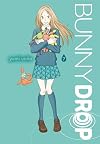
Bunny Drop volume 7 picks up just about where volume 6 left off. Rin is navigating teenage relationships along with her cousin Reina and childhood best friend Kouki, and meanwhile she and Daikichi both are struggling with the changes of growing older.
In the 7th volume especially, the relationships focus turns towards family, especially parents and children and the way they interact. The fluid nature of who is taking care of whom is highlighted when Daikichi's back seizes up when he tries to show more keep Rin from toppling of a stepstool, and suddenly he is relying on her for help.
Rin begins to wonder about the nature of parenthood which leads her on a search for her birth mother, who is now pregnant with a second (and this time desired) child. She asserts her independence in performing the search secretly rather than hurt Daikichi's feelings, but it's the mother who is the least happy about it, as she's dealing with her own feelings about not parenting Rin and now another baby on the way.
It's interesting in this volume the way Rin and Daikichi are so co-dependent. Rin has very few friends but is mostly concerned that when she grows up, or if she meets her mom, Daikichi won't want her around anymore. Daikichi himself worries that Rin is too much of a homebody, but is terrified of her leaving him behind and alone again. Like a lot of doting fathers, he seems to still see her as the six-year-old he met at his grandfather's funeral ten years ago, and he insists that she'll always be his child when she expresses her fears. show less
In the 7th volume especially, the relationships focus turns towards family, especially parents and children and the way they interact. The fluid nature of who is taking care of whom is highlighted when Daikichi's back seizes up when he tries to show more keep Rin from toppling of a stepstool, and suddenly he is relying on her for help.
Rin begins to wonder about the nature of parenthood which leads her on a search for her birth mother, who is now pregnant with a second (and this time desired) child. She asserts her independence in performing the search secretly rather than hurt Daikichi's feelings, but it's the mother who is the least happy about it, as she's dealing with her own feelings about not parenting Rin and now another baby on the way.
It's interesting in this volume the way Rin and Daikichi are so co-dependent. Rin has very few friends but is mostly concerned that when she grows up, or if she meets her mom, Daikichi won't want her around anymore. Daikichi himself worries that Rin is too much of a homebody, but is terrified of her leaving him behind and alone again. Like a lot of doting fathers, he seems to still see her as the six-year-old he met at his grandfather's funeral ten years ago, and he insists that she'll always be his child when she expresses her fears. show less

This manga became a favorite of mine from the first chapter. I already love Unita's way of drawing hands and facial expressions (omg, the hands are amazing - actually, the entire style is just fantastic), so I was predisposed to enjoy this book if only because of the art. But the story!
Wow, the story is crafted really well. It's all about "looking through the gaps" or "looking through a lens", as shown through the two main characters, Heisaku (who watches his neighbor Fumio through the gap show more in her curtain, and likes to look through spaces or gaps in other things as well) and Fumio (who does photography, and mostly watches Heisaku through her camera lens from her room). So not only do we get the story about how they move from using these barriers to watch each other to actually entering each other's spaces, but these barriers and gaps appear everywhere. It's a visual motif, with the favorite meeting places having lots of vertical bars or windows, and it's a story motif as well. The reader is never able to fully know anything about any character, even the primary ones - what we do learn is like bits and pieces from a slide projector. Of course as the pov character, more is known about Heisaku than anyone else, but it's a slice-of-life story that doesn't give us a lot of background information, except what comes out in the dialogue. It's very tightly constructed, the story. As a result, even when we learn big information about a character, we're always left with the feeling that there's more to the story and what we've seen isn't as it seems at all.
The length of the story and the way it wraps up with a very ambiguous ending also matches that motif of "watching through the gaps". It's slice of life, so of course there's a feeling like that, but the shortness and abruptness amplifies the feeling. It's like when you're on a train and have just left one tunnel and are about to enter another - suddenly you see this panorama of cityscape or landscape or whatever out the windows, vibrant and expansive, and then just as suddenly you're thrust into the next tunnel without getting a really full view of what you'd past, and no longer able to go back to fill in the gaps that you missed. We don't know much, if anything, about Heisaku or his friends or Fumio before the story begins, and there are no signs at all about what happens after the story ends. We've seen this one instant, this period of several weeks, and that's it. But there doesn't need to be any more - even if the ending is ambiguous about what happens to the characters (is it a metaphor? is it literal?), the story that was meant to be told has been done and there's no more to say about it. Besides which, the ambiguity only emphasizes the "through the gaps" thing.
I guess it's probably clear that I love this manga. It's a slice-of-life character study, not really a romance at all, and has not only beautiful art but a tightly crafted story. It's one of my top recommendations for people looking for something that rises above the ordinary. show less
Wow, the story is crafted really well. It's all about "looking through the gaps" or "looking through a lens", as shown through the two main characters, Heisaku (who watches his neighbor Fumio through the gap show more in her curtain, and likes to look through spaces or gaps in other things as well) and Fumio (who does photography, and mostly watches Heisaku through her camera lens from her room). So not only do we get the story about how they move from using these barriers to watch each other to actually entering each other's spaces, but these barriers and gaps appear everywhere. It's a visual motif, with the favorite meeting places having lots of vertical bars or windows, and it's a story motif as well. The reader is never able to fully know anything about any character, even the primary ones - what we do learn is like bits and pieces from a slide projector. Of course as the pov character, more is known about Heisaku than anyone else, but it's a slice-of-life story that doesn't give us a lot of background information, except what comes out in the dialogue. It's very tightly constructed, the story. As a result, even when we learn big information about a character, we're always left with the feeling that there's more to the story and what we've seen isn't as it seems at all.
The length of the story and the way it wraps up with a very ambiguous ending also matches that motif of "watching through the gaps". It's slice of life, so of course there's a feeling like that, but the shortness and abruptness amplifies the feeling. It's like when you're on a train and have just left one tunnel and are about to enter another - suddenly you see this panorama of cityscape or landscape or whatever out the windows, vibrant and expansive, and then just as suddenly you're thrust into the next tunnel without getting a really full view of what you'd past, and no longer able to go back to fill in the gaps that you missed. We don't know much, if anything, about Heisaku or his friends or Fumio before the story begins, and there are no signs at all about what happens after the story ends. We've seen this one instant, this period of several weeks, and that's it. But there doesn't need to be any more - even if the ending is ambiguous about what happens to the characters (is it a metaphor? is it literal?), the story that was meant to be told has been done and there's no more to say about it. Besides which, the ambiguity only emphasizes the "through the gaps" thing.
I guess it's probably clear that I love this manga. It's a slice-of-life character study, not really a romance at all, and has not only beautiful art but a tightly crafted story. It's one of my top recommendations for people looking for something that rises above the ordinary. show less

This volume marks the end of the main Bunny Drop storyline - there's another volume that tells a side story of Rin and Kouki's middle school years, but the story of Rin and Daikichi comes to a close in volume nine.
The ending is controversial, to say the least. Particularly in the West, where it is coming out years after the story ended in its original run, people hear what the ending entails and decide to drop the entire series rather than invest more time in something that they expect will show more disappoint them.
I tried very hard not to think of the ending as I read the series and as I waited for the English translations to come out. I really love Unita's comics - the storylines are often weird and unexpected, with deeper layers that might take a few readings to appreciate, and of course I just like her art style a lot. Not all of her work is complex in that way, but enough is such that I wasn't surprised at all as she explored Daikichi and Rin's relationship and how they relate to each other given their circumstances and personalities, and that this exploration revealed discomfiting things.
So here's where the spoilers come in to play.
With the story as it goes, it's almost inevitable that Rin develops a deep bond with Daikichi, such that it's basically a codependency for them, and Rin's teenage desires and hormones cause her to view this bond as a romantic attraction. Neither of them wants to have to part from the other as they grow older, but Daikichi understands it as a natural part of life as children grow up and leave their parents, while Rin has never thought of him as her parent but only a guardian. She sees herself as taking care of Daikichi as much as he cares for her, and in some ways this has been the case since she was in elementary school.
Daikichi has always given Rin anything he can. When she says that she can't bear to not care for him as they age, and he himself doesn't want to see his child grow up, he relents and agrees to give her what she wants. Rin regains her parent-child relationship with her estranged mother, so Daikichi no longer needs to be the parent. He takes two years to try to grow comfortable with the idea of Rin being romantically attracted to him, which are unfortunately skipped over in the book. I would have liked to see more of how he comes to change his mind and agree that if they will be changing their family type, then he will marry Rin when she comes of age.
It seems to me that even at the very end, when Daikichi and Rin discuss the idea of marrying, he is still stuck on seeing her as the child he raised and not wanting to let her leave. It's a dark and ugly side to the relationship the two have developed over the years, and I think that Unita had too light of a hand, was too subtle, in showing these aspects prior to the final chapter. But, then again, guardian-child marriage isn't as unheard of in Asian cultures, from what I understand (historically, at least), or maybe Unita just wanted to do a wish-fulfillment so that everyone who fell in love with Daikichi and Rin in the early chapters wouldn't have to be sad that Rin grows up and leaves him to marry someone else, but this was the best way she could think of.
I like the ending. I would have been happier if Daikichi and Rin hadn't decided to marry, but given the way Unita built towards that choice, I like the way she depicted it and how she developed it. They never did have anything other than a guardian/child relationship in the story, and speak of marrying as a future event, which leaves a potential for change, that it isn't set in stone.
On the whole, this is a fitting end to the series, particularly the second half (from the 5th volume on), which is all about the way teenage Rin and 40-year-old Daikichi navigate growing older and their co-dependent relationship with each other. I am happy that I continued to the end instead of stopping halfway through, though maybe I'd like to see another sequel years later that does take a decidedly darker look at this family of two. show less
The ending is controversial, to say the least. Particularly in the West, where it is coming out years after the story ended in its original run, people hear what the ending entails and decide to drop the entire series rather than invest more time in something that they expect will show more disappoint them.
I tried very hard not to think of the ending as I read the series and as I waited for the English translations to come out. I really love Unita's comics - the storylines are often weird and unexpected, with deeper layers that might take a few readings to appreciate, and of course I just like her art style a lot. Not all of her work is complex in that way, but enough is such that I wasn't surprised at all as she explored Daikichi and Rin's relationship and how they relate to each other given their circumstances and personalities, and that this exploration revealed discomfiting things.
So here's where the spoilers come in to play.
With the story as it goes, it's almost inevitable that Rin develops a deep bond with Daikichi, such that it's basically a codependency for them, and Rin's teenage desires and hormones cause her to view this bond as a romantic attraction. Neither of them wants to have to part from the other as they grow older, but Daikichi understands it as a natural part of life as children grow up and leave their parents, while Rin has never thought of him as her parent but only a guardian. She sees herself as taking care of Daikichi as much as he cares for her, and in some ways this has been the case since she was in elementary school.
Daikichi has always given Rin anything he can. When she says that she can't bear to not care for him as they age, and he himself doesn't want to see his child grow up, he relents and agrees to give her what she wants. Rin regains her parent-child relationship with her estranged mother, so Daikichi no longer needs to be the parent. He takes two years to try to grow comfortable with the idea of Rin being romantically attracted to him, which are unfortunately skipped over in the book. I would have liked to see more of how he comes to change his mind and agree that if they will be changing their family type, then he will marry Rin when she comes of age.
It seems to me that even at the very end, when Daikichi and Rin discuss the idea of marrying, he is still stuck on seeing her as the child he raised and not wanting to let her leave. It's a dark and ugly side to the relationship the two have developed over the years, and I think that Unita had too light of a hand, was too subtle, in showing these aspects prior to the final chapter. But, then again, guardian-child marriage isn't as unheard of in Asian cultures, from what I understand (historically, at least), or maybe Unita just wanted to do a wish-fulfillment so that everyone who fell in love with Daikichi and Rin in the early chapters wouldn't have to be sad that Rin grows up and leaves him to marry someone else, but this was the best way she could think of.
I like the ending. I would have been happier if Daikichi and Rin hadn't decided to marry, but given the way Unita built towards that choice, I like the way she depicted it and how she developed it. They never did have anything other than a guardian/child relationship in the story, and speak of marrying as a future event, which leaves a potential for change, that it isn't set in stone.
On the whole, this is a fitting end to the series, particularly the second half (from the 5th volume on), which is all about the way teenage Rin and 40-year-old Daikichi navigate growing older and their co-dependent relationship with each other. I am happy that I continued to the end instead of stopping halfway through, though maybe I'd like to see another sequel years later that does take a decidedly darker look at this family of two. show less

This is an awkward volume for Bunny Drop, which does so well in depicting family relationships, different aspects of growing up, and all of it in a fresh and rather unique way. This sixth installment shies away from all those things and embraces the cliché of high school manga stories. It honestly felt so much more soap opera to me, particularly in contrast to the rest of the series.
That's not to say this is a skippable volume. It does a lot to bring closure to the missing years that were show more jumped over between volumes 4 and 5, and it develops the characters and their relationships further. It's also incredibly important for making volume 5 feel cohesive - I believe that 5 & 6 create a story arc and are best read together. But could this story arc be told in a different and less clichéd way? Perhaps it could have...
The story in these chapters has two primary functions, from what I can tell. 1) It ties up the potential relationships between the Nitanis and Rin and Daikichi, and 2) explains what happened in middle school to strain Rin and Kouki's friendship, as we saw in volume 5. There is actually very little of Daikichi in the volume, considering he's one of the two main characters, though his appearances contain rather a lot of character establishment, considering. I particularly enjoyed the way he interacts with Kouki, like a long-suffering father or uncle.
I wasn't sure about the second half of this series when I started it in volume 5, thinking it was a bit all over the place and not really a good match for the first half. But with volume 6, it seems clear that we're now reading a different type of story (or, at least, story arc) that transitions us to a new stage in Rin and Daikichi's lives. This transition and the story structure becomes more clear in volume 7. show less
That's not to say this is a skippable volume. It does a lot to bring closure to the missing years that were show more jumped over between volumes 4 and 5, and it develops the characters and their relationships further. It's also incredibly important for making volume 5 feel cohesive - I believe that 5 & 6 create a story arc and are best read together. But could this story arc be told in a different and less clichéd way? Perhaps it could have...
The story in these chapters has two primary functions, from what I can tell. 1) It ties up the potential relationships between the Nitanis and Rin and Daikichi, and 2) explains what happened in middle school to strain Rin and Kouki's friendship, as we saw in volume 5. There is actually very little of Daikichi in the volume, considering he's one of the two main characters, though his appearances contain rather a lot of character establishment, considering. I particularly enjoyed the way he interacts with Kouki, like a long-suffering father or uncle.
I wasn't sure about the second half of this series when I started it in volume 5, thinking it was a bit all over the place and not really a good match for the first half. But with volume 6, it seems clear that we're now reading a different type of story (or, at least, story arc) that transitions us to a new stage in Rin and Daikichi's lives. This transition and the story structure becomes more clear in volume 7. show less
Lists
Awards

You May Also Like


Associated Authors
Statistics
- Works
- 26
- Members
- 1,245
- Popularity
- #20,609
- Rating
- 3.8
- Reviews
- 56
- ISBNs
- 60
- Languages
- 4
- Favorited
- 2