
Laury A. Egan
Author of The Outcast Oracle
Works by Laury A. Egan
Associated Works
Tagged
Common Knowledge
- Gender
- female
Members
Reviews
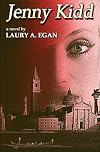
In Jenny Kidd author Laury A. Egan expertly assembles colorful, but not-quite-what-they-seem characters to animate this dark thriller. Set in Venice, her story features art forgery, theft, multiple murders, and an age-old noble family awash in mystery and decadence. It’s a slender piece, paced like lightning, and edge-of-your-seat suspenseful — a truly gripping read.
The eponymous character, a gifted young American artist, has abandoned New York in favor of Venice for a couple of months show more so that she can sharpen her skills. The attractions, both personal and cultural, exert their irresistible pull on Jenny immediately on her arrival. In short order, she meets an enigmatic but charming British woman, two young aristocratic members of Venetian society (under whose spell she can’t help but fall), and a pushy American man who seems to turn up wherever Jenny goes. And even that’s not all: add in her fretting, emotionally distant, and disapproving parents, back in America, and you have a young woman whom trouble will inevitably find. And sure enough, in very short order Jenny’s apartment is burgled, she is seduced — and learns a lot about herself in the process — and ultimately, imprisoned.
Egan taps this bewitching cast with her magic wand, and they misbehave in quite unexpected ways. And she keeps us, her breathless readers, pulled this way and that in suspense. We guess at who’s guilty of crimes and who isn’t; sometimes a character’s activity paints them in a suspicious light, and sometimes we suspect them for reasons of our own. Jenny’s captivity stretches out, occupying a considerable portion of the narrative; her multiple attempts at escape come a cropper, one after the other.
Come for the culture, the world-class scenery, and the plucky heroine. Stay for the ingenious skulduggery. Don’t miss this chilling, and emotional, adventure!
https://bassoprofundo1.blogspot.com/2025/08/jenny-kidd-by-laury-egan.html show less
The eponymous character, a gifted young American artist, has abandoned New York in favor of Venice for a couple of months show more so that she can sharpen her skills. The attractions, both personal and cultural, exert their irresistible pull on Jenny immediately on her arrival. In short order, she meets an enigmatic but charming British woman, two young aristocratic members of Venetian society (under whose spell she can’t help but fall), and a pushy American man who seems to turn up wherever Jenny goes. And even that’s not all: add in her fretting, emotionally distant, and disapproving parents, back in America, and you have a young woman whom trouble will inevitably find. And sure enough, in very short order Jenny’s apartment is burgled, she is seduced — and learns a lot about herself in the process — and ultimately, imprisoned.
Egan taps this bewitching cast with her magic wand, and they misbehave in quite unexpected ways. And she keeps us, her breathless readers, pulled this way and that in suspense. We guess at who’s guilty of crimes and who isn’t; sometimes a character’s activity paints them in a suspicious light, and sometimes we suspect them for reasons of our own. Jenny’s captivity stretches out, occupying a considerable portion of the narrative; her multiple attempts at escape come a cropper, one after the other.
Come for the culture, the world-class scenery, and the plucky heroine. Stay for the ingenious skulduggery. Don’t miss this chilling, and emotional, adventure!
https://bassoprofundo1.blogspot.com/2025/08/jenny-kidd-by-laury-egan.html show less
In Contrary Laury A. Egan trains her unforgiving eye on some of the 21st Century’s worst features. She takes up toxic childrearing practices; the dicey work of maintaining relationships in the Queer spectrum; the haughty, insular views of the wealthy class; and, among others, the isolation and confusion of older citizens beginning to lose their mental acuity. Through it all she yolks her comprehensive understanding of people’s emotional journeys, and treats her characters and her readers show more with a therapist’s support and generosity. It’s a collection full of lovely, memorable pieces.
As in all good fiction, characters’ lives change: they move from one phase of their lives to the next, for better or for worse. There’s the teenager born to privilege who, after walking to a welcoming home in a very different neighborhood for his Thanksgiving dinner, returns home to grudgingly fulfill his holiday duties. He remains in his room long enough to rein in his disgust toward his father and his old-money pals so he can perform dutifully.
We also meet a widow late in her life who is not very comfortable attending a Christmas dinner under the threat of Covid. When she finds no one else is in a mask, she surreptitiously removes hers, but is horrified when everyone else at the party, who are all her age or thereabouts, interrupts their own conversation to take video hello’s from family in other states. Her isolation is complete when she decides to get her coat and leave early, to the angry glances and whispered recriminations of her fellow guests.
And, quite memorably, a young psychotherapist marches along a beach, fuming about a cowardly breakup being perpetrated by her mooching lover. Because of a note written in the sand, of all things, she meets an enigmatic character holed up on the beach who calls himself “Captain Roy.” This old gent draws her out about why she’s so angry, and says some miraculously on-point things, plumbing her emotional depths so quickly and with such exactitude that she is quite gobsmacked. The kinetic therapy he treats her with, and who he used to be before retirement, are simply wondrous, exciting, ineffable.
Egan concludes her collection with a two-act play, “Duet.” This is a new form for her, but she handles it with aplomb. The subject matter and theme are right in her wheelhouse: generous, caring therapists who extend a hand to a troubled client. The drama is very professionally drawn—set and staging are modern and creative—and moves forward with clever devices. For me some of the monologues run a little long, but the climax avoids any tidy wrap-up, but packs a wallop nonetheless.
This is a very rewarding collection. Modern themes hold center stage, and draw the author’s vituperation, which is always pointed and appropriate. Take this collection up, and be reminded of the emotional punch good shorter fiction can provide.
https://bassoprofundo1.blogspot.com/2025/02/contrary-by-laury-egan.html show less
As in all good fiction, characters’ lives change: they move from one phase of their lives to the next, for better or for worse. There’s the teenager born to privilege who, after walking to a welcoming home in a very different neighborhood for his Thanksgiving dinner, returns home to grudgingly fulfill his holiday duties. He remains in his room long enough to rein in his disgust toward his father and his old-money pals so he can perform dutifully.
We also meet a widow late in her life who is not very comfortable attending a Christmas dinner under the threat of Covid. When she finds no one else is in a mask, she surreptitiously removes hers, but is horrified when everyone else at the party, who are all her age or thereabouts, interrupts their own conversation to take video hello’s from family in other states. Her isolation is complete when she decides to get her coat and leave early, to the angry glances and whispered recriminations of her fellow guests.
And, quite memorably, a young psychotherapist marches along a beach, fuming about a cowardly breakup being perpetrated by her mooching lover. Because of a note written in the sand, of all things, she meets an enigmatic character holed up on the beach who calls himself “Captain Roy.” This old gent draws her out about why she’s so angry, and says some miraculously on-point things, plumbing her emotional depths so quickly and with such exactitude that she is quite gobsmacked. The kinetic therapy he treats her with, and who he used to be before retirement, are simply wondrous, exciting, ineffable.
Egan concludes her collection with a two-act play, “Duet.” This is a new form for her, but she handles it with aplomb. The subject matter and theme are right in her wheelhouse: generous, caring therapists who extend a hand to a troubled client. The drama is very professionally drawn—set and staging are modern and creative—and moves forward with clever devices. For me some of the monologues run a little long, but the climax avoids any tidy wrap-up, but packs a wallop nonetheless.
This is a very rewarding collection. Modern themes hold center stage, and draw the author’s vituperation, which is always pointed and appropriate. Take this collection up, and be reminded of the emotional punch good shorter fiction can provide.
https://bassoprofundo1.blogspot.com/2025/02/contrary-by-laury-egan.html show less

Charlene Whitestone has grown up in a small farming town in New York, not far from Lake Ontario. The community is fairly rural, and poor, and the Whitestone family takes advantage of that from their large property on the outskirts. Charlie's grandfather C.B. earns a living by several scams as well as straight business ventures - there's the moonshine one, the church they run out of the house, preserves made from things grown on the farm, and they rent out parcels of land to others to farm. show more Plus there's a few more outright illegal ones. C.B. can't do it all alone, though, and he's taught Charlie to keep the books and otherwise help out.
And her parents? Charlie's dad is an abusive alcoholic, absolutely no good, and her mama is presumably bipolar and definitely unmedicated. Actually, they're probably all alcoholics - Charlie herself likes taking a nip of the Chivas Regal or even some of the corn whiskey in the morning before school, or before church services, or while cooking dinner, and if she isn't there yet, she's likely on the path to it.
When The Outcast Oracle opens, Charlie's parents have disappeared again, but for longer than usual. C.B. is starting to act worn out and has been slowly getting Charlie ready to take over all of his businesses. Charlie is fourteen and lonely, without any friends at school, where she is a year younger than her classmates, and now only Grandpa C.B. at home.
I found Egan's writing to be wonderfully evocative. Charlie really came alive to me in her first-person narrative, and so did her community and family. It's just a little thing, and maybe not so lovely out of context, but when describing the moonshine business early in the first chapter, she explains why the ledger sometimes takes until the first of the month to tally properly: "Some of his customers run short of cash when they forget to earn a living because they enjoy the moonshine too much." I love how much she says there, about the business, about the customers, about the community.
Throughout the book, there are signs that things are going to come crashing down on Charlie - Grandpa C.B. isn't doing too well, there's no sign of her parents returning, the sheriff is breathing down their necks about the hooch shop (of which he has no proof), and Grandpa C.B. is getting into shadier and more illegal dealings. It's no surprise that Grandpa dies (it's even on the back cover), but when it happens was a bit shocking to me, as I expected it almost every page. And then what happens after had me worrying again and again for Charlie and her safety. It was a relief when I got to the end of the book, and a temporary hope for her, even if there are no guarantees.
I loved reading The Outcast Oracle and am very grateful that I was selected to receive it as part of the Early Reviewers program. If this is the quality of fiction that the Humanist Press is putting out, I am definitely going to be seeking more of it. And more of Egan's works, too, for that matter.
This book was listed as YA at some point, but I'm not sure it really is. The protagonist is a teenager, but it seems that the content of the book is more suited for older teens or adults. At least, I don't think labeling it as YA is the best idea, since that often limits the audience. show less
And her parents? Charlie's dad is an abusive alcoholic, absolutely no good, and her mama is presumably bipolar and definitely unmedicated. Actually, they're probably all alcoholics - Charlie herself likes taking a nip of the Chivas Regal or even some of the corn whiskey in the morning before school, or before church services, or while cooking dinner, and if she isn't there yet, she's likely on the path to it.
When The Outcast Oracle opens, Charlie's parents have disappeared again, but for longer than usual. C.B. is starting to act worn out and has been slowly getting Charlie ready to take over all of his businesses. Charlie is fourteen and lonely, without any friends at school, where she is a year younger than her classmates, and now only Grandpa C.B. at home.
I found Egan's writing to be wonderfully evocative. Charlie really came alive to me in her first-person narrative, and so did her community and family. It's just a little thing, and maybe not so lovely out of context, but when describing the moonshine business early in the first chapter, she explains why the ledger sometimes takes until the first of the month to tally properly: "Some of his customers run short of cash when they forget to earn a living because they enjoy the moonshine too much." I love how much she says there, about the business, about the customers, about the community.
Throughout the book, there are signs that things are going to come crashing down on Charlie - Grandpa C.B. isn't doing too well, there's no sign of her parents returning, the sheriff is breathing down their necks about the hooch shop (of which he has no proof), and Grandpa C.B. is getting into shadier and more illegal dealings. It's no surprise that Grandpa dies (it's even on the back cover), but when it happens was a bit shocking to me, as I expected it almost every page. And then what happens after had me worrying again and again for Charlie and her safety. It was a relief when I got to the end of the book, and a temporary hope for her, even if there are no guarantees.
I loved reading The Outcast Oracle and am very grateful that I was selected to receive it as part of the Early Reviewers program. If this is the quality of fiction that the Humanist Press is putting out, I am definitely going to be seeking more of it. And more of Egan's works, too, for that matter.
This book was listed as YA at some point, but I'm not sure it really is. The protagonist is a teenager, but it seems that the content of the book is more suited for older teens or adults. At least, I don't think labeling it as YA is the best idea, since that often limits the audience. show less
 This review was written for LibraryThing Early Reviewers.
In The Swimmer we encounter Bess Lynch, a sixty-something psychotherapist, as she retreats to a cabin on Cape Cod, trying to disengage from the presences crowding her life. Her practice already handed off, she needs to make some important decisions about family, her will, and particularly her marriage. She’s on borrowed time. She has already survived much longer than a patient with Stage IV pancreatic cancer can normally expect.
As determined as Bess is to follow her plan, she’s caught up show more when a stunningly attractive man disrupts her solitude and proves a delightful - and desirable - distraction. As if that weren’t enough, her troubled and unreliable son crashes this groupe de deux with a surprise visit. The shock of this unannounced intrusion releases some pent-up acrimony and recrimination between mother and son. Stephen, the mysterious and handsome stranger stays (mostly) on the sideline as some long-stagnant air is cleared between Bess and her son.
The mystery of Stephen only deepens as Bess’s condition takes a sudden and nasty turn. He has knowledge of symptoms and conditions in extremis that is only vaguely explained. His solicitousness never flags, however; he is always there for Bess, doing his best to relieve her pain and her fears.
Laury Egan has delivered a touching and well-rounded performance. First, I must honor her for the skill and sharp professionalism with which she portrays her heroine. With a long career as a counselor, Bess’s observations are all expressed in terms which would be used by such a professional. She deals with two men in her lonely vigil, Stephen and her son, and she observes and interacts with them as would a doctor of psychology.
Additionally, Egan challenges herself to render a plot featuring very difficult subjects; requiring technical and emotional mastery. This is very accomplished work, of a deceptively difficult kind, and Laury Egan makes it look easy. The pacing, the exactitude of emotional tenor, and the mystery at its heart, all recommend this author, and this book very highly. Sterling work! show less
As determined as Bess is to follow her plan, she’s caught up show more when a stunningly attractive man disrupts her solitude and proves a delightful - and desirable - distraction. As if that weren’t enough, her troubled and unreliable son crashes this groupe de deux with a surprise visit. The shock of this unannounced intrusion releases some pent-up acrimony and recrimination between mother and son. Stephen, the mysterious and handsome stranger stays (mostly) on the sideline as some long-stagnant air is cleared between Bess and her son.
The mystery of Stephen only deepens as Bess’s condition takes a sudden and nasty turn. He has knowledge of symptoms and conditions in extremis that is only vaguely explained. His solicitousness never flags, however; he is always there for Bess, doing his best to relieve her pain and her fears.
Laury Egan has delivered a touching and well-rounded performance. First, I must honor her for the skill and sharp professionalism with which she portrays her heroine. With a long career as a counselor, Bess’s observations are all expressed in terms which would be used by such a professional. She deals with two men in her lonely vigil, Stephen and her son, and she observes and interacts with them as would a doctor of psychology.
Additionally, Egan challenges herself to render a plot featuring very difficult subjects; requiring technical and emotional mastery. This is very accomplished work, of a deceptively difficult kind, and Laury Egan makes it look easy. The pacing, the exactitude of emotional tenor, and the mystery at its heart, all recommend this author, and this book very highly. Sterling work! show less
Awards

You May Also Like
Associated Authors
Statistics
- Works
- 8
- Also by
- 3
- Members
- 37
- Popularity
- #390,571
- Rating
- 3.8
- Reviews
- 17
- ISBNs
- 10
