
Nikolaus Pevsner (1902–1983)
Author of An Outline of European Architecture
About the Author
He is a former architecture historian. 050
Series
Works by Nikolaus Pevsner
The Englishness of English art : an expanded and annotated version of the Reith lectures broadcast in October and November 1955 (1956) 130 copies, 2 reviews
London 6: Westminster (Pevsner Architectural Guides: Buildings of England) (v. 6) (2003) 71 copies, 1 review
Norfolk 1: Norwich and North East (Pevsner Architectural Guides: Buildings of England) (v. 1) (1970) 68 copies, 1 review
London, except the cities of London and Westminster (Buildings of England series;no.6) (1952) 58 copies, 1 review
London: The City Churches (Pevsner Architectural Guides: Buildings of England) (1998) 34 copies, 1 review
Cumbria: Cumberland, Westmorland and Furness (Pevsner Architectural Guides: Buildings of England) (2010) 23 copies
The Cathedrals of England the West and Midlands.the North and East Anglia.the South East. 3 volume set (2005) 12 copies
Somerset: South and West (Pevsner Architectural Guides: Buildings of England) (2014) 9 copies, 1 review
RUSKIN AND VIOLLET'LE'DUC: Englishness and Frenchness in the Appreciation of Gothic Architecture (1969) 7 copies
The Buildings of England 5 copies
Lancashire 4 copies
London 4 copies
Barockmalerei in den romanischen ländern — Author — 4 copies
Geheimreport Deutsches Design: Deutsche Konsumgüter im Visier des britischen Council of Industrial Design (1946) (2012) 2 copies
Giulio Cesare Procaccini 1 copy
Associated Works
Cambridge New Architecture: A Guide to Modern Buildings (1970) — Foreword; Foreword — 8 copies, 1 review
Tagged
Common Knowledge
- Legal name
- Pevsner, Nikolaus Bernhard Leon
- Birthdate
- 1902-01-30
- Date of death
- 1983-08-18
- Gender
- male
- Education
- University of Leipzig (Ph.D | 1924)
University of Munich
University of Berlin - Occupations
- art historian
architectural historian
professor
editor
author - Organizations
- Dresden Gallery (staff | five years)
Gottingen University (lecturer | four years)
Cambridge University (Slade Professor of Fine Art | six years)
Birkbeck College, University of London (professor of history of art)
Courtauld Institute
Oxford University (show all 10)
Victorian Society (founding member)
Pelican History of Art (editor)
Architectural Review (editor)
William Morris Society - Awards and honors
- Order of the British Empire (Commander, 1953)
BBC Reith Lecturer (1955)
British Academy (Fellow, 1965)
Royal Institute of British Architects (gold medal | 1967)
Knight Bachelor (1969)
Thomas Jefferson Medal (1976) (show all 8)
Society of Antiquaries of London (Fellow, 1950)
A. W. Mellon Lectures in the Fine Arts (1970) - Relationships
- Haskell, Francis (student)
Banham, Reyner (student)
Mayer, Gerda (researcher)
Pevsner, Dieter (son)
Pevsner, Tom (son) - Nationality
- Germany
UK (citizen|1946) - Birthplace
- Leipzig, Kingdom of Saxony, Germany Empire
- Places of residence
- Leipzig, Germany
London, England, UK - Place of death
- London, England, UK
- Burial location
- Churchyard of St. Peter, Clyffe Pypard, Wiltshire, England, UK
- Associated Place (for map)
- England, UK
Members
Reviews

This book is almost 70 years old. As Pevsner states in the introduction, much about "national identity" is mutable. Many of the characteristics he ascribes to the English in 1955 are no longer part of an international vision of "England," while others have endured.
He makes it quite clear that he's trying to do something (pin down aspects of national identity as expressed artistically) that even the author finds a little suspect. He warns against the recent resurgence of nationalism and show more (more implicitly) ethnonationalism, and argues that "race" is a "dangerous" way to define national identity. So should one even try to do this? And avoiding narrow, chauvinistic ethnic or racial explanations for national identity, how could we do it?
In the end, he comes down on the factors of language, climate, geography, class structure, and political system as the ones that have determined the Englishness of English art. The visual characters are, essentially, linearity over plasticity; fact over fantasy. These are explored primarily through medieval architecture and 18th/early 19th century painting, with a tiny love letter at the end to modernist architecture and the New Towns of postwar Britain.
What a strange little document. show less
He makes it quite clear that he's trying to do something (pin down aspects of national identity as expressed artistically) that even the author finds a little suspect. He warns against the recent resurgence of nationalism and show more (more implicitly) ethnonationalism, and argues that "race" is a "dangerous" way to define national identity. So should one even try to do this? And avoiding narrow, chauvinistic ethnic or racial explanations for national identity, how could we do it?
In the end, he comes down on the factors of language, climate, geography, class structure, and political system as the ones that have determined the Englishness of English art. The visual characters are, essentially, linearity over plasticity; fact over fantasy. These are explored primarily through medieval architecture and 18th/early 19th century painting, with a tiny love letter at the end to modernist architecture and the New Towns of postwar Britain.
What a strange little document. show less

Not light reading by any means; this is a very in-depth, technical analysis of the cathedrals of England (ancient and modern) from an architectural point of view. The material was based on Pevsner's series of books on the buildings of England. There's a wealth of photographs and diagrams, and the material is presented logically, though it's assumed the reader has a high level of familiarity with the material. For specialists, but still enjoyable.
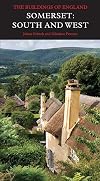
Replaces old edition by Pevsner alone. This is the part of the country which I know best and in which my soul and spirit truly live. An authoritative and truly comprehensive masterpiece. Reliable and companionable. Lovely colour photos do enhance the text. My only criticism is that the author is over-fond of understatement - more lavish praise of some buildings would not go amiss with this reader.

A useful summary. His prejudice against anything he deems "irrational" gets in the way though.
Lists
Awards


You May Also Like


Associated Authors
Statistics
- Works
- 118
- Also by
- 12
- Members
- 6,607
- Popularity
- #3,709
- Rating
- 3.9
- Reviews
- 41
- ISBNs
- 265
- Languages
- 12
- Favorited
- 1
