
About the Author
James Geary is the author of four previous books, including the New York Times bestseller The World in a Phrase, and is the deputy curator at Harvard University's Nieman Foundation for Journalism. A sought-after speaker and avid juggler, he lives near Boston, Massachusetts.
Image credit: Photo by Maciek Nabrdalik
Works by James Geary
I Is an Other: The Secret Life of Metaphor and How It Shapes the Way We See the World (2011) 316 copies, 5 reviews
We Are What We Think: A Journey Through the Wisest and Wittiest Sayings in the World (2005) 19 copies, 1 review
"The Student" 2 copies
Associated Works
Tagged
Common Knowledge
- Birthdate
- 1962-11-24
- Gender
- male
- Education
- Bennington College (BA)
- Occupations
- author
editor
journalist - Organizations
- Nieman Foundation for Journalism, Harvard
- Nationality
- USA
- Associated Place (for map)
- USA
Members
Reviews
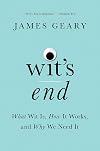
In the circle of friends I grew up with, being called witty was about the highest praise one could receive. We never bothered to define the term precisely, but rather understood that it implied a degree of cleverness and facility with language that went well beyond just being funny. So, what exactly is wit, how does it function, and why does being considered witty matter so much to us? Those are precisely the questions that James Geary attempts to answer in Wit’s End, his exhaustingly show more researched and frequently engaging treatise on just about every imaginable aspect of the topic.
At the simplest level, the author explains that wit can be regarded as a kind of metaphor: two disparate concepts connected by a commonality in sight, sound, or thought are combined for an incongruously comedic effect. Take puns, for example, such as the title of the 1970s rock album ‘You Can Tune a Piano but You Can’t Tuna Fish’. (Incidentally, this is not one of the dozens of puns that Geary cites, but it has been a personal favorite for a long time now.) The book then expands on this basic theme with chapters detailing how wit can be found in everything from literary fiction to fine art to popular music to religious tracts to political discourse.
It deserves mention that the author himself is very clever in how he offers this analysis—the chapter on witty verbal banter is written as the script for a stage play, he presents the section on how wit works in the brain as a scientific research paper, visual wit is treated as an art history lecture, and so on. That structure, along with the thorough way in which the subject is documented across time and tradition, is what I found to be most compelling about Wit’s End. On the other hand, I also caught myself wondering at times in my reading whether this was really too narrow of a topic to justify a volume-length treatment. I am not sure that question was ever resolved, but I did come away from the experience both amused and enlightened. show less
At the simplest level, the author explains that wit can be regarded as a kind of metaphor: two disparate concepts connected by a commonality in sight, sound, or thought are combined for an incongruously comedic effect. Take puns, for example, such as the title of the 1970s rock album ‘You Can Tune a Piano but You Can’t Tuna Fish’. (Incidentally, this is not one of the dozens of puns that Geary cites, but it has been a personal favorite for a long time now.) The book then expands on this basic theme with chapters detailing how wit can be found in everything from literary fiction to fine art to popular music to religious tracts to political discourse.
It deserves mention that the author himself is very clever in how he offers this analysis—the chapter on witty verbal banter is written as the script for a stage play, he presents the section on how wit works in the brain as a scientific research paper, visual wit is treated as an art history lecture, and so on. That structure, along with the thorough way in which the subject is documented across time and tradition, is what I found to be most compelling about Wit’s End. On the other hand, I also caught myself wondering at times in my reading whether this was really too narrow of a topic to justify a volume-length treatment. I am not sure that question was ever resolved, but I did come away from the experience both amused and enlightened. show less
I Is an Other: The Secret Life of Metaphor and How It Shapes the Way We See the World by James Geary
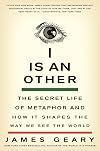
I have always tended to think of metaphors as statements like “ran like the wind” or “raven haired”; statements that are obvious comparisons. Geary points out that metaphor goes far deeper in our language; stocks ‘climb’ despite not having limbs, time races by or crawls, a person or situation can be a ticking time bomb while having nothing to do with actual explosives. Metaphor is so ingrained in humans that we aren’t even aware of it. Metaphors help explain the world to us; show more new things are explained by comparing them to things we already know. Metaphors are so deeply ingrained in our brains that we can easily be manipulated by others using them; advertisers and politicians use them all the time. The book is very interesting; the man knows what he’s talking about if the gigantic bibliography tells us anything. Recommended if you are interested in learning about how your brain works and perhaps making you aware of how metaphors can ‘prime’ you to feel and act in certain ways. show less
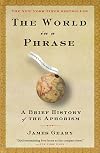
Although I didn’t know the name at the time, about thirty years ago, I began keeping what’s sometimes referred to as a commonplace book, in my case a large spiral notebook in which I recorded bits of writing by a favorite author or Scotch-taped clippings before they disintegrated in my wallet. Now I’ve come across a kindred spirit in James Geary, whose dazzling brief history of the aphorism is guaranteed to do for your brain what a brisk walk will do for your body.
Confessing that his show more love of aphorisms blossomed from a fairly pedestrian source --- the “Quotable Quotes” section in Reader’s Digest --- Geary (who shares bits of his own biography, including the charming story of how he met his wife through an aphorism and worked for a time writing fortunes in a Chinese fortune cookie factory) has strong views about what aphorisms are not. “Aphorisms aren’t meant to make you feel good about yourself, either,” he writes. “More often than not, they are cynical and acerbic, an antidote to the bland, relentlessly upbeat nostrums in self-help guides and inspirational literature.” There is ample proof of that observation in these pages, from the caustic wit of Mark Twain (“Few things are harder to put up with than the annoyance of a good example.”) to the world-weary writings of the Roman Stoics Seneca (“Do not regard as valuable anything that can be taken away.”) or Marcus Aurelius (“Every man is worth just so much as the worth of what he has set his heart upon.”).
Not content with the aphorism’s conventional definition as a “terse formulation of a truth or statement” or “concise statement of principle,” Geary, who calls himself an “aphorism addict,” lays down his own five laws of aphorisms: They must be brief, definitive, personal, have a twist and be philosophical. And although he tends to stretch his own definition a bit when it suits his purposes, it’s only in the service of covering some 2,500 years of the form in fewer than 200 pages.
Geary offers a rich sampling of almost forty masters of the aphorism; well-known (Confucius, Montaigne, Nietzsche, Benjamin Franklin and yes, even Dr. Seuss) and obscure, if no less deserving of recognition (Sébastien-Roch Nicolas Chamfort and Joseph Joubert). But The World in a Phrase contains much more than a Bartlett’s Familiar Quotations-like catalog of their pithiest observations. Geary also offers mini-biographies of his subjects, explaining in the case of those who wrote more widely how their aphoristic writings fit within a body of literary work and placing each in a historical context. There’s also an extensive bibliography that will allow readers who want to pursue the writings of a particular favorite in depth.
To round out this review, I’m tempted to string together a lengthy sampling of some of the most striking aphorisms of the many in this collection that will illustrate how entertaining and painlessly educational it is, but I’ll have to content myself with only a few more of my favorites: “A man is wealthy in proportion to the things he can do without.” (Epicurus). “The most entertaining surface on earth is the human face.” (Georg Christoph Lichtenberg). “‘Tis with our judgements as our watches, none/Go just alike, yet each believes his own.” (Alexander Pope). And this one, from Montaigne, perfect for deflating the self-important people in our lives: “Upon the highest throne in the world, we are seated, still, upon our arses.”
Geary concludes his delightful work with an exhortation to follow the example of the well-known aphorist Ralph Waldo Emerson to “make your own Bible. Select and collect all the words and sentences that in all your reading have been to you like the blast of triumph out of Shakespeare, Seneca, Moses, John and Paul.” Even if you don’t decide to follow that sage advice, you can content yourself with sampling the rich lode of wisdom awaiting you in this sparkling book.
Copyright 2009 Harrisburg Magazine show less
Confessing that his show more love of aphorisms blossomed from a fairly pedestrian source --- the “Quotable Quotes” section in Reader’s Digest --- Geary (who shares bits of his own biography, including the charming story of how he met his wife through an aphorism and worked for a time writing fortunes in a Chinese fortune cookie factory) has strong views about what aphorisms are not. “Aphorisms aren’t meant to make you feel good about yourself, either,” he writes. “More often than not, they are cynical and acerbic, an antidote to the bland, relentlessly upbeat nostrums in self-help guides and inspirational literature.” There is ample proof of that observation in these pages, from the caustic wit of Mark Twain (“Few things are harder to put up with than the annoyance of a good example.”) to the world-weary writings of the Roman Stoics Seneca (“Do not regard as valuable anything that can be taken away.”) or Marcus Aurelius (“Every man is worth just so much as the worth of what he has set his heart upon.”).
Not content with the aphorism’s conventional definition as a “terse formulation of a truth or statement” or “concise statement of principle,” Geary, who calls himself an “aphorism addict,” lays down his own five laws of aphorisms: They must be brief, definitive, personal, have a twist and be philosophical. And although he tends to stretch his own definition a bit when it suits his purposes, it’s only in the service of covering some 2,500 years of the form in fewer than 200 pages.
Geary offers a rich sampling of almost forty masters of the aphorism; well-known (Confucius, Montaigne, Nietzsche, Benjamin Franklin and yes, even Dr. Seuss) and obscure, if no less deserving of recognition (Sébastien-Roch Nicolas Chamfort and Joseph Joubert). But The World in a Phrase contains much more than a Bartlett’s Familiar Quotations-like catalog of their pithiest observations. Geary also offers mini-biographies of his subjects, explaining in the case of those who wrote more widely how their aphoristic writings fit within a body of literary work and placing each in a historical context. There’s also an extensive bibliography that will allow readers who want to pursue the writings of a particular favorite in depth.
To round out this review, I’m tempted to string together a lengthy sampling of some of the most striking aphorisms of the many in this collection that will illustrate how entertaining and painlessly educational it is, but I’ll have to content myself with only a few more of my favorites: “A man is wealthy in proportion to the things he can do without.” (Epicurus). “The most entertaining surface on earth is the human face.” (Georg Christoph Lichtenberg). “‘Tis with our judgements as our watches, none/Go just alike, yet each believes his own.” (Alexander Pope). And this one, from Montaigne, perfect for deflating the self-important people in our lives: “Upon the highest throne in the world, we are seated, still, upon our arses.”
Geary concludes his delightful work with an exhortation to follow the example of the well-known aphorist Ralph Waldo Emerson to “make your own Bible. Select and collect all the words and sentences that in all your reading have been to you like the blast of triumph out of Shakespeare, Seneca, Moses, John and Paul.” Even if you don’t decide to follow that sage advice, you can content yourself with sampling the rich lode of wisdom awaiting you in this sparkling book.
Copyright 2009 Harrisburg Magazine show less
I've said it before: I'm a big ol' word nerd. So of course this book on the history of the aphorism appealed to me. It turned out to be even better than I expected. In addition to defining and giving wonderful examples of aphorisms, this little volume provides a brief history of philosophy as well. Beginning with Lao-Tzu and Confucius, and progressing to modern poets and activists, Geary leads us through a history of thinkers and provides us with some of their most powerful words. I'm going show more to hold on to this book because I believe I'll want to refer to it again. For such a small book, it holds a great deal of fascinating information! show less
Lists
You May Also Like


Statistics
- Works
- 7
- Also by
- 1
- Members
- 893
- Popularity
- #28,688
- Rating
- 3.7
- Reviews
- 22
- ISBNs
- 25
- Languages
- 2