
John J. Gross (1935–2011)
Author of The Oxford Book of Essays
About the Author
Works by John J. Gross
Associated Works
Literary Genius: 25 Classic Writers Who Define English & American Literature (2007) — Contributor — 96 copies, 2 reviews
Counterpoints: 25 Years of The New Criterion on Culture and the Arts (2007) — Contributor — 48 copies
Against the Grain: The New Criterion on Art and Intellect at the End of the Twentieth Century (1995) — Contributor — 36 copies
Tagged
Common Knowledge
- Canonical name
- Gross, John J.
- Legal name
- Gross, John Jacob
- Birthdate
- 1935-03-12
- Date of death
- 2011-01-10
- Gender
- male
- Education
- Wadham College, Oxford University (BA|1955)
- Occupations
- literary critic
essayist
editor
anthologist - Organizations
- Times Literary Supplement
The Sunday Telegraph
New York Times
The New Statesman
Victor Gollancz Limited
The Literary Society (show all 7)
The Beefsteak Club - Awards and honors
- Fellow, The Royal Society of Literature (1992)
Duff Cooper Memorial Prize (1969) - Agent
- Dan Fenton (Peters Fraser + Dunlop)
- Relationships
- Gross, Miriam (former spouse)
- Cause of death
- heart and kidney failure
- Nationality
- UK
- Birthplace
- London, England, UK
- Places of residence
- London, England, UK
New York, New York, USA - Place of death
- London, England, UK
- Associated Place (for map)
- England, UK
Members
Reviews
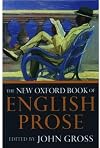
It’s sad to find misogyny still alive and well and popping up like weeds. Editor John Gross had only 6 pages to devote to Nathaniel Hawthorne in this anthology, and he chose to give a full page to an excerpt entitled “Englishwomen” from Our Old Home. The opening sentence of the excerpt contains the phrase “ it strikes me that an English lady of fifty is apt to become a creature less refined and delicate, so far as her physique goes, than anything that we western people class under show more the name of woman” (402). So Englishwomen over fifty can’t even be classed with women, they are instead “creatures”?
Hawthorne continues describing the archetypal 50+ English lady as “massive with solid beef and streaky tallow,” which causes him to think of “steaks and sirloins” (402). She is “elephantine,” “usually grim and stern,” with a “sturdy capacity for trampling down a foe.” Not content with expressing contempt for middle-aged Englishwomen’s bodies, Hawthorne then proceeds to state that these women are strong only physically, but morally are weak, “powerless and timid” in anything that calls for moral or ethical fortitude outside of her homegrown “conventionalities” (402-3). Hawthorne wraps up his dissection by stating that “somewhere in this enormous bulk there must be hidden the modest, slender, violet-nature of a girl,” and laments that, alas, the girl must grown up into the overpowering creature of a middle-aged Englishwoman (403).
I assume that John Gross found this piece irresistibly amusing, and did not consider that women readers of this anthology could find it offensive and misogynist, especially read as an excerpt without any context in which to mitigate or explain the virulent disgust displayed towards older women. I hope that Gross hesitated before including rants against racial and religious minorities, but I admit that I’m not going to continue reading this anthology, which a (male reviewer) on the back cover touts as sure to give everyone “hundreds of unexpected pleasures and rediscoveries.” It certainly did contain one unexpected discovery for me. show less
Hawthorne continues describing the archetypal 50+ English lady as “massive with solid beef and streaky tallow,” which causes him to think of “steaks and sirloins” (402). She is “elephantine,” “usually grim and stern,” with a “sturdy capacity for trampling down a foe.” Not content with expressing contempt for middle-aged Englishwomen’s bodies, Hawthorne then proceeds to state that these women are strong only physically, but morally are weak, “powerless and timid” in anything that calls for moral or ethical fortitude outside of her homegrown “conventionalities” (402-3). Hawthorne wraps up his dissection by stating that “somewhere in this enormous bulk there must be hidden the modest, slender, violet-nature of a girl,” and laments that, alas, the girl must grown up into the overpowering creature of a middle-aged Englishwoman (403).
I assume that John Gross found this piece irresistibly amusing, and did not consider that women readers of this anthology could find it offensive and misogynist, especially read as an excerpt without any context in which to mitigate or explain the virulent disgust displayed towards older women. I hope that Gross hesitated before including rants against racial and religious minorities, but I admit that I’m not going to continue reading this anthology, which a (male reviewer) on the back cover touts as sure to give everyone “hundreds of unexpected pleasures and rediscoveries.” It certainly did contain one unexpected discovery for me. show less
Despite the fact that this anthology consists of pieces by thirty-eight white men plus James Baldwin (hey, it was published in 1967), it is an excellent introduction to the history of the 'essay'. I'm quite sure (and would certainly hope) that a selection of the best essays of the last, say, fifty years would have a more diverse author roster. I found Charles Lamb's 'The Superannuated Man', E. B. White's 'Death of a Pig' and Baldwin's 'Stranger in the Village" particularly good.
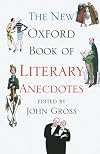
I have been having a good time lately browsing through "The New Oxford Book of Literary Anecdotes." I usually just open the book at random and read whatever I come across.
The book is simply a collections of stories — from biographies and other sources — about writers from Geoffrey Chaucer to J.K. Rowling. These are mostly, but not exclusively, British writers.
Some of the tales are quite sad, such as the one about the death of Jane Austen in 1817 — her last recorded words were, "I want show more nothing but death" — and Mary Wollstonecraft's suicide attempt. The latter jumped from a bridge into the Thames, but because of her bulky clothing, she floated long enough to be rescued. By surviving, she was later able to give birth to Mary Shelley, who gave us Frankenstein.
Other stories are lighter, more in keeping with what we usually mean when we use the word anecdote. When G.K. Chesterton got his first look at the lights of Broadway, he is said to have commented, "What a glorious garden of wonders this would be for anyone who was lucky enough to be unable to read."
People who knock on the door of your home to try to convert you to their particular religious views are nothing new. When Thomas Paine had such a visitor at his door, he reportedly told her, "Pshaw! God would not send such a foolish, ugly old woman as you about with his messages. Go away — be off — and shut the door."
In a secondhand bookshop, George Bernard Shaw found a book with the words "To ___ with esteem, George Bernard Shaw." He bought it and sent it again to the same person, after adding the words, "With renewed esteem, George Bernard Shaw." show less
The book is simply a collections of stories — from biographies and other sources — about writers from Geoffrey Chaucer to J.K. Rowling. These are mostly, but not exclusively, British writers.
Some of the tales are quite sad, such as the one about the death of Jane Austen in 1817 — her last recorded words were, "I want show more nothing but death" — and Mary Wollstonecraft's suicide attempt. The latter jumped from a bridge into the Thames, but because of her bulky clothing, she floated long enough to be rescued. By surviving, she was later able to give birth to Mary Shelley, who gave us Frankenstein.
Other stories are lighter, more in keeping with what we usually mean when we use the word anecdote. When G.K. Chesterton got his first look at the lights of Broadway, he is said to have commented, "What a glorious garden of wonders this would be for anyone who was lucky enough to be unable to read."
People who knock on the door of your home to try to convert you to their particular religious views are nothing new. When Thomas Paine had such a visitor at his door, he reportedly told her, "Pshaw! God would not send such a foolish, ugly old woman as you about with his messages. Go away — be off — and shut the door."
In a secondhand bookshop, George Bernard Shaw found a book with the words "To ___ with esteem, George Bernard Shaw." He bought it and sent it again to the same person, after adding the words, "With renewed esteem, George Bernard Shaw." show less
There are many things to criticize about this book but I still like it. Ultra short entries from many writers, beautifully laid out on the page, with the emphasis on as many writers as possible being showcased. No attempt was made by the editor to show the dynamic qualities that build emotional power within the text. The only purpose was to display what can be achieved by a short passage or sentence. 993 pp, Index.
Awards


You May Also Like


Associated Authors
Statistics
- Works
- 18
- Also by
- 5
- Members
- 2,059
- Popularity
- #12,494
- Rating
- 3.8
- Reviews
- 14
- ISBNs
- 59
- Languages
- 4