

Jeremy Braddock
Author of Collecting as Modernist Practice (Hopkins Studies in Modernism)
Works by Jeremy Braddock
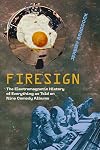
Firesign: The Electromagnetic History of Everything as Told on Nine Comedy Albums (2024) 9 copies, 1 review
Tagged
Common Knowledge
There is no Common Knowledge data for this author yet. You can help.
Members
Reviews
Firesign: The Electromagnetic History of Everything as Told on Nine Comedy Albums by Jeremy Braddock
For all the strenuous efforts at marketing and brand recognition in American life today, there are some brands that just remain sacrosanct forever with no effort at all. A book called Firesign is immediately recognizable to most Americans, even if they haven’t listened to its work in 50 years. Jeremy Braddock has done absolutely astonishing work in putting together this history of the group, how it leveraged the technology of the moment in real time (as it was released), and all the show more obscure references and connections in it from history, current affairs, and pop culture. An enormous achievement.
Four guys, working at various jobs, caught up in California and became Firesign Theatre. Their first album, 1968’s Waiting for the Electrician or Someone Like Him, stunned. It was radio drama on a record, a totally different application for LPs, with revolutionary use of sound, voices and effects. It was “movies for the mind.” And it was not only funny, it was very critical of America. It made Firesign Theatre a household term that resonates even today. You know the way everyone memorizes the hits off a music album? For Firesign Theatre, they memorized the entire album of spoken words, listening to it over and over and over again, always discovering new voices, new lines, and new sounds.
The guys came from varied backgrounds, like PSYOPS in Vietnam, live radio, theater, radio tech, talkshow hosting, Broadway shows, radio documentaries and writing. They all performed on radio, notably WBAI in New York and KFPK in Los Angeles. Their talents all came together beautifully.
Between them, they had worked with everybody, it seems, from Tom Stoppard (who was writing what would become Rosencrantz and Guildenstern are Dead) to Marshall McLuhan (who offered them exploding cigars). Their comedic inspirations came from Bob & Ray, The Goons Show and Mad Magazine. As precisely realistic as their recordings were, they claimed to be surrealists in everything they did. They respected the likes of surrealist innovators like WC Fields, the Marx Brothers, Marcel Duchamp and Marcel Marceau. Braddock says their albums were assemblages of comedic archeology. It all makes the book a fascinating journey in recording history.
Braddock is quite surgical about it. He takes snippets and explains what the references are (or likely were), from Hopi Indian ceremonies to old radio and TV traditions, to current politics (Vietnam) and old movies (Nick Danger). He spends an enormous amount of time on what we now call artificial intelligence, showing Firesign understood the pitfalls at least as well as its inventor – 50 years ago.
Mostly, it was a time for technical advances in recording. Four track mono gave way to stereo, which soon became 24 track. FM radio stations were unleashed to offer innovative programming, in stereo. Firesign’s exquisite use of both speakers took listeners on head trips like no medium had ever offered. The invention of Dolby Noise Reduction allowed them to cut and paste at will without adding distracting noise, but rather enhancing the entire album.
Everyone was watching, from Richard Nixon to The Beatles. Even humorless Apple baked a Firesign Easter Egg into its iPhone in 2011. When Siri was given the code words “This is worker speaking” – from I Think We’re All Bozos On This Bus – it would respond “Hello Ah-Clem. What function can I perform for you?” It stayed in the code until 2021 with the release of iOS 15.
And there was so much going on in the background, fans had to listen multiple times to try to catch it all. With all the local misery: the 1968 uprisings, Kent State, Vietnam, the Democratic Convention, Richard Nixon, racism – Firesign was the group that got it, exploded it, and managed to make it funny. All their albums and radio shows are available on youtube if you’d like to take the trip yourself.
Author Jeremy Braddock is a superfan. He published his first article on Firesign in 1994. His research included personal interviews with the players, plus executives, technicians, and lots of research into sound technologies, cultural happenings and historical events, fan magazines, zines and internet forums. His analysis is deep pop culture, and the words he chooses are from academic research. I freely admit I had to look up words he uses repeatedly as if they were ordinary street language. Words like diegetic, proleptic, doxa and heteroglossia are not what I am used to seeing in pop culture books. They definitely slow a reader down. Even if they are mostly harmless, my spellchecker does not like them.
The big break the group got was from CBS’ Columbia Records, which allowed them unlimited use of a fully equipped LA studio, where they learned to recreate 30s radio drama, experimented with stereo, and leveraged it all with their own voices mocking current affairs and pop culture. The result was extraordinary high quality vinyl that spread all over the world. Everyone knew of Firesign Theatre by the early 70s.
But they sure didn’t know the details Braddock has pulled together. No morsel of technical trivia or American culture is too superficial to pass over. It’s all here, for readers to judge for themselves. For some it will be too much. For others there will be “I knew it” moments galore.
Firesign Theatre was a collective, legally Oz Firesign Theatre. Its members insisted on not being paid as individuals, and did not seek the limelight separately. They were building a monster entity of unprecedented cultural and technical mastery.
Unfortunately, as the book shows without intending to, Firesign Theatre became formulaic instead of shocking. Simply changing a letter in a name gave them a new character to mock some aspect of American culture, mostly cringeworthy television, a bloated, soft target if ever there was one. Looking back, nothing could live up to the initial stunner that Waiting for the Electrician was. It came out of left field and wowed a nation, and not just the stoners. By the ninth album, the new material was already old hat. So it goes.
Instead, they tried valueless innovations (something I call Innovation Without Inspiration) such as none of the characters speaking to each other on Police Street. None of them were ever physically in the presence of another character. This was the opposite of standard drama (or comedy), but it wowed no one.
The book ends rather bizarrely to me, with a chapter detailing sampling of Firesign lines by Hip Hop artists. There’s even an inventory of it. Sampling, according to many musicians is total laziness, short circuiting creativity in favor of recycling the past. Braddock might consider this an extension of the comedic archaeology that powered Firesign’s first albums, but in this context, not only did they have nothing to do with it, but it is unmemorable, unoriginal, unfunny, and cheap in its new clothes. For some reason, Braddock sees it as important.
Lester Bangs, a renowned Creem critic and one of their biggest fans, was saying by 1975 that he “no longer had the patience, attention span, conscious-level or whatever was required to ‘get into’ Firesign Theatre albums.” They soon lost their studio arrangement, broke up, got together again, did radio shows, videos and toured. But they never regained their demi-god status.
I was delighted when it popped up on my list of upcoming books, and pushed everything else aside to read it. I was not disappointed.
David Wineberg show less
Four guys, working at various jobs, caught up in California and became Firesign Theatre. Their first album, 1968’s Waiting for the Electrician or Someone Like Him, stunned. It was radio drama on a record, a totally different application for LPs, with revolutionary use of sound, voices and effects. It was “movies for the mind.” And it was not only funny, it was very critical of America. It made Firesign Theatre a household term that resonates even today. You know the way everyone memorizes the hits off a music album? For Firesign Theatre, they memorized the entire album of spoken words, listening to it over and over and over again, always discovering new voices, new lines, and new sounds.
The guys came from varied backgrounds, like PSYOPS in Vietnam, live radio, theater, radio tech, talkshow hosting, Broadway shows, radio documentaries and writing. They all performed on radio, notably WBAI in New York and KFPK in Los Angeles. Their talents all came together beautifully.
Between them, they had worked with everybody, it seems, from Tom Stoppard (who was writing what would become Rosencrantz and Guildenstern are Dead) to Marshall McLuhan (who offered them exploding cigars). Their comedic inspirations came from Bob & Ray, The Goons Show and Mad Magazine. As precisely realistic as their recordings were, they claimed to be surrealists in everything they did. They respected the likes of surrealist innovators like WC Fields, the Marx Brothers, Marcel Duchamp and Marcel Marceau. Braddock says their albums were assemblages of comedic archeology. It all makes the book a fascinating journey in recording history.
Braddock is quite surgical about it. He takes snippets and explains what the references are (or likely were), from Hopi Indian ceremonies to old radio and TV traditions, to current politics (Vietnam) and old movies (Nick Danger). He spends an enormous amount of time on what we now call artificial intelligence, showing Firesign understood the pitfalls at least as well as its inventor – 50 years ago.
Mostly, it was a time for technical advances in recording. Four track mono gave way to stereo, which soon became 24 track. FM radio stations were unleashed to offer innovative programming, in stereo. Firesign’s exquisite use of both speakers took listeners on head trips like no medium had ever offered. The invention of Dolby Noise Reduction allowed them to cut and paste at will without adding distracting noise, but rather enhancing the entire album.
Everyone was watching, from Richard Nixon to The Beatles. Even humorless Apple baked a Firesign Easter Egg into its iPhone in 2011. When Siri was given the code words “This is worker speaking” – from I Think We’re All Bozos On This Bus – it would respond “Hello Ah-Clem. What function can I perform for you?” It stayed in the code until 2021 with the release of iOS 15.
And there was so much going on in the background, fans had to listen multiple times to try to catch it all. With all the local misery: the 1968 uprisings, Kent State, Vietnam, the Democratic Convention, Richard Nixon, racism – Firesign was the group that got it, exploded it, and managed to make it funny. All their albums and radio shows are available on youtube if you’d like to take the trip yourself.
Author Jeremy Braddock is a superfan. He published his first article on Firesign in 1994. His research included personal interviews with the players, plus executives, technicians, and lots of research into sound technologies, cultural happenings and historical events, fan magazines, zines and internet forums. His analysis is deep pop culture, and the words he chooses are from academic research. I freely admit I had to look up words he uses repeatedly as if they were ordinary street language. Words like diegetic, proleptic, doxa and heteroglossia are not what I am used to seeing in pop culture books. They definitely slow a reader down. Even if they are mostly harmless, my spellchecker does not like them.
The big break the group got was from CBS’ Columbia Records, which allowed them unlimited use of a fully equipped LA studio, where they learned to recreate 30s radio drama, experimented with stereo, and leveraged it all with their own voices mocking current affairs and pop culture. The result was extraordinary high quality vinyl that spread all over the world. Everyone knew of Firesign Theatre by the early 70s.
But they sure didn’t know the details Braddock has pulled together. No morsel of technical trivia or American culture is too superficial to pass over. It’s all here, for readers to judge for themselves. For some it will be too much. For others there will be “I knew it” moments galore.
Firesign Theatre was a collective, legally Oz Firesign Theatre. Its members insisted on not being paid as individuals, and did not seek the limelight separately. They were building a monster entity of unprecedented cultural and technical mastery.
Unfortunately, as the book shows without intending to, Firesign Theatre became formulaic instead of shocking. Simply changing a letter in a name gave them a new character to mock some aspect of American culture, mostly cringeworthy television, a bloated, soft target if ever there was one. Looking back, nothing could live up to the initial stunner that Waiting for the Electrician was. It came out of left field and wowed a nation, and not just the stoners. By the ninth album, the new material was already old hat. So it goes.
Instead, they tried valueless innovations (something I call Innovation Without Inspiration) such as none of the characters speaking to each other on Police Street. None of them were ever physically in the presence of another character. This was the opposite of standard drama (or comedy), but it wowed no one.
The book ends rather bizarrely to me, with a chapter detailing sampling of Firesign lines by Hip Hop artists. There’s even an inventory of it. Sampling, according to many musicians is total laziness, short circuiting creativity in favor of recycling the past. Braddock might consider this an extension of the comedic archaeology that powered Firesign’s first albums, but in this context, not only did they have nothing to do with it, but it is unmemorable, unoriginal, unfunny, and cheap in its new clothes. For some reason, Braddock sees it as important.
Lester Bangs, a renowned Creem critic and one of their biggest fans, was saying by 1975 that he “no longer had the patience, attention span, conscious-level or whatever was required to ‘get into’ Firesign Theatre albums.” They soon lost their studio arrangement, broke up, got together again, did radio shows, videos and toured. But they never regained their demi-god status.
I was delighted when it popped up on my list of upcoming books, and pushed everything else aside to read it. I was not disappointed.
David Wineberg show less
Awards

Statistics
- Works
- 4
- Members
- 37
- Popularity
- #390,571
- Rating
- 4.2
- Reviews
- 1
- ISBNs
- 11