

Suzanne P. Hudson
Author of Robert Ryman: Used Paint
About the Author
Works by Suzanne P. Hudson
Associated Works
Tagged
Common Knowledge
- Canonical name
- Hudson, Suzanne P.
- Legal name
- Hudson, Suzanne Perling
- Birthdate
- 1977
- Gender
- female
- Education
- Princeton University (MA|2003|Ph.D|2006)
University of California, Berkeley (BA|1999) - Occupations
- professor
art historian
art critic - Organizations
- University of Southern California
University of Illinois, Urbana-Champaign - Nationality
- USA
- Places of residence
- Los Angeles, California, USA
- Associated Place (for map)
- California, USA
Members
Reviews
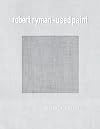
This first book-length study of Robert Ryman argues that his work is a continuous experiment in the possibilities of painting.
In this first book-length study of Robert Ryman, Suzanne Hudson traces the artist's production from his first paintings in the early 1950s, many of which have never been exhibited or reproduced, to his recent gallery shows. Ryman's largely white-on-white paintings represent his careful working over of painting's conventions at their most radically reduced. Through show more close readings of the work, Hudson casts Ryman as a painter for whom painting was conducted as a continuous personal investigation. Ryman's methodan act of learning by doingas well as his conception of painting as used paint sets him apart from second-generation abstract expressionists, minimalists, or conceptualists.
Ryman (born in 1930) is a self-taught artist who began to paint in earnest while working as a guard at the Museum of Modern Art in New York in the 1950s. Hudson argues that Ryman's approach to painting developed from quotidian contact with the story of modern painting as assembled by MoMA director and curator Alfred Barr and rendered widely accessible by director of the education department Victor D'Amico and colleagues. Ryman's introduction to artistic practice within the (white) walls of MoMA, Hudson contends, was shaped by an institutional ethos of experiential learning. (Others who worked at the MoMA during these years include Lucy Lippard, who married Ryman in 1961; Dan Flavin, another guard; and Sol LeWitt, a desk assistant.)
Hudson's chaptersPrimer, Paint, Support, Edge, and Wall, named after the most basic elements of the artist's workeloquently explore Ryman's ongoing experiment in what makes a painting a painting. Ryman's work, she writes, tests the medium's material and conceptual possibilities. It signals neither the end of painting nor guarantees its continued longevity but keeps the prospect of painting an open question, answerable only through the production of new paintings. show less
In this first book-length study of Robert Ryman, Suzanne Hudson traces the artist's production from his first paintings in the early 1950s, many of which have never been exhibited or reproduced, to his recent gallery shows. Ryman's largely white-on-white paintings represent his careful working over of painting's conventions at their most radically reduced. Through show more close readings of the work, Hudson casts Ryman as a painter for whom painting was conducted as a continuous personal investigation. Ryman's methodan act of learning by doingas well as his conception of painting as used paint sets him apart from second-generation abstract expressionists, minimalists, or conceptualists.
Ryman (born in 1930) is a self-taught artist who began to paint in earnest while working as a guard at the Museum of Modern Art in New York in the 1950s. Hudson argues that Ryman's approach to painting developed from quotidian contact with the story of modern painting as assembled by MoMA director and curator Alfred Barr and rendered widely accessible by director of the education department Victor D'Amico and colleagues. Ryman's introduction to artistic practice within the (white) walls of MoMA, Hudson contends, was shaped by an institutional ethos of experiential learning. (Others who worked at the MoMA during these years include Lucy Lippard, who married Ryman in 1961; Dan Flavin, another guard; and Sol LeWitt, a desk assistant.)
Hudson's chaptersPrimer, Paint, Support, Edge, and Wall, named after the most basic elements of the artist's workeloquently explore Ryman's ongoing experiment in what makes a painting a painting. Ryman's work, she writes, tests the medium's material and conceptual possibilities. It signals neither the end of painting nor guarantees its continued longevity but keeps the prospect of painting an open question, answerable only through the production of new paintings. show less

'Contemporary Painting' is a tricky term but it is probably best understood as 'painting' (more conceptually than traditionally understood) that follows modernism and post-modernism and that will eventually cease to be contemporary simply because time passes.
This Thames & Hudson book is a competent if not particularly exciting guide to what, from the outside, looks like the utter mess that is art under late liberal capitalism - an almost hysterical attempt to be constantly new under market show more conditions, often while critiquing those conditions.
The book itself is well illustrated by Hudson but she gives us little more than the thematic representation of a catalogue of artists, most of whom get no more than a long paragraph. She cannot escape but manages to minimise use of incomprehensible 'International Art English'.
It is a useful addition to any library as reference work but it has the unfortunate effect of pointing up the hollow core of an immense amount of technical and conceptual 'creativity'. It is an explosion not so much of talent as of attempts to be noticed in a volatile market.
The book indicates just how fragmented and socially shattered cosmopolitan urban Western culture has become with two extremes co-existing - cynical market exploitation and a rather narcissistic and increasingly futile political art centred on a posturing identity politics that talks to itself.
The conceptual often indicates a one trick pony of an artist, some perhaps clinically unstable, or an inability to do no more than become what my grandmother called 'The Great I Am'. The idea is transient, useless except as status or investment within a close-knit self-referential world.
The political is worse. Simplistic, unsophisticated, assertive and often ending up as merely the cause of vicious reaction from other aspiring artistic social justice warriors wanting to introduce censorship and something close to Byzantine iconoclasm to an art world of trust fund posturers.
There is some serious talent here and some interesting work but one constantly feels as if the best are treading on eggshells in order to be 'relevant' and not attract the disapproval of the wolves who lurk in the jungles of New York intellectual life and its sad global suburbs.
It is all very disheartening. Capital rules and few of these artists really escape it but who does? The masochism of neurotic capitalists allows them to be critiqued as villains but not in any way that actually changes anything. This is a cultural dead end. It epitomises the death of a system.
This is also not effective politics, de-linked as it is from national community or grand narrative. It is a closed world, a parasite on a system correctly identified as exploitative yet failing to understand that the same system that feeds them exploits those that the artists patronise.
In a world where half the population is 'populist' in some form or another, there is no meaningful populist art, no connection to the working class and only rare if important connection to the urban poor. The politics is often childish, 'infantile' as Lenin might have used the term.
Wasting energy (literally) on international art events and travel, the rising artist too often seems to be lost in the spectacle, rootless, hungry for acclaim, fundamentally trivial, ready to latch on to the latest simplification if that simplification is one shared by the idle but emoting liberal rich.
The text reminded me why I no longer visit galleries or retain membership of museums or institutions like the Royal Academy, happy to leave their survival to those people who seem to be entranced by artists as brands, art as novelty and simple messaging and ideology as art. show less
This Thames & Hudson book is a competent if not particularly exciting guide to what, from the outside, looks like the utter mess that is art under late liberal capitalism - an almost hysterical attempt to be constantly new under market show more conditions, often while critiquing those conditions.
The book itself is well illustrated by Hudson but she gives us little more than the thematic representation of a catalogue of artists, most of whom get no more than a long paragraph. She cannot escape but manages to minimise use of incomprehensible 'International Art English'.
It is a useful addition to any library as reference work but it has the unfortunate effect of pointing up the hollow core of an immense amount of technical and conceptual 'creativity'. It is an explosion not so much of talent as of attempts to be noticed in a volatile market.
The book indicates just how fragmented and socially shattered cosmopolitan urban Western culture has become with two extremes co-existing - cynical market exploitation and a rather narcissistic and increasingly futile political art centred on a posturing identity politics that talks to itself.
The conceptual often indicates a one trick pony of an artist, some perhaps clinically unstable, or an inability to do no more than become what my grandmother called 'The Great I Am'. The idea is transient, useless except as status or investment within a close-knit self-referential world.
The political is worse. Simplistic, unsophisticated, assertive and often ending up as merely the cause of vicious reaction from other aspiring artistic social justice warriors wanting to introduce censorship and something close to Byzantine iconoclasm to an art world of trust fund posturers.
There is some serious talent here and some interesting work but one constantly feels as if the best are treading on eggshells in order to be 'relevant' and not attract the disapproval of the wolves who lurk in the jungles of New York intellectual life and its sad global suburbs.
It is all very disheartening. Capital rules and few of these artists really escape it but who does? The masochism of neurotic capitalists allows them to be critiqued as villains but not in any way that actually changes anything. This is a cultural dead end. It epitomises the death of a system.
This is also not effective politics, de-linked as it is from national community or grand narrative. It is a closed world, a parasite on a system correctly identified as exploitative yet failing to understand that the same system that feeds them exploits those that the artists patronise.
In a world where half the population is 'populist' in some form or another, there is no meaningful populist art, no connection to the working class and only rare if important connection to the urban poor. The politics is often childish, 'infantile' as Lenin might have used the term.
Wasting energy (literally) on international art events and travel, the rising artist too often seems to be lost in the spectacle, rootless, hungry for acclaim, fundamentally trivial, ready to latch on to the latest simplification if that simplification is one shared by the idle but emoting liberal rich.
The text reminded me why I no longer visit galleries or retain membership of museums or institutions like the Royal Academy, happy to leave their survival to those people who seem to be entranced by artists as brands, art as novelty and simple messaging and ideology as art. show less
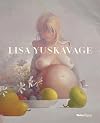
Accompanying a major exhibition, this stunning survey and important monograph highlights more than two decades’ worth of Lisa Yuskavage’s brilliant and controversial paintings. Internationally acclaimed American painter Lisa Yuskavage is known for her seductive yet unsettling work, in which cartoony, vulgar, angelic young nymphs are cast within fantastical landscapes or theatrical interiors. In this dazzling monograph she presents the confrontational imagery, luscious paint, and show more technical virtuosity that are her signature, blurring the boundaries between high art’s classic female nudes and their naughty, soft-porn counterparts.
This comprehensive new volume offers a rich overview of the artist’s work with interpretive essays by leading art historians and an interview with the artist. This will be the definitive book on this important artist. show less
This comprehensive new volume offers a rich overview of the artist’s work with interpretive essays by leading art historians and an interview with the artist. This will be the definitive book on this important artist. show less
You May Also Like
Associated Authors
Statistics
- Works
- 15
- Also by
- 2
- Members
- 170
- Popularity
- #125,473
- Rating
- 4.0
- Reviews
- 3
- ISBNs
- 21
- Languages
- 1