
Rosemary McLoughlin
Author of Tyringham Park
Works by Rosemary McLoughlin
Tyringham Park: A Novel 1 copy
Tagged
Common Knowledge
- Gender
- female
- Birthplace
- Dorrigo, New South Wales, Australia
- Associated Place (for map)
- New South Wales, Australia
Members
Reviews
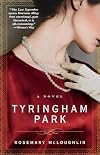
Awkward sentence structure throughout, painfully flat characters, improbable plot: I'm surprised that I finished this book at all. There simply wasn't anyone to root for: Charlotte, the most likely candidate, was far too passive, helpless, and weak (though in fairness to her, she spent most of her childhood being told she was useless and ugly).
Edwina Blackshaw falls in love with a portrait artist who her father refuses to pay after he completes four portraits of the family; Edwina decides to show more marry the next eligible match that comes along, which turns out to be her older cousin, Lord Waldron Blackshaw. (She comforts herself that at least he will share her family deficiency, whatever that is, but that's left as a loose end.) Edwina has no interest in raising her children, only in riding horses (and sleeping with the horse trainer). She has deluded herself into thinking she is a good rider, although the truly gifted rider is her older daughter, Charlotte, of whom she is jealous. Other than riding, Charlotte's life is miserable: she lives in constant fear of Nurse Dixon, herself an orphan, and a bitter one at that. Dixon believes the horse trainer Manus is in love with her, and has waited eight years for him to propose. But when Charlotte's younger, prettier sister Victoria disappears, all their lives are thrown into chaos.
The story continues on in this melodramatic way; two of the main characters go to live in Australia (separately) but eventually return to Ireland. There was more of a sense of place in the Australia section, barely any in the Irish section, either in Dublin or Tyringham Park. Few of the characters had an accurate sense of self, or of each other, and though the mystery of Victoria's disappearance has a reasonable explanation (in the very last pages), the blackmail and confrontation that results has a sense of desperation about it, as if the manuscript was a blue book and the proctor announced "Pencils down in five minutes."
Would not recommend. Read The Tea Rose by Jennifer Donnelly or The Thorn Birds by Colleen McCullough instead.
Quotes
"It all just slipped away. Without you around I couldn't motivate myself. It all seemed so pointless." -Charlotte to Cormac (256)
"It's sinful to give up on life before you've lived it." -Cormac to Charlotte, (257)
There was a strange sensation in her head. It was as if her mind were a hundred-roomed mansion that was falling apart, each wall as it crumbled revealing its individual secrets to all the other rooms until the house was a single pile of rubble with all its furnishings and artifacts exposed. (411) show less
Edwina Blackshaw falls in love with a portrait artist who her father refuses to pay after he completes four portraits of the family; Edwina decides to show more marry the next eligible match that comes along, which turns out to be her older cousin, Lord Waldron Blackshaw. (She comforts herself that at least he will share her family deficiency, whatever that is, but that's left as a loose end.) Edwina has no interest in raising her children, only in riding horses (and sleeping with the horse trainer). She has deluded herself into thinking she is a good rider, although the truly gifted rider is her older daughter, Charlotte, of whom she is jealous. Other than riding, Charlotte's life is miserable: she lives in constant fear of Nurse Dixon, herself an orphan, and a bitter one at that. Dixon believes the horse trainer Manus is in love with her, and has waited eight years for him to propose. But when Charlotte's younger, prettier sister Victoria disappears, all their lives are thrown into chaos.
The story continues on in this melodramatic way; two of the main characters go to live in Australia (separately) but eventually return to Ireland. There was more of a sense of place in the Australia section, barely any in the Irish section, either in Dublin or Tyringham Park. Few of the characters had an accurate sense of self, or of each other, and though the mystery of Victoria's disappearance has a reasonable explanation (in the very last pages), the blackmail and confrontation that results has a sense of desperation about it, as if the manuscript was a blue book and the proctor announced "Pencils down in five minutes."
Would not recommend. Read The Tea Rose by Jennifer Donnelly or The Thorn Birds by Colleen McCullough instead.
Quotes
"It all just slipped away. Without you around I couldn't motivate myself. It all seemed so pointless." -Charlotte to Cormac (256)
"It's sinful to give up on life before you've lived it." -Cormac to Charlotte, (257)
There was a strange sensation in her head. It was as if her mind were a hundred-roomed mansion that was falling apart, each wall as it crumbled revealing its individual secrets to all the other rooms until the house was a single pile of rubble with all its furnishings and artifacts exposed. (411) show less
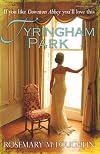
During a forty-minute period of inattention while her mother is otherwise engaged at the estate's stables, little Victoria Blackshaw, the cherished, pretty, younger daughter, disappears from her pram. The repercussions haunt her mother, her eight-year-old sister Charlotte, and the servants for years to come.
With no clues to what happened, rather than accept that Victoria got out of her pram and wandered to the rain-swollen river, Lady Edwina Blackshaw focuses on Theresa Kelly, a servant who show more left the estate that day. Unfortunately, by the time Kelly becomes the suspect of choice, she's already sailed from Ireland on her way to Australia, intending to marry a farmer there. It's 1917,no one remembers the name of the farmer, and there's really no way to track her.
Meanwhile, Charlotte has stopped talking. Altogether.
McLoughlin lovingly develops the internal stresses of the Blackshaw family, as well as the servants, most importantly Lily East, the housekeeper when Victoria disappears, and Nurse Dixon, the abusive nanny in charge of the children.
The depiction of Ireland between the wars, and the gradual development of the characters of Edwina, Charlotte, Charlotte's father Waldron, as well as Lily East, Dixon, and other important characters in their lives is beautifully done, and I was completely absorbed almost from the first paragraph. Because this is a character-driven rather than plot-driven story, it's difficult to say more without spoilers, but this should be a pleasure for anyone who enjoys family dramas.
Recommended
I received a free electronic galley of this book from the publisher via NetGalley. show less
With no clues to what happened, rather than accept that Victoria got out of her pram and wandered to the rain-swollen river, Lady Edwina Blackshaw focuses on Theresa Kelly, a servant who show more left the estate that day. Unfortunately, by the time Kelly becomes the suspect of choice, she's already sailed from Ireland on her way to Australia, intending to marry a farmer there. It's 1917,no one remembers the name of the farmer, and there's really no way to track her.
Meanwhile, Charlotte has stopped talking. Altogether.
McLoughlin lovingly develops the internal stresses of the Blackshaw family, as well as the servants, most importantly Lily East, the housekeeper when Victoria disappears, and Nurse Dixon, the abusive nanny in charge of the children.
The depiction of Ireland between the wars, and the gradual development of the characters of Edwina, Charlotte, Charlotte's father Waldron, as well as Lily East, Dixon, and other important characters in their lives is beautifully done, and I was completely absorbed almost from the first paragraph. Because this is a character-driven rather than plot-driven story, it's difficult to say more without spoilers, but this should be a pleasure for anyone who enjoys family dramas.
Recommended
I received a free electronic galley of this book from the publisher via NetGalley. show less
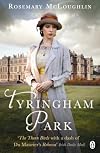
The Irish Daily Mail cover promo compares this novel to 'The Thorn Birds with a dash of Du Maurier's Rebecca'. Well, McCullough is there in spades, but I couldn't find a microscopic trace of Du Maurier. Even the eponymous house is more Downton Abbey than Manderley.
I had my fingers crossed throughout the first half of the book, but then plot, pacing and nuanced characterisation bowed humbly out, to be replaced by rampant melodrama. And I don't even mind convoluted storylines and incestuous show more panto villains, but there is nothing here really original either. Nor did setting the house in Ireland after the Easter Rising add to the book in anyway, apart from the 'bad' characters all being English of course (blustering General Melchett type father, cold-hearted Lady Chatterley mother, psychotic children's nurse, etc.)
Yet another Downton Abbey spin-off, I'm afraid. Philippa Gregory's Wideacre trilogy covers the whole twisted family saga schtick far better. show less
I had my fingers crossed throughout the first half of the book, but then plot, pacing and nuanced characterisation bowed humbly out, to be replaced by rampant melodrama. And I don't even mind convoluted storylines and incestuous show more panto villains, but there is nothing here really original either. Nor did setting the house in Ireland after the Easter Rising add to the book in anyway, apart from the 'bad' characters all being English of course (blustering General Melchett type father, cold-hearted Lady Chatterley mother, psychotic children's nurse, etc.)
Yet another Downton Abbey spin-off, I'm afraid. Philippa Gregory's Wideacre trilogy covers the whole twisted family saga schtick far better. show less
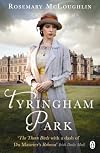
An enjoyable saga set in Ireland and Australia, the ending a little disappointing, but I would read more books by this author
Lists
Awards

Statistics
- Works
- 5
- Members
- 79
- Popularity
- #226,896
- Rating
- 3.2
- Reviews
- 5
- ISBNs
- 16
- Languages
- 1