
Joseph L. Galloway (1941–2021)
Author of We Were Soldiers Once... and Young: Ia Drang--The Battle That Changed the War in Vietnam
About the Author
Image credit: Joe Galloway photographed by Christopher Michel in San Francisco in 2017. By Cmichel67 - Own work, CC BY-SA 4.0, https://commons.wikimedia.org/w/index.php?curid=58773580
Works by Joseph L. Galloway
We Were Soldiers Once... and Young: Ia Drang--The Battle That Changed the War in Vietnam (1993) 2,895 copies, 36 reviews
Tagged
Common Knowledge
- Birthdate
- 1941-11-13
- Date of death
- 2021-08-18
- Gender
- male
- Occupations
- reporter
columnist - Awards and honors
- Bronze Star
- Short biography
- Joseph L. Galloway is a war correspondent and currently writes a syndicated column on military affairs for McClatchy News Service. He was awarded a Bronze Star for valor in Vietnam. [from So Wrong for So Long (2008)]
- Nationality
- USA
- Place of death
- Concord, North Carolina, USA
- Associated Place (for map)
- North Carolina, USA
Members
Reviews
We Were Soldiers Once...and Young: Ia Drang - The Battle That Changed the War in Vietnam by Harold G. Moore
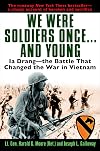
War is awesome and terrible, and so is We Were Soldier's Once... and Young. One of the blurbs calls this book a monument to the men of the 1/7th Cavalry, and I can think of no better way to describe this book. Opening with a sepia toned reminiscence of the development of Air Mobile tactics and helicopter warfare, the story moves soon enough to Vietnam, where the proud soldiers of the air cavalry would face their greatest test.
Intelligence suggested Viet Cong forces in the Ia Drang valley, show more but nothing could have prepared the 1/7 for landing almost on top of an North Vietnamese Army base area and 2000 soldiers. For a fraught 24 hours, Colonel Moore brought in more troops, called down a withering cordon of fire support, staved off a crushing dawn offensive, and rescued the 'lost platoon' which had become separated in the opening moments of the battle. The second half focuses on the battle of LZ Albany, and the terrible mauling that the 2/7 Cav took leaving the area the following day.
Colonel Moore is a born leader, and this book provides a close up portrait of the kind of selfless dedication and love that men in combat deserve. But while Moore's voice is dominant, he is not alone. Oral histories from hundreds of Ia Drang veterans, including the Vietnamese commanders, rounds out the story of this desperate combat.
I've often said that Vietnam was fractally fucked up, and Ia Drang is a perfect example of that. In the 34 day campaign the Cavalry inflicted a 10:1 kill ratio on the NVA. However, Ia Drang remained Indian Country and the most of the NVA units involved in the battle survived to escape into Cambodia. A well-led American unit with sufficient fire support was essentially invincible in defense, but even a momentary lapse in focus could prove fatal, such as what happened to the 2/7 at Albany. While both sides had the capacity to regenerate their units, in many ways the finely-tuned high morale 7th Cavalry that went into Vietnam could not be sustained by draftees from an increasingly anti-War America. In a microcosm of the whole disaster, hundreds of death notifications were delivered by taxi drivers and Western Union messengers because the Army hadn't realized that families would find the experience traumatic.
This book begins with a list of every American killed during the battle, and that is the ultimate tragedy of war, one repeated throughout the book. [Name] from [Home town] died [in some terrible way]. To compress a life into that brief sentence; to compress hundreds and thousands of lives into that sentence.
Never start a war. show less
Intelligence suggested Viet Cong forces in the Ia Drang valley, show more but nothing could have prepared the 1/7 for landing almost on top of an North Vietnamese Army base area and 2000 soldiers. For a fraught 24 hours, Colonel Moore brought in more troops, called down a withering cordon of fire support, staved off a crushing dawn offensive, and rescued the 'lost platoon' which had become separated in the opening moments of the battle. The second half focuses on the battle of LZ Albany, and the terrible mauling that the 2/7 Cav took leaving the area the following day.
Colonel Moore is a born leader, and this book provides a close up portrait of the kind of selfless dedication and love that men in combat deserve. But while Moore's voice is dominant, he is not alone. Oral histories from hundreds of Ia Drang veterans, including the Vietnamese commanders, rounds out the story of this desperate combat.
I've often said that Vietnam was fractally fucked up, and Ia Drang is a perfect example of that. In the 34 day campaign the Cavalry inflicted a 10:1 kill ratio on the NVA. However, Ia Drang remained Indian Country and the most of the NVA units involved in the battle survived to escape into Cambodia. A well-led American unit with sufficient fire support was essentially invincible in defense, but even a momentary lapse in focus could prove fatal, such as what happened to the 2/7 at Albany. While both sides had the capacity to regenerate their units, in many ways the finely-tuned high morale 7th Cavalry that went into Vietnam could not be sustained by draftees from an increasingly anti-War America. In a microcosm of the whole disaster, hundreds of death notifications were delivered by taxi drivers and Western Union messengers because the Army hadn't realized that families would find the experience traumatic.
This book begins with a list of every American killed during the battle, and that is the ultimate tragedy of war, one repeated throughout the book. [Name] from [Home town] died [in some terrible way]. To compress a life into that brief sentence; to compress hundreds and thousands of lives into that sentence.
Never start a war. show less
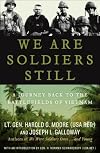
This is the follow up to Moore and Galloway’s We Were Soldiers Once…and Young. The original book, for those who have not read it, documents the battles of the Ia Drang valley in 1965, in which Moore commanded the 1st Battalion of the 7th Cavalry Regiment. The more recent book discusses Moore and Galloway’s trips to Vietnam while researching the original book. Moore had the opportunity to meet the men who had commanded the North Vietnamese forces in the Ia Drang valley and found that show more they had much in common. Moore believes the U.S. ultimately failed in Vietnam because we did not understand the nationalist nature of the forces we were fighting; if we had focused on this rather then on their communism we probably would not have been involved in the war. I am not sure I entirely agree with Moore but he does make good points. The most important aspect of the book is that it provides a rare look at the North Vietnamese point of view. At a meeting between American and Vietnamese veterans of Ia Drang, an American who had been a machine gunner explained to a Vietnamese colonel where he was during the battle, upon hearing this the colonel replied, “You and your machine gun killed my battalion. Four hundred men. You killed my best friend.” Moore and Galloway put a face on the faceless enemy.
If that’s not enough to get you to read the book, throw in a couple of meetings with Vo Nguyen Giap, a visit to Dien Bien Phu, and an overwhelming tribute to Rick Rescorla who survived the Ia Drang but not the World Trade Center. One of the best books I’ve read in a long time. show less
If that’s not enough to get you to read the book, throw in a couple of meetings with Vo Nguyen Giap, a visit to Dien Bien Phu, and an overwhelming tribute to Rick Rescorla who survived the Ia Drang but not the World Trade Center. One of the best books I’ve read in a long time. show less
We Were Soldiers Once...and Young: Ia Drang - The Battle That Changed the War in Vietnam by Harold G. Moore
November 1965 and US and North Vietnamese forces looking to try each other's military tactics find each other in an encounter battle at the Battle of Ia Drang. the book's litany of American casualties in the close battle is detailed and necessarily numerous. Somehow this succeeds at being both affecting and wearisome. extensive first-hand accounts, including from the opposing side, personalizes this detailed account, including extensive after action notes. this includes descriptions of show more families receiving KIA notices delivered at the time by taxis. show less
We were Soldiers Once...And Young: Ia Drang--The Battle That Changed The War In Vietnam by Harold G. Moore
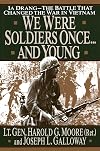
This book made the war in Vietnam present again, 45 years later. The best account I have ever read of a battle from the point of view of the men who fought it, backed up with some of the larger details that give context. Moore didn't say as much as he could have, but if you know a bit about the history of the Vietnam War you can fill in the gaps with what he does say. Many of the things the military does today are based on lessons learned from this battle, and others like it.
One of the show more blurbers described this book as eye-stinging. I can't think of a better word for my emotional reaction. The citizen soldiers who fought at LZ X-Ray and LZ Albany displayed incredible courage and grit. I was struck by the difference between this book and books of the wars in Iraq and Afghanistan. The military that fights in the sandbox today is very different than that of the Vietnam War. Many of today's shooters are professionals, career military men who provide structure to an all-volunteer force that is increasingly disengaged with wider society.
Moore's men were a combination of conscripts and volunteers, but they were the best of citizen soldiers, non-professionals who shouldered a tough job for a short time in solidarity with their countrymen. One of the best parts of the book is Moore and Galloway's homage "Where have all the young men gone?". They tracked down as many of the men who fought at Ia Drang as possible, and told their stories after the battle. These were men from every walk of life, so the impact of their lives and deaths was diffused throughout society. This was the last great hurrah of the citizen soldier, and he fought damn well. show less
One of the show more blurbers described this book as eye-stinging. I can't think of a better word for my emotional reaction. The citizen soldiers who fought at LZ X-Ray and LZ Albany displayed incredible courage and grit. I was struck by the difference between this book and books of the wars in Iraq and Afghanistan. The military that fights in the sandbox today is very different than that of the Vietnam War. Many of today's shooters are professionals, career military men who provide structure to an all-volunteer force that is increasingly disengaged with wider society.
Moore's men were a combination of conscripts and volunteers, but they were the best of citizen soldiers, non-professionals who shouldered a tough job for a short time in solidarity with their countrymen. One of the best parts of the book is Moore and Galloway's homage "Where have all the young men gone?". They tracked down as many of the men who fought at Ia Drang as possible, and told their stories after the battle. These were men from every walk of life, so the impact of their lives and deaths was diffused throughout society. This was the last great hurrah of the citizen soldier, and he fought damn well. show less
Lists
Awards


You May Also Like


Associated Authors
Statistics
- Works
- 4
- Members
- 3,161
- Popularity
- #8,080
- Rating
- 4.1
- Reviews
- 42
- ISBNs
- 54
- Languages
- 3