
Angela Young
Author of Speaking of Love
About the Author
Image credit: author photograph (c) Jamie Lumley
http://www.jamielumley.com
Works by Angela Young
Associated Works
Tagged
Common Knowledge
- Canonical name
- Young, Angela
- Gender
- female
Members
Reviews
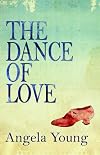
The Dance of Love is historical fiction set at the turn of the twentieth century between 1899 and 1919. It is outstanding and I loved it so much. At times as I read it I could hardly see the pages through my tears – and there have not been many books that have that effect on me. It’s a brilliant book, both a heart-rending love story and a dramatic story too, as the sinking of the Titanic in 1912 and the devastating and tragic effects of the First World War impact on the characters’ show more lives.
It’s the story of Natalie, the daughter of Sir Thomas Edwardes, a wealthy business man, a self-made man who is socially unsure of himself, but who wants his daughter to be accepted into society. It begins in 1899, a period when young ladies were presented at Court for the London Season, an opportunity to meet their future husbands. Natalie’s friends, the daughters of Lady Bridewell, are looking forward to the London Season. But Natalie has little desire to be presented at Court, relishing the idea that she would be free to live without such restraints and marry for love, someone who will care for her for herself, not because of her family connections. However, she falls in with her father’s wishes and when she meets a handsome artist-soldier, Lieutenant Haffie, it seems her wish for a happy marriage will come true.
What I really liked about this book is the way historical background is seamlessly interwoven with the narrative and how it captures the changes in society as the years went by. Natalie grows from a young, impulsive teenager with passion for romance and dancing into a responsible young woman whose hopes for a happy marriage are in the balance. The portrait of the Edwardian upper classes, with their lavish life style, glittering balls and all their extravagances is fascinating, contrasting with the enormous changes in society as the War takes its effect.
I liked all the details about paintings as Haffie shows his work to Natalie – Angela Young’s beautiful descriptions draw such vivid full colour images that I could easily visualise the paintings, which Natalie says are ‘mysteries made of light.’ And her portrayal of the settings, whether in London, Devon or the Scottish Highlands are just as vivid, making this a richly descriptive book.
But it is the effect of the War and the effect on the families of those people travelling across the Atlantic on the Titanic that really brought home to me the whole human tragedy that people lived through, much more than any historical account has done. I think it’s seeing these events through the eyes of the people left at home that has the most impact. show less
It’s the story of Natalie, the daughter of Sir Thomas Edwardes, a wealthy business man, a self-made man who is socially unsure of himself, but who wants his daughter to be accepted into society. It begins in 1899, a period when young ladies were presented at Court for the London Season, an opportunity to meet their future husbands. Natalie’s friends, the daughters of Lady Bridewell, are looking forward to the London Season. But Natalie has little desire to be presented at Court, relishing the idea that she would be free to live without such restraints and marry for love, someone who will care for her for herself, not because of her family connections. However, she falls in with her father’s wishes and when she meets a handsome artist-soldier, Lieutenant Haffie, it seems her wish for a happy marriage will come true.
What I really liked about this book is the way historical background is seamlessly interwoven with the narrative and how it captures the changes in society as the years went by. Natalie grows from a young, impulsive teenager with passion for romance and dancing into a responsible young woman whose hopes for a happy marriage are in the balance. The portrait of the Edwardian upper classes, with their lavish life style, glittering balls and all their extravagances is fascinating, contrasting with the enormous changes in society as the War takes its effect.
I liked all the details about paintings as Haffie shows his work to Natalie – Angela Young’s beautiful descriptions draw such vivid full colour images that I could easily visualise the paintings, which Natalie says are ‘mysteries made of light.’ And her portrayal of the settings, whether in London, Devon or the Scottish Highlands are just as vivid, making this a richly descriptive book.
But it is the effect of the War and the effect on the families of those people travelling across the Atlantic on the Titanic that really brought home to me the whole human tragedy that people lived through, much more than any historical account has done. I think it’s seeing these events through the eyes of the people left at home that has the most impact. show less
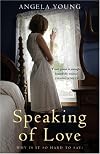
Angela Young's book was actually in the running for the 2008 Spread the Word: Books to Talk About award. There were over 100 books voted on as part of the UK World Book Day celebration, and Speaking of Love made the Top Ten, which is pretty impressive. There's good reason that the book made it that far, and I know we have more to look forward to from Angela Young.
The book is told from the points of view of the three main characters -- Iris, Vivie, and Matthew. Normally, it's pretty rare for show more me to really enjoy a book told from multiple viewpoints. Inevitably, I'll love the voice of one of the characters and never really like the others. I'll find myself skimming quickly through those portions of the book to get back to the character that I actually care something about. In this case, Angela Young manages to fully flesh out all three characters. I came to care about all three and wanted to know how each of them felt. I never found myself hurrying through one character's chapter to get to the next. In fact, I don't think the book would have worked nearly as well having been told from only one point of view. That being said, I do think the first part of the book starts slowly. The author give us tiny glimpses into the lives of each of the characters without filling in any of the details. At first, this was a little frustrating for me. I wanted to know NOW! Yes, I know I have a problem with patience. However, the author did a masterful job of giving the reader just the right amount of information. As the book continues, the pace seems to quicken as you begin to put the pieces together. By the third section of the book, the chapters even become shorter, which adds to the sense of building anticipation. It's hard to imagine when you start this book to see how everything will come together in the end. But, Young does an amazing job of typing up the loose ends and bringing the story together in an honest, realistic way.
O.K., now for the story, which is a little harder to describe without giving away too much. As I said, the three main characters are Iris, Vivie and Matthew. Iris is Vivie's mother, and Matthew is Vivie's childhood friend. There's a complicated set of circumstances, which all come together nicely in the end. However, it's a wee bit rough getting there. Iris loses her mother at an early age, and her father refuses to let her talk about her or mourn for her. Iris finds comfort in her books and the stories that her mother had told her. Iris becomes estranged from her father after meeting a poet and moving in with him. They have a child together -- Vivie. Circumstances begin to repeat themselves and Vivie becomes estranged from Iris. Matthew grew up next door to Vivie and is her best friend. He fell in love with her, but never tells her and she marries someone else. The book is about the power of love and how devastating it can be when the words, "I love you" are never spoken. The power of words and storytelling is also a major theme in the book. Iris is a storyteller just as her mother was before her. Vivie's father, Kit, is a poet. Vivie works in a public relations firm writing copy for advertisements. The author separates the four sections of the book with a story that somehow relates to the book. The book also deals with another very serious subject, schizophrenia. The author delves into how mental illness affects the friends and family members of the person with the disease.
I really didn't want this one to end. Like I said earlier, it was a little slow to start with, but the author does this purposefully to build the tension and set the stage for what's to come. It wouldn't have been as powerful had she simply told the story in a straightforward manner. Instead she gives the reader pieces of the puzzle, small at first, to piece together. The more you read, the bigger the pieces get and the more you begin to understand the characters and the choices that they make. This one is highly recommended, and be on the look out because you will hear more from Angela Young. show less
The book is told from the points of view of the three main characters -- Iris, Vivie, and Matthew. Normally, it's pretty rare for show more me to really enjoy a book told from multiple viewpoints. Inevitably, I'll love the voice of one of the characters and never really like the others. I'll find myself skimming quickly through those portions of the book to get back to the character that I actually care something about. In this case, Angela Young manages to fully flesh out all three characters. I came to care about all three and wanted to know how each of them felt. I never found myself hurrying through one character's chapter to get to the next. In fact, I don't think the book would have worked nearly as well having been told from only one point of view. That being said, I do think the first part of the book starts slowly. The author give us tiny glimpses into the lives of each of the characters without filling in any of the details. At first, this was a little frustrating for me. I wanted to know NOW! Yes, I know I have a problem with patience. However, the author did a masterful job of giving the reader just the right amount of information. As the book continues, the pace seems to quicken as you begin to put the pieces together. By the third section of the book, the chapters even become shorter, which adds to the sense of building anticipation. It's hard to imagine when you start this book to see how everything will come together in the end. But, Young does an amazing job of typing up the loose ends and bringing the story together in an honest, realistic way.
O.K., now for the story, which is a little harder to describe without giving away too much. As I said, the three main characters are Iris, Vivie and Matthew. Iris is Vivie's mother, and Matthew is Vivie's childhood friend. There's a complicated set of circumstances, which all come together nicely in the end. However, it's a wee bit rough getting there. Iris loses her mother at an early age, and her father refuses to let her talk about her or mourn for her. Iris finds comfort in her books and the stories that her mother had told her. Iris becomes estranged from her father after meeting a poet and moving in with him. They have a child together -- Vivie. Circumstances begin to repeat themselves and Vivie becomes estranged from Iris. Matthew grew up next door to Vivie and is her best friend. He fell in love with her, but never tells her and she marries someone else. The book is about the power of love and how devastating it can be when the words, "I love you" are never spoken. The power of words and storytelling is also a major theme in the book. Iris is a storyteller just as her mother was before her. Vivie's father, Kit, is a poet. Vivie works in a public relations firm writing copy for advertisements. The author separates the four sections of the book with a story that somehow relates to the book. The book also deals with another very serious subject, schizophrenia. The author delves into how mental illness affects the friends and family members of the person with the disease.
I really didn't want this one to end. Like I said earlier, it was a little slow to start with, but the author does this purposefully to build the tension and set the stage for what's to come. It wouldn't have been as powerful had she simply told the story in a straightforward manner. Instead she gives the reader pieces of the puzzle, small at first, to piece together. The more you read, the bigger the pieces get and the more you begin to understand the characters and the choices that they make. This one is highly recommended, and be on the look out because you will hear more from Angela Young. show less
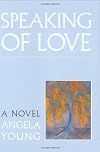
This is a lovely book with three central characters; its chapters alternate between their three voices over the course of a long weekend and in flashback.
When her mother died Iris' father refused to ever talk about her again; Iris' daughter Vivie hasn't talked to her mother for ten years, (after committing her to an asylum for treatment for a schizophenic episode); and the boy-next-door Matthew wishes he'd told Vivie he loved her - then she wouldn't have married Charles. Their relationships show more are bound together by not talking, and the events of the weekend to come are to break those chains and bring them together again.
Iris is now well and has become a master storyteller in the oral tradition. Matthew is taking his dad to see Iris in action at a Welsh castle. Vivie has realised she doesn't want Charles' baby.
This novel is a slow burner; the story unfolds at a gentle pace, and it won't be spoiling the plot to tell you it ends up happily ever after.
Running through the novel are Iris' stories - fairy-tales and fables with a strong moral purpose and made for reading aloud.
This is an extremely accomplished first novel, highly recommended. show less
When her mother died Iris' father refused to ever talk about her again; Iris' daughter Vivie hasn't talked to her mother for ten years, (after committing her to an asylum for treatment for a schizophenic episode); and the boy-next-door Matthew wishes he'd told Vivie he loved her - then she wouldn't have married Charles. Their relationships show more are bound together by not talking, and the events of the weekend to come are to break those chains and bring them together again.
Iris is now well and has become a master storyteller in the oral tradition. Matthew is taking his dad to see Iris in action at a Welsh castle. Vivie has realised she doesn't want Charles' baby.
This novel is a slow burner; the story unfolds at a gentle pace, and it won't be spoiling the plot to tell you it ends up happily ever after.
Running through the novel are Iris' stories - fairy-tales and fables with a strong moral purpose and made for reading aloud.
This is an extremely accomplished first novel, highly recommended. show less
Such a lovely presented book as the hardback - it has a delightful book mark attached and I really liked the picture on the front. A pleasure to read, the book throws into questions what happens when we don't tell those closest to us how we feel. There are three narrators: Vivie, Iris and Matthew; with other characters involved along the way. Vivie and Matthew grew up next door to each other and Iris is Vivie's mother. The other characters include husbands, fathers and friends.
The book show more centres around mental illness and the impact that can have on families. Treatment and care is explored and how other people relate to those that are ill. Story telling is the biggest part of the novel with Iris having been told stories when she was a little girl and carrying the tradition on.
I came across this book through the World Book Day website and was very lucky to have been able to discuss (along with my reading group) issues raised in the novel with the author herself. It was a joy to read and I sincerely hope Angela Young goes on to write another novel.
It is well-written and once I'd settled into the flashbacks I was in for a great read. It should have a wide appeal as it covers a range of themes from love, trust, to family life, to mental illness. Something in there for a lot of different people. You may have a lump in your throat and a tear in your eye by the end. show less
The book show more centres around mental illness and the impact that can have on families. Treatment and care is explored and how other people relate to those that are ill. Story telling is the biggest part of the novel with Iris having been told stories when she was a little girl and carrying the tradition on.
I came across this book through the World Book Day website and was very lucky to have been able to discuss (along with my reading group) issues raised in the novel with the author herself. It was a joy to read and I sincerely hope Angela Young goes on to write another novel.
It is well-written and once I'd settled into the flashbacks I was in for a great read. It should have a wide appeal as it covers a range of themes from love, trust, to family life, to mental illness. Something in there for a lot of different people. You may have a lump in your throat and a tear in your eye by the end. show less
You May Also Like
Associated Authors
Statistics
- Works
- 4
- Also by
- 1
- Members
- 55
- Popularity
- #295,339
- Rating
- 3.8
- Reviews
- 4
- ISBNs
- 7
- Favorited
- 1
