
Nicole Georges
Author of Calling Dr. Laura: A Graphic Memoir
About the Author
Series
Works by Nicole Georges
Invincible Summer #11 / Clutch #17 10 copies
Invincible Summer #13 3 copies
Invincible summer #21/clutch #24 3 copies
Anonymous Fuzzball 2 copies
Invincible Summer #5 1 copy
Invincible Summer #8 1 copy
La peinture des vases grecs 1 copy
Associated Works
It's So You: 35 Women Write About Personal Expression Through Fashion and Style (2007) — Contributor — 56 copies, 2 reviews
Tagged
Common Knowledge
- Birthdate
- 1981
- Gender
- female
- Short biography
- Nicole J. Georges is a professor, writer, and illustrator who has been publishing her own zines and comics for twenty years. She lives in Portland, Oregon, and Los Angeles, California.
- Nationality
- USA
- Places of residence
- Kansas City, Missouri, USA
Portland, Oregon, USA
Los Angeles, California, USA - Associated Place (for map)
- USA
Members
Reviews
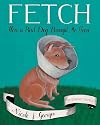
oh h*ck.
(Full disclosure: I received a free copy of this book for review. Trigger warning for allusions to rape, child abuse, domestic violence, animal abuse, alcoholism, self-harm, and suicidal ideation.)
I first discovered Nicole Georges's artwork nestled within the pages of Bitch Magazine. Instantaneously smitten, my adoration only grew when I learned that Georges was a vegan who referred to her furry sidekick Beija as her "canine life partner." Her 2010 Invincible Summer Queer Animal show more Odyssey calendar still rests in the plastic protective covering it arrived in. (Don't worry, I take it out every once in awhile for much-deserved admiration.) I enjoyed her debut graphic novel, Invincible Summer: An Anthology, well enough, though haven't quite gotten around to reading Calling Dr. Laura. Even so, I can say with 99.9% certainty that Fetch: How a Bad Dog Brought Me Home is her best work yet.
For my Noodle, Mags.
------------------------------
At the tender age of sixteen, Georges adopted a dog as a gift for her then-boyfriend and first love, Tom. The ensuing back-and-forth demonstrates why you should never give a dog as a gift: despite clearing it ahead of time with Tom's mother, Tom's stepfather did not sign off on the deal. Nicole's mom reluctantly allowed her to keep the dog, but Beija's many behavioral problems quickly wore her patience thin.
Beija harbored an intense dislike/fear of men, children, and veterinarians; did not enjoy being picked up or touched on her sides; did not suffer invasions of space lightly; and frequently antagonized/was victimized by other dogs. She was temperamental and required patience, compassion, and understanding - much like her new human.
And so, in a situation so weird and improbable that it seems like the plot of a bad Fox sitcom, you have both sets of parents conspiring to push their teenagers out of the nest and into a seedy apartment, just so they could have a Beija-free home: "Starting now, this gift would change the course of both our lives. [...] All of this in order to keep the dog. As if we'd had a teen pregnancy."
While Nicole's relationship with Tom would soon implode, her partnership with Bejia proved to be for keeps. Through unhealthy relationships, annoying roommates, professional upheavals, and the trials and tribulations of growing up and discovering oneself, there was one constant in Nicole life. And if she just so happened to have four legs, a soft tummy, and spoke in a series of barks, whimpers, and tail wags, so what? Family is what you make of it.
Fetch is Rennie-approved.
------------------------------
Most of the blurbs I've read so far focus on the coming-of-age aspect of Fetch (e.g., it's not "just" a book about a dog). And while it is indeed that - after all, at the time of her death, Beija had lived with Nicole for almost exactly half of Nicole's life - to me Fetch is, above all else, a love letter to and everlasting celebration of a best friend. A soul mate. A patronus, to quote Georges. (A daemon, in my vocab.) The dogs, they will always come first. PRIORITIES.
There's this one Mutts comic I love: It's a lovely day, and Ozzie is walking Earl on a long leash. A little heart bobs in a thought bubble above the human's head. To the right is a quote by one W.R. Purche: "Everyone thinks they have the best dog. And none of them are wrong."
To borrow a phrase from an online friend (Marji Beach, who works at another awesome animal sanctuary called Animal Place), it's clear that Nicole considers Beija the best worst dog ever. Their love for one another shines through every panel and page, making the inevitable goodbye that much more heartbreaking. It took me a full week to read the book, just because I couldn't bear to face the last forty pages.
I think it's safe to say that beauty is in the eye of the beholder, especially when it comes to Fetch, and animal lovers will take something a little extra special away from their experience. When I say "animal lovers," I mean both in the conventional sense - i.e., those who care for culturally appropriate animals, such as dogs, cats, horses, and rabbits - as well as those of use who extend that circle of compassion to all nonhumans. There are precious few comic books that I could call overtly vegan - only two come to mind, namely Matt Miner's Liberator and The Animal Man by Grant Morrison - and I'm happy to add Fetch to the list. While Georges only drops the v*-word (vegetarian or vegan) a handful of times, she does introduce readers to animal rights issues in a gentle, subtle way. If you're not on the lookout (and I always am!), you might just miss it.
Though all the better to sneak into your subconscious, worming and niggling and prodding you to think about the face on your plate or the skin on your back ... to see them as someones rather than somethings, more alike than different from the dog snuggled up next to you or fast asleep at your feet.
Full disclosure: In between bites of spider trappings, Rennie assisted me in writing this review.
------------------------------
I especially loved Bejia's manifesto, "I am not a stuffed animal," which surreptitiously introduces readers to the idea of intersectionality: "It's kind of like feminism, but for dogs." That line (along with countless others) literally had me squealing for joy. Little Beija-Boo - is she a shar pei-doxy mix? corgi and beagle? who knows! - is adorable and tubby, even as she's telling you to back the fuck off.
I could go on and on - about the many weird parallels between Georges's life and mine; about how I see pieces of Bejia in my own dogs; about the many ways, both large and small, that my loved ones and I have adapted our everyday routines and very existences to better accommodate our four-legged family members - but suffice it to say that Fetch is a must-read for anyone who's ever loved (and lost) a dog (though you may want to wait until the loss isn't quite so fresh - the ending is freaking brutal).
Ditto: anyone who just likes good storytelling or quirky artwork. I know I've focused on the nonhumans for most of my review - hey, that's how I do - but even those rare scenes sans doggos are beautifully rendered and engaging.
In summary: Fetch is easily my favorite book of 2017 thus far, graphic novel or no.
Aaaaand just in case the previous 1,000 words didn't convince you, here are a few of my favorite panels to help seal the deal.
(That last one? So charming that it displaced foster doggy as the background on my desktop. Temporarily, but still.)
http://www.easyvegan.info/2017/07/18/fetch-by-nicole-j-georges/ show less
(Full disclosure: I received a free copy of this book for review. Trigger warning for allusions to rape, child abuse, domestic violence, animal abuse, alcoholism, self-harm, and suicidal ideation.)
I first discovered Nicole Georges's artwork nestled within the pages of Bitch Magazine. Instantaneously smitten, my adoration only grew when I learned that Georges was a vegan who referred to her furry sidekick Beija as her "canine life partner." Her 2010 Invincible Summer Queer Animal show more Odyssey calendar still rests in the plastic protective covering it arrived in. (Don't worry, I take it out every once in awhile for much-deserved admiration.) I enjoyed her debut graphic novel, Invincible Summer: An Anthology, well enough, though haven't quite gotten around to reading Calling Dr. Laura. Even so, I can say with 99.9% certainty that Fetch: How a Bad Dog Brought Me Home is her best work yet.
For my Noodle, Mags.
------------------------------
At the tender age of sixteen, Georges adopted a dog as a gift for her then-boyfriend and first love, Tom. The ensuing back-and-forth demonstrates why you should never give a dog as a gift: despite clearing it ahead of time with Tom's mother, Tom's stepfather did not sign off on the deal. Nicole's mom reluctantly allowed her to keep the dog, but Beija's many behavioral problems quickly wore her patience thin.
Beija harbored an intense dislike/fear of men, children, and veterinarians; did not enjoy being picked up or touched on her sides; did not suffer invasions of space lightly; and frequently antagonized/was victimized by other dogs. She was temperamental and required patience, compassion, and understanding - much like her new human.
And so, in a situation so weird and improbable that it seems like the plot of a bad Fox sitcom, you have both sets of parents conspiring to push their teenagers out of the nest and into a seedy apartment, just so they could have a Beija-free home: "Starting now, this gift would change the course of both our lives. [...] All of this in order to keep the dog. As if we'd had a teen pregnancy."
While Nicole's relationship with Tom would soon implode, her partnership with Bejia proved to be for keeps. Through unhealthy relationships, annoying roommates, professional upheavals, and the trials and tribulations of growing up and discovering oneself, there was one constant in Nicole life. And if she just so happened to have four legs, a soft tummy, and spoke in a series of barks, whimpers, and tail wags, so what? Family is what you make of it.
Fetch is Rennie-approved.
------------------------------
Most of the blurbs I've read so far focus on the coming-of-age aspect of Fetch (e.g., it's not "just" a book about a dog). And while it is indeed that - after all, at the time of her death, Beija had lived with Nicole for almost exactly half of Nicole's life - to me Fetch is, above all else, a love letter to and everlasting celebration of a best friend. A soul mate. A patronus, to quote Georges. (A daemon, in my vocab.) The dogs, they will always come first. PRIORITIES.
There's this one Mutts comic I love: It's a lovely day, and Ozzie is walking Earl on a long leash. A little heart bobs in a thought bubble above the human's head. To the right is a quote by one W.R. Purche: "Everyone thinks they have the best dog. And none of them are wrong."
To borrow a phrase from an online friend (Marji Beach, who works at another awesome animal sanctuary called Animal Place), it's clear that Nicole considers Beija the best worst dog ever. Their love for one another shines through every panel and page, making the inevitable goodbye that much more heartbreaking. It took me a full week to read the book, just because I couldn't bear to face the last forty pages.
I think it's safe to say that beauty is in the eye of the beholder, especially when it comes to Fetch, and animal lovers will take something a little extra special away from their experience. When I say "animal lovers," I mean both in the conventional sense - i.e., those who care for culturally appropriate animals, such as dogs, cats, horses, and rabbits - as well as those of use who extend that circle of compassion to all nonhumans. There are precious few comic books that I could call overtly vegan - only two come to mind, namely Matt Miner's Liberator and The Animal Man by Grant Morrison - and I'm happy to add Fetch to the list. While Georges only drops the v*-word (vegetarian or vegan) a handful of times, she does introduce readers to animal rights issues in a gentle, subtle way. If you're not on the lookout (and I always am!), you might just miss it.
Though all the better to sneak into your subconscious, worming and niggling and prodding you to think about the face on your plate or the skin on your back ... to see them as someones rather than somethings, more alike than different from the dog snuggled up next to you or fast asleep at your feet.
Full disclosure: In between bites of spider trappings, Rennie assisted me in writing this review.
------------------------------
I especially loved Bejia's manifesto, "I am not a stuffed animal," which surreptitiously introduces readers to the idea of intersectionality: "It's kind of like feminism, but for dogs." That line (along with countless others) literally had me squealing for joy. Little Beija-Boo - is she a shar pei-doxy mix? corgi and beagle? who knows! - is adorable and tubby, even as she's telling you to back the fuck off.
I could go on and on - about the many weird parallels between Georges's life and mine; about how I see pieces of Bejia in my own dogs; about the many ways, both large and small, that my loved ones and I have adapted our everyday routines and very existences to better accommodate our four-legged family members - but suffice it to say that Fetch is a must-read for anyone who's ever loved (and lost) a dog (though you may want to wait until the loss isn't quite so fresh - the ending is freaking brutal).
Ditto: anyone who just likes good storytelling or quirky artwork. I know I've focused on the nonhumans for most of my review - hey, that's how I do - but even those rare scenes sans doggos are beautifully rendered and engaging.
In summary: Fetch is easily my favorite book of 2017 thus far, graphic novel or no.
Aaaaand just in case the previous 1,000 words didn't convince you, here are a few of my favorite panels to help seal the deal.
(That last one? So charming that it displaced foster doggy as the background on my desktop. Temporarily, but still.)
http://www.easyvegan.info/2017/07/18/fetch-by-nicole-j-georges/ show less
I've been a fan of Georges for a couple of years now -- I discovered her Invincible Summer zine shortly after moving to Portland and devoured issue after issue -- so I was PSYCHED when I heard this book was coming out. Even so, I wasn't prepared for how engrossing the story is. I picked this up last night to read a dozen pages or so and wound up poring through the whole book in one epic sitting. The artwork is smart and endearing (the switch between childhood and adulthood is very cleverly show more handled); the portrayal of Portland culture is charming without resorting to cliché; the characters are nuanced and mostly well rounded. In some places, I wanted more information -- and more judgment -- about her parents and sisters and the complicated, often twisted family dynamic Georges grew up in, but I also appreciate the careful distance Georges keeps from those kinds of judgmental portrayals. I also wonder why the codas and the epilogue weren't more seamlessly worked into the narrative, but I certainly appreciate them for the closure they provide, and I like the direct address to the reader in the first coda. Overall, it's a stunning graphic memoir that takes my appreciation of Georges's work to a whole new level. show less
This is a vibrant memoir, full of wit, pathos, and beautiful art. The art style conveys the emotional content perfectly. To me, this was about healing from a turbulent childhood. Along the way, Nicole reflects on personal information and secrets, and this seemed to also be a reflection on the author/reader relationship. When it comes down to it, this was so full of heart and I loved it!
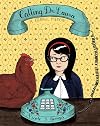
Like David Smalls in Stitches, Nicole George has grown up in a family that has kept a major secret from her: her mother told Nicole that her dad, David, was dead. The rest of the family, including Nicole's two older half-sisters, kept the secret for years, until one day Nicole's friend Verona ("She is a good kisser....She changed my life for one year") takes her to a palm reader for her birthday, and the psychic tells Nicole that her father is still alive.
Still, Nicole doesn't confront her show more family right away, and doesn't immediately seek out her father. She dates and then moves in with a girl called Radar; Radar is jealous of Nicole's friendships with other girls, including Verona, so she sees less of them. Nicole and Radar live happily together for a while with their "menagerie" of dogs and backyard chickens, making art and music, but eventually Nicole does find out the truth - or part of it - from one of her sisters.
Calling Dr. Laura is two parallel stories: that of Nicole's relationship with Radar, and that of her relationship with her family. (She does actually call Dr. Laura for guidance, but the helpfulness of her advice is limited.) The outcome, in the epilogue, is an abrupt coda, sad but fitting.
The artwork is good, probably better than I can appreciate - I don't read many graphic novels and have a bad habit of focusing on the text rather than the illustrations. I especially liked on p. 170 where, in a fight with her mother, Nicole becomes a hedgehog while her mother becomes a lion. Dialogue, whether spoken or thought, is in normal case, and narration and captions are in upper case and/or cursive.
"Sometimes it feels much easier to bare intensely personal information with a stranger than to tell your real friends. It's like skipping the bases of small talk and stealing home. You don't have to be emotionally accountable, because they don't know you." (p. 55) show less
Still, Nicole doesn't confront her show more family right away, and doesn't immediately seek out her father. She dates and then moves in with a girl called Radar; Radar is jealous of Nicole's friendships with other girls, including Verona, so she sees less of them. Nicole and Radar live happily together for a while with their "menagerie" of dogs and backyard chickens, making art and music, but eventually Nicole does find out the truth - or part of it - from one of her sisters.
Calling Dr. Laura is two parallel stories: that of Nicole's relationship with Radar, and that of her relationship with her family. (She does actually call Dr. Laura for guidance, but the helpfulness of her advice is limited.) The outcome, in the epilogue, is an abrupt coda, sad but fitting.
The artwork is good, probably better than I can appreciate - I don't read many graphic novels and have a bad habit of focusing on the text rather than the illustrations. I especially liked on p. 170 where, in a fight with her mother, Nicole becomes a hedgehog while her mother becomes a lion. Dialogue, whether spoken or thought, is in normal case, and narration and captions are in upper case and/or cursive.
"Sometimes it feels much easier to bare intensely personal information with a stranger than to tell your real friends. It's like skipping the bases of small talk and stealing home. You don't have to be emotionally accountable, because they don't know you." (p. 55) show less
Lists
Awards


You May Also Like


Associated Authors
Statistics
- Works
- 19
- Also by
- 4
- Members
- 702
- Popularity
- #36,076
- Rating
- 3.8
- Reviews
- 34
- ISBNs
- 12
- Languages
- 2