

Michael Winerip
Author of Adam Canfield of the Slash
Series
Works by Michael Winerip
Associated Works
The Art of Fact: A Historical Anthology of Literary Journalism (1997) — Contributor — 225 copies, 1 review
Tagged
Common Knowledge
Members
Reviews
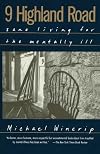
Winerip combines triumph of the spirit with the harsh realities of prejudice. The mentally ill have more than just their sickness to battle. People are afraid of what they do not understand. They make assumptions that all mentally ill are violent, crude, childlike, or sexually deviant. Unlike an obvious injury like a broken leg a schizophrenic or multiple personality disorder cannot wave their affliction in your face and tell you when it will be healed. No one wants the likes of them in show more their neighborhood. In the pages of 9 Highland Road Winerip pulls back the curtain on the political controversies and uncovers the fear-induced prejudices about group homes for the mentally ill. He does not sugarcoat the harsh realities of childhood traumas that are at the core of some patients' initial break with reality: psychological, verbal and physical abuses in the form of violence, rape, incest and torture. What was particularly stunning were the varying degrees of responsibility families accept regarding the wellbeing of their son or daughter. Winerip also touches lightly on the problem of homelessness and delves more deeply into the miracles of modern medicine. show less

Adam Canfield is something of a legend. He's a four-pluser and an all-star reporter for The Slash - the Harris Elementary/Middle School student newspaper. After being convinced by his friend, Jennifer, he finds himself as co-editor of the newspaper. Things start off rocky for Adam, but when third-grade reporter Phoebe accidentally reveals a scandal that will shake the Tremble community...things get interesting.
I've never read a book with so many subplots that tie up perfectly in the end. Not show more even in an adult novel. Michael Winerip managed to keep me glued - somewhat, actually, as it is rather hard to read anything with a newborn around. I wanted to devour this book after things started picking up for Adam. Those of you without newborns rest assured that this book is definitely a page turner.
The characters are beautifully crafted, and Winerip leaves the ending open for a sequel - which there is; two, actually. And while he possibly didn't intend to - but I'm an English major, so I'll draw my conclusions - I love how he carefully placed in the caricature of Fox News (Bolandvision!!!) in there. show less
I've never read a book with so many subplots that tie up perfectly in the end. Not show more even in an adult novel. Michael Winerip managed to keep me glued - somewhat, actually, as it is rather hard to read anything with a newborn around. I wanted to devour this book after things started picking up for Adam. Those of you without newborns rest assured that this book is definitely a page turner.
The characters are beautifully crafted, and Winerip leaves the ending open for a sequel - which there is; two, actually. And while he possibly didn't intend to - but I'm an English major, so I'll draw my conclusions - I love how he carefully placed in the caricature of Fox News (Bolandvision!!!) in there. show less
This book changed my mind about mental health group homes. I'd always thought I'd protest if one opened near me. This book, by a New York Times reporter who spent several years researching, describes the process to get it opened, against organized opposition by neighbors and double crossing politicians. Finally the first residents move in. Then the book follows the lives of several patients who live there. Some get better, some worse, some stay the same. The staff who live on site know their show more clients better than hospital staff who have more patients or patients they don't see as often, and can assess how they're doing on medication and when they might need hospitalization. Patients can ask for voluntary hospitalization when they know they need it.
He makes a convincing case that for many patients such houses are a better treatment option than hospitalization, at a much lower cost, and that they are good neighbors. Many of the people who fought hard to keep it out of their Long Island neighborhood end up supporting it. Other neighbors have no idea it's a group home for people with mental problems.
There's a lot of meticulous reporting about the red tape and general idiocy of public mental health programs. One woman is unable to see a specialist at a reduced rate because it would be $10 more a month than the state doctor - and since there's no alternative, she's kept in a more expensive facility for no good reason. Another patient can't get a new antipsychotic drug because the state hasn't authorized it unless he returns to the hospital where he won't be able to see therapists - the rules say he has to take it with hospital supervision, even though the group home staff will be able to spend more time with him than staff at the hospital.
The author mentions how few such homes exist to support the large population of mental patients. He points out that in the state of New York, there are far more group homes for the retarded than for mental patients. If such patients can live in a group home, some of them will get better and end up saving the state money. This book was written during the 90s and I'm sure if things have changed, it's for the worse. A very interesting book. show less
He makes a convincing case that for many patients such houses are a better treatment option than hospitalization, at a much lower cost, and that they are good neighbors. Many of the people who fought hard to keep it out of their Long Island neighborhood end up supporting it. Other neighbors have no idea it's a group home for people with mental problems.
There's a lot of meticulous reporting about the red tape and general idiocy of public mental health programs. One woman is unable to see a specialist at a reduced rate because it would be $10 more a month than the state doctor - and since there's no alternative, she's kept in a more expensive facility for no good reason. Another patient can't get a new antipsychotic drug because the state hasn't authorized it unless he returns to the hospital where he won't be able to see therapists - the rules say he has to take it with hospital supervision, even though the group home staff will be able to spend more time with him than staff at the hospital.
The author mentions how few such homes exist to support the large population of mental patients. He points out that in the state of New York, there are far more group homes for the retarded than for mental patients. If such patients can live in a group home, some of them will get better and end up saving the state money. This book was written during the 90s and I'm sure if things have changed, it's for the worse. A very interesting book. show less
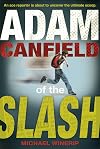
Adam Canfield likes to stay involved–he’s involved in sports, music (the baritone), sundry clubs and quiz bowls, the voluntary/mandatory class to prepare state exams (in which he learns critical skills such as sharpening number 2 pencils). Even though Adam is already quite possibly the most programmed kid ever to walk the halls of Harris Elementary/Middle School, he has agreed to yet another commitment. He has agreed to be co-editor of the Harris paper, the Slash (it doesn’t take much show more coaxing considering that he has a bit of a crush on the other editor, his friend Jennifer).
The Slash has a reputation as a quality school newspaper to uphold, and Adam and Jennifer work hard to print interesting, relevant, and candid articles for and about their community. To accomplish this, they include articles covering everything from an exposé on a seedy law banning “accessory structures” (which includes basketball hoops), to a missing wooden cow reward offer, to a dental smiling contest, to a feature on the school janitor, to a mysterious gift to the school left by a benefactor for “general improvements”.
While all of these articles contribute to the plot, it is the latter story that ends up driving much of the novel’s action and discourse regarding truth, journalistic ethics, local corruption, and the prevarications of the mass media. Adam explains some hard truths of journalism to a young protegé who admires his work: “It’s not your job to write what Phyllis wants…Our job as reporters is to tell the truth as we see it. It has to be backed by facts, but that’s what good newspapers do. That’s why people read newspapers. They trust reporters to be honest about what they see…you are the public’s eyes and ears…” Phyllis and a few of the other adults in the book would have the Slash full of lies. Even as Adam and Jennifer face adult wrath and potential expulsion, they make difficult decisions about truth and compromise.
Winerip does attempt to balance the number of treacherous, nasty adults with the number of truthful, helpful adults. For every Mrs. Marris of his story he includes a Mr. Brooks. Mrs. Marris, the principal, charges them to always be sure to print stories that help “propel the Good Ship Harris forward” and not the kind that “poke holes in our bow, so to speak–bad stories, unhelpful stories, negative stories.”As Adam begins to despair in the face of so much treachery and obfuscation of the truth, his Latin-spouting, World Domination game creating, history teacher Mr. Brooks tells him, “…history certainly teaches us that treachery lurks around every corner. And yet, against all odds, despite every form of human stupidity, we Homo Sapiens are still here.”
While many (nor most, I hope) middle school editors will not be faced with the daunting task of exposing their principals avarice, all editors face decisions about what facts belong in the story and what can be omitted without sacrificing its truth. Adam Canfield of the Slash champions truth. Along the way, Winerip also satirizes the overprogrammed lives of many young people today and the prescribed nature of standardized testing.
For those who are involved in their own school papers or for those who like stories about principled young kids who stand up to and overcome adult deceit, then Adam Canfield of the Slash is a solid choice. Also, for those who like Winerip’s first book, more of Adam’s adventures with the Slash are now available in Adam Canfield, Watch Your Back! (Adam Canfield of the Slash)(2007). show less
The Slash has a reputation as a quality school newspaper to uphold, and Adam and Jennifer work hard to print interesting, relevant, and candid articles for and about their community. To accomplish this, they include articles covering everything from an exposé on a seedy law banning “accessory structures” (which includes basketball hoops), to a missing wooden cow reward offer, to a dental smiling contest, to a feature on the school janitor, to a mysterious gift to the school left by a benefactor for “general improvements”.
While all of these articles contribute to the plot, it is the latter story that ends up driving much of the novel’s action and discourse regarding truth, journalistic ethics, local corruption, and the prevarications of the mass media. Adam explains some hard truths of journalism to a young protegé who admires his work: “It’s not your job to write what Phyllis wants…Our job as reporters is to tell the truth as we see it. It has to be backed by facts, but that’s what good newspapers do. That’s why people read newspapers. They trust reporters to be honest about what they see…you are the public’s eyes and ears…” Phyllis and a few of the other adults in the book would have the Slash full of lies. Even as Adam and Jennifer face adult wrath and potential expulsion, they make difficult decisions about truth and compromise.
Winerip does attempt to balance the number of treacherous, nasty adults with the number of truthful, helpful adults. For every Mrs. Marris of his story he includes a Mr. Brooks. Mrs. Marris, the principal, charges them to always be sure to print stories that help “propel the Good Ship Harris forward” and not the kind that “poke holes in our bow, so to speak–bad stories, unhelpful stories, negative stories.”As Adam begins to despair in the face of so much treachery and obfuscation of the truth, his Latin-spouting, World Domination game creating, history teacher Mr. Brooks tells him, “…history certainly teaches us that treachery lurks around every corner. And yet, against all odds, despite every form of human stupidity, we Homo Sapiens are still here.”
While many (nor most, I hope) middle school editors will not be faced with the daunting task of exposing their principals avarice, all editors face decisions about what facts belong in the story and what can be omitted without sacrificing its truth. Adam Canfield of the Slash champions truth. Along the way, Winerip also satirizes the overprogrammed lives of many young people today and the prescribed nature of standardized testing.
For those who are involved in their own school papers or for those who like stories about principled young kids who stand up to and overcome adult deceit, then Adam Canfield of the Slash is a solid choice. Also, for those who like Winerip’s first book, more of Adam’s adventures with the Slash are now available in Adam Canfield, Watch Your Back! (Adam Canfield of the Slash)(2007). show less
Lists
Awards


You May Also Like


Associated Authors
Statistics
- Works
- 5
- Also by
- 2
- Members
- 644
- Popularity
- #39,180
- Rating
- 3.8
- Reviews
- 25
- ISBNs
- 46