
A grumpy turtle after my own heart.
Reviews made me want to read this but I somehow thought it was going to be a mystery, with someone trying to figure out what happened. Instead, it's a novel with several points of view from different timeframes, including one that gradually tells what happened. So... interesting and disturbing, and definitely suspenseful but not quite what I wanted. Were the characters believable? I guess so. It was entertaining.
I didn't know there was a sequel til I updated GoodReads for the first book, and of course I was intrigued enough to get it from the library. It tells what happened to everybody afterwards, with some prequel stuff to flesh out certain characters. It didn't add a lot and certainly didn't explain why / how the most psychotic character got that way, beyond all the stuff that happened in the first book.
She says she wrote it because of fans writing to ask what happened next, which makes me roll my eyes. I can't blame her for that, but it feels different from if the characters kept coming back to her and wanting her to tell their story. Plus it kind of leaves the door open for the further adventures of the psycho.
She says she wrote it because of fans writing to ask what happened next, which makes me roll my eyes. I can't blame her for that, but it feels different from if the characters kept coming back to her and wanting her to tell their story. Plus it kind of leaves the door open for the further adventures of the psycho.


The Dancing Crocodile is great, otherwise not very special. Black and white drawings.
An interesting fantasy / horror book. The narrators are a troubled man who lives alone in a boarded up house, and a cat who reads the Bible. The man’s young daughter visits, but never stays, and he is obsessed by thoughts of his mother and gods in the woods that he needs to care for. Another point of view is from a woman whose young sister was murdered and never found. She thinks she has identified the killer, and moves into a house on Needless Street where an odd man lives in a boarded up house, prepared to take revenge.
Yes, there’s a big twist, but it's not what makes this good. By the end I cared about all the characters even though I hadn’t been able to tell what was going on.
Yes, there’s a big twist, but it's not what makes this good. By the end I cared about all the characters even though I hadn’t been able to tell what was going on.
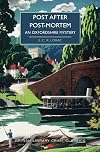
During a gathering of a family of writers and intellectuals, a daughter kills herself. But a few days later a letter arrives making it clear she was happy and had plans for the future. Was it suicide? Inspector MacDonald reopens the case and interviews an interesting cast of characters, many of whom had motives for murder. A pleasant Golden Age mystery from 1936. I’ve read several by this author and appreciate the puzzles and her sly humor.
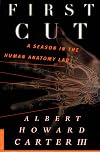
He’s a writer who regretted never going to medical school, so he arranged to audit a first year anatomy class. It’s a combination of scientific descriptions of human anatomy, using medieval illustrations, and his thoughts about the metaphors of the body and observations of the students’ experiences. They start out tentative and become comfortable with the bodies assigned to them, giving them names and speculating about their lives. One is a woman who was 100 when she died.
He describes the disturbing details of how various body parts including genitalia and brains are handled, in a straightforward way. I learned a lot.
He describes the disturbing details of how various body parts including genitalia and brains are handled, in a straightforward way. I learned a lot.
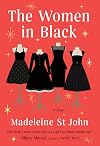
A Facebook friend recommended this, saying that if you liked Miss Pettigrew Lives for a Day, you’ll like this. Since I liked that book very much, I got it from the library. Blurbs by two writers I like a lot, Hilary Mantel and Jane Gardam, were encouraging. I liked it a lot. It’s about a group of women who work in a big department store in Sydney. The main character is Lisa (dropping her original name, Lesley, for the first time) who’s waiting for her exam results and has taken her first job. She’d like to go to university but her father is against it; she and her mother are in cahoots to get around him. At the store she meets the sophisticated Magda, a former displaced person who sells the highest priced gowns. Another saleswoman, Fay, is also taken into Magda’s circle with charming results. A third saleswoman’s joyless marriage undergoes a change. Everything ends in a perfect and believable way.
It’s written in a dry, subtle style with little funny touches. I soon realized I need my own copy and ordered some other novels by St. John.
It’s written in a dry, subtle style with little funny touches. I soon realized I need my own copy and ordered some other novels by St. John.
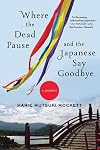
Her father is American, her mother Japanese, and some of the Japanese family have charge of a Buddhist temple 25 miles from the Fukushima nuclear power plant. Mockett visits Japan some time after the disaster, when radiation levels have dropped enough that the family can bury her grandfather. Her American father had also died during that time.
She visits family and temples and has trivial and profound conversations with Zen priests and ordinary Japanese, around death and its rituals. There’s material about some esoteric Buddhism that I’d been curious about. I enjoyed it very much.
She visits family and temples and has trivial and profound conversations with Zen priests and ordinary Japanese, around death and its rituals. There’s material about some esoteric Buddhism that I’d been curious about. I enjoyed it very much.

Review I wrote in 1998 and reread in 2026 when I'm trying to decide whether to keep the book. I don't think I can stand to read this kind of prose any more.
I was crazy about The Bone People. It took me two days to read and many days to think about. I was slightly annoyed because it seemed to be a lot about what Joe needed - he needs Kerewin and Simon. Simon needs both adults too. But I didn't care as much about him as I did about Kerewin (even though her speech mannerisms reminded me of a hated teacher and set my teeth on edge). It wasn't clear to me that Kerewin needed either of them - she liked having them in her life, but she didn't need them. She needed to get back to painting, and she needed solitude. I don't take it as a given that she needed to be reunited with her family.
I was frustrated because the book gave us all these clues about Simon and his identity and history and then didn't do anything with a lot of them. Okay, Simon's father was a heroin addicted wastrel who'd been cut off by his grandfather. Simon was on the boat with his father, who lived and ended up with the Ancestor Joe later encountered, and then he died. Who were the other people on the boat? We are told they aren't related to Simon. I guess the woman was Simon's father's wife.
Had he been abused by his father and the other adults? Who was it whose voice he remembers, doing this?
What was the injury to his hips and pelvis that had put him in the hospital before?
What was the signifigance if any of show more the name "Clare"? It's not the same as his father's name, nor his grandfather's title.
Why didn't he talk?
What is his state at the end of the book? He's being fostered by Kerewin, officially, and Joe and his family are involved. He seems to have his old spunk back but has to use hearing aids now. Will he always be mute?
I didn't quite feel quite happy about the ending. Is everyone living at Kerewin's house? That doesn't seem like something she'd welcome, given what we know about her. I can't believe that she no longer needs solitude.
I didn't buy for a second Kerewin's spontaneous self healing. Joe's accident and healing by the Ancestor seemed much more believeable.
I guess I should be grateful that Joe and Kerewin didn't fall in love and then struggle to help the poor mute boy hesitantly whisper his first words which in the TV version would be "I love you". The fact that they weren't perfect for each other made them real people. But so much was dangled and left.... show less
I was crazy about The Bone People. It took me two days to read and many days to think about. I was slightly annoyed because it seemed to be a lot about what Joe needed - he needs Kerewin and Simon. Simon needs both adults too. But I didn't care as much about him as I did about Kerewin (even though her speech mannerisms reminded me of a hated teacher and set my teeth on edge). It wasn't clear to me that Kerewin needed either of them - she liked having them in her life, but she didn't need them. She needed to get back to painting, and she needed solitude. I don't take it as a given that she needed to be reunited with her family.
I was frustrated because the book gave us all these clues about Simon and his identity and history and then didn't do anything with a lot of them. Okay, Simon's father was a heroin addicted wastrel who'd been cut off by his grandfather. Simon was on the boat with his father, who lived and ended up with the Ancestor Joe later encountered, and then he died. Who were the other people on the boat? We are told they aren't related to Simon. I guess the woman was Simon's father's wife.
Had he been abused by his father and the other adults? Who was it whose voice he remembers, doing this?
What was the injury to his hips and pelvis that had put him in the hospital before?
What was the signifigance if any of show more the name "Clare"? It's not the same as his father's name, nor his grandfather's title.
Why didn't he talk?
What is his state at the end of the book? He's being fostered by Kerewin, officially, and Joe and his family are involved. He seems to have his old spunk back but has to use hearing aids now. Will he always be mute?
I didn't quite feel quite happy about the ending. Is everyone living at Kerewin's house? That doesn't seem like something she'd welcome, given what we know about her. I can't believe that she no longer needs solitude.
I didn't buy for a second Kerewin's spontaneous self healing. Joe's accident and healing by the Ancestor seemed much more believeable.
I guess I should be grateful that Joe and Kerewin didn't fall in love and then struggle to help the poor mute boy hesitantly whisper his first words which in the TV version would be "I love you". The fact that they weren't perfect for each other made them real people. But so much was dangled and left.... show less
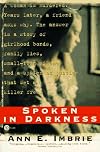
The author learned that Lee, a girl she'd been best friends with in grade school, had since become a drug addict and prostitute and was murdered by a serial killer. She became obsessed with tracing what happened in Lee's life after their friendship waned. She muses on family, mothers and daughters, female sexuality and other things. It's an interesting and odd book. One of her theses is that how women are punished for being too sexual which is probably true, but not something that speaks to me.

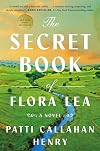
Recommended by a friend and it sounded interesting so I reserved it at the library, but after reading reviews I wasn't so keen. I flipped through it and it looked badly written. About English children but the dialogue didn’t seem at all English. I skimmed enough to get the gist and didn't finish.
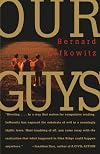
About a town where jocks get away with anything and got away with gang-raping a retarded girl. Fascinating, excellent.
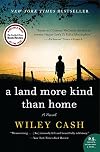
I don't know what to say about this book. It's a tragic story told by multiple voices. All of them feel true and all of their stories are moving and have stayed with me. There's a strong sense of place. (I was actually glad that last year I went on a trip to North Caroline that included a tobacco museum, so I understood what people were talking about when they mentioned burley and the tobacco sheds and other things related to tobacco production.)
I just... I didn't like it despite all that. So many bad choices and angry people. It was a hard read.
I just... I didn't like it despite all that. So many bad choices and angry people. It was a hard read.

The setting is offbeat and interesting, a Portland OR vaudeville theater where she's a seamstress. I like the protagonist. She's plucky but not unrealistic as so many period mystery characters can be, and has an unexpected back story. She gets involved in a mystery when a dancer at the theater is found murdered in one of the tunnels under the city, and teams up with a young reporter. Her back story complicates the plot in realistic ways. A solid and entertaining story, too.
A review compared this novel to William Maxwell's So Long, See You Tomorrow, one of my favorite books. It holds up to the comparison. This is a story of a small town in Canada and its resi¬dents, and their reactions to a terrible crime. Who committed the crime is never a mystery, but the puzzle is why, and how the various threads entwine with each other. Chapters are told by and about different people and their stories connect and branch from the main one. It's about memory and loss, and the minor things in our daily lives that become the things that we remember years later. I immediately re-read it to catch all the connections, and was glad I did.

I read it when she died. I’d seen the movie when I was fourteen, but never read the novel. I think I still didn’t understand it, though.
Novel inspired by the true story of Danish painter Einar Wegener and his California-born wife Gerda. Einar had sex reassignment surgery in 1930 and published a series of essays about her experience in the Danish press. This book explores their marriage, in which Gerda was supportive of her husband in his transition. It’s a very interesting subject, and I thought Ebershoff handled it well. I have a couple of quibbles, like about how every man falls in love with him when he’s dressed as Lili, but aside from that I liked it a lot.

I read another of her novels, The Widow's Children, in 2017 and liked it a lot so I was pleased to find another book by Fox (no relation). Apparently her books had gone out of print but raves by Jonathan Franzen have given them new life.
In this one, the world is falling apart for a New York couple, in various ways.
Funny and smart but I missed something and didn't feel the profound love that others do.
In this one, the world is falling apart for a New York couple, in various ways.
Funny and smart but I missed something and didn't feel the profound love that others do.

Her life gets more interesting in this second volume – she realizes she’s drifting and decides to get serious about acting, gets better roles, and does well in them. Then directing and producing. I always enjoy reading about creative work and the creative process. There’s lots about her and Jack Nicholson (he finds out his “sister” was actually his mother, but she and their mother have both died). She meets sculptor Robert Graham to whom she was happily married until his death in 2008.
Robbins was a journalist in London in the 60s when he was introduced to Brian Desmond Hurst, an elderly Irish gay man described as the "greatest Irish filmmaker ever". If his name isn't familiar, he made thirty films, including the Alastair Sim version of A Christmas Carol (my favorite). He made Irish dramas in the 30s before coming to London. He went on to do propaganda films during the war, including The Lion Has Wings, about the RAF, and continued to work till the early 60s.
But when Robbins met him, he was idle, living on credit, enjoying drinking and hanging out with an ever changing group of film people, rent boys, artists, gay soldiers (Hurst's favorite men), disreputable European "royalty", and anyone he met down the pub who seemed interesting. He had an idea for another movie and after he learned Robbins was a writer, hired him to write the script - though pay for the job never really materialized. It was a drama about the events leading up to Jesus' birth and the politics of King Herod's court (and it sounds like it would have been interesting). Hurst, Robbins, and a Welsh guardsman who was his current favorite traveled to the Mideast to look for locations. They spent most of their time meeting with other movie people and eating huge meals.
Hurst sounded like a wonderfully fun guy to be around, with so many stories of films, actors, filmmaking, drag queens, and criminals. But in the latter half of the book, he asks Robbins to write his biography where we learn show more his life had been hard. He came from a working class family and left school early. Robbins had heard his funny stories about recovering from hepatitis when he was in the British Army at a hospital in Egypt, playing pranks on the nurses and other patients. But he hadn't talked about fighting at Gallipoli and what trench warfare was like. Robbins was shaken, and so was I.
I really enjoyed this book. So many funny stories, and Robbins' fondness for its fascinating subject is obvious. show less
But when Robbins met him, he was idle, living on credit, enjoying drinking and hanging out with an ever changing group of film people, rent boys, artists, gay soldiers (Hurst's favorite men), disreputable European "royalty", and anyone he met down the pub who seemed interesting. He had an idea for another movie and after he learned Robbins was a writer, hired him to write the script - though pay for the job never really materialized. It was a drama about the events leading up to Jesus' birth and the politics of King Herod's court (and it sounds like it would have been interesting). Hurst, Robbins, and a Welsh guardsman who was his current favorite traveled to the Mideast to look for locations. They spent most of their time meeting with other movie people and eating huge meals.
Hurst sounded like a wonderfully fun guy to be around, with so many stories of films, actors, filmmaking, drag queens, and criminals. But in the latter half of the book, he asks Robbins to write his biography where we learn show more his life had been hard. He came from a working class family and left school early. Robbins had heard his funny stories about recovering from hepatitis when he was in the British Army at a hospital in Egypt, playing pranks on the nurses and other patients. But he hadn't talked about fighting at Gallipoli and what trench warfare was like. Robbins was shaken, and so was I.
I really enjoyed this book. So many funny stories, and Robbins' fondness for its fascinating subject is obvious. show less
My mom was a great fan of Maigret mysteries and I inherited some Penguin editions from her. I've never read any Simeonon except for one years ago that turned out not to be a mystery. This was a pleasant but not very engaging read. The case was solved by Maigret's insights into a friendship and the lifestyles of the rich and famous. I'll try another before I write these books off.


How Docas and other native Americans lived, until the kindly padres came along and invited them all to come live at the mission.
Fun fact: San Jose was the only mission that had a rebellion.
Fun fact: San Jose was the only mission that had a rebellion.
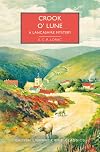
A pleasant rural mystery set in the fell area of Lancashire. Chief Inspector Macdonald is visiting friends, with an eye to finding a small farm where he can retire. It's around 1950 and there are mentions of the war: talk of rationing, a fire siren upsets a woman who says she's heard too many sirens in recent years, faded posters in a classroom describing procedures in case of a gas attack.
But all is not well in this pastoral setting: there's been sheep stealing in the area, then a suspicious fire and a death, and Macdonald gets involved with the case. There are lots of affable locals, an unpopular parson who may be embezzling, a sweet young couple who need a home so they can marry, an ancient shepherd who still climbs the hills to tend his charges, and a lot of sheep.
I don't think I'll look for more of her books but it was entertaining.
I learned some words:
fell: a high barren field or moor
bosting: timber supports that hold the hay loft
baulks: related to the bosting somehow
shippon: cow barn or cattle shed
gimmer: a yearling female sheep; a two-tooth ewe. from Old Norse gymbr a live lamb one year old
stirk: a young bull or cow especially between one and two years old
wether: a male sheep castrated before sexual maturity. also : a castrated male goat
hurdle: a portable panel usually of wattled withes and stakes used especially for enclosing land or livestock. also a frame or sled formerly used in England for dragging traitors to execution (used in the book to bring an injured show more man down from the fells)
beck: creek
polony: a dry partly cooked sausage made of various ingredients
mulock: from context, a mess, mistake
diddled us: wasted our time
gey gert fule: very great fool
opprobrious: scurrilous
but and ben: in the Highlands of Scotland, a small, simple house with two rooms show less
But all is not well in this pastoral setting: there's been sheep stealing in the area, then a suspicious fire and a death, and Macdonald gets involved with the case. There are lots of affable locals, an unpopular parson who may be embezzling, a sweet young couple who need a home so they can marry, an ancient shepherd who still climbs the hills to tend his charges, and a lot of sheep.
I don't think I'll look for more of her books but it was entertaining.
I learned some words:
fell: a high barren field or moor
bosting: timber supports that hold the hay loft
baulks: related to the bosting somehow
shippon: cow barn or cattle shed
gimmer: a yearling female sheep; a two-tooth ewe. from Old Norse gymbr a live lamb one year old
stirk: a young bull or cow especially between one and two years old
wether: a male sheep castrated before sexual maturity. also : a castrated male goat
hurdle: a portable panel usually of wattled withes and stakes used especially for enclosing land or livestock. also a frame or sled formerly used in England for dragging traitors to execution (used in the book to bring an injured show more man down from the fells)
beck: creek
polony: a dry partly cooked sausage made of various ingredients
mulock: from context, a mess, mistake
diddled us: wasted our time
gey gert fule: very great fool
opprobrious: scurrilous
but and ben: in the Highlands of Scotland, a small, simple house with two rooms show less
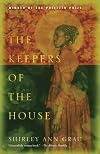
I've been talking with some friends in an online space about what makes writing beautiful, and then I happened to read this book, which has truly beautiful writing. She sets the background in Alabama with descriptions of the scents and sounds of a farm, a journey by canoe in a swamp, the meaningful contents of a house. Other reviewers complain that the story dragged, but I loved these word pictures and see how they were needed to describe the Howland family's ties to the land.
It's not a spoiler to say that William Howland had a relationship with Margaret, his black housekeeper, and had children with her, though key details are revealed later. His granddaughter Abigail, the main character, seems to have no problem with this and understands why Margaret sends her children to school in the north, where they can pass as white. She grows up to marry John, a lawyer with political ambitions who runs for governor on a segregationist ticket.
What I didn't understand was (spoiler)
.
.
.
.
.
.
.
.
why Margaret's son Robert returned to the south, or how his existence, and relationship to Abigail and John, became known so that it could be used against John. Did he mean to hurt the campaign? Why? Or was it simply dug up by John's rivals? I also didn't understand Abigail's anger towards Robert and his sister, and why she said cruel things to him at the end.
It's not a spoiler to say that William Howland had a relationship with Margaret, his black housekeeper, and had children with her, though key details are revealed later. His granddaughter Abigail, the main character, seems to have no problem with this and understands why Margaret sends her children to school in the north, where they can pass as white. She grows up to marry John, a lawyer with political ambitions who runs for governor on a segregationist ticket.
What I didn't understand was (spoiler)
.
.
.
.
.
.
.
.
why Margaret's son Robert returned to the south, or how his existence, and relationship to Abigail and John, became known so that it could be used against John. Did he mean to hurt the campaign? Why? Or was it simply dug up by John's rivals? I also didn't understand Abigail's anger towards Robert and his sister, and why she said cruel things to him at the end.

I swear I read this novel in the Ladies Home Journal, which used to run novels in each issue. I was a teenager, it was published in 1972, and boy is it of its era. Narrated by Prudence Goodwin, a 17 year old Manhattan schoolgirl whose best friend Lolly is having a fling with Pru’s father. That’s okay, Lolly’s father, a widower, has always thought Pru would be a looker when she grows up and they get together. Prudence’s mother is conveniently sent to an insane asylum. The main plot is about how the girls’ friendship suffers because of the jealousy about who Daddy loves the most. I’m making it sound awful but Prudence is a great character, witty and funny, and she and Nate have such a great connection. I unashamedly adore it because it was such a part of my formation. I really wish there was a sequel because I love these characters so much and want to know what happens to them.
The author is the great niece of Edna Ferber (a novelist whose books I devoured in high school and college) and her other books are non fiction about Ferber and others of that period.
The author is the great niece of Edna Ferber (a novelist whose books I devoured in high school and college) and her other books are non fiction about Ferber and others of that period.