
Anthony Cartwright
Author of How I Killed Margaret Thatcher
Works by Anthony Cartwright
Tagged
Common Knowledge
- Birthdate
- 1973
- Gender
- male
- Education
- University of East Anglia (BA|Creative Writing)
- Nationality
- UK
- Birthplace
- Dudley, Staffordshire, England, UK
- Associated Place (for map)
- England, UK
Members
Reviews
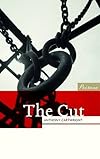
I began ‘The Cut’ under a misapprehension - that it was by [a:Justin Cartwright|68426|Justin Cartwright|https://images.gr-assets.com/authors/1272070995p2/68426.jpg] rather than [a:Anthony Cartwright|2147530|Anthony Cartwright|https://s.gr-assets.com/assets/nophoto/user/u_50x66-632230dc9882b4352d753eedf9396530.png]. I’d read Justin Cartwright’s [b:Other People's Money|8735765|Other People's Money|Justin Cartwright|https://images.gr-assets.com/books/1316728491s/8735765.jpg|13608840] show more and found it an interesting commentary on high finance in British society, so wondered what he had to say about Brexit. Easy mistake to make, right? ‘The Cut’ is a commissioned novel, intended to comment on the EU referendum and what it says about Britain. Or rather England. I found it insightful in parts, but not to the extent I’d hoped for. Given the diminutive length, I probably expected too much. The plot begins when a documentary maker comes to interview people in Dudley about the upcoming referendum and meets a man called Cairo. This isn’t really a spoiler as the back cover heavily implies it: they start a romantic relationship. I didn’t find this relationship that helpful a lens for understanding Brexit. This could be a case of me trying to interpret literature too literally, I suppose. The highlight of the book for me occurred before the romance. I found this conversation very thought-provoking:
Talk of the elite makes me want a Marxist analysis of Brexit, incidentally. If you find one, let me know. On a pedantic note, I found it distracting that Mum was spelled ‘Mom’, American style, presumably as part of rendering Black Country accents phonetically. The ending was also slightly baffling, although it certainly made Leave’s vein of masochism extremely clear. What comes across strongly is that Leave manipulated nostalgia. Britain has a strong streak of nostalgic traditionalism and it seems almost like poetic justice that we should pay for it. Brexit won’t compensate the many countries we ruined when we colonised them, though. And although some of the elite will suffer as a result, the worst off will suffer the most.
I’m very pleased that Brexit literature is starting to appear, and contemplating how much more I enjoyed Ali Smith’s [b:Autumn|28446947|Autumn|Ali Smith|https://images.gr-assets.com/books/1456560519s/28446947.jpg|48572278] than ‘The Cut’ made me consider my personal biases. Ali Smith’s novel has a main character of my age, gender, occupation, and inclination to Remain, whereas ‘The Cut’ centres on Cairo, a grandfather who works as a day labourer and votes Leave. While I appreciate the attempt in ‘The Cut’ to explain the psychology behind voting Leave, what I still can’t grasp is this: for those who voted in protest against politicians in general, who did they think was going to do the Leaving? If you distrusted politicians (and I can certainly see why you would, albeit I distrusted the pro-Leave ones more) why give them this additional power? Were the European politicians were distrusted even more? But many of them were UKIP... I guess with both Brexit and Trump, there’s a toxic stew of sociopolitical forces at work below the surface and it’s very difficult to unpack them from within current events. There are class, generational, and geographical elements; anti-immigrant sentiment is obviously important, all overlapping with bewildered anger at the inequality and rapacity of neoliberal capitalism. Channeling that anger into voting for obnoxious rich white men seems so counterintuitive, though! That said, when the referendum happened I was living in Cambridge, which voted 74% Remain, and I’m a millennial. So maybe I’ll never get it. show less
”These people have got it coming,” he said with a feeling she found hard to understand. The man she had know for a few hours, less. She surprised herself when she noticed no wedding ring, not that it meant anything. They had talked so far of fathers and newspaper stories.
“Which people?”
“The people who write this crap.”
“It’s just a game to them, a funny game, like life’s a game. I bet the people writing these papers don’t vote to leave, I bet they live in fancy houses in London and they’ll vote to stay. They’m all doing fine, thank you very much. It’s like a double bluff.”
“Who’s playing games now?”
“You get what I mean, though?”
“I’m not sure I do. You mean that people here will vote against whatever they think the perceived elite will vote?”
“Here you go again. It ay perceived. There is an elite.”
“But some of the elite want you to vote to leave.”
“They doh mean it.”
“What do you mean, they don’t mean it?”
“I’ve told yer, it’s a game of double bluff. They’ll all argue about it. We’ll have the vote. It’ll be a vote to stay in. They’ll fix it if they need to. Then they’ll get on with whatever’s next on the agenda, all mates together again.”
“I think they mean it, and anyway, what, it’s all one big conspiracy?”
“You said it. A conspiracy of the elite, thass your word by the way, these are your own words, against the rest of us. You should write this down, put it in your film.”
“I will,” she said. She suddenly had to laugh.
Talk of the elite makes me want a Marxist analysis of Brexit, incidentally. If you find one, let me know. On a pedantic note, I found it distracting that Mum was spelled ‘Mom’, American style, presumably as part of rendering Black Country accents phonetically. The ending was also slightly baffling, although it certainly made Leave’s vein of masochism extremely clear. What comes across strongly is that Leave manipulated nostalgia. Britain has a strong streak of nostalgic traditionalism and it seems almost like poetic justice that we should pay for it. Brexit won’t compensate the many countries we ruined when we colonised them, though. And although some of the elite will suffer as a result, the worst off will suffer the most.
I’m very pleased that Brexit literature is starting to appear, and contemplating how much more I enjoyed Ali Smith’s [b:Autumn|28446947|Autumn|Ali Smith|https://images.gr-assets.com/books/1456560519s/28446947.jpg|48572278] than ‘The Cut’ made me consider my personal biases. Ali Smith’s novel has a main character of my age, gender, occupation, and inclination to Remain, whereas ‘The Cut’ centres on Cairo, a grandfather who works as a day labourer and votes Leave. While I appreciate the attempt in ‘The Cut’ to explain the psychology behind voting Leave, what I still can’t grasp is this: for those who voted in protest against politicians in general, who did they think was going to do the Leaving? If you distrusted politicians (and I can certainly see why you would, albeit I distrusted the pro-Leave ones more) why give them this additional power? Were the European politicians were distrusted even more? But many of them were UKIP... I guess with both Brexit and Trump, there’s a toxic stew of sociopolitical forces at work below the surface and it’s very difficult to unpack them from within current events. There are class, generational, and geographical elements; anti-immigrant sentiment is obviously important, all overlapping with bewildered anger at the inequality and rapacity of neoliberal capitalism. Channeling that anger into voting for obnoxious rich white men seems so counterintuitive, though! That said, when the referendum happened I was living in Cambridge, which voted 74% Remain, and I’m a millennial. So maybe I’ll never get it. show less
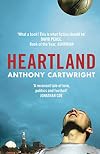
I bought this book on the basis of a glowing review in The Guardian. It's not bad but I can't say it lived up to the review. Set in and around Dudley (Britain's 'Heartland'), during the 2002 World Cup, it explores masculinity, English identity and racial conflict. All worthy stuff, but neither the plot nor the writing are quite strong enough. One of the main problems is the use of multiple narrative strands in the 3rd person, all intertwined: this means that names are constantly repeated as show more the author needs to remind the reader of who is featuring in a particular section. 'Rob said .... Adnan did ... Jim felt ... Jasmine realised .... Zubair went ... Glenn noticed ...' It all feels a bit stilted. Recounting large chunks of the England v Argentina match didn't help either. show less
Lists
Awards


Statistics
- Works
- 6
- Members
- 103
- Popularity
- #185,854
- Rating
- 3.5
- Reviews
- 2
- ISBNs
- 15
- Languages
- 2