
Thomas R. Schreiner
Author of Romans (Baker Exegetical Commentary on the New Testament)
About the Author
Thomas R. Schreiner (PhD, Fuller Theological Seminary) is the James Buchanan Harrison Professor of New Testament Interpretation and associate dean of the School of Theology at the Southern Baptist Theological Seminary.
Image credit: Used by permission of Baker Publishing Group, copyright © 2008. All rights to this material are reserved. Materials are not to be distributed to other web locations for retrieval, published(see © info.)
Series
Works by Thomas R. Schreiner
Believer's Baptism: Sign of the New Covenant in Christ (Nac Studies in Bible & Theology) (2006) — Editor; Contributor — 929 copies, 5 reviews
Women in the Church: An Analysis and Application of 1 Timothy 2:9-15 (1995) — Editor; Contributor — 728 copies, 2 reviews
The King in His Beauty: A Biblical Theology of the Old and New Testaments (2013) 553 copies, 2 reviews
Still Sovereign: Contemporary Perspectives on Election, Foreknowledge, and Grace (2000) 525 copies, 1 review
The Lord's Supper: Remembering and Proclaiming Christ Until He Comes (New American Commentary Studies in Bible & Theology) (2010) — Editor — 401 copies, 2 reviews
Understanding Scripture: An Overview of the Bible's Origin, Reliability, and Meaning (2012) — Editor — 245 copies
The Joy of Hearing: A Theology of the Book of Revelation (New Testament Theology) (2021) 174 copies, 1 review
1 Corinthians: An Introduction and Commentary (Tyndale New Testament Commentaries) (2018) 171 copies
The Grace of God, the Bondage of the Will, Volume 1: Biblical and Practical Perspectives on Calvinism (1995) 111 copies
The Grace of God, the Bondage of the Will, Volume 2: Historical and Theological Perspectives on Calvinism (1995) 104 copies
Gálatas CEPNT (Comentario Exegético-Práctico del Nuevo Testamento) (Spanish Edition) (2020) 3 copies
Teologia del Nuevo Testamento - Vol. 2: Magnificando a Dios en Cristo (Teología Bíblica Thomas Schreiner) (Spanish Edition) (2023) 2 copies
Teologia del Nuevo Testamento - Vol. 1: Magnificando a Dios en Cristo (Teología Bíblica Thomas Schreiner) (Spanish Edition) (2023) 2 copies
Faith ALONE (Five Solas Series) 2 copies
Galatians, A Video Study: 26 Lessons on Literary Context, Structure, Exegesis, and Interpretation (2017) 2 copies
El Rey en su belleza - Vol. 1: Una teologia biblica del Antiguo y Nuevo Testamento (Teología Bíblica Thomas Schreiner) (Spanish Edition) (2022) 2 copies
El pacto y el propósito de Dios para el mundo (Estudios Breves de Teología Bíblica) (Spanish Edition) (2021) 2 copies
El Rey en su belleza - Vol. 2: Una teologia biblica del Antiguo y Nuevo Testamento (Teología Bíblica Thomas Schreiner) (Spanish Edition) (2022) 2 copies
Courir pour remporter le prix: La persévérance dans le Nouveau Testament (Réflexions) (French Edition) (2020) 1 copy
Believers Baptism 1 copy
The Commands of God 1 copy
The New American Commentary: 1, 2 Peter, Jude (New American Commentary, 37) by Thomas R. Schreiner (2003-09-01) (2003) 1 copy
Faith Alone Video Lectures 1 copy
Reading the Epistles 1 copy
Associated Works
Tagged
Common Knowledge
- Canonical name
- Schreiner, Thomas R.
- Birthdate
- 1954-04-24
- Gender
- male
- Education
- Fuller Theological Seminary (Ph.D|1983)
Western Conservative Baptist Seminary (M.Div|Th.M)
Western Oregon University (BS) - Occupations
- professor
biblical scholar - Organizations
- Southern Baptist Theological Seminary
Bethel Theological Seminary
Azusa Pacific University
Southern Baptist Convention
Evangelical Theological Society - Nationality
- USA
- Birthplace
- Salem, Oregon, USA
- Places of residence
- Louisville, Kentucky, USA
- Associated Place (for map)
- USA
Members
Reviews

"This is my body" (1 Corinthians 11:24). Hoc est corpus. Defining the verb, "to be" in this context has been one of the most divisive tasks the church has undertaken. On one side of the spectrum you have the transubstantiation of the Roman Catholic church. On the other side you have the memorialism of Zwingli's descendents. "Do this ... in remembrance of me" (1 Corinthians 11:25).
In The Lord's Supper, Schreiner and Crawford have collected essays from Southern Baptists which reflect on the show more "biblical, historical, theological, and pastoral issues" required to properly understand the meal (391). The survey of Biblical material is particularly helpful. Köstenburger leads the volume with an essay exploring the Passover roots of the meal before Pennington and Hamilton Jr. survey Gospel and Pauline literature, respectively.
The historical essays begin with the church fathers, pause on each of the reformers, and close with a look at recent Baptist history. Here the polemic of the volume comes to the forefront. Each of these essays examine the way a particular group understood the Lord's Supper before pointing out how these views are in part faulty. This volume is "a book written by Baptists for Baptists, a fact that [the editors] make no apology for" (391).
There are challenges even within the Baptist camp. In Gregory A. Wills' essay, "Sounds from Baptist History," he traces the movement of the Southern Baptist church from close to open communion. (Close communion is restricted to church members whose regeneration and subsequent baptism has been demonstrated.) You can almost hear the pain in his voice when he writes, "The widespread adoption of open Communion among conservative Southern Baptists indicated that they did not cross the twentieth century unscathed by the progressive currents against which they struggled." (311). "Close Communion was not the only victim. ... The traditional church practices and structures lost their basis in a 'thus saith the Lord'" (312).
Craig L. Blomberg offered this blurb for the back cover: "While Schreiner and Crawford stress that this volume was written by Southern Baptists for Southern Baptists, it would be a pity if this emphasis prevented their book from receiving the very wide readership that it deserves." Blomberg is right. The Lord's Supper provides the reader with a thorough education on the various elements of our Christian meal. If you're not a Southern Baptist, be prepared to interact critically and thoughtfully with the material. show less
In The Lord's Supper, Schreiner and Crawford have collected essays from Southern Baptists which reflect on the show more "biblical, historical, theological, and pastoral issues" required to properly understand the meal (391). The survey of Biblical material is particularly helpful. Köstenburger leads the volume with an essay exploring the Passover roots of the meal before Pennington and Hamilton Jr. survey Gospel and Pauline literature, respectively.
The historical essays begin with the church fathers, pause on each of the reformers, and close with a look at recent Baptist history. Here the polemic of the volume comes to the forefront. Each of these essays examine the way a particular group understood the Lord's Supper before pointing out how these views are in part faulty. This volume is "a book written by Baptists for Baptists, a fact that [the editors] make no apology for" (391).
There are challenges even within the Baptist camp. In Gregory A. Wills' essay, "Sounds from Baptist History," he traces the movement of the Southern Baptist church from close to open communion. (Close communion is restricted to church members whose regeneration and subsequent baptism has been demonstrated.) You can almost hear the pain in his voice when he writes, "The widespread adoption of open Communion among conservative Southern Baptists indicated that they did not cross the twentieth century unscathed by the progressive currents against which they struggled." (311). "Close Communion was not the only victim. ... The traditional church practices and structures lost their basis in a 'thus saith the Lord'" (312).
Craig L. Blomberg offered this blurb for the back cover: "While Schreiner and Crawford stress that this volume was written by Southern Baptists for Southern Baptists, it would be a pity if this emphasis prevented their book from receiving the very wide readership that it deserves." Blomberg is right. The Lord's Supper provides the reader with a thorough education on the various elements of our Christian meal. If you're not a Southern Baptist, be prepared to interact critically and thoughtfully with the material. show less
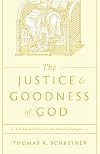
First sentence: Why would anyone want to write on the final judgment? It might seem that anyone who writes on this theme is obsessed with the negative, with hate instead of love, with punishment instead of mercy, with crankiness instead of joy.
For a theological book, this was a short, quick, "little" read. The subject is the justice and goodness of God. How does God's goodness relate to God's justice? Would God be good if he wasn't at the same time just? The justice of God is not at odds show more with his attributes--obviously. A good, faithful, holy, loving, merciful God HAS to be a JUST God, a God of justice. This little book traces the justice of God throughout the Bible. He tackles this generally and broadly in the first few chapters. In the middle chapters, Schreiner focuses on justice in the New Testament. The book concludes with further implications of God's justice. How should we as Christians respond and live in light of God's justice AND goodness. The final chapter is "Salvation Shines Brighter," and indeed it does. Christians are done no favors when theologians--pastors, preachers, writers--pick and choose which of God's attributes to "allow" or preach upon. Christians need the whole counsel of the Word of God, and the Bible has a LOT to say about God's justice AND God's goodness. This book also speaks of God's holiness.
Chapter titles:
Only a Holy God
The Ugliness of Sin
Judgment in the Gospels and Acts
Judgment in the Epistles
Judgment in the Book of Revelation
Living in Light of the Judgment
Salvation Shines Brighter.
Quotes:
I am writing this book for missionaries, for pastors, for Christians in ministry, and for all Christians to remind us that judgment is fundamental to the message we proclaim so that we will not be ashamed of or neglect speaking about judgment. Indeed, I hope Christians will rejoice in judgment, not because they long for the punishment of others (since we pray and hope that all will be saved) but because judgment displays the holiness and goodness of God. Without judgment, God would not be good, and life on earth would be without meaning since our moral decisions would not ultimately matter.
The Lord loves justice because his very person, his very nature, is just. He doesn’t love justice as something outside of himself.
If the Lord is righteous, loves righteousness, and rewards righteousness, then the converse follows as well. His love of righteousness also means that evil will be frowned on and punished.
Righteousness and goodness are compromised if evil is tolerated, ignored, and overlooked, especially when one has the power to resist wickedness. Even though judgment is often thought to be cruel, the opposite is the case. An authority who indulgently allows evil to occur without any consequence is not righteous but wicked.
As with holiness and righteousness, justice isn’t a virtue to which God conforms. Instead, God is just; he is intrinsically and inherently righteous so that justice constitutes God’s very being. Psalm 89:14 avers, “Righteousness and justice are the foundation of your throne.” Because God is just, we are not surprised to read that he loves justice (Ps. 33:5) and that he delights in justice (Jer. 9:24), which is really another way of saying that the Lord delights in himself.
Judgment doesn’t take place in a vacuum; it is not arbitrary, whimsical, or capricious. As we saw in the previous chapter, judgment takes place for a reason, and the reason is human sin. Sin deserves judgment: it denies God’s lordship, deforms human beings, wars against truth, and destroys human community.
God set up the universe to function as he willed, and he isn’t absent from the world he created. He is always and ever the personal God, recompensing both the righteous and wicked according to what is right. We see here an example of retributive justice in that punishment and iniquity are bound together in a package.
When we feel and sense that we deserve judgment, the beauty and loveliness of God’s mercy stands forth in all its splendor. Forgiveness isn’t cheap or trivial but precious and costly. In forgiving sinners God does not compromise his justice. The justice of God is satisfied in the atoning sacrifice of his Son. show less
For a theological book, this was a short, quick, "little" read. The subject is the justice and goodness of God. How does God's goodness relate to God's justice? Would God be good if he wasn't at the same time just? The justice of God is not at odds show more with his attributes--obviously. A good, faithful, holy, loving, merciful God HAS to be a JUST God, a God of justice. This little book traces the justice of God throughout the Bible. He tackles this generally and broadly in the first few chapters. In the middle chapters, Schreiner focuses on justice in the New Testament. The book concludes with further implications of God's justice. How should we as Christians respond and live in light of God's justice AND goodness. The final chapter is "Salvation Shines Brighter," and indeed it does. Christians are done no favors when theologians--pastors, preachers, writers--pick and choose which of God's attributes to "allow" or preach upon. Christians need the whole counsel of the Word of God, and the Bible has a LOT to say about God's justice AND God's goodness. This book also speaks of God's holiness.
Chapter titles:
Only a Holy God
The Ugliness of Sin
Judgment in the Gospels and Acts
Judgment in the Epistles
Judgment in the Book of Revelation
Living in Light of the Judgment
Salvation Shines Brighter.
Quotes:
I am writing this book for missionaries, for pastors, for Christians in ministry, and for all Christians to remind us that judgment is fundamental to the message we proclaim so that we will not be ashamed of or neglect speaking about judgment. Indeed, I hope Christians will rejoice in judgment, not because they long for the punishment of others (since we pray and hope that all will be saved) but because judgment displays the holiness and goodness of God. Without judgment, God would not be good, and life on earth would be without meaning since our moral decisions would not ultimately matter.
The Lord loves justice because his very person, his very nature, is just. He doesn’t love justice as something outside of himself.
If the Lord is righteous, loves righteousness, and rewards righteousness, then the converse follows as well. His love of righteousness also means that evil will be frowned on and punished.
Righteousness and goodness are compromised if evil is tolerated, ignored, and overlooked, especially when one has the power to resist wickedness. Even though judgment is often thought to be cruel, the opposite is the case. An authority who indulgently allows evil to occur without any consequence is not righteous but wicked.
As with holiness and righteousness, justice isn’t a virtue to which God conforms. Instead, God is just; he is intrinsically and inherently righteous so that justice constitutes God’s very being. Psalm 89:14 avers, “Righteousness and justice are the foundation of your throne.” Because God is just, we are not surprised to read that he loves justice (Ps. 33:5) and that he delights in justice (Jer. 9:24), which is really another way of saying that the Lord delights in himself.
Judgment doesn’t take place in a vacuum; it is not arbitrary, whimsical, or capricious. As we saw in the previous chapter, judgment takes place for a reason, and the reason is human sin. Sin deserves judgment: it denies God’s lordship, deforms human beings, wars against truth, and destroys human community.
God set up the universe to function as he willed, and he isn’t absent from the world he created. He is always and ever the personal God, recompensing both the righteous and wicked according to what is right. We see here an example of retributive justice in that punishment and iniquity are bound together in a package.
When we feel and sense that we deserve judgment, the beauty and loveliness of God’s mercy stands forth in all its splendor. Forgiveness isn’t cheap or trivial but precious and costly. In forgiving sinners God does not compromise his justice. The justice of God is satisfied in the atoning sacrifice of his Son. show less
First sentence: Galatians heralds the truth of the gospel, and this gospel stands as the authority over all people everywhere.
Who is this book for? Who is this book not for? I feel that the casual bible reader with little to moderate experience with scholarly deep-dives will struggle with this book. Primarily for two reasons: first, Galatians is a weighty book to unpack. It covers some of the same topics as Paul's letter to the Romans, however, it is less general, more specific, and more show more layered. You have a LOT of decoding context to do before you even get to the theological bits. Second, the book is scholarly. This in and of itself is neither good nor bad. It is what it is. This is not something that can be read, understood, comprehended, mastered by a casual read-through. It requires YOU the reader to engage in complex, weighty theological ideas and concepts so that you can keep up or follow along with the author. If your understanding begins to weaken, if things begin to slide right on over your head, there is no "catching up" and "muddling through" and hoping that the next chapter will clarify. For those more experienced with [weighty] theology and are used to reading scholarly books--textbooks even--then this one will prove an easier go.
One thing that I was able to appreciate was its clarity. You might be confused. Didn't I just say this one was too complex for the average reader? (And I am definitely in that grouping with this one. I struggled.) The book is clearly laid out and organized. It tells you what to expect in each part or section, each chapter. Each chapter has a CONCLUSION which sums up the main points of the chapter. If nothing else, the conclusions help clarify some of the arguments. If not for the conclusions, then I might have given up all hope of finishing this one.
What I did read and understand--there were some bits--I found thought-provoking. I appreciated that he was trying to put the book into context and piece together WHAT Paul's opponents actually-actually believed instead of just diving into the Scripture itself. If Paul is arguing THIS in response, can we figure out more clearly WHAT position(s) were being held. At one point it was like theological algebra--solving for x. The discussion on circumcision, for example, brought up some points that I had not considered.
I decided to rate four stars because I think most likely what is here is solid theologically, I just couldn't quite understand it well enough to fully engage and benefit from it. Perhaps ministers and teachers could benefit more from it because it was written more on their level. show less
Who is this book for? Who is this book not for? I feel that the casual bible reader with little to moderate experience with scholarly deep-dives will struggle with this book. Primarily for two reasons: first, Galatians is a weighty book to unpack. It covers some of the same topics as Paul's letter to the Romans, however, it is less general, more specific, and more show more layered. You have a LOT of decoding context to do before you even get to the theological bits. Second, the book is scholarly. This in and of itself is neither good nor bad. It is what it is. This is not something that can be read, understood, comprehended, mastered by a casual read-through. It requires YOU the reader to engage in complex, weighty theological ideas and concepts so that you can keep up or follow along with the author. If your understanding begins to weaken, if things begin to slide right on over your head, there is no "catching up" and "muddling through" and hoping that the next chapter will clarify. For those more experienced with [weighty] theology and are used to reading scholarly books--textbooks even--then this one will prove an easier go.
One thing that I was able to appreciate was its clarity. You might be confused. Didn't I just say this one was too complex for the average reader? (And I am definitely in that grouping with this one. I struggled.) The book is clearly laid out and organized. It tells you what to expect in each part or section, each chapter. Each chapter has a CONCLUSION which sums up the main points of the chapter. If nothing else, the conclusions help clarify some of the arguments. If not for the conclusions, then I might have given up all hope of finishing this one.
What I did read and understand--there were some bits--I found thought-provoking. I appreciated that he was trying to put the book into context and piece together WHAT Paul's opponents actually-actually believed instead of just diving into the Scripture itself. If Paul is arguing THIS in response, can we figure out more clearly WHAT position(s) were being held. At one point it was like theological algebra--solving for x. The discussion on circumcision, for example, brought up some points that I had not considered.
I decided to rate four stars because I think most likely what is here is solid theologically, I just couldn't quite understand it well enough to fully engage and benefit from it. Perhaps ministers and teachers could benefit more from it because it was written more on their level. show less

Bible commentaries abound today. Scores of commentaries confront the would-be expositor of any book of the Bible, and almost nobody blinks at a new series of commentaries anymore. It goes without saying that the relative value of a given commentary is all over the map, and here perhaps more than anywhere else, a discerning eye is called for.
You guessed it, I’m getting ready for the “but you have to check out this new commentary series” line. But I really mean it. The new Zondervan show more Exegetical Commentary on the New Testament (ZECNT) series will live up to any amount of hype one can dig up. I’ve reviewed several commentaries, I own bits and pieces of a score of commentary sets, and have examined others besides, yet this series promises to be a true must-have, when it comes to exegetical commentaries.
Like many other students of Scripture, I’ve been schooled in Greek, but that was some time ago. I also aim to fix an opinion on any passage I plan to teach. But with the amount of scholarly material one must evaluate, the task can be a bit daunting. Opening a commentary for answers can lead to far more questions than originally conceived. And some commentators stand out for their pious, know-it-all approach to informing us of their thoughts on the subject.
In sharp contrast, Thomas Schreiner in his ZECNT commentary on Galatians, excels at making the task of studying and making judgments easy. He provides all the relevant arguments on a given question, both the pros and cons. He defends positions that he ultimately rejects, all in the effort of explaining what is at stake and how to best see the big picture in a given exegetical question.
The clarity and candor on display in Schreiner’s work is complemented by the brilliant (can I use that term of a commentary?) ordering of material conceived by the ZECNT editors. After allowing for an in-depth introduction to set the stage for the book, each unit of the text is addressed in such a way as to best help the teacher or preacher work through the material of the Text and see connections to the overall outline of the book, catching the flow of the larger argument. Greek is used throughout but never in an over the top way. Almost universally, the Greek follows the English, and the effect is to draw one into the Greek arguments more easily, encouraging and promoting the revival of long-forgotten Greek exegetical skills.
Each section begins with a literary context of the unit and a tie in to the over-arching outline of the book. Then the main idea is summarized in a few sentences. The English translation of the text is next given in a special graphical layout which highlights the relationship between the various clauses and phrases which make up the text. Following this, the structure of the textual unit is discussed and a more detailed exegetical outline is provided for the text just before a detailed explanation of the text (with footnotes) is offered. Finally, a pastoral application section concludes the discussion on the passage at hand. Theology is thus applied to life in a masterful way, which will help guide the teacher and pastor to make appropriate and relevant applications from the exegetical study he undertakes.
At the end of the commentary the major themes of the book are discussed, giving an overview, or summary of all that Galatians has covered. This section is a miniature biblical theology in a sense, and will be of great value to those seeking a bigger picture view of the book, before they dive into the separate pieces.
Now on top of all the positive things I’ve mentioned up to this point, Zondervan is to be commended for choosing a competent and careful scholar to pick up his pen for the Galatians commentary. Thomas Schreiner has written books on the question of Paul’s use of the Law, and on the more practical side of how the OT Law relates to Christians. He also is one who’s publicly disputed the New Pauline Perspective, standing for a conservative, Reformed view of justification by faith and imputation. The expertise and faithfulness Schreiner has shown over the years makes him eminently qualified to write this book. And furthermore, his attitude and style in writing remains irenic, open and fair-minded, even when he stands forcefully against a contemporary exegetical trend.
The problem passages are many in Galatians, and Schreiner succeeds in navigating them well. I’m particularly impressed by how the book maintains a pastoral perspective throughout. I shouldn’t be surprised, however, since Schreiner himself is a preaching pastor even as he fills the roles of professor of NT and associate dean of Scripture and interpretation for Southern Baptist Theological Seminary. A fine combination of learning and grace exude from the man himself and this book.
I can’t recommend the work more highly, and I’m now interested in checking out other titles of this exceedingly useful commentary series. If the Galatians volume is truly representative of the larger series, then the Zondervan Exegetical Commentary of the New Testament series is truly a must-have resource for the exegetically minded pastor and teacher.
Disclaimer: This book was provided by Zondervan (via Koinonia blog) for review. The reviewer was under no obligation to offer a favorable review.
See an expanded version of this review, with additional content and resources, at CrossFocusedReviews.com. show less
You guessed it, I’m getting ready for the “but you have to check out this new commentary series” line. But I really mean it. The new Zondervan show more Exegetical Commentary on the New Testament (ZECNT) series will live up to any amount of hype one can dig up. I’ve reviewed several commentaries, I own bits and pieces of a score of commentary sets, and have examined others besides, yet this series promises to be a true must-have, when it comes to exegetical commentaries.
Like many other students of Scripture, I’ve been schooled in Greek, but that was some time ago. I also aim to fix an opinion on any passage I plan to teach. But with the amount of scholarly material one must evaluate, the task can be a bit daunting. Opening a commentary for answers can lead to far more questions than originally conceived. And some commentators stand out for their pious, know-it-all approach to informing us of their thoughts on the subject.
In sharp contrast, Thomas Schreiner in his ZECNT commentary on Galatians, excels at making the task of studying and making judgments easy. He provides all the relevant arguments on a given question, both the pros and cons. He defends positions that he ultimately rejects, all in the effort of explaining what is at stake and how to best see the big picture in a given exegetical question.
The clarity and candor on display in Schreiner’s work is complemented by the brilliant (can I use that term of a commentary?) ordering of material conceived by the ZECNT editors. After allowing for an in-depth introduction to set the stage for the book, each unit of the text is addressed in such a way as to best help the teacher or preacher work through the material of the Text and see connections to the overall outline of the book, catching the flow of the larger argument. Greek is used throughout but never in an over the top way. Almost universally, the Greek follows the English, and the effect is to draw one into the Greek arguments more easily, encouraging and promoting the revival of long-forgotten Greek exegetical skills.
Each section begins with a literary context of the unit and a tie in to the over-arching outline of the book. Then the main idea is summarized in a few sentences. The English translation of the text is next given in a special graphical layout which highlights the relationship between the various clauses and phrases which make up the text. Following this, the structure of the textual unit is discussed and a more detailed exegetical outline is provided for the text just before a detailed explanation of the text (with footnotes) is offered. Finally, a pastoral application section concludes the discussion on the passage at hand. Theology is thus applied to life in a masterful way, which will help guide the teacher and pastor to make appropriate and relevant applications from the exegetical study he undertakes.
At the end of the commentary the major themes of the book are discussed, giving an overview, or summary of all that Galatians has covered. This section is a miniature biblical theology in a sense, and will be of great value to those seeking a bigger picture view of the book, before they dive into the separate pieces.
Now on top of all the positive things I’ve mentioned up to this point, Zondervan is to be commended for choosing a competent and careful scholar to pick up his pen for the Galatians commentary. Thomas Schreiner has written books on the question of Paul’s use of the Law, and on the more practical side of how the OT Law relates to Christians. He also is one who’s publicly disputed the New Pauline Perspective, standing for a conservative, Reformed view of justification by faith and imputation. The expertise and faithfulness Schreiner has shown over the years makes him eminently qualified to write this book. And furthermore, his attitude and style in writing remains irenic, open and fair-minded, even when he stands forcefully against a contemporary exegetical trend.
The problem passages are many in Galatians, and Schreiner succeeds in navigating them well. I’m particularly impressed by how the book maintains a pastoral perspective throughout. I shouldn’t be surprised, however, since Schreiner himself is a preaching pastor even as he fills the roles of professor of NT and associate dean of Scripture and interpretation for Southern Baptist Theological Seminary. A fine combination of learning and grace exude from the man himself and this book.
I can’t recommend the work more highly, and I’m now interested in checking out other titles of this exceedingly useful commentary series. If the Galatians volume is truly representative of the larger series, then the Zondervan Exegetical Commentary of the New Testament series is truly a must-have resource for the exegetically minded pastor and teacher.
Disclaimer: This book was provided by Zondervan (via Koinonia blog) for review. The reviewer was under no obligation to offer a favorable review.
See an expanded version of this review, with additional content and resources, at CrossFocusedReviews.com. show less
Lists
Awards

You May Also Like


Associated Authors
Statistics
- Works
- 77
- Also by
- 5
- Members
- 13,073
- Popularity
- #1,781
- Rating
- 4.2
- Reviews
- 30
- ISBNs
- 120
- Languages
- 5
- Favorited
- 9