
Wolcott Gibbs (1902–1958)
Author of Backward Ran Sentences: The Best of Wolcott Gibbs from the New Yorker
Works by Wolcott Gibbs
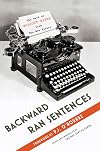
Backward Ran Sentences: The Best of Wolcott Gibbs from the New Yorker (2011) — Author — 87 copies, 12 reviews
The Courtship of Milton Barker 2 copies
Song at Twilight 1 copy
Associated Works
Fierce Pajamas: An Anthology of Humor Writing from The New Yorker (2001) — Contributor — 790 copies, 5 reviews
Tagged
Common Knowledge
- Legal name
- Gibbs, Oliver Wolcott
- Birthdate
- 1902-03-15
- Date of death
- 1958-08-16
- Gender
- male
- Occupations
- journalist
theater critic - Organizations
- The New Yorker
- Nationality
- USA
- Associated Place (for map)
- USA
Members
Reviews
The title is a slight misnomer, since many of these pieces didn't appear in Gibbs' long-time home, The New Yorker, but in a selection of other magazines. But the bulk did appear there, and many do survive the test of time quite well, including the title piece, which is a brutal satire of Timespeak, the odd lingo adopted by Time Magazine in the 1920s and 1930s. The introduction is also quite interesting, in that it describes just how troubled Gibbs' life was. A good selection of material. In show more fine New Yorker style, many of the pieces are written in a fashion where you can hear the whetstone sharpening the steel. show less
“Backward ran sentences until reeled the mind”
Wolcott Gibbs was probably the greatest forgotten writer that ever helped keep the New Yorker of the 30’s and 40’s afloat. A prose stylist who loved words but believed more strongly, often in a very laconic way, about content, and would tell you exactly what he felt — the hell with what you felt. Gibbs covered everything, writing innumerable “Talk of the Town” and “Notes and Comments” paragraphs, brilliantly scathing Broadway show more deconstructions and movie reviews— most of which he opined were "so vulgar, witless, and dull that it is preposterous to write about them in any publication not intended to be read while chewing gum."
The parody sections with bits on Saroyan, Luce, Hemingway and the eponymous Spinster, all written in the 30’s, would fit snuggly in McSweeney’s Internet Tendencies today.
James Thurber wrote that “when Wolcott Gibbs set out to do ‘a job’ on a profile subject, he brought out a fine array of surgical instruments, a rapier and a pearl-handled blackjack.”
Gibbs published more than a million words in the New Yorker and this marvelous collection from Bloomsbury, edited by Thomas Vinciguerra, is over 600 pages of timeless wit, wordplay and, in the words of editor Harold Ross, the “epitome of smart metropolitan journalism.”
His famous profile of Henry Luce, publisher of Time, Fortune and Life magazines, done in a parody of Time magazine's journalism and Timestyle, their baffling stylebook, is still fun to read.
“Where it all will end, knows God!” show less
Wolcott Gibbs was probably the greatest forgotten writer that ever helped keep the New Yorker of the 30’s and 40’s afloat. A prose stylist who loved words but believed more strongly, often in a very laconic way, about content, and would tell you exactly what he felt — the hell with what you felt. Gibbs covered everything, writing innumerable “Talk of the Town” and “Notes and Comments” paragraphs, brilliantly scathing Broadway show more deconstructions and movie reviews— most of which he opined were "so vulgar, witless, and dull that it is preposterous to write about them in any publication not intended to be read while chewing gum."
The parody sections with bits on Saroyan, Luce, Hemingway and the eponymous Spinster, all written in the 30’s, would fit snuggly in McSweeney’s Internet Tendencies today.
James Thurber wrote that “when Wolcott Gibbs set out to do ‘a job’ on a profile subject, he brought out a fine array of surgical instruments, a rapier and a pearl-handled blackjack.”
Gibbs published more than a million words in the New Yorker and this marvelous collection from Bloomsbury, edited by Thomas Vinciguerra, is over 600 pages of timeless wit, wordplay and, in the words of editor Harold Ross, the “epitome of smart metropolitan journalism.”
His famous profile of Henry Luce, publisher of Time, Fortune and Life magazines, done in a parody of Time magazine's journalism and Timestyle, their baffling stylebook, is still fun to read.
“Where it all will end, knows God!” show less
 This review was written for LibraryThing Early Reviewers.
Caveat: I am still devouring Backward Ran Sentences, albeit ever so slowly.
Gibbs' prose brings to mind the world of Joseph Mitchell to me. Both writers of the yesteryear of New York bring to mind such a nostalgic, memorable, and oh so forgotten moments of ourselves.
Though Gibbs may now be overlooked, his satire and literary mirth encompass a subtle humanity that our lifestyles lack today while his commentaries reflect the zeitgeist of the society that some lament. Indeed, some of his pieces show more are decidedly dated, but to me, it's what I feel nostalgic about most: ephemeral personalities that represent what used to be. show less
Gibbs' prose brings to mind the world of Joseph Mitchell to me. Both writers of the yesteryear of New York bring to mind such a nostalgic, memorable, and oh so forgotten moments of ourselves.
Though Gibbs may now be overlooked, his satire and literary mirth encompass a subtle humanity that our lifestyles lack today while his commentaries reflect the zeitgeist of the society that some lament. Indeed, some of his pieces show more are decidedly dated, but to me, it's what I feel nostalgic about most: ephemeral personalities that represent what used to be. show less
This review was written for LibraryThing Early Reviewers.
I'm enjoying Backward Ran Sentences: The Best of Wolcott Gibbs from The New Yorker.
Given that I've been "Currently Reading" it for 6 months now, however, let the gerund form of my opening line caution anyone not otherwise put off by this door-stop of a book! DFW or Pynchon it's not; but it's still impressive, even as a softcover, and I see reason behind The New Yorker's publishing these pieces a few at a time over a span of years -- decades, even -- rather than all at once. This is the stuff show more of which the magazine's reputation was made.
Gibbs actually wrote a (very) few years before my time but, despite being familiar with his name, I don't recall ever before having read a piece by him. His writing is witty and intelligent, oddly and humbly admiring of his subjects, notwithstanding a cynical and satiric cast. Reading Gibbs in retrospect also affords a glimpse of the times in which he wrote -- the U.S.' outlook leading into World War II; New York's social scene, theater and literary circles in the '30s, '40s and '50s; even mundane aggravations and struggles of daily life, reflected upon in a thoughtful, humane manner. I'm not at all surprised that he was affiliated with the likes of Harold Ross, James Thurber and E.B. White; but it also tells me something that theirs are more nearly household names, even today, than is Gibbs'.
Of course, Gibbs never much expected or intended that many of these pieces would survive beyond the magazine's next issue. I suspect he would have disdained, or at least deprecated, the editorial tasks of selecting and presenting his work to new audiences more than a half-century after his passing. I, for one, am grateful for Thomas Vinciguerra's efforts in this regard, and I look forward to "Currently Reading" Backward Ran Sentences periodically until I'm done.
ETA: Thanks to Esta1923 for pointing me to this video clip: http://www.youtube.com/watch?v=Hh5hFQFpup8 . And there's more where that came from! show less
Given that I've been "Currently Reading" it for 6 months now, however, let the gerund form of my opening line caution anyone not otherwise put off by this door-stop of a book! DFW or Pynchon it's not; but it's still impressive, even as a softcover, and I see reason behind The New Yorker's publishing these pieces a few at a time over a span of years -- decades, even -- rather than all at once. This is the stuff show more of which the magazine's reputation was made.
Gibbs actually wrote a (very) few years before my time but, despite being familiar with his name, I don't recall ever before having read a piece by him. His writing is witty and intelligent, oddly and humbly admiring of his subjects, notwithstanding a cynical and satiric cast. Reading Gibbs in retrospect also affords a glimpse of the times in which he wrote -- the U.S.' outlook leading into World War II; New York's social scene, theater and literary circles in the '30s, '40s and '50s; even mundane aggravations and struggles of daily life, reflected upon in a thoughtful, humane manner. I'm not at all surprised that he was affiliated with the likes of Harold Ross, James Thurber and E.B. White; but it also tells me something that theirs are more nearly household names, even today, than is Gibbs'.
Of course, Gibbs never much expected or intended that many of these pieces would survive beyond the magazine's next issue. I suspect he would have disdained, or at least deprecated, the editorial tasks of selecting and presenting his work to new audiences more than a half-century after his passing. I, for one, am grateful for Thomas Vinciguerra's efforts in this regard, and I look forward to "Currently Reading" Backward Ran Sentences periodically until I'm done.
ETA: Thanks to Esta1923 for pointing me to this video clip: http://www.youtube.com/watch?v=Hh5hFQFpup8 . And there's more where that came from! show less
This review was written for LibraryThing Early Reviewers.Awards

You May Also Like
Associated Authors
Statistics
- Works
- 9
- Also by
- 19
- Members
- 151
- Popularity
- #137,934
- Rating
- 3.7
- Reviews
- 12
- ISBNs
- 4
