
About the Author
Eric Pyle studied painting at Parsons School of Design and has a Ph.D. in aesthetic philosophy from Hiroshima University. For many years he has taught classes on the Divine Comedy at Hiroshima's Peace Park, at the site of the atomic bombing. He lives in Hiroshima, Japan.
Image credit: From Author's Facebook Page
Works by Eric Pyle
Tagged
Common Knowledge
There is no Common Knowledge data for this author yet. You can help.
Members
Reviews
William Blake's illustrations for Dante's Divine comedy : a study of the engravings, pencil sketches and watercolors by Eric Pyle
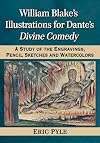
Eric Pyle’s book, William Blake’s Illustrations for Dante’s Divine Comedy, explores the relationship between two great artists, separated by time and beliefs, but with much in common. In the last years of his life, Blake undertook a set of illustrations for Dante’s Divine Comedy. When he died in 1827, he left a set of 102 watercolors and some pencil sketches. Using this material plus some marginalia in Blake’s copy of the Inferno, Eric Pyle shows how Blake used his project to show more “correct” what he viewed as the errors of Dante’s theology. At a very gross level, Blake objected to Dante’s orthodox belief in the ineffability or unknowability of the nature of God. Blake’s views grew out of a history of dissenters in England that God was in no way separated from the material world; that He was present in “every grain of sand;” that He was knowable, not through reason, but through vision or imagination.
Pyle’s treatment is detailed and exhaustive. He uses the tools and language of theology and philosophy to make his case. It is not light reading, but will be of interest, perhaps more to the scholar of Blake than Dante. show less
Pyle’s treatment is detailed and exhaustive. He uses the tools and language of theology and philosophy to make his case. It is not light reading, but will be of interest, perhaps more to the scholar of Blake than Dante. show less
 This review was written for LibraryThing Early Reviewers.
William Blake's Illustrations for Dante's Divine Comedy: A Study of the Engravings, Pencil Sketches and Watercolors by Eric Pyle
This is probably not a bad book if used for its intended purpose. The problem is, what is that purpose?
The publisher, McFarland, is an academic publisher – which does not necessarily condemn the book. For example, I 5*****'d my early review of Harald Haarmann's McFarland-published Roots of Ancient Greek Civilization: The Influence of Old Europe. My problem with Eric Pyle's William Blake's Illustrations for Dante's Divine Comedy is that it seems just a bit too specialized a work – not show more just academic, but designed perhaps more for the author's own course in, well, "William Blake's Illustrations for Dante's Divine Comedy."
The author (who has a doctoral degree in "aesthetic philosophy" from Hiroshima University) apparently teaches a course in Japan that covers this subject; and I suspect it is a well-received and valuable course, because the author is highly knowledgeable on his subject and, in the classroom, probably conveys an appreciation for both Blake and Dante (and Milton as well, Blake's illustrated epic, Milton: A Poem in Two Books, being covered rather intensively in the earlier chapters of Pyle's book). The problem is that, without the author's personalized classroom guidance, Pyle's book falls flat, at least for the general reader but I suspect it would also for Blakean specialists (which I am not).
As I've noted, Pyle's doctoral degree is in "aesthetic philosophy" – so don't expect a book either of art history or of literary criticism. This is a specific study of Blake's philosophically antinomian response to Dante (with, again, references back to Blake's earlier illustrated Milton poem), pointing out, I think correctly, that Blake was not "rejecting" Dante but rather "modifying" him. A reader who does not already have some knowledge of Blake's illustrations of Dante, though, is going to get confused.
The first three parts of this book – 120-some pages out of a total of 268 – explain Blake's antinomianism, in significant degree discussing Blake's Milton as well as several of Blake's other poems. Here's where it gets particularly confusing. Part III, ch. 6 is titled "Remarks on the Illustration to Hell, Canto Four" but does not really discuss this particular illustration other than to make an initial reference to it preparatory to a more general discussion of Blake's "rejection-rewriting" of Dante's Inferno. This happens too frequently throughout the book, the author initially seeming to discuss Blake's Dantean illustrations but then going off on a related but unexpected tangent. This is a technique that might well work in his classroom but is going to be frustrating to a reader.
I would also have liked to have seen a complete listing of Blake's Dantean illustrations. I recognize that, given cost limitations, the author cannot be expected to have included all of these illustrations, and he is in fact generous with what he does include, among them some dozen or so full-color illustrations; but a complete listing of Blake's illustrations, a description of whether a particular illustration was in color versus black-and-white versus a merely preliminary sketch, would have been helpful, accompanied by a page reference to where the illustration appears in Pyle's book (if it is one of the illustrations actually reproduced therein).
Something else that a reader has to remember is that Blake was illustrating the Divine Comedy. He was not writing his own, independent poem as he did in the case of Milton. Considering that Blake's Dantean illustrations were made late in Blake's own life and that we really cannot be sure how complete Blake considered this project, the absence of an accompanying Blakean text can make them more difficult to understand than much of the rest of Blake's visual art. Again, this is a matter that might be addressed more successfully in classroom discussion than in a written text alone.
I'm going to give this 3½***. The author is obviously knowledgeable on his subject and devoted to both Blake and Dante (and Milton as well) but in this particular case I think we have a book that might be a good classroom syllabus for the author's own course but is not as successful simply for reading; and the author's academic background in "aesthetic philosophy" might make this book less useful at least as an undergraduate text, where more attention to art history or to literary criticism might be preferred. show less
The publisher, McFarland, is an academic publisher – which does not necessarily condemn the book. For example, I 5*****'d my early review of Harald Haarmann's McFarland-published Roots of Ancient Greek Civilization: The Influence of Old Europe. My problem with Eric Pyle's William Blake's Illustrations for Dante's Divine Comedy is that it seems just a bit too specialized a work – not show more just academic, but designed perhaps more for the author's own course in, well, "William Blake's Illustrations for Dante's Divine Comedy."
The author (who has a doctoral degree in "aesthetic philosophy" from Hiroshima University) apparently teaches a course in Japan that covers this subject; and I suspect it is a well-received and valuable course, because the author is highly knowledgeable on his subject and, in the classroom, probably conveys an appreciation for both Blake and Dante (and Milton as well, Blake's illustrated epic, Milton: A Poem in Two Books, being covered rather intensively in the earlier chapters of Pyle's book). The problem is that, without the author's personalized classroom guidance, Pyle's book falls flat, at least for the general reader but I suspect it would also for Blakean specialists (which I am not).
As I've noted, Pyle's doctoral degree is in "aesthetic philosophy" – so don't expect a book either of art history or of literary criticism. This is a specific study of Blake's philosophically antinomian response to Dante (with, again, references back to Blake's earlier illustrated Milton poem), pointing out, I think correctly, that Blake was not "rejecting" Dante but rather "modifying" him. A reader who does not already have some knowledge of Blake's illustrations of Dante, though, is going to get confused.
The first three parts of this book – 120-some pages out of a total of 268 – explain Blake's antinomianism, in significant degree discussing Blake's Milton as well as several of Blake's other poems. Here's where it gets particularly confusing. Part III, ch. 6 is titled "Remarks on the Illustration to Hell, Canto Four" but does not really discuss this particular illustration other than to make an initial reference to it preparatory to a more general discussion of Blake's "rejection-rewriting" of Dante's Inferno. This happens too frequently throughout the book, the author initially seeming to discuss Blake's Dantean illustrations but then going off on a related but unexpected tangent. This is a technique that might well work in his classroom but is going to be frustrating to a reader.
I would also have liked to have seen a complete listing of Blake's Dantean illustrations. I recognize that, given cost limitations, the author cannot be expected to have included all of these illustrations, and he is in fact generous with what he does include, among them some dozen or so full-color illustrations; but a complete listing of Blake's illustrations, a description of whether a particular illustration was in color versus black-and-white versus a merely preliminary sketch, would have been helpful, accompanied by a page reference to where the illustration appears in Pyle's book (if it is one of the illustrations actually reproduced therein).
Something else that a reader has to remember is that Blake was illustrating the Divine Comedy. He was not writing his own, independent poem as he did in the case of Milton. Considering that Blake's Dantean illustrations were made late in Blake's own life and that we really cannot be sure how complete Blake considered this project, the absence of an accompanying Blakean text can make them more difficult to understand than much of the rest of Blake's visual art. Again, this is a matter that might be addressed more successfully in classroom discussion than in a written text alone.
I'm going to give this 3½***. The author is obviously knowledgeable on his subject and devoted to both Blake and Dante (and Milton as well) but in this particular case I think we have a book that might be a good classroom syllabus for the author's own course but is not as successful simply for reading; and the author's academic background in "aesthetic philosophy" might make this book less useful at least as an undergraduate text, where more attention to art history or to literary criticism might be preferred. show less
This review was written for LibraryThing Early Reviewers.The lengthy title for this volume, William Blake’s Illustrations for Dante’s Divine Comedy, is at once descriptive and highly misleading. The author’s underlying premise for the book goes beyond simply presenting an annotated overview of the 102 watercolor paintings and seven engravings that Blake produced to illustrate various scenes in Dante’s masterwork, which transports the reader from Hell to Heaven. Instead, Pyle’s aim is to convince us that Blake rendered his drawings out of show more a need to reinterpret Dante’s vision, written some 500 years earlier, and to correct a number of perceived theological mistakes. However, unlike the conclusion reached in a very similar scholarly treatise on exactly the same subject in the 1950s (i.e., Albert Roe’s Blake’s Illustrations to the Divine Comedy), Pyle’s view is that Blake was actually sympathetic to Dante but disagreed with him on several key points.
If you think that sounds more like someone’s academic dissertation in art history or religious studies than an engaging non-fictional foray into a fascinating subject, you would be absolutely correct. The book is effectively divided into two halves. In the first, the author spends an exhausting amount of time explaining how and why Blake’s theology in the early 1800s differed from that of Dante in the early 1300s. (Two examples: Dante thought God was an entity removed from the world that man had to earn the right to see while Blake thought God exists everywhere in the material world; and Dante felt there was no escape from Hell whereas Blake thought that Hell was a “state” which people can be redeemed out of with sufficient imagination and no need to go through Purgatory.) In the second half of the work, Pyle then describes and interprets many of Blake’s artworks in the context of these philosophical divisions.
I found the first half of the book to be bloated and overly arcane; I am actually interested in these topics, but the author approached the effort from the point of view of a scholar trying to produce a rigorous academic exposition rather than something that would connect with the lay reader. It was simply more than I cared to know and certainly more than the slight contribution it makes can justify. The second part of the book was also bloated although considerably more palatable if only because it allowed me to re-read substantial passages of Inferno, Purgatorio, and Paradiso, a collective work that I dearly love. Interestingly, the paintings in which Blake tried to “correct” Dante’s viewpoint seemed far fewer in number than those where the two artists agreed.
There were other choices the author made in writing this work that I found curious or distracting. Although he admits early on that he did not intend to catalog all of Blake’s illustrations, a number of the watercolors Pyle describes in considerable detail are not shown in the book, meaning the reader must scour the internet to see those images. Further, of the paintings that are contained in the book, only 12 are shown in color. That is truly a shame because some of the other illustrations printed in black and white are quite beautiful (although, on balance, I much prefer Gustave Doré’s paintings of the same subject matter, which were produced about 50 years after Blake’s). Finally, the author makes a surprising mistake when he states near the end of the book that Blake only produced eight illustrations of Paradiso, even though he discusses all ten that were actually done. In summary, then, this is not a book that I can recommend to anyone but the most ardent consumer of academic discourse. show less
If you think that sounds more like someone’s academic dissertation in art history or religious studies than an engaging non-fictional foray into a fascinating subject, you would be absolutely correct. The book is effectively divided into two halves. In the first, the author spends an exhausting amount of time explaining how and why Blake’s theology in the early 1800s differed from that of Dante in the early 1300s. (Two examples: Dante thought God was an entity removed from the world that man had to earn the right to see while Blake thought God exists everywhere in the material world; and Dante felt there was no escape from Hell whereas Blake thought that Hell was a “state” which people can be redeemed out of with sufficient imagination and no need to go through Purgatory.) In the second half of the work, Pyle then describes and interprets many of Blake’s artworks in the context of these philosophical divisions.
I found the first half of the book to be bloated and overly arcane; I am actually interested in these topics, but the author approached the effort from the point of view of a scholar trying to produce a rigorous academic exposition rather than something that would connect with the lay reader. It was simply more than I cared to know and certainly more than the slight contribution it makes can justify. The second part of the book was also bloated although considerably more palatable if only because it allowed me to re-read substantial passages of Inferno, Purgatorio, and Paradiso, a collective work that I dearly love. Interestingly, the paintings in which Blake tried to “correct” Dante’s viewpoint seemed far fewer in number than those where the two artists agreed.
There were other choices the author made in writing this work that I found curious or distracting. Although he admits early on that he did not intend to catalog all of Blake’s illustrations, a number of the watercolors Pyle describes in considerable detail are not shown in the book, meaning the reader must scour the internet to see those images. Further, of the paintings that are contained in the book, only 12 are shown in color. That is truly a shame because some of the other illustrations printed in black and white are quite beautiful (although, on balance, I much prefer Gustave Doré’s paintings of the same subject matter, which were produced about 50 years after Blake’s). Finally, the author makes a surprising mistake when he states near the end of the book that Blake only produced eight illustrations of Paradiso, even though he discusses all ten that were actually done. In summary, then, this is not a book that I can recommend to anyone but the most ardent consumer of academic discourse. show less
This review was written for LibraryThing Early Reviewers.William Blake's Illustrations for Dante's Divine Comedy: A Study of the Engravings, Pencil Sketches and Watercolors by Eric Pyle
Eric Pyle's _William Blake's Illustrations for Dante's Divine Comedy_ is a useful, if heavy, introduction to the works of poet and artist William Blake. The title, is somewhat deceptive as while the focus is ultimately on his illustrations for the Divine Comedy the book goes far beyond this topic. Instead, it covers Blake's overall religious philosophy, which rejected much of what an early Renaissance writer such as Dante would have accepted.
Pyle attempts to demonstrate, and does so fairly show more successfully, that understanding Blake's religious philosophy is necessary in order to understand his art and his approach to illustration. Pyle rejects earlier views of Blake, which see his illustrations for the Divine Comedy to be a condemnation of that work. Instead, he shows Blake intended, as he had with other illustrations, to give Dante a chance to correct his mistaken views, as it were. That is, Blake's agenda was to not simply correct Dante, but to show the "true" meaning of Dante's works, which Dante, in his life, was no able to do on his own.
Pyle's work is heavily academic in nature, which is no bad thing given the subject. However, this can make for very dense reading. Also, although the book is relatively introductory in nature in that Pyle tries to cover everything necessary in order for his thesis to be understandable, it is not necessarily a book for beginners of art history or theory. show less
Pyle attempts to demonstrate, and does so fairly show more successfully, that understanding Blake's religious philosophy is necessary in order to understand his art and his approach to illustration. Pyle rejects earlier views of Blake, which see his illustrations for the Divine Comedy to be a condemnation of that work. Instead, he shows Blake intended, as he had with other illustrations, to give Dante a chance to correct his mistaken views, as it were. That is, Blake's agenda was to not simply correct Dante, but to show the "true" meaning of Dante's works, which Dante, in his life, was no able to do on his own.
Pyle's work is heavily academic in nature, which is no bad thing given the subject. However, this can make for very dense reading. Also, although the book is relatively introductory in nature in that Pyle tries to cover everything necessary in order for his thesis to be understandable, it is not necessarily a book for beginners of art history or theory. show less
This review was written for LibraryThing Early Reviewers.Statistics
- Works
- 1
- Members
- 22
- Popularity
- #553,377
- Rating
- 3.6
- Reviews
- 6
- ISBNs
- 2
