
Ting-Xing Ye
Author of A Leaf in the Bitter Wind
About the Author
Image credit: William Bell
Series
Works by Ting-Xing Ye
Associated Works
Tagged
Common Knowledge
- Birthdate
- 1952
- Gender
- female
- Education
- Beijing University (BA, English Language and Literature)
- Relationships
- Bell, William (husband)
- Short biography
- Ting-xing Ye was born in Shanghai and came to Toronto in August 1987 as a visiting scholar to York University. After living in Toronto for five years, she moved to Orillia.Although Ting-xing enjoyed reading books as a child, she did not enjoy a simple childhood. She was born on June 28, 1952, the fourth child of a factory worker. She was orphaned at thirteen, and her high-school education was cut short by the Cultural Revolution. She majored in English language and literature at Beijing University, and yet, in thirty-five years of living in China, she never once took the initiative to write. Ting-xing realized at a very early age that, in China, the act of writing “black character on white paper” could prove dangerous. China’s totalitarian regime punished, suppressed, and occasionally executed people for their thoughts, spoken words, and writing.Ting-xing lives in Orillia with her husband, author William Bell. Her plans are to continue to learn and grow by doing research and writing.
- Nationality
- China (birth)
Canada (Citizen) - Birthplace
- Shanghai, China
- Places of residence
- Shanghai, China (1987)
Orillia, Ontario, Canada (1987) - Map Location
- Canada
Members
Reviews
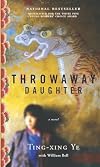
I did not finish the book. I felt the author's writing about the characters in China was excellent or at least plausible, but her voice did not exactly feel authentic when she was trying to write first-person point of view in the persona of the Canadian characters. The reason for Grace / Dong-Mei's antipathy towards China never really came through and Jane (adoptive mother) didn't really gel as a person. I guess that is a risk an author takes when trying to write a story in which half a show more dozen different people appear and use first-person narration throughout. It's hard enough to get into one person's skin. For the reader, similarly, it's difficult to identify with, or even empathize with, all these characters. Before I gave up, I skimmed and skipped through the remainder of the book and still didn't find it caught my interest.
In addition, I'm afraid that reading a little about the author and knowing that she abandoned her own child in China to come to Canada and pursue her own goals in life, made me feel that she wasn't entirely sincere about the story she was telling. The tale of the One Child Policy in China is important and Ye Ting-Xing would probably be a good person to tell it, but this isn't that book. show less
In addition, I'm afraid that reading a little about the author and knowing that she abandoned her own child in China to come to Canada and pursue her own goals in life, made me feel that she wasn't entirely sincere about the story she was telling. The tale of the One Child Policy in China is important and Ye Ting-Xing would probably be a good person to tell it, but this isn't that book. show less
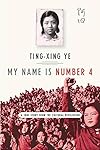
Ting-xing Ye grew up in a politically fractured China, where the "wrong" political allegiance could be a death sentence. Her parents died when Ting-xing was 14, but her father had owned a business and land, thus he was branded a capitalist, a grave offense on the new communist China. This was held against the entire family for life. With a black political background, Ting-xing and her four siblings endured attacks on their school and their home. At the age of 16, Ting-xing was ordered to a show more prison farm far from her home and family where she suffered from poor living conditions, illness, and loneliness while forced to do hard labor. She was teased, tormented, and tortured for having a capitalist father. Fellow workers invented crimes against the state for which Ting-xing was also held accountable.
Ting-xing's story is heartbreaking and frustrating to read. I just wanted to knock some sense into the Red Guards. The leaders came up with whatever stories they wanted against a family, and to say the charges were false would earn a beating. The only escape from such charges was to confess and accept whatever punishment the authorities deemed appropriate. People were beaten (sometimes to death), humiliated, exiled, and murdered for having the wrong political affiliations or for being suspected of not embracing the new China. I cannot imagine growing up in such a place. It is unbelievable that this happened just 35 years ago. Ting-xing told her story well, including cultural and historical background that makes the story easily understandable to other cultures. The personal details enhance the story's depth and sadness. It is a wonderful book about struggle, courage, failure, and triumph that I would recommend to all human beings in hopes of avoiding a repeat of such events. show less
Ting-xing's story is heartbreaking and frustrating to read. I just wanted to knock some sense into the Red Guards. The leaders came up with whatever stories they wanted against a family, and to say the charges were false would earn a beating. The only escape from such charges was to confess and accept whatever punishment the authorities deemed appropriate. People were beaten (sometimes to death), humiliated, exiled, and murdered for having the wrong political affiliations or for being suspected of not embracing the new China. I cannot imagine growing up in such a place. It is unbelievable that this happened just 35 years ago. Ting-xing told her story well, including cultural and historical background that makes the story easily understandable to other cultures. The personal details enhance the story's depth and sadness. It is a wonderful book about struggle, courage, failure, and triumph that I would recommend to all human beings in hopes of avoiding a repeat of such events. show less
 This review was written for LibraryThing Early Reviewers.
Ting-Xing grew up during a particularly bleak time of China's modern history: the Cultural Revolution. Despite her family's incredibly poor circumstances (with both of her parents dead and five children to feed), in middle school she is labeled "bourgeoisie" is tormented and ridiculed because her father had owned a factory before the communist take over. As the political climate gets more and more fevered, Ting-Xing is soon exiled to a prison camp as a laborer, to help "ease overpopulation show more in the city" and life in the camp is, if possible, even less pleasant than in the city.
One of Ting-Xing's strengths as a writer is her ability to really capture her teenage self. I think teenager readers will relate to her experiences because beyond the horrific and disturbing experiences, she includes details that still concern teens today (relationships with siblings, the horrors of menstruation, guilt and loss). Not only that, it also makes plain that often during the cultural revolution it was teens and very young adults who turned against their friends and classmates (this is consistent with other memoirs I have read of the time). And while she paints herself as a victim, I think again, she is describing her teenage feelings - so it never felt as though she is begging for our sympathy for her experience, more so she can show others that she was just a normal teenage girl going through a horrendous experience that could've happened to anybody.
As Ting-Xing survives ordeal after ordeal in the prison camp, she slowly comes into her own and finds, somehow, a seed of hope that her life won't have to end in the rice patties. Her perseverance and strength are evident and a great example for teens and adults alike. show less
One of Ting-Xing's strengths as a writer is her ability to really capture her teenage self. I think teenager readers will relate to her experiences because beyond the horrific and disturbing experiences, she includes details that still concern teens today (relationships with siblings, the horrors of menstruation, guilt and loss). Not only that, it also makes plain that often during the cultural revolution it was teens and very young adults who turned against their friends and classmates (this is consistent with other memoirs I have read of the time). And while she paints herself as a victim, I think again, she is describing her teenage feelings - so it never felt as though she is begging for our sympathy for her experience, more so she can show others that she was just a normal teenage girl going through a horrendous experience that could've happened to anybody.
As Ting-Xing survives ordeal after ordeal in the prison camp, she slowly comes into her own and finds, somehow, a seed of hope that her life won't have to end in the rice patties. Her perseverance and strength are evident and a great example for teens and adults alike. show less
This review was written for LibraryThing Early Reviewers.
My name is Number 4 is an excellent memoir of one girl's experience in China's Cultural Revolution in the 1960's. She describes with detail how her family's life was turned upside-down by waves of changes (each one seemingly worse for them) during that time. The prose is clear and I could easily imagine the places and people described. I see that the book is meant for Young Reader and indeed it would be excellent way to expose say high school students to this part of world history. Direct, show more eyewitness experience is always so powerful.
My only quibble is the choice of title. The fact that she was known as Number 4 had nothing to do with the Cultural Revolution and subsequent experiences. It simply resulted in how all her siblings were given (if I understood correctly) the same name and known by their birth order. Perhaps it was to help non-Chinese readers such as myself, who still sometimes had difficulty with other character's names. show less
My only quibble is the choice of title. The fact that she was known as Number 4 had nothing to do with the Cultural Revolution and subsequent experiences. It simply resulted in how all her siblings were given (if I understood correctly) the same name and known by their birth order. Perhaps it was to help non-Chinese readers such as myself, who still sometimes had difficulty with other character's names. show less
This review was written for LibraryThing Early Reviewers.Lists
Awards


You May Also Like


Associated Authors
Statistics
- Works
- 10
- Also by
- 1
- Members
- 583
- Popularity
- #43,004
- Rating
- 3.6
- Reviews
- 27
- ISBNs
- 46
- Languages
- 3
