
Geoffrey N. Leech (1936–2014)
Author of Semantics: The Study of Meaning
About the Author
Geoffrey Leech is Emeritus Professor of English Linguistics at Lancaster University, where he has been a faculty member for over 40 years. He has published many books and articles in the fields of English grammar, stylistics, pragmatics, semantics, and corpus linguistics. He was elected a Fellow of show more the British Academy in 1987. show less
Image credit: Geoffrey N. Leech
Works by Geoffrey N. Leech
Style in Fiction: A Linguistic Introduction to English Fictional Prose (English Language Series, 13) (1981) 82 copies, 1 review
English in Advertising: Linguistic Study of Advertisement in Great Britain (English Language Series) (1966) 16 copies
Word frequencies in written and spoken English : based on the British National Corpus (2001) 11 copies
Associated Works
Tagged
Common Knowledge
- Canonical name
- Leech, Geoffrey N.
- Legal name
- Leech, Geoffrey Neil
- Birthdate
- 1936-01-16
- Date of death
- 2014-08-19
- Gender
- male
- Education
- London University
- Occupations
- linguist
- Organizations
- Lancaster University (Professor Emeritus|English Linguistics)
University College London
Massachusetts Institute of Technology - Nationality
- UK
- Birthplace
- Gloucester, England, Grossbritannien
- Place of death
- Lancaster, Lancashire, England
- Associated Place (for map)
- UK
Members
Reviews
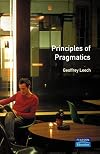
Given the anodyne title I had no idea till I read it that this is (among other things) a foundational text in politeness theory, where Leech fleshes out what politeness phenomena like tact, generosity, approbation, modesty, agreement, sympathy, and irony mean pragmalinguistically alongside Grice's communication maxims.
That alone makes this a crucial read for anyone interested in the interpersonal aspect of language. Some of the rest is descriptive schematization of the type that is show more uninteresting to me, but Leech also does. a magnificent job critiquing Searle's idea of illocutionary acts (that sort of reduce language to "statements that do things" like "I hereby christen this boat/declare you married/leave this party" and treat huge swaths of normal speech problematically as exceptions or questionably as forced examples; he does so partly with a kind of corpus angle before its time, reminding us just how important proper corpora were for counteracting scholasticism like the generative semantics, still somewhat influential at the time, in which every indicative statement, like "It's Saturday," must be preceded with an implicit declaration, like "I declare that it's Saturday," for abstruse theoretical reasons. Bad rubbish well disposed of.
He gets us a lot closer to understanding the social aspect of language as a kind of damp emotional process that happens between nerve bundles as opposed to a volitional effort to express a change and thereby affect it (which, weirdly, leaves illocution as a kind of magic, a vow or incantation) or formal exchange of propositions among (hereby-)proposing machines. (I was working on a sex analogy but maybe nobody needs that.) show less
That alone makes this a crucial read for anyone interested in the interpersonal aspect of language. Some of the rest is descriptive schematization of the type that is show more uninteresting to me, but Leech also does. a magnificent job critiquing Searle's idea of illocutionary acts (that sort of reduce language to "statements that do things" like "I hereby christen this boat/declare you married/leave this party" and treat huge swaths of normal speech problematically as exceptions or questionably as forced examples; he does so partly with a kind of corpus angle before its time, reminding us just how important proper corpora were for counteracting scholasticism like the generative semantics, still somewhat influential at the time, in which every indicative statement, like "It's Saturday," must be preceded with an implicit declaration, like "I declare that it's Saturday," for abstruse theoretical reasons. Bad rubbish well disposed of.
He gets us a lot closer to understanding the social aspect of language as a kind of damp emotional process that happens between nerve bundles as opposed to a volitional effort to express a change and thereby affect it (which, weirdly, leaves illocution as a kind of magic, a vow or incantation) or formal exchange of propositions among (hereby-)proposing machines. (I was working on a sex analogy but maybe nobody needs that.) show less
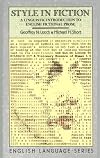
Oh hell, I really want to give this 1 star because well, I see the use but it just wan't a captivating read at all. However, since I can see how it is useful for literary studies (and in extension translation studies), 3 stars. But only just.

Boy this guy runs on. Why say something in two sentences when you can use seven?
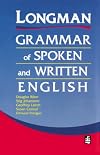
English grammar has gained a much insight from corpus and this volume is thorough in its treatment of this huge topic. A classic reference work that will still be relevant for at least my life time.
You May Also Like


Associated Authors
Statistics
- Works
- 24
- Also by
- 2
- Members
- 979
- Popularity
- #26,315
- Rating
- 4.0
- Reviews
- 4
- ISBNs
- 91
- Languages
- 4