
Bhikkhu Bodhi
Author of In the Buddha's Words : An Anthology of Discourses from the Pali Canon
About the Author
Image credit: Bhikkhu Bodhi
Series
Works by Bhikkhu Bodhi
The Connected Discourses of the Buddha (Saṃyutta Nikāya) (2000) — Translator — 281 copies, 3 reviews
A Comprehensive Manual of Abhidhamma : The Abhidhammattha Sangaha of Acariya Anuruddha, Ed by Bhikku Bodhi (1993) — Translator, General Editor — 179 copies, 1 review
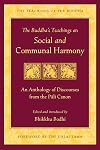
The Buddha's Teachings on Social and Communal Harmony: An Anthology of Discourses from the Pali Canon (The Teachings of the Buddha) (2016) 96 copies, 1 review
The Suttanipata: An Ancient Collection of the Buddha’s Discourses Together with Its Commentaries (2017) 88 copies
Numerical Discourses of the Buddha: An Anthology of Suttas from the Anguttara Nikaya (0001) — Translator — 58 copies, 1 review
Noble Truths, Noble Path: The Heart Essence of the Buddha's Original Teachings (The Teachings of the Buddha) (2023) 40 copies
The Discourse on the All-Embracing Net of Views: The Brahmajala Sutta and Its Commentaries (1992) 37 copies
The Discourse on the Root of Existence: Mulapariyaya Sutta and Its Commentaries (1992) 30 copies, 1 review
Reading the Buddha's Discourses in Pali: A Practical Guide to the Language of the Ancient Buddhist Canon (2020) 24 copies, 1 review
The Discourse on the Fruits of Recluseship: The Samannaphala Sutta and its Commentaries (2022) 5 copies
Summary of the topics of Abhidhamma (Abhidhammatthasangaha): Being a commentary to Anuruddha's "Summary of the topics of (2002) 4 copies
The Buddha's Teachings on Social and Communal Harmony: An Anthology of Discourses from the Pali Canon (The Teachings of the Buddha) (2016) 2 copies
Vision of Dhamma: Buddhist Writings of Nyanaponika Thera (Vipassana Meditation and the Buddha's Teachings) (2013) 2 copies
All Embracing Net of Views 1 copy
Meditation on Perception 1 copy
In the Buddha's Words - CD 1 copy
il nobile ottuplice sentiero 1 copy
Let the Light Shine 1 copy
The Buddha And His Message 1 copy
Associated Works
Great Disciples of the Buddha: Their Lives, Their Works, Their Legacy (1997) — Editor — 173 copies, 2 reviews
Abhidhamma Studies: Buddhist Explorations of Consciousness and Time (1949) — Editor — 127 copies, 2 reviews
Tagged
Common Knowledge
- Other names
- Block, Jeffrey
- Birthdate
- 1944-12-10
- Gender
- male
- Education
- Brooklyn College (BA|Philosophy)
Claremont Graduate School (PhD ∙ Philosophy) - Occupations
- Buddhist monk
scholar
editor - Organizations
- Buddhist Publication Society
Buddhist Association of the United States
Buddhist Global Relief - Nationality
- USA
- Birthplace
- Brooklyn, New York, USA
- Places of residence
- Sri Lanka
New York, USA
Chuang Yen Monastery, Carmel, New York, USA - Associated Place (for map)
- New York, USA
Members
Reviews
The Buddha's Teachings on Social and Communal Harmony: An Anthology of Discourses from the Pali Canon (The Teachings of the Buddha) by Bhikkhu Bodhi
Time to Stand Up retells the story of the historical Buddha, one of the greatest sacred activists of all time, as a practical human being whose teachings of freedom from suffering are more relevant than ever in this time of global peril. Evolving onward from the patriarchal template of spiritual warriors and their quests, former nun Thanissara explores awakening from within a feminine view where the archetypes of lover and nurturer are placed as central and essential for a sustainable show more world.
Vital is an investigation into the pinnacle of Buddhist practice, the realization of the "liberated heart." Thanissara questions the narrative of "transcendence" and invites us into the lived reality of our deepest heart as it guides our journey of healing, reclamation, and redemption. As the book unfolds, the author examines traditional Buddhism--often fraught with gender discrimination--and asks the important question, "Can Buddhist schools, overly attached to hierarchal power structures, and often divorced from the radical and free inquiry exemplified by the Buddha, truly offer the ground for maturing awakening without undertaking a fundamental review of their own shadows?" show less
Vital is an investigation into the pinnacle of Buddhist practice, the realization of the "liberated heart." Thanissara questions the narrative of "transcendence" and invites us into the lived reality of our deepest heart as it guides our journey of healing, reclamation, and redemption. As the book unfolds, the author examines traditional Buddhism--often fraught with gender discrimination--and asks the important question, "Can Buddhist schools, overly attached to hierarchal power structures, and often divorced from the radical and free inquiry exemplified by the Buddha, truly offer the ground for maturing awakening without undertaking a fundamental review of their own shadows?" show less
Reading the Buddha's Discourses in Pali: A Practical Guide to the Language of the Ancient Buddhist Canon by Bhikkhu Bodhi

Renowned scholar-monk and bestselling translator Bhikkhu Bodhi's definitive, practical guide on how to read ancient Buddhist texts in the original language.
Bhikkhu Bodhi's sophisticated and practical instructions on how to read the Pali of the Buddha's discourses will acquaint students of Early Buddhism with the language and idiom of these sacred texts. Here the renowned English translator of the Pali Canon opens a window into key suttas from the Samyutta Nikaya, giving a literal translation show more of each sentence followed by a more natural English rendering, then explaining the grammatical forms involved. In this way, students can determine the meaning of each word and phrase and gain an intimate familiarity with the distinctive style of the Pali suttas--with the words, and world, of the earliest Buddhist texts.
Ven. Bodhi's meticulously selected anthology of suttas provides a systematic overview of the Buddha's teachings, mirroring the four noble truths, the most concise formulation of the Buddha's guide to liberation. Reading the Buddha's Discourses in Pali shares with readers not only exceptional language instruction but also a nuanced study of the substance, style, and method of the early Buddhist discourses. show less
Bhikkhu Bodhi's sophisticated and practical instructions on how to read the Pali of the Buddha's discourses will acquaint students of Early Buddhism with the language and idiom of these sacred texts. Here the renowned English translator of the Pali Canon opens a window into key suttas from the Samyutta Nikaya, giving a literal translation show more of each sentence followed by a more natural English rendering, then explaining the grammatical forms involved. In this way, students can determine the meaning of each word and phrase and gain an intimate familiarity with the distinctive style of the Pali suttas--with the words, and world, of the earliest Buddhist texts.
Ven. Bodhi's meticulously selected anthology of suttas provides a systematic overview of the Buddha's teachings, mirroring the four noble truths, the most concise formulation of the Buddha's guide to liberation. Reading the Buddha's Discourses in Pali shares with readers not only exceptional language instruction but also a nuanced study of the substance, style, and method of the early Buddhist discourses. show less
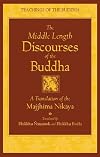
This book offers a complete translation of the Majjhima Nikaya, or Middle Length Discourses of the Buddha, one of the major collections of texts in the Pali Canon, the authorized scriptures of Theravada Buddhism. This collection--among the oldest records of the historical Buddha's original teachings--consists of 152 suttas or discourses of middle length, distinguished as such from the longer and shorter suttas of the other collections. The Majjhima Nikaya might be concisely described as the show more Buddhist scripture that combines the richest variety of contextual settings with the deepest and most comprehensive assortment of teachings. These teachings, which range from basic ethics to instructions in meditation and liberating insight, unfold in a fascinating procession of scenarios that show the Buddha in living dialogue with people from many different strata of ancient Indian society: with kings and princes, priests and ascetics, simple villagers and erudite philosophers. Replete with drama, reasoned argument, and illuminating parable and simile, these discourses exhibit the Buddha in the full glory of his resplendent wisdom, majestic sublimity, and compassionate humanity. show less
The Discourse on the Root of Existence : The Mulapariyaya Sutta and Its Commentaries by Bhikkhu Bodhi
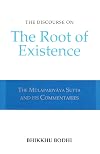
Includes an important discussion on the distinction between the Arhat and the Buddha, so often overlooked but so critical to Mahayana polemic over the Hinayana. Most Mahayana polemic makes no attempt at tracing its origins in the Tripitaka. Here the staunchly orthodox will find reasonable doubt.
Bhikkhu Bodhi is head and shoulders above the rest not only in translating Pali into English but also in his interpretations.
Bhikkhu Bodhi is head and shoulders above the rest not only in translating Pali into English but also in his interpretations.
Lists
You May Also Like


Associated Authors
Statistics
- Works
- 63
- Also by
- 2
- Members
- 2,902
- Popularity
- #8,826
- Rating
- 4.4
- Reviews
- 22
- ISBNs
- 90
- Languages
- 7
- Favorited
- 4