
John Grassy
Author of Apes and Monkeys
Works by John Grassy
National Audubon Society Field Guide to the Rocky Mountain States (1999) — Author — 150 copies, 2 reviews
Apes and Monkey 2 copies
Tagged
Common Knowledge
- Gender
- male
Members
Reviews

So nice that all kinds of the local species are together in one book, plus a brief geological history, the different biotopes and sky maps! We have used it in Yellowstone.

National Audubon Society's First Field guide to Mammals is a beginner's field guide to most of mammals most persons have come in contact with, be it in the wild or TV. If I had to decide between Audubon's 'First' field guides and Audubon's field guide to North American mammals, I would choose the latter. I don't feel that the differ much in their approach, only in their scope of presentation. There is a few pages in the First field guide that discusses 'how to view animals in the wild' and a show more couple of pages on what an ecosystem is, etc. However, there are better presentations of this elsewhere -- many of which are freely available online.
As similar Audubon guides, the reader first find the general outline or silhouette of the animal. This is just the general shape. For example, chipmunks would have the same shape as most squirrels. The reader then turns to the associated page and views the fantastic color plates to find the animal among the common shapes. Once found, the entry give general distribution, binomial name, and seasonal tidbits about the mammal. The amount of info given is dwarfed by Audubon's guide to North America Mammals, but I think the amount of info would be sufficient for most.
Ultimately, I would pick the North American Mammal's guide from Audubon. It has more pictures, more info, and the learning curve to use the guide is no steeper. That said, they are both fine books. show less
As similar Audubon guides, the reader first find the general outline or silhouette of the animal. This is just the general shape. For example, chipmunks would have the same shape as most squirrels. The reader then turns to the associated page and views the fantastic color plates to find the animal among the common shapes. Once found, the entry give general distribution, binomial name, and seasonal tidbits about the mammal. The amount of info given is dwarfed by Audubon's guide to North America Mammals, but I think the amount of info would be sufficient for most.
Ultimately, I would pick the North American Mammal's guide from Audubon. It has more pictures, more info, and the learning curve to use the guide is no steeper. That said, they are both fine books. show less
National Audubon Society First Field Guide Mammals (National Audubon Society First Field Guide) by John Grassy
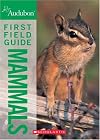
Do you ever walk around and wonder, "hey, what is that animal?" Well, welcome to the world of mammals! You should start carrying around the National Audubon Society's filed guide to mammals where you will learn about all the unique characteristics of the animals that share our environment. From babies to mammal senses, the endangered species and animal habitats, many of your questions about mammals will be answered.

This book talks about a wide variety of primates, giving general coverage to the whole group and focusing on a few varieties. It talks a little bit about their habits, etc., but for the most part only gives a snapshot due to the wide scope. It is loaded with illustrations, and focuses on chimps, orangutangs, and gorillas at the end. Overall this is a good introductory book.
Awards

You May Also Like


Associated Authors
Statistics
- Works
- 13
- Members
- 1,290
- Popularity
- #19,887
- Rating
- 3.8
- Reviews
- 8
- ISBNs
- 18
- Languages
- 1