
Desmond Graham
Author of Poetry of the Second World War: An International Anthology
About the Author
Desmond Graham is Emeritus Professor of Poetry at Newcastle University.
Works by Desmond Graham
Milean Poems 1 copy
The Book Collector (91) 1 copy
Associated Works
Tagged
Common Knowledge
- Canonical name
- Graham, Desmond
- Birthdate
- 1940
- Gender
- male
- Education
- Leeds University
- Occupations
- poet
- Organizations
- University of Newcastle-upon-Tyne
- Nationality
- UK
- Birthplace
- Surrey, England, UK
- Associated Place (for map)
- England, UK
Members
Reviews
Hast Du Dich Verirrt? – Stevie Smith.
My Child, my child, watch how he goes
The man in Party coloured clothes.
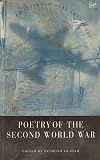
At one point in time it was considered that the horrors of the Second World War and the Holocaust had left poetry silenced, almost tongue-tied, as though the sheer monstrosity that man was capable of could not, or should not, be expressed in this art form. Like with most things, time has rendered that view obsolete, in fact revealed a necessity to bear witness, to lament and show more question all that was done by man to man. Whether this was Primo Levi, writing “You who live secure/ In your warm houses/ Who return at evening to find/ Hot food and friendly faces: Consider whether this is a man/ who labours in the mud”**, or Tamik Hara, who wrote “this is a human being/ look what an A-bomb has done to it/ the flesh swells so horribly/ and both men and women are reduced to one form”*** who survived Hiroshima only to commit suicide at the confirmation of the symptoms of “Atoms Disease” poetry not only found it’s voice, but found itself more than capable of conveying the “the vast and terrible sweep of the war”.
Horoscope – Vladimir Holan
Early evening…. Cemetery…. And the wind sharp as
bone splinters on a butcher’s block.
Rust shakes its model out of tortured form.
And above it all, above the tears of shame,
the star has almost decided to confess
why we understand simplicity only when the heart breaks,
and we are suddenly ourselves, alone and fateless.
Trans: Jarmilla & Ian Milner
The poetry in this anthology highlights the utter abhorrence and sheer mundanity of conflict, whether on the frontline or the home front, Auschwitz or Hiroshima, the experience of war is apparent and central. From Osip Mandelshtam, writing in 1937 (a year before his death in Siberia), through Keith Douglas, killed in Normandy or Miklos Radnoti murdered on a forced march, this collection charts the course of the Second World War, through the voices of these poets.
What makes this a great book is its sheer scope, it truly is an international compilation. One hundred and thirty poets from about twenty countries, from Australia, Japan, Europe, America and Russia show the scope of this collection and also reveal how universal is the need to articulate their experience, to record their thoughts and feelings – to witness.
http://parrishlantern.blogspot.co.uk/2013/03/poetry-of-second-world-war.html show less
My Child, my child, watch how he goes
The man in Party coloured clothes.
At one point in time it was considered that the horrors of the Second World War and the Holocaust had left poetry silenced, almost tongue-tied, as though the sheer monstrosity that man was capable of could not, or should not, be expressed in this art form. Like with most things, time has rendered that view obsolete, in fact revealed a necessity to bear witness, to lament and show more question all that was done by man to man. Whether this was Primo Levi, writing “You who live secure/ In your warm houses/ Who return at evening to find/ Hot food and friendly faces: Consider whether this is a man/ who labours in the mud”**, or Tamik Hara, who wrote “this is a human being/ look what an A-bomb has done to it/ the flesh swells so horribly/ and both men and women are reduced to one form”*** who survived Hiroshima only to commit suicide at the confirmation of the symptoms of “Atoms Disease” poetry not only found it’s voice, but found itself more than capable of conveying the “the vast and terrible sweep of the war”.
Horoscope – Vladimir Holan
Early evening…. Cemetery…. And the wind sharp as
bone splinters on a butcher’s block.
Rust shakes its model out of tortured form.
And above it all, above the tears of shame,
the star has almost decided to confess
why we understand simplicity only when the heart breaks,
and we are suddenly ourselves, alone and fateless.
Trans: Jarmilla & Ian Milner
The poetry in this anthology highlights the utter abhorrence and sheer mundanity of conflict, whether on the frontline or the home front, Auschwitz or Hiroshima, the experience of war is apparent and central. From Osip Mandelshtam, writing in 1937 (a year before his death in Siberia), through Keith Douglas, killed in Normandy or Miklos Radnoti murdered on a forced march, this collection charts the course of the Second World War, through the voices of these poets.
What makes this a great book is its sheer scope, it truly is an international compilation. One hundred and thirty poets from about twenty countries, from Australia, Japan, Europe, America and Russia show the scope of this collection and also reveal how universal is the need to articulate their experience, to record their thoughts and feelings – to witness.
http://parrishlantern.blogspot.co.uk/2013/03/poetry-of-second-world-war.html show less
Awards

You May Also Like
Associated Authors
Statistics
- Works
- 15
- Also by
- 2
- Members
- 61
- Popularity
- #274,233
- Rating
- 3.7
- Reviews
- 1
- ISBNs
- 17